
Resources
Explore a wide range of valuable resources on GCED to deepen your understanding and enhance your research, advocacy, teaching, and learning.
1,726 Results found
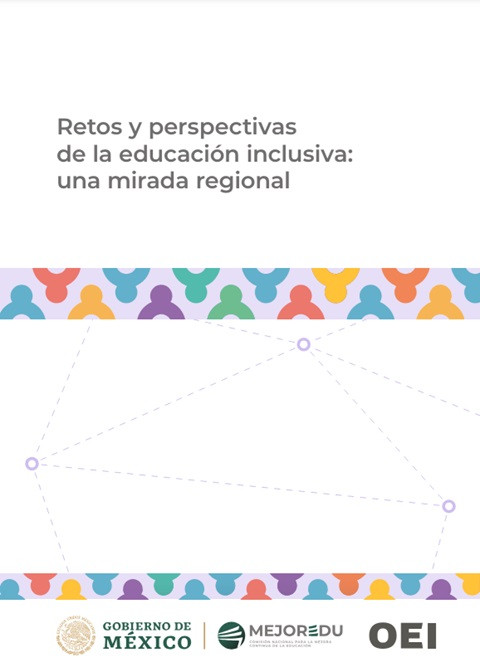 Retos y perspectivas de la educación inclusiva: Una mirada regional Year of publication: 2024 Corporate author: National Commission for the Continuous Improvement of Education (Mejoredu) | Organización de Estados Iberoamericanos para la Educación, la Ciencia y la Cultura (OEI) Esta obra compila las cuatro mesas de análisis Retos y perspectivas de la educación inclusiva, las cuales, para contribuir a este propósito, se constituyeron en espacios de reflexión y diálogo plural y democrático. Durante las mesas de análisis realizadas en junio de 2023, los destacados ponentes dieron vida a un espacio de reflexión y diálogo plural y democrático, buscando aportar mediante conversatorios a un tema de debate inaplazable en la vida de las escuelas, hablando sobre la situación actual de las poblaciones históricamente vulneradas en sus derechos fundamentales, los desafíos de la educación inclusiva en la región, experiencias en atención educativa de poblaciones históricamente desfavorecidas y propuestas de acciones que contribuyan a que los sistemas educativos avancen hacia una educación inclusiva.
 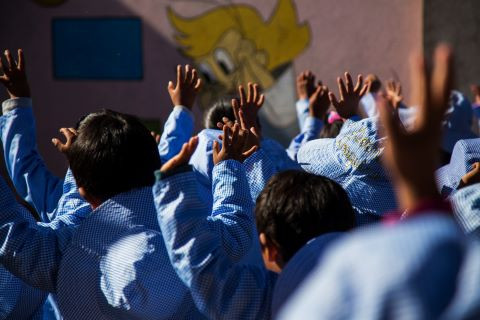 Weaving Education and Equity in Ibero-America Year of publication: 2024 Author: Ricardo Cuenca Corporate author: Organization of Ibero-American States for Education, Science and Culture (OEI) Addressing the complex relationship between education and inequality in Latin America is a challenge. Economic and social disparities create a complex network in the region. Despite progress, access remains an obstacle for many. During its 75-year history, the OEI has been working to break down the barriers that hinder equitable education for all. Ricardo Cuenca, member of the OEI Advisory Board, explains to what extent educational policies can contribute to mitigating these inequalities in Latin America. Tejiendo educación y equidad en Iberoamérica Year of publication: 2024 Author: Ricardo Cuenca Corporate author: Organización de Estados Iberoamericanos para la Educación, la Ciencia y la Cultura (OEI) Abordar la compleja relación entre educación y desigualdad en Iberoamérica es todo un desafío. Las disparidades económicas y sociales tejen un entramado complejo en la región. A pesar de los avances, el acceso sigue siendo un obstáculo para muchos. En esta travesía, la OEI ha venido trabajando durante sus 75 años de historia para derribar las barreras que obstaculizan una formación equitativa para todos. Ricardo Cuenca, miembro del Consejo Asesor de la OEI, nos explica hasta qué punto las políticas educativas pueden contribuir a mitigar esas desigualdades en Iberoamérica.
  Education for citizenship in the Arab World: key to the future Year of publication: 2011 Author: Muhamman Faour | Marwan Muasher Corporate author: Carnegie Middle East Center Reforming education to foster citizenship is urgently needed if democracy is to take hold in the Arab world. Under authoritarian rule, students were primarily taught to be docile subjects of the state—creative thinking was discouraged and information was treated as indisputable. Instead, students must learn from a very early age what it means to be citizens who seek and produce knowledge, question, and innovate. Only by teaching youth to think critically and respect different points of view will Arab countries become economically competitive and reliably democratic.
  Education for citizenship in the Arab World: key to the future Year of publication: 2011 Author: Muhamman Faour | Marwan Muasher Corporate author: Carnegie Middle East Center Reforming education to foster citizenship is urgently needed if democracy is to take hold in the Arab world. Under authoritarian rule, students were primarily taught to be docile subjects of the state—creative thinking was discouraged and information was treated as indisputable. Instead, students must learn from a very early age what it means to be citizens who seek and produce knowledge, question, and innovate. Only by teaching youth to think critically and respect different points of view will Arab countries become economically competitive and reliably democratic. التربية من أجل المواطنة في العالم العربي: مفتاح المستقبل Year of publication: 2011 Author: Muhamman Faour | Marwan Muasher Corporate author: Carnegie Middle East Center La réforme de l'éducation pour favoriser la citoyenneté est nécessaire de toute urgence si la démocratie est de prendre la main dans le monde arabe. Sous un régime autoritaire, les étudiants ont été principalement appris à être des sujets dociles de la pensée créatrice de l'État a été découragé et de l'information a été traitée comme indiscutable. Au lieu de cela, les élèves doivent apprendre à partir d'un très jeune âge ce que cela signifie d'être des citoyens qui cherchent et produisent la connaissance, question, et innovent. Seulement en enseignant les jeunes à penser de façon critique et respecter différents points de vue seront les pays arabes devenir économiquement compétitive et fiable démocratique. التربية من أجل المواطنة في العالم العربي: مفتاح المستقبل Year of publication: 2011 Author: Muhamman Faour | Marwan Muasher Corporate author: Carnegie Middle East Center Reforming education to foster citizenship is urgently needed if democracy is to take hold in the Arab world. Under authoritarian rule, students were primarily taught to be docile subjects of the state—creative thinking was discouraged and information was treated as indisputable. Instead, students must learn from a very early age what it means to be citizens who seek and produce knowledge, question, and innovate. Only by teaching youth to think critically and respect different points of view will Arab countries become economically competitive and reliably democratic.
 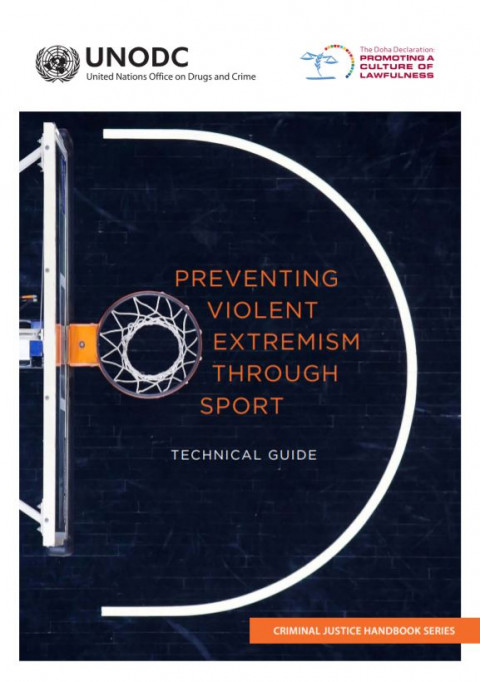 Preventing Violent Extremism through Sport: Technical Guide; Criminal Justice Handbook Series Year of publication: 2020 Corporate author: UN. Office on Drugs and Crime (UNODC) The Technical Guide on Preventing Violent Extremism through Sport, developed in consultation with international experts, recognizes the importance of promoting the well-being of children and youth. It applies an approach that encourages prosocial behaviour and good safeguarding and welfare practices, with particular emphasis on educational and social development measures in line with the United Nations Guidelines for the Prevention of Crime.The guide, addressed mainly to policy makers and implementing organizations, has been carefully designed to support effective integration of sport-based learning in primary prevention frameworks. By adopting a five-zone approach to prevent violent extremism namely safe space, empowerment, resilience, social inclusion and education, it supports informed policy development and a Theory of Change that can shape curriculum design and content. To further support global efforts in preventing violent extremism, UNODC is also developing an e-learning module and a practical tool for trainers that will be published soon and will complement this technical guide.
  Jeunesse et citoyenneté : une culture à réinventer: 23 recommandations pour redynamiser la culture citoyenne (Rapport d'information; No.648, 2021-2022) Year of publication: 2022 Author: Stéphane Piednoir | Henri Cabanel Corporate author: Sénat français Des sujets proches des préoccupations de la mission d’information ont été inscrits à l’agenda d’autres institutions et structures du Sénat pendant cette mission d’information qui s’est déroulée du 1er décembre 2021 au 7 juin 2022. Cette convergence souligne l’importance de ces questions et l’urgence de mesures destinées à réparer le lien entre les citoyens et les institutions et, à travers l’éducation citoyenne de la jeunesse, à renforcer la cohésion nationale et à préparer l’avenir de notre démocratie. Au terme de ses travaux, la mission formule vingt-trois recommandations pour mieux éduquer et former à la citoyenneté, pour encourager une citoyenneté active par l’engagement, et pour repenser les pratiques démocratiques afin de rapprocher les citoyens – et plus particulièrement les jeunes – des institutions. Elle considère que ces questions doivent, à l’approche de la nouvelle législature, constituer une priorité pour les pouvoirs publics.
 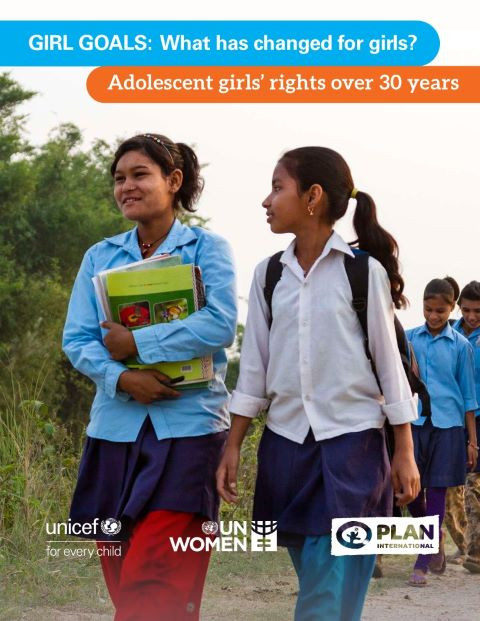 Girl Goals: What has Changed for Girls? Adolescent Girls’ Rights over 30 Years Year of publication: 2025 Corporate author: United Nations Children's Fund (UNICEF) | United Nations Entity for Gender Equality and the Empowerment of Women (UN Women) | Plan International This report makes three key recommendations on action we can take now to advance adolescent girls’ rights at scale, in ways that account for fiscally constrained contexts and multiple competing priorities: 1. Ensure tangible and actionable support for adolescent girls’ voices, advocacy and action. The current generation of girls are raising their voices to be heard and are already at the forefront of making change around the world. With the right support, resources and seats at the table, adolescent girls can help transform the world for the better, shaping better policy outcomes for themselves and everyone. This is not about girls’ voices above all others, or endless consultation, but about specific, meaningful actions that ensure girls get the support they need and are heard on policy issues that matter to them. 2. Establish and track explicit targets for change for adolescent girls, who are too often invisible and sidelined Setting explicit targets to monitor outcomes for adolescent girls is key to making progress. Context-specific prioritization will be necessary, but there are some issues that stand out globally. Gaps in progress (such as child marriage gains accruing disproportionately to wealthier households) demonstrate the need forprogrammes that address poverty and economic realities alongside harmful social norms. The disproportionate number of adolescent girls not in education, employment or training, not entering the labour market as young women, and left behind when it comes to digital skills, is a threat to the gains made for girls and to economic growth that will benefit everyone. Stagnation on issues like underweight also stand out. Country- specific priorities supported by data- driven accountability mechanisms and investments are needed to translate policy commitments into change on the ground. 3. Resource and deliver smartly to unlock the social and economic dividend Governments and partners should invest in solutions proven to change outcomes across multiple SDGs at scale – for example, investing in education and skills, cash transfers and economic empowerment programmes designed to support girls. Existing systems, from maternal health care to school curricula, should be adapted to meet girls’ needs rather than creating small- scale, separate projects. Streamlined, evidence-based ‘add-ons’ – such as adding parenting support to existing maternal health-care programmes – can be cost effective and accelerate outcomes if well designed. Change is possible, and this report shows that great gains have been made. Smart investments now can transform the world for girls, families, communities and national economies. It is time to act.