
Resources
Explore a wide range of valuable resources on GCED to deepen your understanding and enhance your research, advocacy, teaching, and learning.
661 Results found
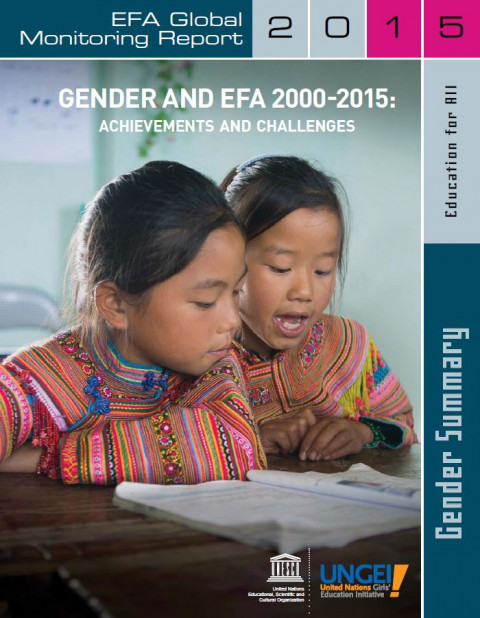 [Summary] Gender and EFA 2000-2015: Achievements and Challenges; EFA Global Monitoring Report 2015; Gender Summary Year of publication: 2015 Corporate author: Global Education Monitoring Report Team This report describes an array of country efforts, some quite effective, to achieve and go beyond gender parity in education. Many of these policies and programmes focus on the immediate school environment in which girls learn. Others focus on the informal and formal laws, social norms and practices that deny girls their right of access to, and completion of, a full cycle of quality basic education. The analyses and key messages in Gender and EFA 2000–2015: Achievements and Challenges deserve careful scrutiny as the world embarks on a universal, integrated and even more ambitious sustainable development agenda in the years to come.
  Opportunities for Media and Information Literacy in the Middle East and North Africa: Yearbook 2016 Year of publication: 2016 Author: Magda Abu-Fadil | Jordi Torrent | Alton Grizzle Corporate author: International Clearinghouse on Children, Youth and Media (Sweden) Opportunities for Media and Information Literacy in the Middle East and North Africa is the seventeenth Yearbook published by the Clearinghouse and fills a gap in the existing body of literature about the progress of media and information literacy work in different parts of the world. This book also helps educators in the Middle East and North Africa region looking for opportunities to bring to their classrooms elements of MIL education.
  Address by Irina Bokova, Director-General of UNESCO, on the occasion of the conference: Creating Sustainable Society of Peace: A Legacy of King Bhumibol Adulyadej of Thailand Year of publication: 2017 Corporate author: UNESCO. Director-General, 2009-2017 (Bokova, I.G.) This address was delivered by Irina Bokova, Director-General of UNESCO, on the occasion of the conference: Creating Sustainable Society of Peace: A Legacy of King Bhumibol Adulyadej of Thailand; UNESCO, 26 September 2017.
 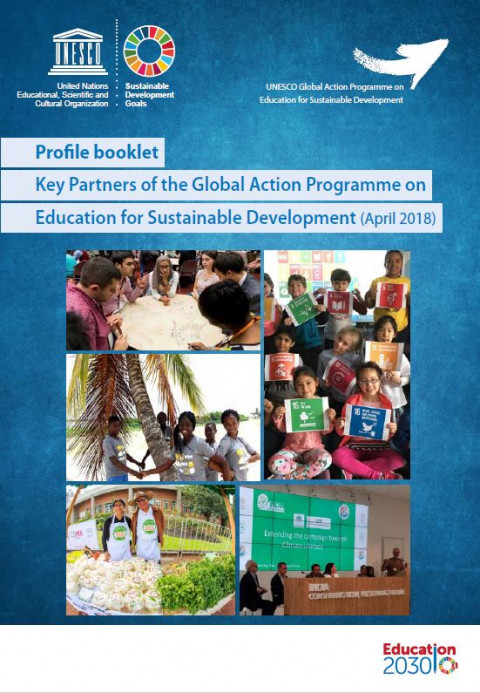 Profile booklet: key partners of the Global Action Programme on Education for Sustainable Development (April 2018) Year of publication: 2018 UNESCO’s Global Action Programme (GAP) was launched at the World Conference on Education for Sustainable Development (ESD) in November 2014 in Aichi-Nagoya, Japan as a follow-up programme to the Decade of ESD (2005-2014). This booklet contains profiles of the current 96 members (also called Key Partners) of the GAP Partner Networks. Each Key Partner is listed in alphabetical order within one of the five Partner Networks. Each profile presents the main objective of their work, their GAP launch commitment and specific activities that contribute to the GAP, as well as related website links and contact information for the organization’s focal point.
 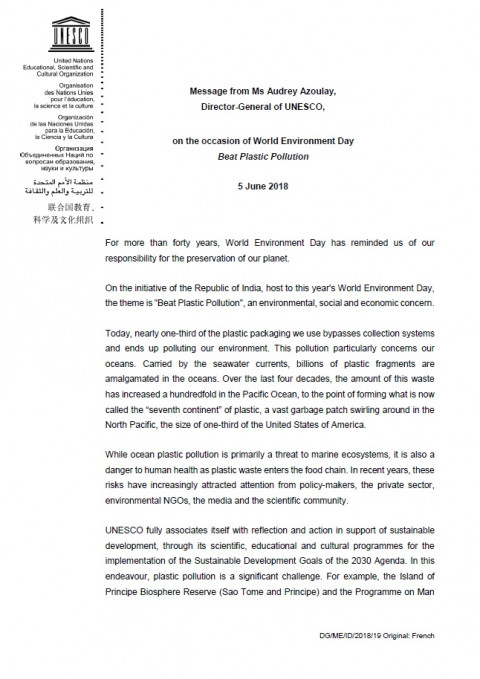 Message from Ms Audrey Azoulay, Director-General of UNESCO, on the occasion of World Environment Day, 5 June 2018 Year of publication: 2018 Corporate author: UNESCO. Director-General, 2017-2025 (Azoulay, A.) This message was delivered by Audrey Azoulay, Director-General of UNESCO, on the occasion of World Environment Day, on 5 June 2018. 联合国教科文组织总干事奥德蕾·阿祖莱 世界环境日致辞:“塑战速决” Year of publication: 2018 Corporate author: UNESCO. Director-General, 2017-2025 (Azoulay, A.) 2018年6月5日, 联合国教科文组织总干事奥德蕾·阿祖莱世界环境日致辞
 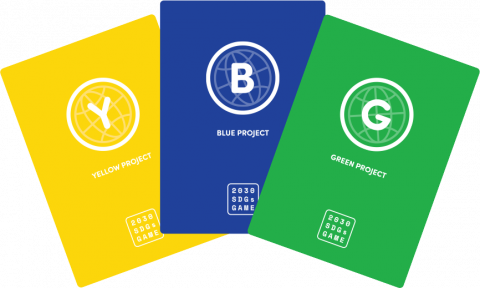 2030 SDGs GAME Year of publication: 2016 Corporate author: Imacocollabo The 2030 SDGs Game is a multiplayer, in-person, card-based game that simulates taking the “real world” into the year 2030. Designed in Japan in 2016, this experience has become a powerful and impactful social phenomenon in Japan, earning extensive media coverage and reaching over 12,000 participants last year. 2030 SDGs Game events are held in corporate, governmental, educational, and community settings, and now has over 100 trained facilitators in a rapidly growing community within Japan. Now, due to a growing demand to bring the game to the rest of the world, we have created an English edition and are beginning to introduce it to a wider audience overseas. The game is designed to be played with anywhere from 5 to 50 players. (That number can be expanded to a maximum of around 200 with multiple parallel ‘worlds’ operating at the same time.) Play time is approximately 1 hour; with the necessary explanation and reflection afterward, it requires a minimum of 90 minutes, and generally works best in a 2 ½ hour time frame.
  Itinéraire d'un téléphone portable Year of publication: 2019 Corporate author: E-graine E-graine te propose de te familiariser à la notion de citoyenneté mondiale, à travers un objet du quotidien : le smartphone.Tu pourras découvrir le système complexe de fabrication du téléphone, les impacts qu’il provoque sur l’Homme et l’environnement... et surtout comment tu as, en tant que citoyen et consommateur, la capacité de faire des choix pour un monde plus solidaire et plus responsable. Chez e-graine, nous sommes persuadés que c’est la prise de conscience que nous faisons tous partie d’une même humanité qui nous permettra de nous emparer de notre futur. E-graine introduces you to the concept of global citizenship through an everyday object: the smartphone. You'll be able to find out about the complex way a phone is made, the impact it has on people and the environment... and, above all, how, as a citizen and consumer, you have the ability to make choices for a more caring and responsible world. At e-graine, we are convinced that it is the realisation that we are all part of the same humanity that will enable us to take control of our future.
  La famille Kiagi Year of publication: 2018 Corporate author: E-graine Suivez les aventures en dessins animés de la famille Kiagiqui décide d’agir au quotidien pour des sociétés solidaires et responsables. Follow the cartoon adventures of the Kiagi family who decide to take action every day to promote responsible, caring societies.
  Calendrier des événements du développement durable 2023-2024 Year of publication: 2023 Author: Matthieu Remblière Corporate author: Académie de Versailles Ce calendrier met en lumières les dates et les journées nationales, européennes et mondiales en rapport avec le développement durable. This calendar highlights national, European and international dates and days related to sustainable development.