
Resources
Explore a wide range of valuable resources on GCED to deepen your understanding and enhance your research, advocacy, teaching, and learning.
2,199 Results found
 2018년도 SDG4-교육2030 협의체 운영보고서 Year of publication: 2019 Corporate author: 유네스코한국위원회 2018년도 교육부, 유네스코한국위원회와 9개 교육전문기관(한국교육과정평가원, 유아정책연구소, 한국대학교육협의회, 한국직업능력개발원, 한국여성정책연구원, 국가평생교육진흥원, 유네스코 아시아태평양 국제이해교육원, 한국교육학술정보원, 한국교육개발원) 으로 구성된 SDG 4-교육2030 협의체 운영(회의, 포럼 등) 내용을 담은 보고서이다.
  2018 유네스코 평화누리 활동보고서 Year of publication: 2018 Corporate author: 유네스코한국위원회 ‘유네스코 평화누리 사업’은 2013년 ‘유네스코 볼론티어 프로젝트’라는 이름으로, 대학생들의 사회 참여를 높이고 역량을 강화하기 위해 시작되었다. 2018년 에는 유엔 지속가능발전목표의 17개 목표를 주제로, 청년들 스스로 자신들이 살아가는 지역사회 현장의 지속가능성을 위협하는 문제에 대한 개선방안을 기획하고 실행함으로써 청년들이 사회변화의 주체(agents of social innovation)로 성장할 수 있도록 지원하고 있다.유네스코한국위원회는 평화누리 사업을 통해 전국 대학(원)생 및 청년으로 구성된 동아리(5-20명)를 선발하여 소정의 활동지원금을 지원한다. 또한 유네스코 본부·한국위원회 관련 정보 및 공지 안내, 워크숍 및 활동보고회 개최, 각종 네트워크 활용 지원, 프로젝트 현장 지원 등 청년들의 성공적인 활동을 위해 함께 노력하고 있다.목표하는 활동 분야의 전문가나 대학 교수를 자문위원으로 위촉할 수 있고, 전체 인원 중 대표 및 부대표를 포함한 80%가 대학생이라면 기존·신설·연합·프로젝트 성 팀 모두 관계없이 지원 가능하다. 유네스코는 우리의 현재이자 미래인 청년들을 세계의 다양한 이슈에 대해 해결방안을 찾아내고 창의력을 이용해 변화를 만드는 필수적인 존재라고 보고 있으며 이에 유네스코한국위원회는 청년들이 사회문제에 보다 관심을 가지고 그들의 활동과 노력이 더 나은 사회를 만들 수 있도록 지지하고 지원하며 청년의 사회참여를 독려합니다. 많은 대학(원)생·청년들이 유네스코 평화누리 사업을 포함한 유네스코한국위원회의 청년 활동에 참여하여 유네스코의 이념에 함께 동참해주기를 바란다.
  An Investigation of Conflict Management in Cambodian Villages: A Review of the Literature with Suggestions for Future Research Year of publication: 2001 Author: Caroline Hughes Corporate author: Centre for Peace and Development, Cambodia Development Resource Institute This literature review sets out a conceptual framework for the investigation of conflict management in Cambodian villages, and gives suggestions for further research. It places the study of conflict and conflict management in the framework of ideas of a “culture of peace”, and argues that this requires examining questions of both active procedures (agency) and their context (structure) in responses to conflict.
 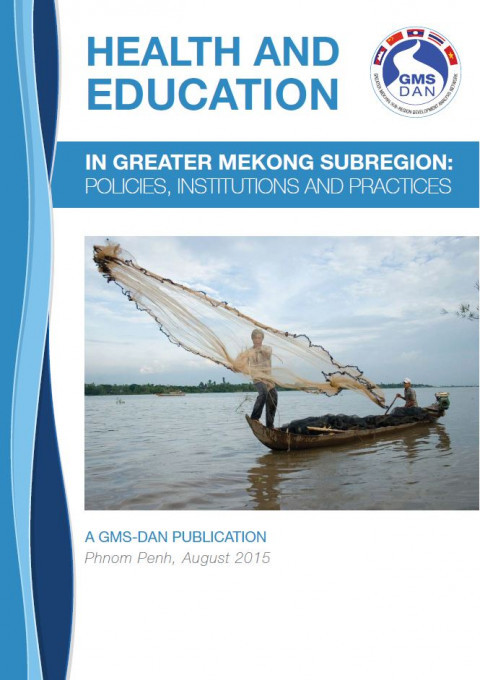 Health and Education in the Greater Mekong Subregion: Policies, Institutions and Practices Year of publication: 2015 Author: Greater Mekong Subregion Development Analysis Network Corporate author: Cambodia Development Resource Institute (CDRI) The focus of the paper is thus on the institutional frameworks and their effectiveness in policy-making and implementation in health and education and not so much on assessing whether these polices themselves are appropriate. In assessing institutional effectiveness, the paper does not purport to be comprehensive but selective in that it looks at only a few key issues: national, especially public, resource commitments; intra-governmental coordination, both vertical and horizontal; the roles of non-state actors, including private sector, civil society organisations and civil society more generally. Impact of Radical Islamisation of Education on Pakistani Society Year of publication: 2012 Author: Muhammad Safeer Awan This article traces the history, rather briefly, of how the national educational policies and curricula in social sciences and humanities have been changed to serve the jihadist ideology in Pakistani society. The crumbling social order in Pakistan is not only an indication of the bad governance but also the systemic inculcation of ideologies of hatred and extremism among a whole generation of schoolchildren and college graduates. It is a society where extremism, not only of the radical Islamists but also of the average person, is on the rise. Impact of Radical Islamisation of Educaion on Pakistani Society Year of publication: 2012 Author: Muhammad Safeer Awan Cet article revient brièvement sur la façon dont les politiques éducatives nationales et les programmes scolaires en sciences sociales et en sciences humaines ont été modifiés au profit de l'idéologie djihadiste présente au sein de la société pakistanaise. Au Pakistan, le délitement de l'ordre social n'est pas seulement révélateur de la mauvaise gouvernance, il dénonce également de l’enseignement systématique d'idéologies haineuses et extrémistes auprès d'une génération entière d'élèves et d'étudiants. C'est une société où l'extrémisme, pas seulement celui porté par les islamistes radicaux mais aussi celui provenant de n'importe quel individu moyen, ne cesse de croître.
  Global Citizenship in a Digital World (The MILID Yearbook, 2014) Year of publication: 2014 Author: Sherri Hope Culver | Paulette Kerr Corporate author: International Clearinghouse on Children, Youth and Media (Sweden) | NORDICOM | University of Gothenburg The theme of the 2014 Yearbook is Global Citizenship in a Digital World. Global citizenship assumes ease of participation in global spaces in which persons are media and information literate and are equipped with competencies and attitudes to deal with the multi-faceted nature of a mediated world in which information is no longer bound by space or time. The unprecedented access to and use of media and Internet technologies for communication and collaboration especially among youth, suggest that effective strategies must be found to enable active critical inquiry and effective media production. The proliferation of mediated spaces throughout education environments, as well as personal and professional environments, does not in itself guarantee that citizens will consider their role as global citizens as they create and consume media. This awareness must be cultivated, encouraged and taught.The 2014 MILID Yearbook brings together a range of reviewed articles, which articulate the theme of global citizenship from varied perspectives and regions of the world. The articles represent different expressions on media and information literacy from researchers and practitioners who offer bold new strategies, share research findings and best practices, and share musings and reflections.
 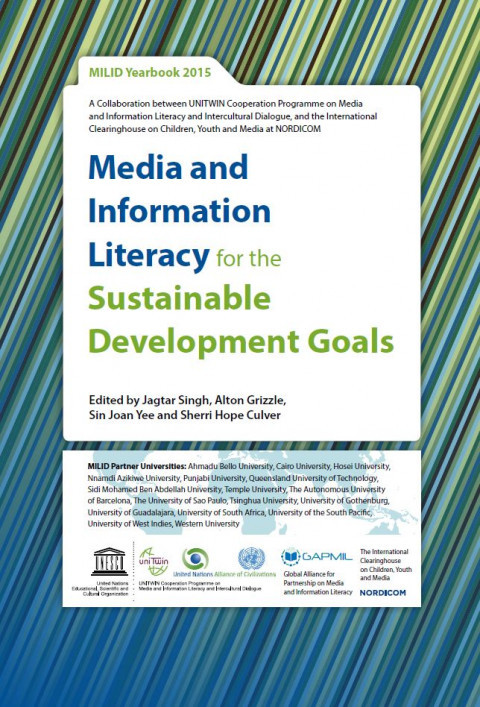 Media and Information Literacy for the Sustainable Development Goals (The MILID Yearbook 2015) Year of publication: 2015 Author: Jagtar Singh | Alton Grizzle | Sin Joan Yee | Sherri Hope Culver Corporate author: International Clearinghouse on Children, Youth and Media (Sweden) In the year 2000, governments and development partners all over the world agreed on eight global development targets called the Millennium Development Goals (MDGs). The year 2015 is a pivotal year as it marks the end of the period during which the MDGs were to be reached and the year in which new global development targets are to be set. These new targets are referred to as the Post-2015 Sustainable Development Goals (SDGs). This process is in its highest gear with ongoing debates and consultative meetings/initiatives globally both online and offline. While much progress has been made, achievement of the MDGs has been mixed across countries. The centrality of information and communication to development is irrefutable. The MILID Yearbook provides a case for media and information literacy (MIL) as a tool for open and inclusive sustainable development.The 2015 edition of the MILID Yearbook displays how media and information literacy can be helpful in facilitating progress and achievement of the sustainable development goals. It is sincerely hoped that the articles in this yearbook will go a long way to sensitize the stakeholders about the role and value of MIL in sustainable development of one and all across frontiers.
 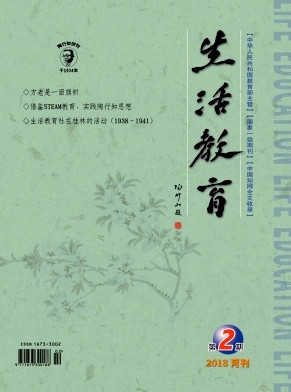 Cultivating "Global Citizens": Relevant Photographs of Current Curriculum Construction: Rational Thinking and Practical Exploration of International Understanding Education Year of publication: 2018 Author: Pan Guowei The international understanding of education has quietly emerged. Its purpose is to enable students to grow into “global citizens” and promote human harmony. Based on this aim, schools should make a difference in the experience of students experiencing foreign languages, so that students can gradually form the necessary qualities of “global citizenship” in expanding international knowledge, enhancing the common prosperity of the world, and improving the ability of foreign activities.
 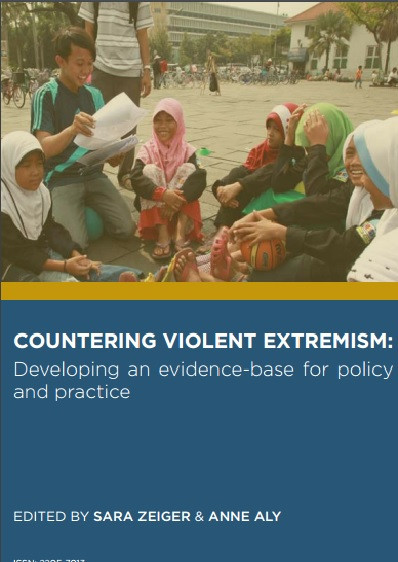 COUNTERING VIOLENT EXTREMISM: Developing an evidence-base for policy and practice Year of publication: 2015 Author: Sara Zeiger | Anne Aly Corporate author: Hedayah and Curtin University This volume reports on the range of papers presented at the Annual Countering Violent Extremism (CVE) Research Conference 2014 from 7-8 December 2014 in Abu Dhabi, United Arab Emirates. It presents two case studies on engaging with non-state actors within the community, namely families, community leaders and youth.