
Resources
Explore a wide range of valuable resources on GCED to deepen your understanding and enhance your research, advocacy, teaching, and learning.
1,727 Results found
 What is Global Citizenship? Year of publication: 2017 Corporate author: Spanish Agency for International Development Cooperation (AECID) | Spain. Ministry of Education, Culture and Sport Inteviews carried out to experts that participated in a debate regarding global citizenship during the V National Teachers' Meeting for development. Coordinated by AECID and MECD (Spain). ¿Qué es la ciudadanía global? Year of publication: 2017 Corporate author: Agencia Española de Cooperación Internacional para el Desarrollo (AECID) | Ministerio de Educación, Cultura y Deporte (España) Entrevistas realizadas a los expertos que colaboraron en la mesa de debate sobre Ciudadanía global llevada a cabo durante la realización del V Encuentro nacional de Docentes para el desarrollo: creando redes coordinada por la AECID y el MECD.
 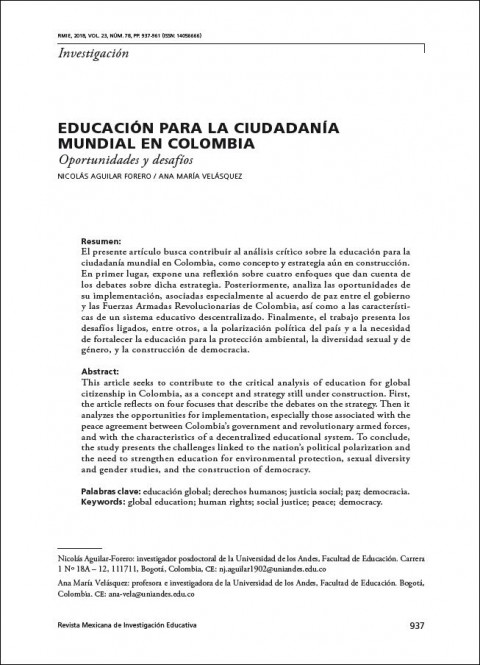 Education for Global Citizenship in Colombia: Opportunities and Challenges Year of publication: 2018 Author: Nicolás AguilAr Forero | Ana María Velásquez This article seeks to contribute to the critical analysis of education for global citizenship in Colombia, as a concept and strategy still under construction. First, the article reflects on four focuses that describe the debates on the strategy. Then it analyzes the opportunities for implementation, especially those associated with the peace agreement between Colombia’s government and revolutionary armed forces, and with the characteristics of a decentralized educational system. To conclude, the study presents the challenges linked to the nation’s political polarization and the need to strengthen education for environmental protection, sexual diversity and gender studies, and the construction of democracy. Educación para la ciudadanía mundial en Colombia. Oportunidades y desafíos Year of publication: 2018 Author: Nicolás AguilAr Forero | Ana María Velásquez El presente artículo busca contribuir al análisis crítico sobre la educación para la ciudadanía mundial en Colombia, como concepto y estrategia aún en construcción. En primer lugar, expone una reflexión sobre cuatro enfoques que dan cuenta de los debates sobre dicha estrategia. Posteriormente, analiza las oportunidades de su implementación, asociadas especialmente al acuerdo de paz entre el gobierno y las Fuerzas Armadas Revolucionarias de Colombia, así como a las característi- cas de un sistema educativo descentralizado. Finalmente, el trabajo presenta los desafíos ligados, entre otros, a la polarización política del país y a la necesidad de fortalecer la educación para la protección ambiental, la diversidad sexual y de género, y la construcción de democracia.
 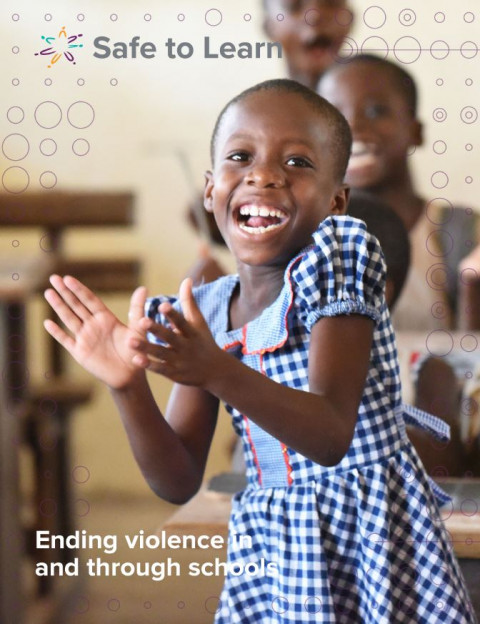 Safe to Learn: Ending Violence in and Through Schools Year of publication: 2019 Corporate author: End Violence Against Children Safe to Learn – is an initiative dedicated to ending violence in and through schools so children are free to learn, thrive and pursue their dreams. Safe to Learn presents an opportunity to unlock the multiple win of ending violence in schools, improving learning outcomes, better leveraging investments in education, and raising awareness and change attitudes towards violence against children. To date, 11 countries have endorsed Safe to Learn’s Call to Action, which sets out in high-level terms what needs to happen to end violence in schools. These countries include Cambodia, Georgia, Ghana, Honduras, Mexico, Moldova, Nepal, Sierra Leone, South Africa, South Sudan, Uganda and El Salvador.
 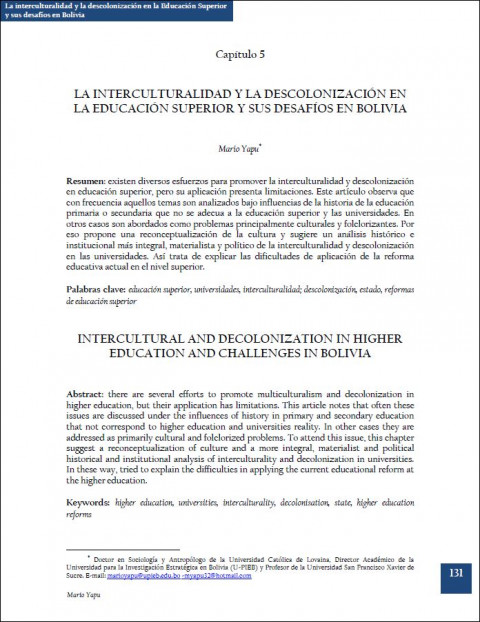 Intercultural and Decolonization in Higher Education and Challenges in Bolivia Year of publication: 2016 Author: Mario Yapu Corporate author: CELEI Chile There are several efforts to promote multiculturalism and decolonization in higher education, but their application has limitations. This article notes that often these issues are discussed under the influences of history in primary and secondary education that not correspond to higher education and universities reality. In other cases they are addressed as primarily cultural and folclorized problems. To attend this issue, this chapter suggest a reconceptualization of culture and a more integral, materialist and political historical and institutional analysis of interculturality and decolonization in universities. In these way, tried to explain the difficulties in applying the current educational reform at the higher education. La interculturalidad y la descolonización en la Educación Superior y sus desafíos en Bolivia Year of publication: 2016 Author: Mario Yapu Corporate author: CELEI Chile Existen diversos esfuerzos para promover la interculturalidad y descolonización en educación superior, pero su aplicación presenta limitaciones. Este artículo observa que con frecuencia aquellos temas son analizados bajo influencias de la historia de la educación primaria o secundaria que no se adecua a la educación superior y las universidades. En otros casos son abordados como problemas principalmente culturales y folclorizantes. Por eso propone una reconceptualización de la cultura y sugiere un análisis histórico e institucional más integral, materialista y político de la interculturalidad y descolonización en las universidades. Así trata de explicar las dificultades de aplicación de la reforma educativa actual en el nivel superior.
 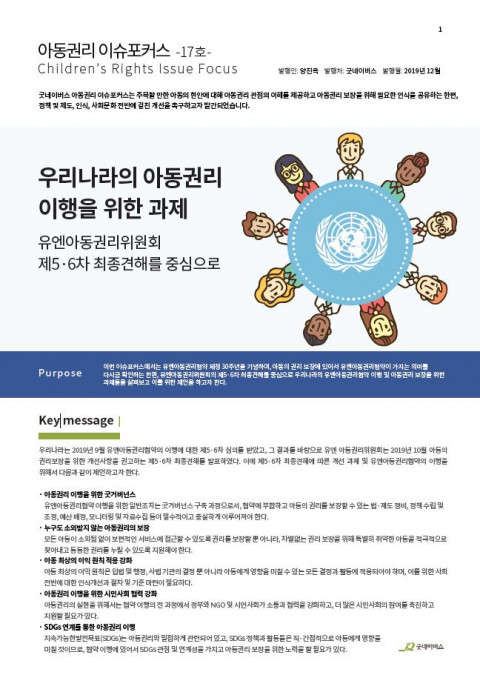 우리나라의 아동권리 이행을 위한 과제: 유엔아동권리위원회 제5·6차 최종견해를 중심으로 (아동권리 이슈포커스 17호) Year of publication: 2019 Corporate author: 굿네이버스 우리나라는 2019년 9월 유엔아동권리협약의 이행에 대한 제5·6차 심의를 받았고, 그 결과를 바탕으로 유엔 아동권리위원회는 2019년 10월 아동의 권리보장을 위한 개선사항을 권고하는 제5·6차 최종견해를 발표하였다.본 원고에서는 유엔아동권리협약 채택 30주년을 맞이하여, 유엔아동권리협약이 아동권리 보장에 있어서 가지는 의미가 무엇인지 확인하고 1991년 유엔아동권리협약 비준 이후 현재 우리나라의 아동권리 보장 수준은 어떠한지, 그리고 아동권리 보장을 위한 이행 과제와 고려점이 무엇인지 유엔아동권리위원회의 대한민국 제5·6차 최종견해를 중심으로 살펴보고자 한다.
  Éducation à la citoyenneté mondiale (ÉCM): Définitions, critiques et postures Year of publication: 2017 Author: Carine Nassif-Gouin | Philippe Tousignant Corporate author: Association québécoise des organismes de coopération internationale (AQOCI) La plupart des organismes de coopération internationale (OCI) se sont engagés dans un long processus d’information, de sensibilisation, d’engagement et d’éducation du public. Ce document cherche à soutenir la réflexion quant à l’approche émergente de l’éducation à la citoyenneté mondiale (ÉCM) et la question suivante : en quoi l’ÉCM est-elle nouvelle ou différent de l’engagement du public ou, par exemple, de l’éducation aux droits humains ? Les OCI mettent à la disposition des apprenants (stagiaires, coopérants, bénévoles, salariés, jeunes en milieu scolaire ou communautaire, entreprises, etc.) de l’information, des formations, des ateliers, des documents voire des trousses, et bien plus encore, qui favorisent l’autonomisation et la responsabilisation des individus. Ces activités sont souvent de nature pédagogique, mais elles peuvent également être d’une toute autre nature. Les OCI ont des pratiques riches et variées en éducation, formation, mobilisation, sensibilisation, etc. Certaines pratiques ont fait leurs preuves et nous encouragent à nous en inspirer ou encore à les adopter. Parmi les facteurs contribuant à la réussite de l’ÉCM, le choix de la définition, la qualité, la précision d’un cadre de références commun jouent un rôle crucial. Ainsi, ce guide tente d’offrir un certain nombre d’informations essentielles à la réalisation et la réussite de l’ÉCM. Du fait qu’il y ait très peu de littérature consacrée à l’éducation à la citoyenneté mondiale au Québec, nous nous sommes beaucoup tourné vers celle qui est issue d’autres pays et contextes. Ce document est conçu à l’intention de toutes les personnes qui souhaitent comprendre ce qu’est l’ÉCM pour en développer des activités et s’approprier ses définitions et contenus. Il faut reconnaître d’emblée que chaque organisme, chaque programme présente des spécificités et qu’il n’est pas souhaitable ou même possible d’uniformiser les guides ou de les rendre conformes à un modèle particulier. Il faut surtout garder à l’esprit que nous tenons à offrir à chacun des acteurs une information de qualité et préparer avec tout le soin nécessaire un guide clair et nourrissant. Ce guide est composé de six (6) parties et d’une note de synthèse. Ainsi, chacun pourra y puiser les informations et ressources ou encore les outils de références souhaités.
  Raising Awareness and Promoting Global Citizenship to Realize the 2030 Agenda Year of publication: 2019 Author: Laurel Wayne-Nixon | Tanya Wragg-Morris | Anjali Mishra | Dawson Markle | Shannon Kindornay Corporate author: British Columbia Council for International Cooperation (BCCIC) | Conseil canadien pour la coopération internationale (CCCI) Socializing the 2030 Agenda for Sustainable Development among citizens, parliamentarians, government institutions, civil society, academia, the private sector, trade unions and others provides a basis for stakeholders to identify their priorities and contribute to sustainable development as global citizens. Based on a review of good practices emerging from around the world, this policy brief offers recommendations on how governments can raise awareness of the 2030 Agenda and support global citizenship.