
Resources
Explore a wide range of valuable resources on GCED to deepen your understanding and enhance your research, advocacy, teaching, and learning.
2,199 Results found
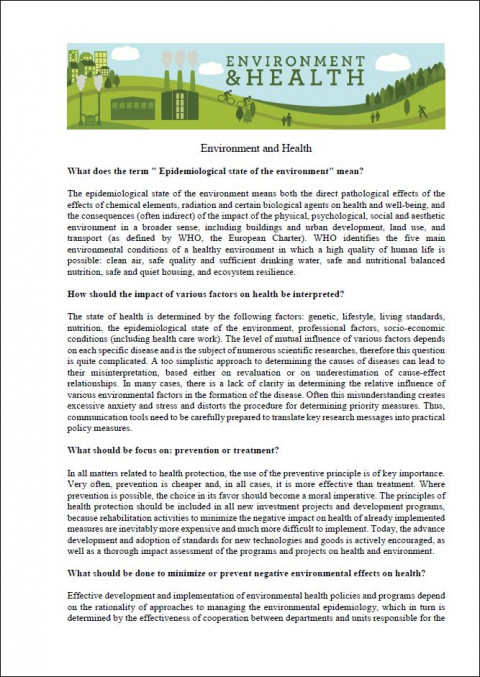 Серия информационных публикаций в рамках программы "окружающая среда и здоровье" Year of publication: 2018 Author: Irina Bekmirzaeva Corporate author: Regional Environmental Centre for Central Asia (CAREC) РЭЦЦА представляет серию публикаций, подготовленную в рамках Программы «Окружающая среда и здоровье», целью которой является информирование и повышение осведомленности и знаний по вопросам взаимосвязи и взаимозависимости экологии и медицины. Данные публикации разрабатываются, в первую очередь, для стран Центральной Азии. Они являются ответом на многочисленные запросы представителей стран ЦА, интересующихся вопросами охраны окружающей среды и здоровья в регионе. Стиль, язык и терминология, а также детальность информации были подобраны специально для широкой категории читателей. Вся представленная в публикациях информация базируется на экспертизе и опыте РЭЦЦА и данных Всемирной организации здравоохранения (ВОЗ), Программы развития ООН (ПРООН) и Программы ООН по окружающей среде (ЮНЕП) и других международных организаций.
 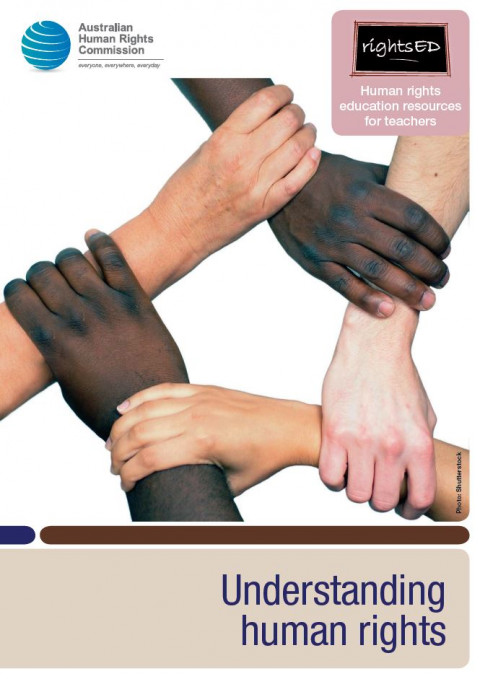 Understanding Human Rights Year of publication: 2010 Corporate author: Australian Human Rights Commission Human rights are basic to humanity. They apply to all people everywhere. An understanding of human rights is an important part of our individual status as human beings and of our collective status as members of the global community of humankind.To understand how human rights affect us in our daily lives and to acknowledge our responsibilities in recognising the need to balance those rights with the rights of others, we require an understanding of what human rights are.So what are human rights? Where did they come from? How do they impact on humanity? How do they affect me?
  Between Colonial Heritage and Political Autonomy. Comparing the Experience of Australian, American and Canadian Aboriginal Peoples in the Turmoil of Welfare State Reform Year of publication: 2016 Author: Martin Papillon Corporate author: Lien social et Politiques Long excluded, then victims of forced assimilation, aboriginal peoples are now evaluating the conditions of their belonging to and participation in citizenship regimes in these three former colonies. The processes of welfare state restructuring may influence the dynamic of identity claims of aboriginal peoples, by modifying the parameters of social citizenship and the relations that aboriginal peoples have with the state. These reforms lean, on the one hand, towards integrated policy with targeted programmes and, on the other hand, towards greater local autonomy in programme management. The post-war citizenship regime in contrast favoured a uniform relationship between citizens and the state, thereby setting up a contradiction between the terms of the citizenship regime and maintenance of a distinct legal regime for aboriginal peoples. The current model seems less likely to constitute a block to recognition of multiplicity and differentiation. Entre l’héritage colonial et la recherche d’autonomie politique: les peuples autochtones dans la tourmente des réformes de l’État-providence. Une comparaison de l’expérience australienne, américaine et canadienne Year of publication: 2016 Author: Martin Papillon Corporate author: Lien social et Politiques Longtemps exclus, puis victimes de politiques d’assimilation forcée, les peuples autochtones remettent aujourd’hui en question les conditions de leur appartenance et de leur participation au régime de citoyenneté des États issus de la colonisation européenne. Le processus de restructuration de l’État-providence pourrait influencer la dynamique des revendications identitaires autochtones, en modifiant les paramètres de la citoyenneté sociale et la relation des peuples autochtones avec l’État. On tend aujourd’hui, d’une part, à l’intégration programmatique accompagnée de mesures ciblées et, d’autre part, à une plus grande autonomie locale dans la gestion de ces programmes. Le régime de citoyenneté d’après-guerre favorisait plutôt une uniformisation du rapport entre les citoyens et l’État, et donc posait en contradiction l’intégration à ce régime et le maintien d’un régime statutaire distinct pour les autochtones. Le modèle actuel peut ainsi paraître moins réfractaire à la multiplicité et à la différenciation.
  [DIALOG #15] Information and methodological bulletin on multilingual and multicultural education in Central Asia Year of publication: 2018 Corporate author: United Nations Children's Fund (UNICEF) | Organization for Security and Co-operation in Europe (OSCE) The website and the informational and methodological bulletin "Dialogue" was created in order to assist educational organizations of the countries of Central Asia in the implementation of multilingual education programs. The website is supported by the Central Asian Education Program of the OSCE HCNM, the UN Children's Fund UNICEF and the Center for Social Integration.The bulletin is addressed to teachers and school leaders, representatives of education authorities, researchers and experts in the field of education. The bulletin is intended to quarterly inform about initiatives and significant events in the field of multilingual and multicultural education in Central Asia and around the world. In each issue of the bulletin you can find a variety of materials: interviews with experts, a review of the experience of multilingual schools, methodological articles and lesson development, announcements of events and publications, links to Internet resources. [ Диалог #15 ] Информационно-методический вестник по многоязычному и поликультурному образованию в странах Центральной Азии Year of publication: 2018 Corporate author: Организация по безопасности и сотрудничеству в Европе (ОБСЕ) | United Nations Children's Fund (UNICEF) Сайт и информационно-методический вестник "Диалог" создан в целях оказания содействия образовательным организациям стран Центральной Азии в реализации программ многоязычного образования. Работу сайта поддерживают Центральноазиатская образовательная программа ВКНМ ОБСЕ, Детский фонд ООН ЮНИСЕФ и Центр социальной интеграции.Вестник адресован преподавателям и руководителям школ, представителям органов управления образованием, исследователям и экспертам в сфере образования. Вестник призван ежеквартально информировать об инициативах и значимых событиях в сфере многоязычного и поликультурного образования в Центральной Азии и по всему миру. В каждом выпуске вестника можно найти разнообразные материалы: интервью с экспертами, обзор опыта многоязычных школ, методические статьи и разработки уроков, анонсы мероприятий и публикаций, ссылки на интернет-ресурсы.
  [DIALOG #13] Information and methodological bulletin on multilingual and multicultural education in Central Asia Year of publication: 2017 Corporate author: Организация по безопасности и сотрудничеству в Европе (ОБСЕ) | United Nations Children's Fund (UNICEF) The website and the informational and methodological bulletin "Dialogue" was created in order to assist educational organizations of the countries of Central Asia in the implementation of multilingual education programs. The website is supported by the Central Asian Education Program of the OSCE HCNM, the UN Children's Fund UNICEF and the Center for Social Integration.The bulletin is addressed to teachers and school leaders, representatives of education authorities, researchers and experts in the field of education. The bulletin is intended to quarterly inform about initiatives and significant events in the field of multilingual and multicultural education in Central Asia and around the world. In each issue of the bulletin you can find a variety of materials: interviews with experts, a review of the experience of multilingual schools, methodological articles and lesson development, announcements of events and publications, links to Internet resources. [ Диалог #13 ] Информационно-методический вестник по многоязычному и поликультурному образованию в странах Центральной Азии Year of publication: 2017 Corporate author: Организация по безопасности и сотрудничеству в Европе (ОБСЕ) | United Nations Children's Fund (UNICEF) Сайт и информационно-методический вестник "Диалог" создан в целях оказания содействия образовательным организациям стран Центральной Азии в реализации программ многоязычного образования. Работу сайта поддерживают Центральноазиатская образовательная программа ВКНМ ОБСЕ, Детский фонд ООН ЮНИСЕФ и Центр социальной интеграции.Вестник адресован преподавателям и руководителям школ, представителям органов управления образованием, исследователям и экспертам в сфере образования. Вестник призван ежеквартально информировать об инициативах и значимых событиях в сфере многоязычного и поликультурного образования в Центральной Азии и по всему миру. В каждом выпуске вестника можно найти разнообразные материалы: интервью с экспертами, обзор опыта многоязычных школ, методические статьи и разработки уроков, анонсы мероприятий и публикаций, ссылки на интернет-ресурсы.
  当代世界公民教育的理念考察 Year of publication: 2003 Author: Zhao Hui 为了把握当代世界公民教育的理念,首先应该在民族主义和民主主义的紧张关系中把握公民教育的基本价值趋向,其次要把握在全球化背景下民族主义的新动向及其对公民教育的影响,最后要透过民主主义中自由主义(新自由主义)与共和主义(社群主义)的论争来把握公民教育理念的新走向。
 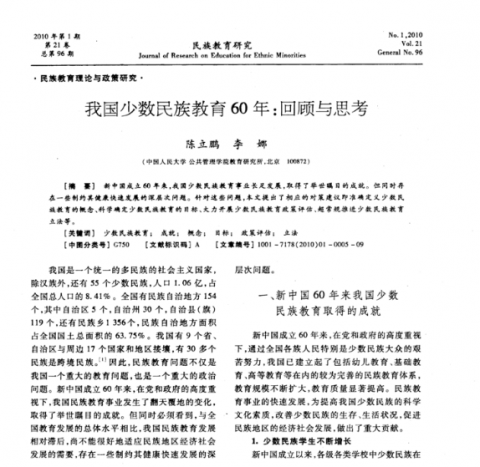 Sixty Years of Education of Ethnic Minorities in China: Retrospect and Reflection Year of publication: 2010 Author: Chen Lipeng, Li Na In the sixty years after the founding of China, great development has been made in eductaion of ethnic minorities in China with outstanding achievements. But at the same time, there still exists some problems restricting its healthy and rapid development. In this paper some suggestions have been put forward to help solve these problems. They are to make an accurate definition of education of ethnic minorities, set up its goal in a scientific way, carry out its policy assessment, and promote its legislation in a hyper normal way.