
Resources
Explore a wide range of valuable resources on GCED to deepen your understanding and enhance your research, advocacy, teaching, and learning.
1,727 Results found
 General Guidelines for the Implementation of the Peace Class in Preschool, Elementary and Middle School in Colombia Year of publication: 2016 Author: Enrique Chaux | Ana María Velásquez Corporate author: Colombia. Ministerio de Educación Nacional This document presents the general guidelines for educational communities in Colombia to carry out their peace education projects within the framework of the Peace Law. Orientaciones generales para la implementación de la cátedra de la paz: En los establecimientos educativos de preescolar, básica y media de colombia Year of publication: 2016 Author: Enrique Chaux | Ana María Velásquez Corporate author: Colombia. Ministerio de Educación Nacional En este documento se presentan las orientaciones generales para que las comunidades educativas de Colombia puedan llevar a cabo sus proyectos de educación para la paz en el marco de la cátedra para la paz.
  Philippine Education for All 2015 review report Year of publication: 2015 A country's vision of inclusive growth and development entails investment in human capital, particularly through the provision of quality basic education, competitive technical vocational skills training, and relevant and responsive higher education as stated in the Philippine Development Plan 2011-2016. The current administration has placed a high regard for education and has pushed for educational reforms that promote inclusive education especially for the marginalized. Education, being the priority of the government, has produced active public-private partnerhsips over the years both at the national and the school levels. The fruits of the past and the current EFA-related programs and projects resulted in increased performance of the country in most of the EFA indicators. However, at this time, which require greater efforts to accelerate and reach national EFA targets by 2015. L'éducation philippine pour tous 2015 Rapport d'examen Year of publication: 2015 La vision d'un pays de la croissance et le développement inclusif implique l'investissement dans le capital humain, en particulier grâce à la fourniture de l'éducation de base de qualité, la formation technique concurrentielle des compétences professionnelles et pertinentes, et l'enseignement supérieur répondant comme indiqué dans le Plan de développement 2011-2016. L'administration actuelle a placé une grande estime pour l'éducation et a poussé des réformes éducatives qui favorisent l'éducation inclusive en particulier pour les groupes marginalisés. L'éducation, étant la priorité du gouvernement, a produit partnerhsips public-privé actifs au cours des années, tant au niveau de l'école nationale et. Les fruits du passé et les programmes EPT liés actuels et les projets ont donné lieu à une performance accrue du pays dans la plupart des indicateurs de l'EPT. Cependant, à ce moment, ce qui nécessite davantage d'efforts pour accélérer et atteindre les objectifs de l'EPT nationaux d'ici à 2015.
  School-related violence and bullying on the basis of Sexual Orientation and Gender Identity or Expression (SOGIE): synthesis report on China, the Philippines, Thailand and Viet Nam Year of publication: 2018 Corporate author: UNESCO Bangkok School related violence and bullying is a problem in all countries. UNESCO is committed to ensuring that all children and young people have access to safe, inclusive, health-promoting learning environments as part of its strategy on education for health and well-being. This synthesis report on school related violence and bullying on the basis of Sexual Orientation and Gender Identity or Expression (SOGIE), covering China, the Philippines, Thailand and Viet Nam, was developed to broaden awareness and understanding about this issue, while also identifying best practices and policies. It also aims to mobilize support for advocacy among educators, research institutions, policy makers and activists at the national and regional levels.
 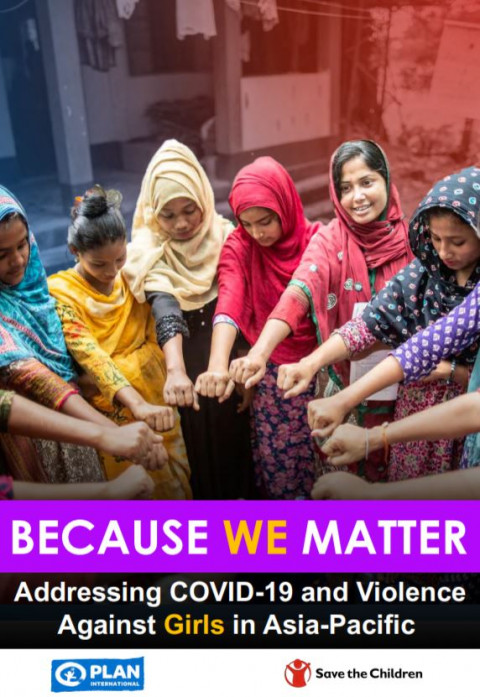 Because We Matter: Addressing COVID-19 and Violence Against Girls in Asia-Pacific Year of publication: 2020 Corporate author: Save the Children | Plan International This thematic policy brief aims to seek and secure commitment from regional and national leaders to urgently prioritize and invest consistently in the protection of girls, who are disproportionately exposed to multitude forms of violence and their devastating consequences. It provides evidence and raises concerns of girls’ vulnerability to combined and complex risks that are further intensified by the COVID-19 pandemic.This brief is primarily intended for regional policy-makers and duty-bearers responsible for regulating, planning and resourcing protection of There is no definition of what it means to be a girl. It offers a set of recommendations to guide policy and investments across the Asia Pacific region to ensure gender-responsive, effective and well-resourced measures to protect all children, and particularly girls.
  Putting Gender at the Forefront of the COVID-19 Education Response: Common Messaging Framework Year of publication: 2020 Corporate author: United Nations Girls' Education Initiative (UNGEI) Nationwide school closures as part of measures to prevent the spread of COVID-19 have disrupted the education of an entire generation of children and youth. Previous health emergencies demonstrate that girls are disproportionately affected, with the effects of gender inequality and unequal power structures exacerbated in times of crisis. This Common Messaging Framework, developed with UNGEI partner and ally organisations, can be used as an advocacy tool to leverage the power of collective action to position gender at the forefront of the COVID-19 response and enhance coherence in advocacy and communications efforts. Mettre le genre au premier plan de la réponse éducative au COVID-19: Cadre de messagerie commun Year of publication: 2020 Corporate author: United Nations Girls' Education Initiative (UNGEI) Les fermetures d’écoles à l’échelle nationale dans le cadre des mesures visant à prévenir la propagation du COVID-19 ont perturbé l’éducation de toute une génération d’enfants et de jeunes. Les urgences sanitaires antérieures démontrent que les filles sont touchées de manière disproportionnée, les effets de l’inégalité entre les sexes et des structures de pouvoir inégales étant exacerbés en temps de crise.En tant que partenariat mondial dédié à la promotion de l’égalité des sexes dans et à travers l’éducation, nous devons tirer parti de la puissance de l’action collective pour placer le genre au premier plan de la réponse COVID-19 et renforcer la cohérence dans le plaidoyer et la communication entre les organisations partenaires et alliées.Cette initiative de messagerie commune représente une opportunité stratégique pour favoriser le dialogue et attirer l’attention sur les impacts sexospécifiques de COVID-19, plaider en faveur de stratégies pour répondre aux dimensions sexospécifiques de cette crise et envisager la réouverture en toute sécurité des écoles à travers une perspective sexospécifique. Poniendo el género en primer plano de la respuesta educativa ante el COVID-19: Marco común de la mensajería Year of publication: 2020 Corporate author: United Nations Girls' Education Initiative (UNGEI) El cierre de las escuelas a nivel nacional como parte de las medidas para prevenir el contagio del COVID-19 ha interrumpido la educación de toda una generación de niños, niñas y jóvenes. Las emergencias de salud anteriores han demostrado que las niñas se ven afectadas de manera desproporcionada con los efectos de la desigualdad de género y estructuras de poder desiguales exacerbadas en tiempos de crisis.Como asociación mundial dedicada a avanzar la igualdad de género en y a través de la educación, debemos ejercer el poder de la acción colectiva para posicionar al género en primer plano en la respuesta ante el COVID-19 y aumentar la coherencia en la defensa, promoción y comunicación entre las organizaciones socias y aliadas.Esta iniciativa común de mensajería representa una oportunidad estratégica para promover el diálogo y llamar la atención sobre los impactos de género del COVID-19, abogar por estrategias que respondan a las dimensiones de género de esta crisis y ver hacia una futura reapertura de las escuelas a través de una lente de género.
  Advocacy for Impact: Gender and Education Year of publication: 2022 Author: Justine Brice | Elodie Gnonlonfoun | Marina Gutiérrez García de Viedma | Chattalie Jayatilaka Corporate author: United Nations Girls' Education Initiative (UNGEI) There has been an urgent need to include a gender-inclusive, anti-racist and decolonial lens in advocacy strategies in recent years. In the rare circumstances these lenses were applied, they were not effectively utilised when designing and implementing an advocacy campaign regarding education. Often, an intersectional approach was not used to consider context-specific power dynamics impacting girls’ ability to access education. The first objective of this report is to understand the “best practices to design and implement advocacy strategies that are gender-inclusive and anti-racist in the development sector, with a focus on gender and education”. The second objective was to examine the evidence regarding the effectiveness and impact of different advocacy strategies. Thirdly, the study aimed to understand the “best tools and approaches to measure advocacy impact." This research was conducted by an LSE student research team exploring gender-inclusive and anti-racist advocacy strategies.