
Resources
Explore a wide range of valuable resources on GCED to deepen your understanding and enhance your research, advocacy, teaching, and learning.
2,199 Results found
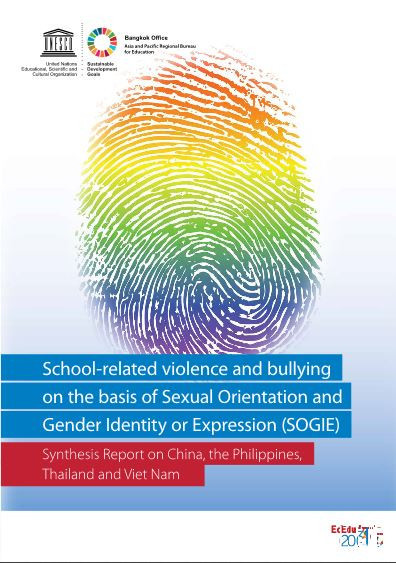 School-related violence and bullying on the basis of Sexual Orientation and Gender Identity or Expression (SOGIE) - Synthesis Report on China, the Philippines, Thailand and VietNam Year of publication: 2018 Corporate author: UNESCO Bangkok School related violence and bullying is a problem in all countries. UNESCO is committed to ensuring that all children and young people have access to safe, inclusive, health-promoting learning environments as part of its strategy on education for health and well-being. This synthesis report on school related violence and bullying on the basis of Sexual Orientation and Gender Identity or Expression (SOGIE), covering China, the Philippines, Thailand and Viet Nam, was developed to broaden awareness and understanding about this issue, while also identifying best practices and policies. It also aims to mobilize support for advocacy among educators, research institutions, policy makers and activists at the national and regional levels.
 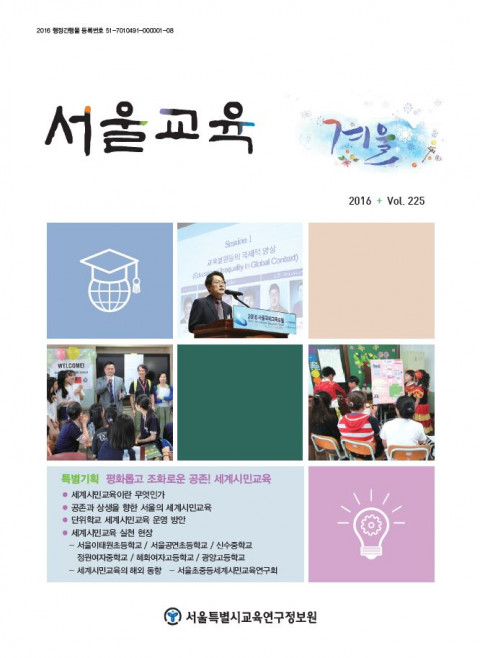 서울교육 2016년 겨울호 (제58권 통권 225호) Year of publication: 2016 Corporate author: 서울특별시교육청 교육연구정보원 권두칼럼:혁신미래교육으로서의 세계시민교육특별기획: 평화롭고 조화로운 공존! 세계시민교육세계시민교육이란 무엇인가공존과 상생을 향한 서울의 세계시민교육단위학교 세계시민교육 운영 방안세계시민교육 실천 현장 해외교육:세계시민교육의 해외 동향 출처 URL:http://www.serii.re.kr/photo/viw.do?method=getView&mcode=S029a&seq=921
  서울교육 2018년 겨울호 (제60권 통권 233호) Year of publication: 2018 Corporate author: 서울특별시교육청 교육연구정보원 권두칼럼:통일교육 패러다임 전환 키워드: #평화특별기획:평화시대를 여는 새로운 통일교육 – 평화와 민주시민교육을 담는 통일교육으로 –화해로 나아가는 평화와 공존의 통일교육한반도 대변혁기의 학교 평화·통일교육 방향 – 통일교육연구학교 운영사례를 중심으로 –해외교육:독일 통일교육이 한국 통일교육에 주는 시사점통일독일의 동독청소년 사회통합을 통해 보는 21세기 통일한국의 청소년 사회통합 정책연구:평화에 대한 비판적 공부: 평화학 출처 URL:http://www.serii.re.kr/photo/viw.do?method=getView&mcode=S029a&seq=1081
  International standards for the protection of human rights and their implementation in court decisions. Year of publication: 2016 Author: M. A. Sarsembaev This manual is devoted to the disclosure of the topic of international standards for the protection of human rights and their implementation in Kazakhstan. Here are offered for consideration the types of international standards for the protection of human rights and the means of their implementation. The types of these international standards include universal and regional, mandatory and recommendatory international human rights standards. Международные стандарты защиты прав человека и их имплементация в судебных решениях. Year of publication: 2016 Author: M. A. Sarsembaev Данная книга-пособие посвящена раскрытию темы о международных стандартах защиты прав человека и их имплементации в Казахстане. Здесь предложены к рассмотрению виды международных стандартов защиты прав человека и средства их осуществления. К видам этих международных стандартов отнесены универсальные и региональные, обязательные и рекомендательные международные стандарты прав человека.
 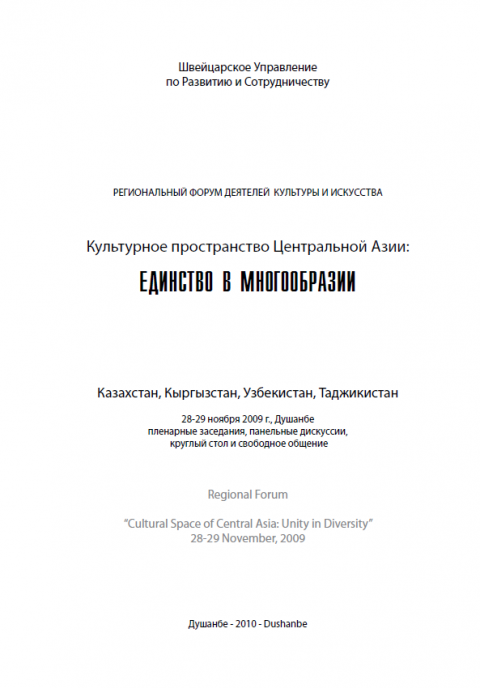 Cultural space of Central Asia: unity in diversity Year of publication: 2010 Corporate author: Swiss Agency for Development and Cooperation (SDC) The report is the proceedings of the "Cultural space of Central Asia: unity in diversity" regional forum held in Dushanbe, Tajikistan in 2010. Культурное пространство Центральной Азии: единство в многообразии Year of publication: 2010 Corporate author: Swiss Agency for Development and Cooperation (SDC) Доклад представляет собой материалы регионального форума «Культурное пространство Центральной Азии: единство в разнообразии», состоявшегося в Душанбе, Таджикистан в 2010 году.
 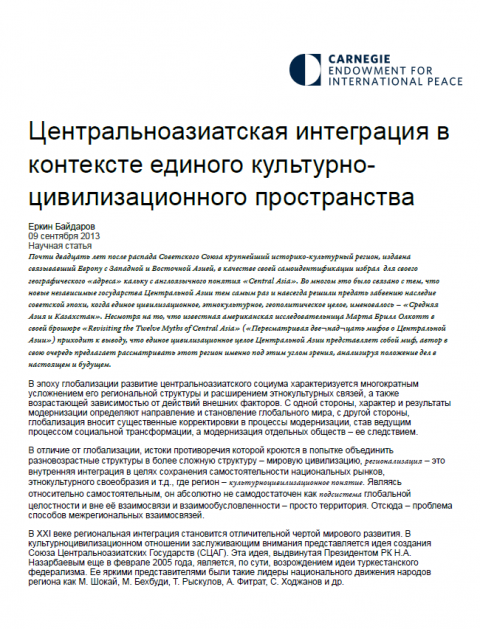 Central Asian integration in the context of a single cultural and civilizational space Year of publication: 2013 Author: Erkin Baydarov The article discusses the prospects for regional integration in Central Asia, the need to understand the unity of the historical, cultural and civilizational heritage of the region. Центральноазиатская интеграция в контексте единого культурно-цивилизационного пространства Year of publication: 2013 Author: Erkin Baydarov В статье рассматривается перспективы региональной интеграции в Центральной Азии, необходимость понимания единства исторического, культурного и цивилизационного наследия региона.
  The role of the education system in preventing manifestations of religious extremism in Central Asia Year of publication: 2013 Author: A. Abdirayymova | R. Zharkynbaeva The article discusses the role of the education system in preventing the manifestation of religious extremism through the prism of social, economic and cultural development.