
Resources
Explore a wide range of valuable resources on GCED to deepen your understanding and enhance your research, advocacy, teaching, and learning.
2,781 Results found
 The influence of the European Union on Central Asia: review, analysis and forecast Year of publication: 2017 Author: V. Paramonov | A. Strokov | Z. Abduganieva The book is intended for government officials and representatives of large businesses, analysts and experts, scientists and teachers of higher educational institutions - in general, all those who are professionally interested in Central Asia are studying the European Union and his policies. The book is the result of a study conducted under the guidance of VVParamonova in the period 2014-2016, built in the form of an analytical report.In this article, we consider the legal aspects of combating extremism in Central Asia, as well as educational and ideological components to combat this phenomenon and cooperation of all three republics with international organizations and other countries of the world in the fight against extremism. Влияние Европейского Союза на Центральную Азию: обзор, анализ и прогноз Year of publication: 2017 Author: V. Paramonov | A. Strokov | Z. Abduganieva Книга предназначена для государственных деятелей и редставителей крупного бизнеса, аналитиков и экспертов, ученых и преподавателей высших учебных заведений – в целом всех тех, кто профессионально интересуется Центральной Азией, занимается изучением Евросоюза и его политики. Книга является результатом исследования, роведенного под руководством В.В.Парамонова в период 2014–2016 годов, построена в форме аналитического доклада.
  Dialogue of cultures in integration processes in Central Asia Year of publication: 2017 Author: S. Kalimova The article discusses topical problems of intercultural dialogue in the countries of Central Asia. The overall place is given to Kyrgyzstan as a multientic and multicultural state in the post-Soviet space, which in the process of cultural integration with neighbors and friendly countries of the former Soviet Union. Диалог культур в интеграционных процессах в Центральной Азии Year of publication: 2017 Author: S. Kalimova В этой статье рассматриваются актуальные проблемы межкультурного диалога в странах Центральной Азии. Особое место отводится Кыргызстану как полиэтническому и поликультурному государству на постсоветском пространстве, у которого, по мнению автора, большие возможности участия в процессе культурной интеграции с соседними и дружественными странами бывшего советского государства.
 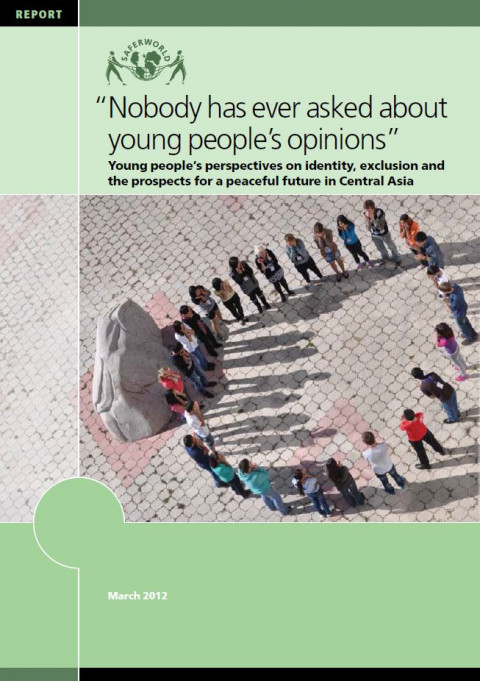 “Nobody Has Ever Asked About Young People’s Opinions”: Young People’s Perspectives on Identity, Exclusion and the Prospects for a Peaceful Future in Central Asia Year of publication: 2012 Corporate author: Saferworld This report offers a number of recommendations for the governments of Central Asian countries, as well as for international donor organizations that provide financial assistance to these states. Recommendations include suggestions priorities and approaches related to institutional and state construction; proposals on creating favorable conditions for enhancing youth participation in political processes; suggestions on how to instill in young people the skills necessary to participate in democratic processes; how to strengthen social unity through building intercommunal dialogue and intergenerational dialogue; as well as how to fight extremism. «Никто и никогда не спрашивал мнения молодежи»: Взгляды молодых людей на вопросы идентичности, изоляции и перспектив мирного будущего в Центральной Азии Year of publication: 2012 Corporate author: Saferworld Данный отчет предлагает ряд рекомендаций для правительств стран Центральной Азии, а также для международных донорских организаций, которые предоставляют финансовую помощь этим государствам. Рекомендации включают предложения приоритетов и подходов, связанных с институциональным и государственным строительством; предложения по вопросам создания благоприятних условий для активизации участия молодежи в политических процессах; предложения как привить молодым людям навыки, необходимые для участия в демократических процессах; как усилить социальное единство через построение межобщинного диалога и диалога между поколениями; а также как бороться с экстремизмом.
 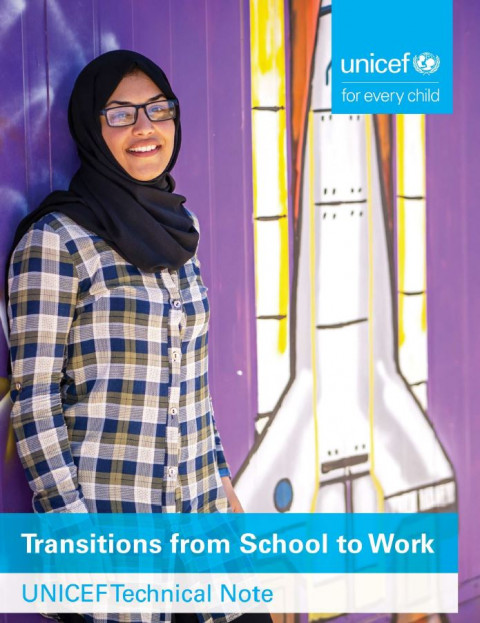 Transitions from School to Work: UNICEF Technical Note Year of publication: 2019 Corporate author: United Nations Children's Fund (UNICEF) This report provides guidance on ways that UNICEF can support governments and partners to help adolescents to make a smooth transition from school to decent work. To prepare them for life, work, citizenship and life-long learning, UNICEF encourages governments and partners to expand access to learning and skills development for all children and adolescents – from pre-primary to upper-secondary age, and particularly for the most marginalized. UNICEF further advocates strengthening systems to enable them to develop a breadth of skills across the life course and through multiple learning pathways, such as formal, non-formal, on the job and community based.
 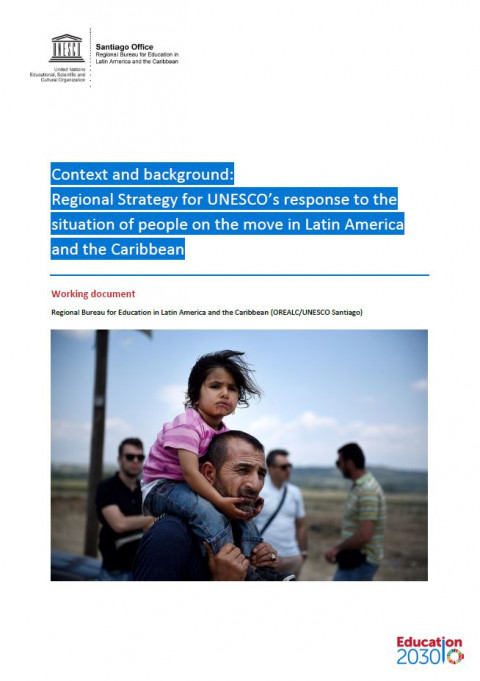 Context and Background: Regional Strategy for UNESCO’s Response to the Situation of People on the Move in Latin America and the Caribbean Year of publication: 2019 Corporate author: UNESCO Santiago The UNESCO offices in Latin America and the Caribbean, under the coordination of the Regional Bureau for Education in Latin America and the Caribbean OREALC/UNESCO Santiago, have proposed the development of a regional strategy that provides a response from UNESCO based on the needs of the region’s countries for guaranteeing the right to education of migrants, refugees, asylum seekers and returnees. The purpose of this document is to present key information for the development of the regional strategy. It reviews a set of information that contextualizes human mobility in Latin America and the Caribbean, recognizing contemporary trends, identifying their driving factors and describing the main demographic qualities that characterize them.The authors then address the needs for protection of individuals in the context of mobility in the region, particularly those associated with the exercise of their fundamental rights and processes of inclusion in social protection systems in the destination society. They then present the right to education as a multiplier right in contexts of human mobility, reviewing the main obstacles faced by migrants, refugees, asylum seekers and returnees. Finally, the text presents a discussion of UNESCO’s role in this context based on the review of international regulatory instruments and frameworks, institutional frameworks, the work agenda at the regional level and the migratory institutional structure in Latin America and the Caribbean. Antecedentes para una estrategia regional de respuesta de la UNESCO a la situación de personas en contexto de movilidad en América Latina y el Caribe: documento de trabajo Year of publication: 2019 Corporate author: UNESCO Santiago Las oficinas de la UNESCO en América Latina y el Caribe, bajo la coordinación de la Oficina Regional de Educación OREALC/UNESCO Santiago, se han propuesto el desarrollo de una estrategia regional que estructure una respuesta de la UNESCO en función de las necesidades de los países de la región para garantizar el derecho a la educación de personas migrantes, refugiados, solicitantes de asilo y retornados. El presente documento tiene como objetivo presentar antecedentes relevantes para la elaboración de la estrategia regional. En él, se revisa un conjunto de antecedentes que contextualizan la movilidad humana en América Latina y el Caribe, reconociendo tendencias contemporáneas, identificando los factores que la impulsan y revisando las principales cualidades demográficas que la caracterizan. Posteriormente, se abordan las necesidades de protección de las personas en contexto de movilidad en la región, especialmente aquellas asociadas al ejercicio de sus derechos fundamentales y a los procesos de inclusión a los sistemas de protección social en la sociedad receptora. Luego, se presenta el derecho a la educación como derecho multiplicador en los contextos de movilidad humana, revisando los principales obstáculos para su realización que deben enfrentar las personas migrantes, refugiadas, solicitantes de asilo y retornadas. Finalmente, se discute el rol de la UNESCO en este escenario a partir de la revisión de los instrumentos y marcos normativos a nivel internacional, marcos institucionales, la agenda de trabajo a nivel regional y la institucionalidad migratoria de América Latina y el Caribe.
 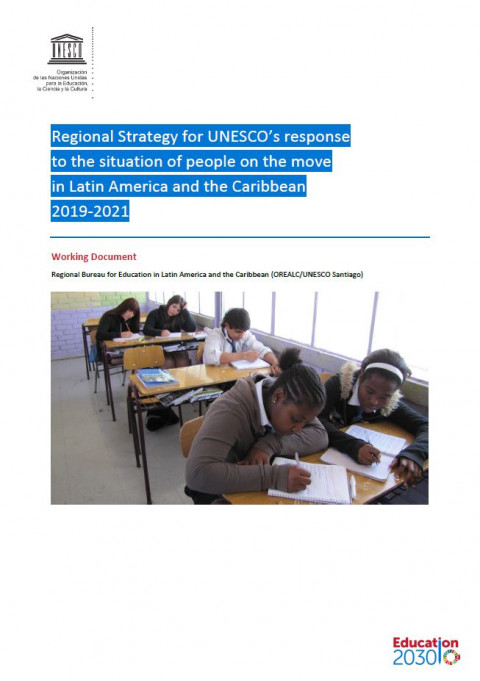 Regional Strategy for UNESCO’s Response to the Situation of People on the Move in Latin America and the Caribbean 2019-2021: Working Document Year of publication: 2019 Corporate author: UNESCO Santiago This document introduces the three priority strategic areas, defined in coherence with those analyzed in the document Background for a Regional Strategy of UNESCO, as well as the components and initiatives of each of them. In addition, the following strategic dimensions are established: coordination and implementation mechanisms, advocacy and communications, planning and financing, and finally, the consolidation of resources, tools and existing publications of UNESCO, a product of the aforementioned intersectoral consultation process.