
Resources
Explore a wide range of valuable resources on GCED to deepen your understanding and enhance your research, advocacy, teaching, and learning.
55 Results found
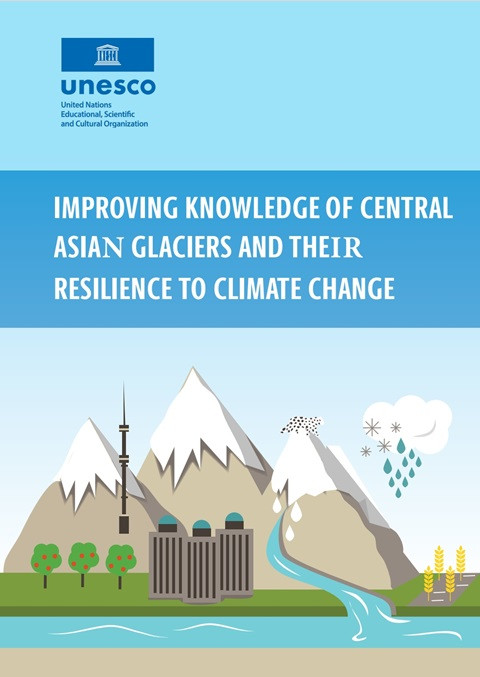 Improving Knowledge of Central Asian Glaciers and Their Resilience to Climate Change Year of publication: 2022 Corporate author: UNESCO Almaty | Global Environment Facility (GEF) | United Nations Development Programme (UNDP) The planned project under the Global Environment Facility and jointly with the UN Development Programme aims to improve the knowledge and monitoring of all key components of the cryosphere: glaciers, snow and permafrost, and support practical climate adaptation measures in the five nations of Central Asia. Paзвитие знаний о ледниках центральной азии и меры адаптации к изменению климата Year of publication: 2022 Corporate author: UNESCO Almaty | Global Environment Facility (GEF) | United Nations Development Programme (UNDP) Планируемый проект в рамках Глобального Экологического Фонда и совместно с Программой Развития ООН направлен на улучшение знаний и мониторинга всех ключевых компонентов криосферы: ледников, снега и вечной мерзлоты, а также на поддержку практических мер по адаптации к изменению климата в пяти странах Центральной Азии.
  Five States and / or One Region? : National and Regional Dualism in Central Asia Year of publication: 2015 Author: Farkhod Tolipov | Abdugani Mamatazimov | Elmira Nogoibaeva | Sanat Kushkumbaev | Tamerlan Ibraimov | Galiya Ibragimova | Azina Kushkumbaeva Corporate author: Central Asian Studies The aim of the group of scientists and researchers of the Almaty Club, created with the support of the Friedrich Ebert Foundation, was to analyze and search for common solutions to intra-regional problems.This publication is the result of the work of researchers from 5 countries of the Central Asian region. It discusses issues of regional integration and cooperation, creating a platform for scientific research, overcoming geopolitical tensions and strategic uncertainty, as the main factors that impede regional evolutionary processes. Пять государств и/или один регион? : Национально-региональный дуализм в Центральной Азии Year of publication: 2015 Author: Farkhod Tolipov | Abdugani Mamatazimov | Elmira Nogoibaeva | Sanat Kushkumbaev | Tamerlan Ibraimov | Galiya Ibragimova | Azina Kushkumbaeva Corporate author: Central Asian Studies Целью группы ученых и исследователей "Алматы-клуба", созданного при поддержке Фонда Фридриха Эберта стал анализ и поиск общих решений внутрирегиональных проблем.Эта публикация является результатом работы исследователей 5 стран центральноазиатского региона. Здесь обсуждаются вопросы региональной интеграции и сотрудничества, создания платформы для научных исследований, преодоление геополитического напряжения и стратегической неопределенности, как основных факторов, препятствующих региональным эволюционным процессам.
  Strengthening the Gender Journalism Curriculum in the Republic of Kazakhstan Year of publication: 2018 Author: Sergey Karpov | Nazgul Shyngysova This program focuses on how strategic gender analysis might be incorporated into journalistic production. It describes and analyzes how inequalities between men and women occur culturally and are reproduced in the media, enabling students to critically examine and reconsider their own stereotypes. Усиление учебной программы по гендерной журналистике в Республике Казахстан Year of publication: 2018 Author: Sergey Karpov | Nazgul Shyngysova Эта программа посвящена тому, как стратегический гендерный анализ мог бы быть включен в журналистское производство. В нем описывается и анализируется, как неравенство между мужчинами и женщинами происходит в культурном плане и воспроизводится в СМИ, давая возможность студентам критически выяснить и пересмотреть свои собственные стереотипные представления.
  Young People of Central Asia: Uzbekistan Year of publication: 2016 Author: Bakhtiyor Ergashev | Azamat Seitov Corporate author: Friedrich-Ebert-Stiftung Kazakhstan Office The Friedrich Ebert Foundation initiated the Youth of Central Asia project. It aims to study the values and attitudes of young Uzbeks, lifestyles, identities, political views and foreign policy orientations. Political scientist Bakhtiyor Ergashev and sociologist Azamat Seitov prepared a research analytical report based on the results of their work. Молодежь Центральной Азии. Узбекистан Year of publication: 2016 Author: Bakhtiyor Ergashev | Azamat Seitov Corporate author: Фонд имени Фридриха Эберта в Казахстане Фондом им. Фридриха Эберта был инициирован проект «Молодежь Центральной Азии». Его цель – изучение ценностей и взглядов молодых узбекистанцев, образа жизни, идентификации, политических взглядов и внешнеполитических ориентаций. По итогам проведенной работы политологом Бахтиером Эргашевым и кандидатом социологических наук Азаматом Сеитовым был подготовлен исследовательский аналитический отчет.
 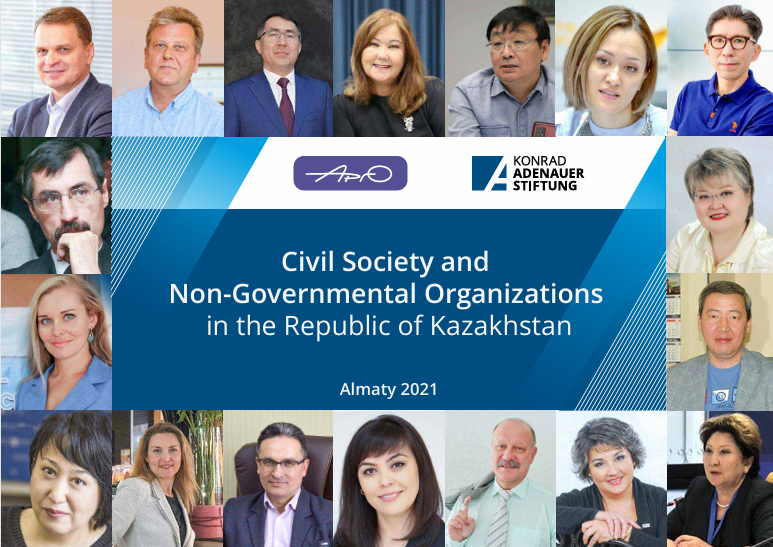 Civil Society and Non-Governmental Organizations in the Republic of Kazakhstan Year of publication: 2021 Author: Madiyar Kozhakhmet | Evgeny Zhovtis | Dosym Satpayev | Roman Podoprigora | Natalia Yantsen | Kaisha Atakhanova | Vadim Nee | Banu Nurgaziyeva | Zulfiya Baysakova | Shakhnoza Khasanova | Saken Zhanazarov | Diana Okremova | Gulmira Birzhanova | Lyazzat Kaltayeva | Saniya Arapova | Sergey Gulyaev | Sergey Khudyakov | Vitaly Kulik Corporate author: Civil Society Development Association (ARGO) This book is a collection of articles on a wide range of issues concerning CSOs and civil society development in Kazakhstan. The publication is designed for nongovernmental organizations, government agencies, Academia includes students and general readers. Гражданское общество и неправительственные организации в Республике Казахстан Year of publication: 2021 Author: Madiyar Kozhakhmet | Evgeny Zhovtis | Dosym Satpayev | Roman Podoprigora | Natalia Yantsen | Kaisha Atakhanova | Vadim Nee | Banu Nurgaziyeva | Zulfiya Baysakova | Shakhnoza Khasanova | Saken Zhanazarov | Diana Okremova | Gulmira Birzhanova | Lyazzat Kaltayeva | Saniya Arapova | Sergey Gulyaev | Sergey Khudyakov | Vitaly Kulik Corporate author: Civil Society Development Association (ARGO) Настоящая книга представляет собой сборник статей по широкому кругу вопросов, касающихся развития НПО и гражданского общества в Казахстане. Издание предназначено для неправительственных организаций, государственных органов, студентов, научного сообщества, а также широкого круга читателей.