
Resources
Explore a wide range of valuable resources on GCED to deepen your understanding and enhance your research, advocacy, teaching, and learning.
15 Results found
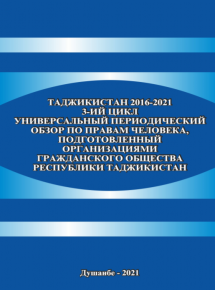 Tajikistan 2016-2021 3rd Cycle Universal Periodic Review on Human Rights Prepared by Civil Society Organizations of the Republic of Tajikistan Year of publication: 2021 Corporate author: Bureau of Human Rights and Rule of Law (BHR) The review was prepared by civil society organizations of the Republic of Tajikistan and covers the period 2016-2021. In preparing the review were used: open statistical data, national and international reports, media materials, international standards, national legislation and other open sources. Таджикистан 2016-2021 3-й цикл Универсальный периодический обзор по правам человека, подготовленный организациями гражданского общества Республики Таджикистан Year of publication: 2021 Corporate author: Bureau of Human Rights and Rule of Law (BHR) Обзор подготовлен организациями гражданского общества Республики Таджикистан и охватывает период 2016-2021 годы. При подготовке обзора были использованы: открытые статистические данные, национальные и международные отчеты, материалы средств массовой информации, международные стандарты, национальное законодательство и другие открытые источники.
 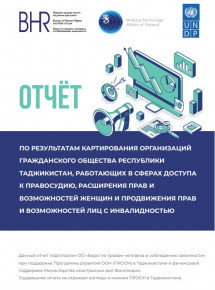 Отчёт по результатам картирования организаций гражданского общества республики Таджикистан, работающих в сферах доступа к правосудию, расширения прав и возможностей женщин и продвижения прав и возможностей лиц с инвалидностью Year of publication: 2022 Corporate author: Бюро по правам человека и соблюдению законности Картирование проведено общественной организацией «Бюро по правам человека и соблюдению законности» в рамках проекта ПРООН «Укрепление верховенства закона и прав человека с целью обеспечения возможностей для реализации прав людей в Таджикистане», финансируемого Правительством Финляндии, с целью определения ОГО, работающих в сфере продвижения прав человека, расширения прав и возможностей женщин и вопросов инвалидности», осуществленного при поддержке ПРООН в Таджикистане с целью определения ОГО, работающих в данных сферах, для доступа заинтересованных лиц и организаций к информации о деятельности данных организаций и их контактам, а также для дальнейшего повышения их потенциала.
  Early Childhood Education in Tajikistan Year of publication: 2021 Corporate author: UNICEF Tajikistan Preschool education is the foundation of lifelong learning and development. The focus on preschool is essential. Access to quality early childhood education (ECE) services not only gives children better chances at success in school, but better learning outcomes in the future. It enhances the efficiency of the school system by reducing repetition and drop-out and improving achievement, especially among girls and marginalized groups. If timely and sufficient investments in early childhood are made, human capital and momentum will grow and provide a great and unique opportunity for the country to improve its future economic prospects. Раннее образование детей в Таджикистане Year of publication: 2021 Corporate author: UNICEF Tajikistan Дошкольное образование - это основа непрерывного обучения и развития ребенка. Акцент на дошкольное образование имеет важное значение. Доступ к качественным услугам дошкольного образования (ДО) не только дает детям больше шансов на успех в школе, но и улучшает результаты их обучения в будущем. Если будут сделаны своевременные и достаточные инвестиции в систему раннего развития детей, человеческий капитал страны будет расти и предоставит стране прекрасную и уникальную возможность улучшить свои будущие экономические перспективы.
 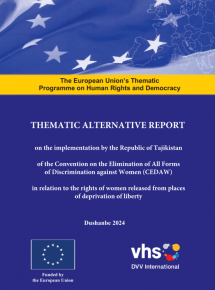 Thematic Alternative Report on the Implementation by the Republic of Tajikistan of the Convention on the Elimination of All Forms of Discrimination Against Women (CEDAW) in Relation to the Rights of Women Released from Places of Deprivation of Liberty Year of publication: 2024 Corporate author: European Union (EU) | DVV International | Bureau of Human Rights and Rule of Law (BHR) This alternative report focuses on the implementation by the Republic of Tajikistan of the UN Convention on the Elimination of All Forms of Discrimination against Women (CEDAW) in relation to the rights of women released from places of deprivation of liberty. The report contains information for the period from 2019 to 2023. Тематический альтернативный доклад о выполнении Республикой Таджикистан Конвенции о ликвидации всех форм дискриминации в отношении женщин. Применительно к правам женщин, освободившихся из мест лишения свободы Year of publication: 2024 Corporate author: EU | DVV International | Bureau of Human Rights and Rule of Law (BHR) Данный альтернативный доклад посвящен выполнению Республикой Таджикистан Конвенции ООН о ликвидации всех форм дискриминации в отношении женщин (КЛДЖ) в аспекте соблюдения прав женщин, освободившихся из мест лишения свободы. Доклад содержит информацию за период с 2019 по 2023 годы.
 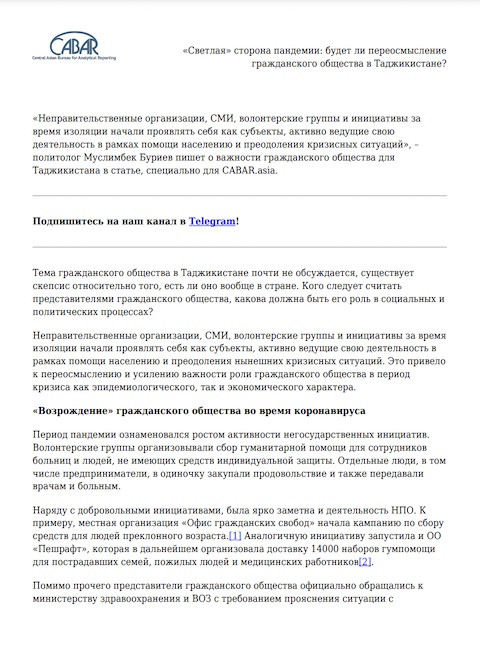 Silver Lining of Pandemic: Redefining Civil Society in Tajikistan Year of publication: 2020 Author: Muslimbek Buriev Corporate author: Central Asian Bureau for Analytical Reporting (CABAR) | Institute for War and Peace Reporting (IWPR) “Non-governmental organizations, mass media, community groups and initiatives have emerged amidst lockdown as actors actively engaged in assisting the population and addressing the crisis,” political scientist Muslimbek Buriev examines the role of civil society in Tajikistan in an article just for the CABAR.asia. «Светлая» сторона пандемии: будет ли переосмысление гражданского общества в Таджикистане? Year of publication: 2020 Author: Muslimbek Buriev Corporate author: Central Asian Bureau for Analytical Reporting (CABAR) | Institute for War and Peace Reporting (IWPR) «Неправительственные организации, СМИ, волонтерские группы и инициативы за время изоляции начали проявлять себя как субъекты, активно ведущие свою деятельность в рамках помощи населению и преодоления кризисных ситуаций», – политолог Муслимбек Буриев пишет о важности гражданского общества для Таджикистана в статье, специально для CABAR.asia.
  Can Tolerance Policy Be an Effective Tool for Conflict Prevention in Tajikistan? Year of publication: 2020 Author: Aziz Timurov Corporate author: Central Asian Bureau for Analytical Reporting (CABAR) | Institute for War and Peace Reporting (IWPR) There are no visible conflicts on the basis of ethnic-religious hostility in Tajikistan. However, if the problem is not visible, this does not mean that it does not exist, said Aziz Timurov, participant of the CABAR.asia School of Analytics. In his opinion, a well-developed and applicable tolerance policy can mitigate potential ethnic-religious and regional conflicts and be a factor in economic development in Tajikistan.