
Resources
Explore a wide range of valuable resources on GCED to deepen your understanding and enhance your research, advocacy, teaching, and learning.
55 Results found
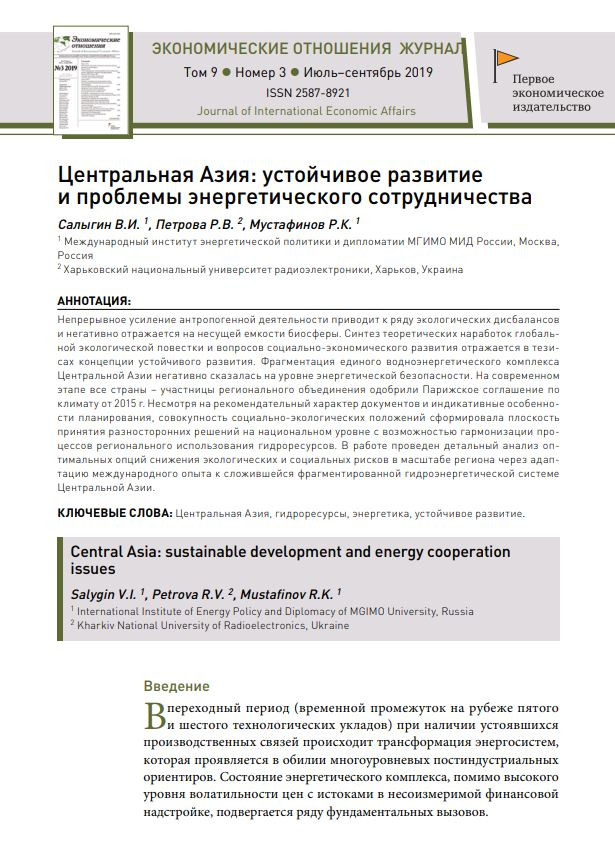 Central Asia: Sustainable Development and Energy Cooperation Issues Year of publication: 2019 Author: Salygin V.I. | Petrova R.V. | Mustafinov R.K. The continuous intensification of anthropogenic activities leads to a number of ecological imbalances and negatively affects the carrying capacity of the biosphere. Synthesis of theoretical developments of the global environmental agenda and issues of socio-economic development is reflected in the theses of the concept of sustainable development. The paper provides a detailed analysis of optimal options for reducing environmental and social risks on a regional scale by adapting international experience to the existing fragmented hydro-energy system Central Asia.
 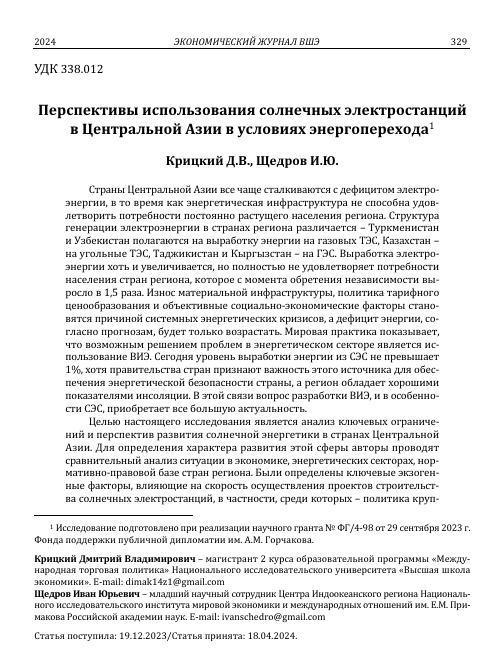 Перспективы использования солнечных электростанций в Центральной Азии в условиях энергоперехода (Экономический журнал ВШЭ, Том 28, №2) Year of publication: 2024 Author: Крицкий Дмитрий | Щедров Иван Целью настоящего исследования является анализ ключевых ограничений и перспектив развития солнечной энергетики в странах Центральной Азии. Для определения характера развития этой сферы авторы проводят сравнительный анализ ситуации в экономике, энергетических секторах, нормативно-правовой базе стран региона. Центральная Азия: устойчивое развитие и проблемы энергетического сотрудничества Year of publication: 2019 Author: Salygin V.I. | Petrova R.V. | Mustafinov R.K. Непрерывное усиление антропогенной деятельности приводит к ряду экологических дисбалансов и негативно отражается на несущей емкости биосферы. Синтез теоретических наработок глобальной экологической повестки и вопросов социально-экономического развития отражается в тезисах концепции устойчивого развития. В работе проведен детальный анализ оптимальных опций снижения экологических и социальных рисков в масштабе региона через адаптацию международного опыта к сложившейся фрагментированной гидроэнергетической системе Центральной Азии.
  Женщины Таджикистана в науке: социально-статистический анализ (Вестник МГЛУ. Общественные науки. Вып. 3(852) Year of publication: 2023 Author: Хушкадамова Халимахон Отамбековна Исследование репрезентирует пример Таджикистана по проблематике участия женщин в науке. Автором применяются разные эмпирические методы – непосредственное наблюдение, контент-анализ публикаций СМИ, биографический метод и статистический анализ официальных данных. Выявляются основные ступени подготовки ученых из числа женщин и девушек. Даются портреты известных женщин-ученых таджикского социума. Рассматриваются факторы, способствующие гендерному разрыву в науке.
  AI in Education: Change at the Speed of Learning Year of publication: 2020 Author: Steven Duggan Corporate author: UNESCO Institute for Information Technologies in Education (IITE) The policy brief “AI in Education: Change at the Speed of Learning” published by the UNESCO Institute for Information Technologies in Education (UNESCO IITE) opens a new series of publications “Digital Transformation of Education”. The new publication describes the advancements in technology, including data, analytics and personalized learning, Artificial Intelligence (AI), cloud computing and machine learning, and explores the promises of AI for students, teachers, school leaders, parents and education administrators. The publication also highlights the ethical aspects of AI implementation and challenges that it might bring. Искусственный интеллект в образовании: Изменение темпов обучения Year of publication: 2020 Author: Steven Duggan Corporate author: UNESCO Institute for Information Technologies in Education (IITE) Аналитическая записка «Искусственный интеллект в образовании: Изменение темпов обучения», опубликованная Институтом ЮНЕСКО по информационным технологиям в образовании (ИИТО ЮНЕСКО), открывает издание новой серии публикаций «Цифровая трансформация образования». В новой публикации представлены достижения в области технологий, включая данные, аналитику и персонализированное обучение, искусственный интеллект (ИИ), облачные вычисления и машинное обучение, а также рассматриваются многообещающие возможности ИИ для учащихся, педагогов, родителей, руководителей учебных заведений и администраторов системы образования. В публикации также обозначены этические аспекты и вызовы, связанные с применением ИИ.
  Медийно-информационная грамотность в цифровом мире: Как научить Учителей Year of publication: 2021 Corporate author: UNESCO Institute for Information Technologies in Education (IITE) В сборник вошли статьи, отражающие некоторые тренды развития цифровой медиасреды, подходы к формированию медийно-информационной грамотности (МИГ), описания отдельных практик, представляющих опыт реализации обучения МИГ педагогов и учащихся различных уровней и форм образования, а также рекомендации, направленные на интеграцию МИГ в педагогическое образование и повышение квалификации учителей и преподавателей. Media and Information Literacy in the Digital Age: How to Teach the Teachers Year of publication: 2021 Corporate author: UNESCO Institute for Information Technologies in Education (IITE) This publication includes articles reflecting some trends in the development of the digital media environment, approaches to the formation of media and information literacy (MIL), practices describing the experience of implementing MIL training for teachers and students of various levels and forms of education. The publication also contains recommendations aimed to integrate MIL into teacher education and professional development.
  Pedagogies of Media and Information Literacies Year of publication: 2012 Author: Suvi Tuominen Corporate author: UNESCO Institute for Information Technologies in Education (IITE) UNESCO has been actively involved in developing foundations for media and information literacy to assist Member States in pursuing the achievement of the objectives of the Grünwald Declaration (1982), the Alexandria Declaration (2005) and the UNESCO Paris Agenda (2007) related to MIL.The UNESCO Institute for Information Technologies in Education commissioned this Handbook, which is intended to become a useful tool that would equip teacher training institutions and facilitate teaching media and information literacy in teacher training, to the Finnish Society on Media Education. This Handbook should help teachers to enhance their media and information literacy and encourage them to take up media education in the classroom. The main target group is teachers of secondary schools who are either in training or in service. The Handbook provides teachers with basic knowledge on media and information literacy, and the way these skills can be taught.The Finnish Society on Media Education (www.mediaeducation.fi – FSME), founded in 2005 by Finnish researchers and practitioners in media education, is an association operating nation-wide in two main languages (Finnish and Swedish). The goal of FSME activities is to support and develop the field of research and practices concerning media education, contribute to the public debate and provide opportunities to share media educational experiences online and offline. Педагогические аспекты формирования медийной и информационной грамотности Year of publication: 2012 Author: Suvi Tuominen Corporate author: UNESCO Institute for Information Technologies in Education (IITE) ЮНЕСКО активно участвует в разработке основ формирования медийной и информационной грамотности и оказывает поддержку странам-членам в достижении целей, сформулированных в Грюнвальдской декларации ЮНЕСКО по медиаобразованию (1982), Александрийской декларации об информационной грамотности и образовании на протяжении всей жизни «Маяки информационного общества» (2005) и Парижской повестки ЮНЕСКО (2007).Настоящий учебник, разработанный в сотрудничестве с Финским обществом медиаобразования, является практическим пособием для педагогических вузов, отражающим передовые тенденции и современный подход к преподаванию медийной и информационной грамотности. Учебник, целевой группой которого являются учителя средних школ, содержит сведения о современных медиа и основных навыках медийной и информационной грамотности.С помощью данного учебника учителя смогут не только повысить собственную медийную и информационную грамотность, но и использовать предложенные в нем материалы для формирования медийной и информационной грамотности своих учеников.Финское общество по медиаобразованию (www.mediaeducation.fi) было основано в 2005 г. исследователями и практиками в области медиаобразования. Цель деятельности Общества заключается в поддержке и развитии исследований в области медийной грамотности и применения полученных результатов в педагогической практике, участие в общественных дебатах и обмен опытом в области медиаобразования.