
Resources
Explore a wide range of valuable resources on GCED to deepen your understanding and enhance your research, advocacy, teaching, and learning.
8 Results found
 تطوير وحدات تعليمية في ضوء منظومة القيم الديمقراطية لمبحث التربية الوطنية والمدنية وأثره في المشاركة السياسية والمدنية ومهارات السلام لدى طالبات المرحلة الأساسية العليا في الأردن Year of publication: 2015 Author: حداد، نهلا أمجد Corporate author: Al-Quds Open University تهدف هذه الدراسة إلى الوقوف على تطوير وحدات تعليمية في ضوء منظومة القيم الديمقراطية لدى الطلبة في مديرية تربية قصبة المفرق، واستقصاء أثره في تنمية المشاركة السياسية والمدنية ومهارات السلام لدى طالبات الصف التاسع الأساسي، ومهارات السلام لدى ولهذه الغاية وضع الباحثان قائمة لمنظومة القيم الديمقراطية وتطوير ثلاث وحدات تدريسية في ضوء هذه المنظومة والتأكد من صدقها، ومنظومة القيم الديمقراطية التي اعتمد عايها كانت لتطوير المشاركة المدنية لدى طالبات الصف العاشر الأساسي، والمشاركة السياسية لدى طالبات الصف التاسع الأساسي, ومهارات السلام لدى طالبات الصف الثامن الأساسي، وأعدت ثلاثة اختبارات وتأكد الباحثان من صدقها وثباتها. وطُبقت الاختبارات - قبل تطبيق الوحدات التدريسية وبعد تطبيقها- على عينة الدراسة التي تكونت في الصف الثامن من 87 طالبة قُسمن إلى مجموعتين (46 ضابطة و41 تجريبية)، وعينة الصف التاسع تكونت من 74 طالبة قُسمن إلى مجموعتين (37 ضابطة و37 تجريبية)، وعينة الصف العاشر تكونت من 86 طالبة قُسمن إلى مجموعتين (42 ضابطة و44 تجريبية)، وبعد معالجة البيانات إحصائياً بوساطة اختبار تحليل التباين المصاحب (ANCOVA) وجود فروق ذات دلالة إحصائية عند مستوى الدلالة ( a ≤ 0.05 ) تعزى لمتغير المجموعة في جميع الاختبارات وكانت الفروق لصالح المجموعات التجريبية الثلاث التي تلقت الوحدات المطورة في الصفوف الثلاثة. وفي ضوء هذه النتائج وضعت مجموعة من التوصيات من أبرزها الاعتماد على منظومة القيم الديمقراطية في تطوير المشاركة السياسية والمدنية ومهارات السلام لطلبة المرحلة الأساسية العليا. Developing Education Units in the Light of Democratic Values in the National and Civic Education Course and Its Impact on Political and Civic Participation and Peace Skills on Females Students in High Basic Female Schools in Jordan Year of publication: 2015 Author: حداد، نهلا أمجد Corporate author: Al-Quds Open University This article aims to study the development of education units in the light of democratic values in the National and Civic Education Course and its impact on political and civic participation and peace skills on females students in high basic female schools in the Directorate of Mafraq. For this purpose, the researchers conducted a list of democratic values, and developed three units of teaching in the light of this system. The democratic values that have been relied upon were to develop the civic participation of the tenth grade students, the political participation among the ninth grade students, and the skills of peace among the eighth grade students.Three tests have been prepared and confirmed. Tests were applied before the application of targeted educational units on a sample formed of the eighth grade consists of (87) divided into two groups (46 control and 41 experimental) . The ninth grade sample consists of 74 female students who were divided into two groups (37 control and 37 experimental) , and the tenth grade sample consists of 86 students who were divided into two groups (42 control and 44 experimental) . After processing the data statistically by (ANCOVA) , the results showed a statistically significant difference at the level of significance (a ≤ 0.05) due to the variable of the group in all the tests, and the differences were in favor of the three experimental groups which received the developed units in the three classes. In the light of these results, a number of recommendations are suggested.
 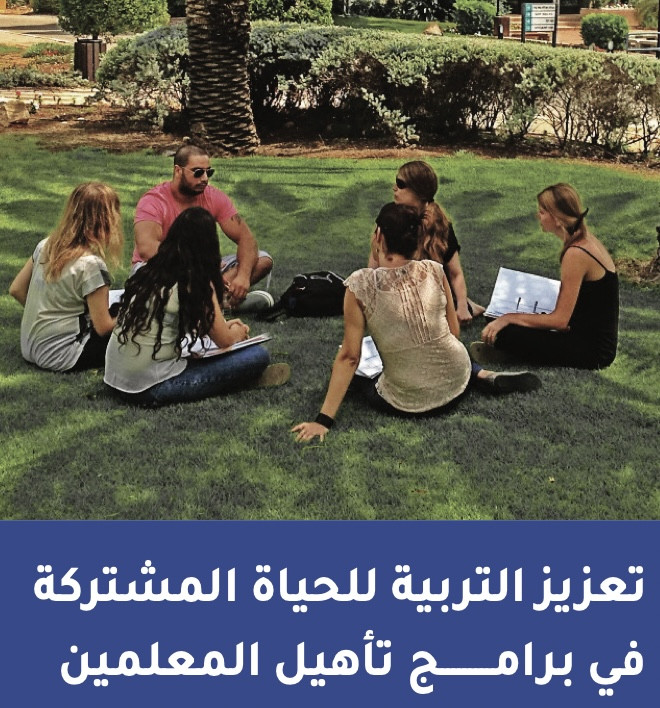 تعزيز التربية للحياة المشتركة في برامج تأهيل المعلمين Year of publication: 2022 Author: Worrod Gusi | Guy Barak | Roni Misrano Corporate author: Sikkuy-Aufoq يتحدث النص عن واقع برامج إعداد المعلمين في مؤسسات إعداد المعلمين في إسرائيل فيما يخص إعداد المعلمين لفهم الحياة المشتركة. يناقش الجزء الأول تعزيز مفهوم المواطنة المشتركة في تأهيل موظّفي سلك التدريس. كما يقترح الجزء الثاني نموذج شامل لتطوير وتعزيز التربية للحياة المشتركة في الكلية الأكاديمية بيت بيرل. Promoting Education for Shared Life in Teacher Education Programmes Year of publication: 2022 Author: Worrod Gusi | Guy Barak | Roni Misrano Corporate author: Sikkuy-Aufoq The text talks about the reality of teacher preparation programs in teacher training institutions in Israel with regard to preparing teachers to understand common life. The first part discusses the promotion of the concept of joint citizenship in the qualification of teaching staff. The second part also proposes a comprehensive model for the development and promotion of education for shared life at Beit Berl Academic College.
  تمثيل وحضور المجتمع العربي في مواد التعليم Year of publication: 2019 Author: Yael Maayan Corporate author: Sikkuy-Aufoq تسعى هذه الورقة لبحث تمثيل وحضور المجتمع العربي في مواد التعليم في إسرائيل. وتهدف إلى تعميق التمعن في الوضع القائم في مجال مواد التعليم والسياسة القائمة واقتراح التغييرات المطلوبة. وهي سياسة تحاول أن تقدم لطلاب المدارس اليهودية أشكال متنوعة من النظر والتعاطي مع المواطنين العرب في إسرائيل. Representation and Presence of the Arab Community in Education Materials Year of publication: 2019 Author: Yael Maayan Corporate author: Sikkuy-Aufoq This paper seeks to examine the representation and presence of the Arab community in education subjects in Israel. It aims to deepen and reflect on the current situation in the field of education materials and the existing policy, and to suggest the required changes. It is a policy that attempts to offer Jewish school students a variety of forms of consideration and interaction with the Arab citizens of Israel.
  دور الجامعات الفلسطينية في ترسيخ ثقافة الحوار المجتمعي من وجهة نظر طلبتها وسبل تعزيزه Year of publication: 2017 Author: سليمان حسين موسى Corporate author: Al-Quds Open University هدفت الدراسة إلى التعرف على دور الجامعات الفلسطينية في ترسيخ ثقافة الحوار المجتمعي من منظور الطلاب وطرق تعزيزها. استخدم الباحثون المنهج الوصفي التحليلي لتحقيق أهداف الدراسة. لجمع البيانات ، قاموا بإعداد استبيان يتكون من (35) عنصر في (4) مجالات. توصلت الدراسة إلى ما يلي: كانت الدرجة الكلية للجامعات الفلسطينية في ترسيخ ثقافة الحوار المجتمعي من منظور طلابها (52.02٪) بدرجة متوسط. لم تكن هناك فروق ذات دلالة إحصائية بين وسائل أعضاء عينة الدراسة بسبب متغيرات الدراسة: النوع الاجتماعي ، الجامعة ، التخصص أو مستوى الدراسة. تضمنت توصيات الباحثين ما يلي: - توفير بيئة جامعية للحوار ومفاهيمه من أجل تفعيل ثقافة ولغة الحوار المجتمعي بين الجامعات ومجتمعاتهم الاجتماعية. - اتباع إجراءات إدارية مبنية على لغة الحوار من أجل ترسيخ ثقافة الحوار المجتمعي في نتائج الجامعة. The Role of Palestinian Universities in Instilling the Culture of Community Dialogue from the Perspective of Students and Ways to Strengthen it Year of publication: 2017 Author: سليمان حسين موسى Corporate author: Al-Quds Open University The study aimed to identify the role of Palestinian universities in consolidating the culture of community dialogue from the perspective of students, and ways to strengthen it. The researchers used the analytical descriptive method to achieve the goals of the study. To collect the data, they prepared a questionnaire consisting of (35) items in (4) fields. The study reached the following: the total degree of Palestinian universities in consolidating the culture of community dialogue from the perspective of their students was a (52.02%) in an average degree. There were no statistically significant differences between the means of the members of the study sample due to the study variables: gender, university, specialization or study level. The researchers’ recommendations included: - provide a university environment of dialogue and its concepts in order to activate the culture and language of community dialogue between the universities and their social communities; - pursue administrative measures based on the language of dialogue in order to consolidate a culture of community dialogue in the university outcomes.