
Resources
Explore a wide range of valuable resources on GCED to deepen your understanding and enhance your research, advocacy, teaching, and learning.
10 Results found
 موجز التقرير العالمي حول الإعاقة Year of publication: 2011 Corporate author: World Health Organization (WHO) | World Bank قامت منظمة الصحة العالمية بالاشتراك مع البنك الدولي في إصدار هذا التقرير العالمي حول الإعاقة، من أجل عرض البيِّنات اللازمة لوضع السياسات والبرامج المبتكرة القادرة على تحسين حياة ذوي الإعاقة، وتيسير تنفيذ اتفاقية الأمم المتحدة لحقوق الأشخاص ذوي الإعاقة التي تم تفعيلها في أيار/مايو من عام 2008. ويقدم التقرير العالمي تعريفا عن الإعاقة بوصفها مصطلحاً جامعاً يضم تحت مظلته الأشكال المختلفة للاعتلال/الخلل العضوي، ومحدودية النشاط، والقيود التي تحد من المشاركة. كما أن مصطلح الإعاقة يعود إلى السمات السلبية للتفاعل بين الأفراد الذين يعانون من حالة صحية ما )مثل الشلل الدماغي، أو متلازمة داون، أو الاكتئاب(، وبين العوامل الشخصية والبيئية )مثل المواقف السلبية، وانعدام إتاحة وسائل النقل والمباني العامة، والدعم الاجتماعي المحدود).ثم يقدم اقتراحات بخطوات يمكن أن تتخذ من قبل كافة الأطراف المعنية –ومنها الحكومات، ومنظمات المجتمع المدني، ومنظمات الأشخاص ذوي الإعاقة – من أجل إيجاد بيئات ممكِّنة، وتطوير خدمات التأهيل والدعم، وضمان الحماية الاجتماعية الكافية، وإطلاق سياسات وبرامج شاملة، وتفعيل المعايير والتشريعات الجديدة والقائمة، وذلك لصالح ذوي الإعاقة والمجتمع على نطاقه الأوسع. وينبغي أن يكون ذوو الإعاقة هم المركز الذي تتمحور حوله هذه المساعي. كما يلقي الضوء على العقبات والعوائق المتباينة التي يواجهها ذوو الإعاقة - عقبات تتعلق بما يصادفونه من مواقف واتجاهات، وعقبات مادية، ومالية – وكلها عقبات يسهل التعامل معها والتصدي لها. يقدم توصيات للعمل على المستويات المحلية والوطنية والدولية، ومن ثم فهو أداة لا تقدر بثمن. Summary of the World Report on Disability Year of publication: 2011 Corporate author: World Health Organization (WHO) | World Bank The World Health Organization and the World Bank jointly produced this global report on disability, in order to present the evidence needed to develop innovative policies and programs capable of improving the lives of people with disabilities, and to facilitate the implementation of the United Nations Convention on the Rights of Persons with Disabilities that was activated in May of 2008. The World Report provides a definition of disability as an umbrella term that includes under its umbrella various forms of organ impairment/dysfunction, limited activity, and participation limitations. The term disability also refers to the negative features of the interaction between individuals with a health condition (such as cerebral palsy, Down syndrome, or depression), and between personal and environmental factors (such as negative attitudes, lack of access to transportation and public buildings, and limited social support).It then presents suggestions for steps that can be taken by all concerned parties - including governments, civil society organizations, and organizations of persons with disabilities - in order to create enabling environments, develop rehabilitation and support services, ensure adequate social protection, launch comprehensive policies and programs, and activate new standards and legislation List, for the benefit of people with disabilities and society at large. People with disabilities should be the centerpiece of these endeavours. It also sheds light on the various obstacles and barriers faced by persons with disabilities - obstacles related to the attitudes and trends they encounter, and physical and financial obstacles - all of which are easy to deal with and address. It provides recommendations for action at the local, national and international levels, and is thus an invaluable tool.
  اللاجئون والنازحون والتعليم: تحديات جديدة تقف في وجه التنمية والسياسات Year of publication: 2016 Corporate author: Network for International Policies and Cooperation in Education and Training (NORRAG) يلفت هذا العدد من أخبار NORRAG الانتباه إلى العديد من الأبعاد المختلفة للاجئين والنازحين والتعليم. لا ينصب التركيز على الهجرة الاقتصادية أو على الهجرة من أجل التعليم العالي في حد ذاته ، بل على ما يسميه المنتدى الاقتصادي العالمي "الهجرة غير الطوعية" وعلاقاتها بالتعليم. Refugees, Displaced Persons and Education: New Challenges for Development and Policy Year of publication: 2016 Corporate author: Network for International Policies and Cooperation in Education and Training (NORRAG) This issue of NORRAG News (NN) draws att ention to many diff erent dimensions of refugees, displaced persons and education, but it is not focused on economic migration or on migration for higher education per se, but on what the WEF calls ‘involuntary migration’ and its connections with education.
 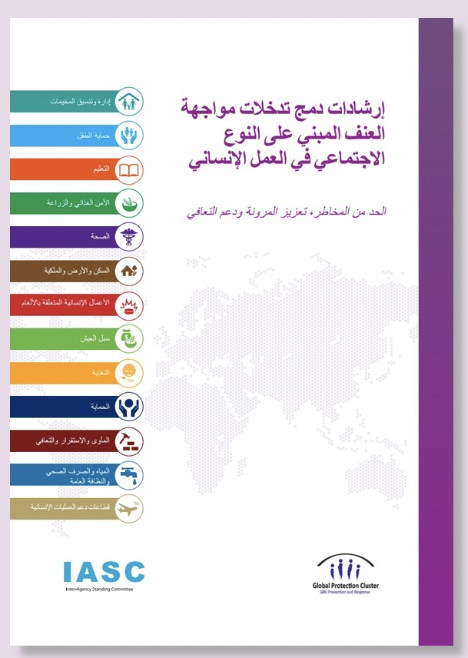 Guidelines for Integrating Gender-Based Violence Interventions in Humanitarian Action Year of publication: 2015 Author: Jeanne Ward | Julie Lafrenière Corporate author: Inter-Agency Standing Committee (IASC) The file is the Guidelines on Gender-Based Violence issued in 2005 by the Special Inter-Agency Task Force, led by UNICEF and the United Nations Population Fund, and endorsed by the Inter-Agency Standing Committee in 2015. The purpose of these Guidelines is to assist humanitarian actors and communities affected by armed conflict, natural disasters, and other humanitarian emergencies to coordinate, plan, implement, monitor and evaluate essential actions to prevent and reduce gender-based violence in all sectors of the humanitarian response.The overall goal of the Guidelines is to support humanitarian stakeholders in fulfilling their responsibility to protect all those affected by crises, by:- Reducing risk of GBV by implementing GBV prevention and mitigation strategies from pre-emergency to recovery stages of humanitarian action.- Promoting resilience by strengthening national and community-based systems that prevent and mitigate GBV, and by enabling survivors and those at risk of GBV to access specialized care and support.- Aiding recovery of communities and societies by supporting local and national capacity to create lasting solutions to the problem of GBV. إرشادات دمج تدخلات مواجهة العنف المبني على النوع الاجتماعي في العمل الإنساني Year of publication: 2015 Author: Jeanne Ward | Julie Lafrenière Corporate author: Inter-Agency Standing Committee (IASC) الملف عبارة عن " الإرشادات حول العنف المبني على النوع الاجتماعي" الصادرة عام 2005 من قبل فريق العمل الخاص بين الوكالات، بقيادة اليونيسيف وصندوق الأمم المتحدة للسكان، وأقرتها اللجنة الدائمة المشتركة بين الوكالات في عام 2015. إن الهدف من هذه الإرشادات هو مساعدة الجهات الفاعلة الإنسانية والمجتمعات المتأثرة بالنزاع المسلح، والكوارث الطبيعية، وغيرها من حالات الطوارئ الإنسانية من أجل التنسيق، والتخطيط، والتنفيذ، ورصد وتقييم الإجراءات الأساسية للوقاية والحد من العنف المبني على النوع الاجتماعي في جميع قطاعات الاستجابة الإنسانية.ويمكن الإشارة بأنه الإرشادات هي دعم صناع القرار في مجال العمل الإنساني في الوفاء بمسؤوليتهم في حماية جميع أولئك المتضررين من الأزمات، من خلال:- مساعدة المجتمعات المحلية والمجتمعات وذلك من خلال دعم القدرات المحلية والوطنية لإيجاد حلول دائمة لمشكلة العنف المبني على النوع الاجتماعي.- تعزيز المرونة من خلال تعزيز النظم الوطنية والمجتمعية التي تعمل على الوقاية والحد من العنف المبني على النوع الاجتماعي، وأيضاً من خلال تمكين الناجين والمعرضين لخطر العنف المبني على النوع الاجتماعي للوصول للرعاية المتخصصة والدعم.- الحد من مخاطر العنف المبني على النوع الاجتماعي وذلك من خلال تنفيذ استراتيجيات الوقاية والحد في مراحل العمل الإنساني من قبل حصول حالة الطوارئ وحتى مرحلة التعافي.
  [Résumé] Rapport de situation 2020 sur la prévention de la violence à l’encontre des enfants dans le monde Year of publication: 2020 Corporate author: World Health Organization (WHO) Le Rapport de situation 2020 sur la violence à l’encontre des enfants dans le monde présente les progrès accomplis par les pays en vue d’atteindre les ODD visant à mettre un terme à la violence dont sont victimes les enfants. Publié conjointement par l’OMS, l’UNICEF, l’UNESCO, le Représentant spécial du Secrétaire général de l’ONU chargé de la question de la violence contre les enfants et le Partenariat mondial pour mettre fin à la violence envers les enfants, il rassemble les contributions de plus d’un millier de décideurs de 155 pays qui ont évalué la situation de leur pays en matière de prévention de la violence à la lumière des approches basées sur des données factuelles proposées dans le cadre d’INSPIRE, un ensemble de sept stratégies pour mettre fin à la violence à l’encontre des enfants. Le rapport montre que si de nombreux pays ayant participé à l’enquête prennent des mesures, les autorités gouvernementales de ces mêmes pays reconnaissent que leurs efforts sont clairement insuffisants pour atteindre les cibles des ODD. Le rapport se conclut par des recommandations visant à intensifier les efforts de mise en œuvre des stratégies INSPIRE et à accélérer les progrès au niveau national. [Resumen] Informe sobre la situación mundial de la prevención de la violencia contra los niños de 2020 Year of publication: 2020 Corporate author: World Health Organization (WHO) En el Informe sobre la situación mundial de la prevención de la violencia contra los niños de 2020 se recogen los progresos realizados por los países en la aplicación de los Objetivos de Desarrollo Sostenible (ODS) en esta esfera. El documento, que publican conjuntamente la OMS, el UNICEF, la UNESCO, el Representante Especial del Secretario General de las Naciones Unidas sobre la violencia contra los niños y la Alianza Mundial para poner fin a la violencia contra los niños, reúne las aportaciones de más de 1000 instancias normativas procedentes de 155 países que evaluaron la situación nacional comparándola con los enfoques basados en datos probatorios que se presentan en las siete estrategias INSPIRE que tratan sobre este tema. El informe muestra que, si bien muchos de los países participantes están adoptando algunas medidas, sus propios funcionarios reconocen que son claramente insuficientes para alcanzar las metas de los ODS. En la parte final del documento se formulan recomendaciones para que los países potencien la aplicación de las estrategias INSPIRE y avancen más rápidamente hacia su consecución. [الملخص] تقرير الحالة العالمية بشأن منع العنف ضد الأطفال لعام 2020 Year of publication: 2020 Corporate author: World Health Organization (WHO) يتناول تقرير الحالة العالمي عن الوقاية من العنف ضد الأطفال لعام 2020 ما أحرزته البلدان من تقدّم في تحقيق أهداف التنمية المستدامة الرامية إلى وضع حدّ للعنف ضد الأطفال. ويستند هذا التقرير الصادر بشكل مشترك عن منظمة الصحة العالمية واليونسيف واليونسكو والممثلة الخاصة للأمين العام للأمم المتحدة المعنية بالعنف ضد الأطفال والشراكة العالمية من أجل إنهاء العنف ضد الأطفال، إلى مدخلات تم تجميعها مما يزيد على 1000 من صنّاع القرار في 155 بلداً، استناداً إلى تقييم حالة الوقاية من العنف في بلدانهم من خلال تطبيق النُهج المسندة بالبيّنات المحددة في حزمة إنسباير: الاستراتيجيات السبع لإنهاء العنف ضد الأطفال. ويُظهر التقرير أنه في حين اتخذت العديد من البلدان المشاركة إجراءات بالفعل في هذا الصدد، فإن المسؤولين الحكوميين من هذه البلدان نفسها يعترفون بأن جهودهم لا تكفي بكل وضوح لبلوغ غايات أهداف التنمية المستدامة ذات الصلة.ويخلص التقرير إلى توصيات ترمي إلى تعزيز الجهود الرامية إلى تطبيق إجراءات حزمة إنسباير وتسريع وتيرة التقدم المحرز على المستوى الوطني. [摘要] 2020年关于预防暴力侵害儿童行为的全球状况报告 Year of publication: 2020 Corporate author: World Health Organization (WHO) 《2020年预防暴力侵害儿童行为全球状况报告》列出了各国在实现旨在终止暴力侵害儿童行为方面的可持续发展目标进展。报告由世卫组织、儿基会、教科文组织、联合国秘书长暴力侵害儿童问题特别代表和全球终止暴力侵害儿童行为伙伴关系联合出版,汇集了来自155个国家的1000多名决策者的意见,他们根据《INSPIRE:消除针对儿童的暴力行为的七项策略》中提出的基于证据的方法评估了预防暴力行为状况。报告显示,许多参与国正在采取一些行动,而这些国家的政府官员承认,他们做出的努力显然不足以实现可持续发展目标。报告最后提出了努力促进INSPIRE的实施以及加快国家进展的建议。