
Resources
Explore a wide range of valuable resources on GCED to deepen your understanding and enhance your research, advocacy, teaching, and learning.
15 Results found
 Policy Recommendations of Gender Equality in Education Year of publication: 2015 Author: Teresa Tovar Samanez Corporate author: United Nations Children's Fund (UNICEF) This document synthesizes the proposals of the Florecer Network to advance in gender equality, because we are convinced that the commitment to a more just and more human world necessarily implies the assumption of equality between men and women. Recomendaciones de Política de Igualdad de Género en Educación Year of publication: 2015 Author: Teresa Tovar Samanez Corporate author: United Nations Children's Fund (UNICEF) Este documento sintetiza las propuestas de la Red Florecer para avanzar en la igualdad de género, porque estamos convencidas y convencidos de que la apuesta por un mundo más justo y más humano implica necesariamente por la asunción de la igualdad entre hombres y mujeres.
  Gender Policy Recommendations in Education Year of publication: 2015 Corporate author: Red Nacional de Educación de la Niña This document synthesizes the proposals of the Florecer Network to advance in gender equality, convinced that the commitment to a more just and more human world necessarily involves the assumption of equality between men and women. The principle that the rights of women and girls are an integral, inalienable and indivisible part of universal human rights has been reaffirmed from the various international forums. Greater equity between men and women is also beneficial for the development of the country. A country with educated girls and women has a lower birth rate, improves their health and productivity conditions. This document synthesizes the main proposals of the Gender and Citizenship Forum: imperative for a quality education, organized by Red Florecer in May 2013 year. We want to put them in the hands of decision-makers and citizens in general to help concretize the mandates of equality between men and women in education. It is time not to give up dreams because they have become possible. Recomendaciones de Política de Género en Educación Year of publication: 2015 Corporate author: Red Nacional de Educación de la Niña Este documento sintetiza las propuestas de la Red Florecer para avanzar en la igualdad de género, convencidos de que la apuesta por un mundo más justo y más humano pasa necesariamente por la asunción de la igualdad entre hombres y mujeres. Desde los diversos foros internacionales se ha reafirmado el principio que los derechos de las mujeres y las niñas son parte integral, inalienable e indivisible de los derechos humanos universales. Una mayor equidad entre hombres y mujeres es además beneficiosa para el desarrollo del país. Un país con niñas y mujeres educadas tiene menor tasa de natalidad, mejora sus condiciones de salud y productividad.Este documento sintetiza las principales propuestas del Foro Género y Ciudadanía: imperativo para una educación de calidad, organizado por la Red Florecer en mayo del 2013 año. Queremos ponerlas en manos de los decisores y de la ciudadanía en general para contribuir a concretar los mandatos de igualdad entre hombres y mujeres en la educación. Es el momento de no desistir de los sueños porque estos se han tornado posibles.
  Guía de disciplina positiva para el desarrollo de habilidades socioemocionales: En la escuela y el trabajo con familias Year of publication: 2021 Corporate author: Perú. Ministerio de educación Está guía brinda herramientas que permiten crear un ambiente seguro de respeto y proximidad en el aula, que propicie las condiciones adecuadas para el aprendizaje. Así mismo, este texto propone orientaciones para el trabajo con las familias en el fortalecimiento de las competencias parentales.
 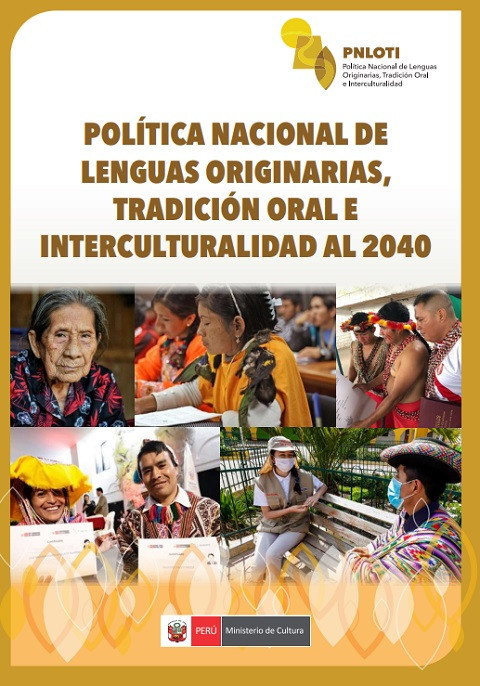 National Policy on Native Languages, Oral Tradition and Interculturality by 2040 Year of publication: 2021 Corporate author: Ministry of Culture of Peru The Ministry of Culture, in coordination with the different sectors of the State, has carried out the process of updating the National Policy on Native Languages, Oral Tradition and Interculturality by 2040 (PNLOTI), which will be the main instrument of guidance and attention in subject of indigenous languages. Seeking to guarantee the participation of citizens in public decisions, the Ministry of Culture makes the PNLOTI proposal for 2040 available to them, with the aim that they can access it and learn about the 41 services declared in charge of the different sectors. In this way, the PNLOTI ensures the full exercise of the linguistic rights of the more than 4 million citizens who speak one of the 48 indigenous or native languages of the country. Política nacional de lenguas originarias, tradición oral e interculturalidad al 2040 Year of publication: 2021 Corporate author: Ministry of Culture of Peru El Ministerio de Cultura, en coordinación con los diferentes sectores del Estado, han llevado a cabo el proceso de actualización de la Política Nacional de Lenguas Originarias, Tradición Oral e Interculturalidad al 2040 (PNLOTI), que será el principal instrumento de orientación y atención en materia de lenguas indígenas. Buscando garantizar la participación de la ciudadanía en las decisiones públicas, el Ministerio de Cultura pone a su disposición la propuesta de la PNLOTI al 2040, con el objetivo de que puedan acceder a él y conocer los 41 servicios declarados a cargo de los diferentes sectores. De esta manera, la PNLOTI asegura el ejercicio pleno de los derechos lingüísticos de los más de 4 millones de ciudadanos y ciudadanas hablantes de alguna de las 48 lenguas indígenas u originarias del país.
  Dad, Mom, They’re Harassing Me! Year of publication: 2024 Corporate author: Ministry of Education of Peru Do you notice that something is not right with your child's academic performance or behavior at school? You may be wondering: What is happening to him or her? Is there a problem affecting him or her? When faced with this situation, it is important to stop and reflect. Talk to your child about what is happening and ask him or her how he or she feels. Analyze together the possible causes of the problem. It is possible that your child is being bullied. If so, we offer you some guidelines for addressing the issue. ¡Papá, mamá, me están acosando! Year of publication: 2024 Corporate author: Ministry of Education of Peru ¿Notas que algo no anda bien en el desempeño académico o comportamiento de tu hijo en la escuela? Tal vez te preguntes: ¿Qué le estará pasando? ¿Habrá algún problema que lo esté afectando? Ante esta situación es importante detenerse y reflexionar. Habla con tu hijo sobre lo que está ocurriendo y pregúntale cómo se siente. Analicen juntos las posibles causas del problema. Es posible que tu hijo esté siendo víctima de acoso escolar. Si es así, te brindamos algunas orientaciones para abordar el tema.
 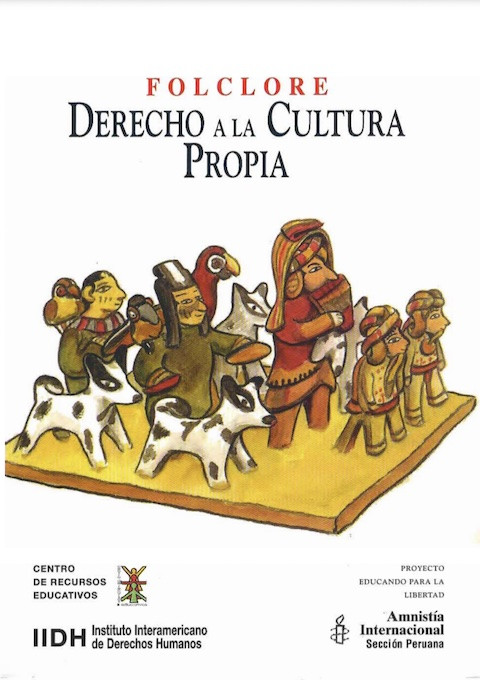 Folklore: Right to Own Culture; Teacher's Guide Year of publication: 1997 Author: William Tamayo Ángeles Corporate author: Instituto Interamericano de Derechos Humanos (IIDH) The traditional popular culture that we call folklore summarizes centuries of our history and the festive art that expresses it, through dance, music and words, is the bearer of a sensitivity that for a long time there has been an attempt to extinguish in the country, despite constitute one of those traits that best identifies us before the world and to be recognized as a nationalizing link of Peruvians. This document offers a guide for teachers and students to learn more about this expression of the continuous life of our people and identify in it their own daily effort of liberation and improvement.