
Resources
Explore a wide range of valuable resources on GCED to deepen your understanding and enhance your research, advocacy, teaching, and learning.
10 Results found
 How Are Vocational Institutions Innovating, Evolving and Changing as a Result of COVID-19?: A Study of Practice and Perspectives in Five Countries Year of publication: 2021 Corporate author: British Council As an international problem, Covid-19 requires international cooperation. The social, economic and educational recovery from the pandemic can be enhanced by knowledge transfer and exchange. This research brought together 15 technical and vocational education and training (TVET) institutions from the five countries in the British Council’s I-WORK Programme (Improving Work Opportunities - Relaying Knowledge) to explore innovation, evolution and change stemming from the pandemic. TVET practitioners and leaders from Ghana, India, Malaysia, South Africa and the UK were asked to reflect on five key questions: How are institutional policy and structures likely to change to reflect the changing situation? Is this different for private institutions? What changes are proposed to the curriculum/ occupational areas to reflect the rapidly changing demand and how are they identifying this demand? How will learners get the practical and work-based experience they need and what changes to work- based learning and apprenticeships are needed? What changes are needed to the skills and type of staff in the teaching institution? How can new delivery models and ways of working promote more inclusive practice? The research took place as institutions approached almost a year of adapting their teaching, learning and support to localised lockdowns and the restrictions of the pandemic. The national policy context may have been different in each country, but the research findings pointed to a single conclusion: that across the board, the move to digital learning and teaching had brought benefits, opportunities and challenges that might not otherwise have been realised.
  Gender Equality and Empowerment of Women and Girls in the UK: Meeting the Challenge of the Sustainable Development Goals Year of publication: 2016 Author: Holly Dustin | Helen Mott | Nicola Waterworth | Gillian Cowell | Janet Veitch Corporate author: British Council This research provides the first stocktake of gender equality in the UK from the perspective of the UN’s Sustainable Development Goals (SDGs), the 17 goals adopted by world leaders in 2015 in order to end poverty, protect the planet and ensure prosperity for all.It focuses on the UK’s successes towards achieving gender equality, as well as gaps and priorities for further action in five key areas: participation, power and leadership; education; economy; justice and violence against women and girls and culture (including arts, sports and technology). There are many examples of good practice from the UK, such as strong legislation, data gathering and structures. However, the research also concludes that women and girls continue to lag behind men and boys on key rights, opportunities and well-being, with men over-represented in almost all positions of power and decision-making. It also explores the impact of international linkages and collaboration to determine whether as the UK’s cultural relations organisation, there is a role for the British Council in this.
  One Voice for All: Education Pack Year of publication: 2013 Corporate author: British Council One Voice for All is a set of resources designed to help teachers work on the Connecting Classrooms themes of Rights and Responsibilities and Fairness and Equality through an exploration of human rights and street children. Its focus is the UN Convention on the Rights of the Child and it aims to allow learners to develop understanding of the key concepts of global citizenship, universal rights and justice.This resource aims to give young people the opportunity to understand the complexity of the wider world in which they live by exploring inequality and steps to address it.
  Connecting Classrooms: Gender Equality; Gender Equality through Citizenship Year of publication: 2019 Corporate author: British Council | UK aid This material shows an example of how you can support the development of pupils’ core skills such as citizenship, critical thinking, problem solving, creativity and imagination through the study and investigation of gender equality. This can be done in the context of English, citizenship, geography, history or other subjects. The materials can be used either with an international partner school or without one and instructions are provided on how to best use the resources. This learning unit will explore the Global Goals for Sustainable Development, and in particular, gender equality.
  Teaching for Sustainable Development through Ethical Global Issues Pedagogy: A Resource for Secondary Teachers Year of publication: 2019 Author: Karen Pashby | Louise Sund | Matthew Williams | Jennifer Maguire | Heidi Meltovuo | David Few | Nicole Sandler | Ruth Till | Ilona Taimela Corporate author: Manchester Metropolitan University This resource aims to support teacher in their current practice rather than a direct ‘how-to’ guide. The activities offer some suggestions for practice before, during, and after students learn about a particular global issue. It offers some suggested global issues topics, but intend for teachers to adapt this resource to the different issues they explore with their students.
 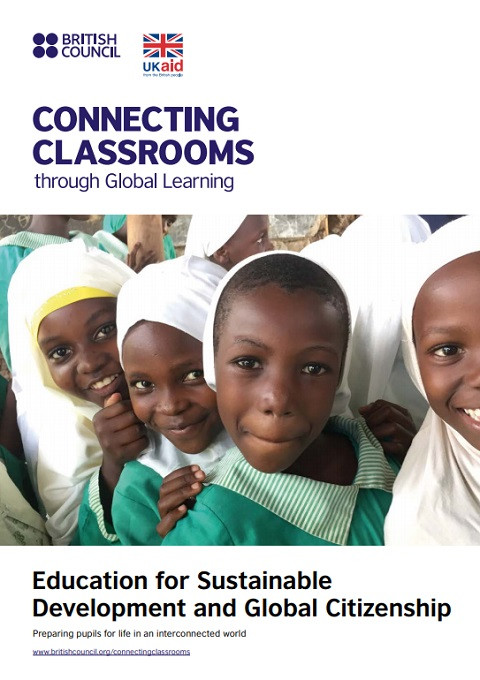 Connecting Classrooms through Global Learning: Education for Sustainable Development and Global Citizenship; Preparing Pupils for Life in an Interconnected World Year of publication: 2020 Corporate author: British Council | UK aid This resource contributes to the development of pupils’ core skills, enabling them to think critically, to consider how to resolve problems, to take informed and reflective action and to develop personal leadership skills. During the course, pupils will analyse global issues, and will plan, implement and evaluate action. This course can be linked to a variety of curriculum areas, including English, Social Studies, Geography, Modern Foreign Languages, Maths, History and Art and Design. It can be used with or without an overseas partner school.
 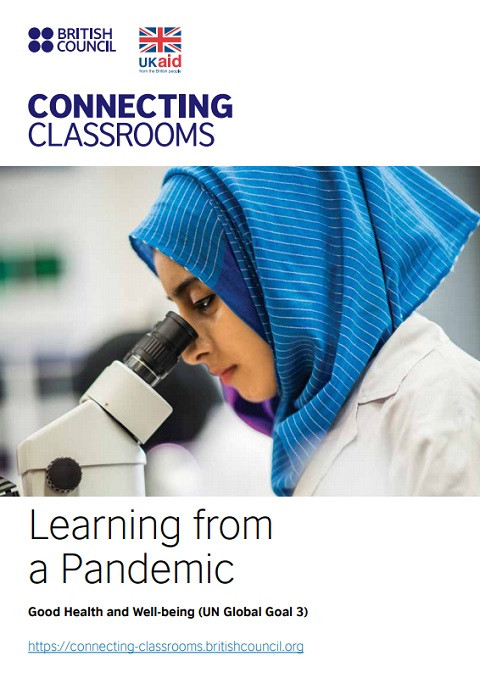 Connecting Classrooms: Learning From a Pandemic; Good Health and Well-Being (UN Global Goal 3) Year of publication: 2020 Corporate author: British Council | UK aid This resource will help you make a contribution to a recovery curriculum in schools, and beyond this, by providing interesting, engaging and relevant content that encourages pupils to recall, discuss and process some of their thoughts, feelings and memories. Over the course of six lessons, pupils will have opportunities to develop an understanding of:• Covid-19 in the context of some of the world’s most common communicable diseases and pandemics from the past• how communicable diseases like Covid-19 may start and spread, and how this is investigated• relevant prevention strategies to foster positive physical and mental health and well-being.In doing so, pupils will have the opportunity to develop core skills in critical thinking and problem solving, citizenship, student leadership, creativity and imagination and aspects of digital literacy. This learning unit is also designed to support the United Nations’ Global Goals for Sustainable Development (SDGs), in particular Goal 3: Good health and well-being.
 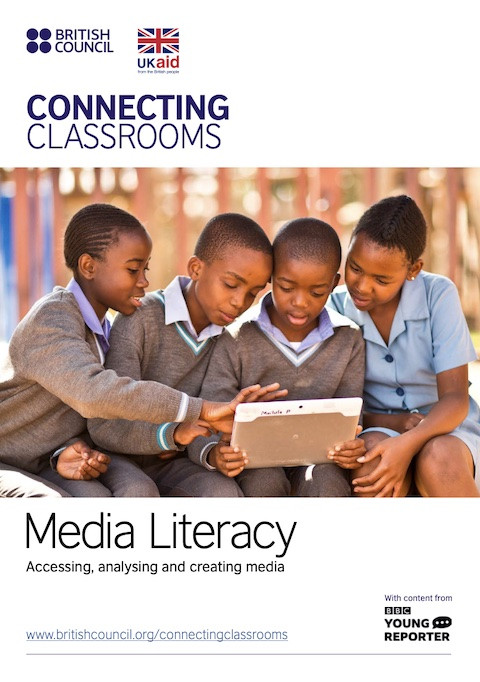 Connecting Classrooms: Media Literacy; Accessing, Analysing and Creating Media Year of publication: 2019 Corporate author: British Council | UK aid This resource aims to help young people develop and use a number of skills and approaches to analyse and critically examine information received through a range of channels and sources, such as the internet, social media, newspapers and TV.
  Manifesto for Education - Empowering Educators and Schools Year of publication: 2015 Corporate author: Radicalisations Awareness Network (RAN) The manifesto is a call to action to help empower the very group of people who have the potential to be some of the most influential in the lives of our young people and to help them truly prevent violent extremism. As it is impossible for schools to solve the problem alone and immediately, on different levels (the educator, the school, the partners and the government) suggestions are made to inspire interventions that could start tomorrow (short term) and help establish a sustainable approach for the future (long term). These insights are mostly based on experiences in secondary education but can easily be translated to primary, vocational and higher education. Manifesto for Education - Empowering Educators and Schools Year of publication: 2015 Corporate author: Radicalisations Awareness Network (RAN) Le manifeste est un appel à l'action pour aider à renforcer ceux qui ont le potentiel d'être parmi les plus influents dans la vie de nos jeunes et pour les aider à prévenir véritablement l'extrémisme violent. Comme il est impossible pour les écoles de résoudre le problème seul et immédiatement, des suggestions sont faites à différents niveaux (au niveau de l'éducateur, de l'école, des partenaires, du gouvernement) pour inspirer des interventions qui pourraient commencer demain (à court terme) et aider à établir une approche durable pour l'avenir (à long terme). Ces idées sont principalement basées sur des expériences dans l'enseignement secondaire, mais peuvent facilement s'appliquer à l'enseignement primaire, professionnel et supérieur.