
Resources
Explore a wide range of valuable resources on GCED to deepen your understanding and enhance your research, advocacy, teaching, and learning.
18 Results found
 Smart Education Strategies for Teaching and Learning: Critical Analytical Framework and Case Studies Year of publication: 2022 Author: Shafika Isaacs | Sanjaya Mishra Corporate author: UNESCO Institute for Information Technologies in Education (IITE) | Beijing Normal University This electronic publication about smart education strategies for building the resilience of education and training systems in the postpandemic environment provides a framework to develop appropriate policy and strategy in existing and emerging forms of schooling, higher education, technical and vocational education, and training (TVET), adult education and lifelong learning, including formal, nonformal and informal educational environments. The publication reviews the status of smart education policies in 10 countries. It includes 15 case studies within the six policy themes: infrastructure, curriculum and pedagogy, digital education resources and platforms, skills and competencies, governance, management and administration, and partnership.
  Образование в области прав человека в России. Аналитический отчет Year of publication: 2008 Author: Anatoly Azarov Corporate author: Moscow School of Human Rights The book examines the status, trends, and issues of human rights education, including HIV/AIDS prevention education in the Russian Federation. It spans the period from the early 1990s to December 2008, analyzing both positive preconditions for the spread of human rights and freedoms knowledge in Russia and obstacles encountered in the process. A special focus is on laws, regulations and standards applicable to higher education. The book describes the activities of the primary social institutions engaged in HRE: comprehensive schools and universities, human rights commissioners, NGOs. It shows examples of international humanitarian law teaching; offers an evaluation of HRE literature for Russian universities; offers a concept of Science and Discipline of Human Rights. The book also examines the condition of HIV/AIDS prevention education within the context of human rights observance. The authors’ conclusions and judgments are supported with a special opinion poll. Éducation aux Droits de l'Homme en Russie: rapport analytique Year of publication: 2008 Author: Anatoly Azarov Corporate author: Moscow School of Human Rights Le livre examine l'état, les tendances et les questions de l'éducation des droits de l'homme, y compris le VIH / SIDA éducation à la prévention dans la Fédération de Russie. Il couvre la période allant du début des années 1990 à Décembre 2008, l'analyse des deux conditions préalables positives pour la diffusion des droits de l'homme et des libertés connaissances en Russie et les obstacles rencontrés dans le processus. Une attention particulière est sur les lois, les règlements et les normes applicables à l'enseignement supérieur. Le livre décrit les activités des institutions primaires sociaux engagés dans EDH: écoles polyvalentes et les universités, les commissaires des droits de l'homme, des ONG. Il montre des exemples de l'enseignement du droit international humanitaire; offre une évaluation de la littérature EDH pour les universités russes; offre un concept de la science et de la discipline des droits de l'homme. Le livre examine aussi l'état de l'éducation de la prévention du VIH / SIDA dans le cadre du respect des droits de l'homme. Les conclusions et les jugements des auteurs sont soutenus par un sondage spécial. Human rights education in Russia: analytical report Year of publication: 2008 Author: Anatoly Azarov Corporate author: Moscow School of Human Rights The book examines the status, trends, and issues of human rights education, including HIV/AIDS prevention education in the Russian Federation. It spans the period from the early 1990s to December 2008, analyzing both positive preconditions for the spread of human rights and freedoms knowledge in Russia and obstacles encountered in the process. A special focus is on laws, regulations and standards applicable to higher education. The book describes the activities of the primary social institutions engaged in HRE: comprehensive schools and universities, human rights commissioners, NGOs. It shows examples of international humanitarian law teaching; offers an evaluation of HRE literature for Russian universities; offers a concept of Science and Discipline of Human Rights. The book also examines the condition of HIV/AIDS prevention education within the context of human rights observance. The authors’ conclusions and judgments are supported with a special opinion poll.
 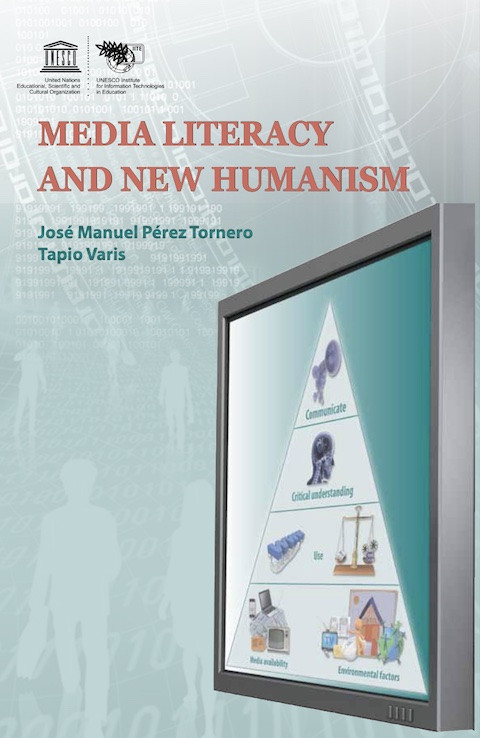 Media Literacy and New Humanism Year of publication: 2010 Author: José Manuel Pérez Tornero | Tapio Varis Corporate author: UNESCO Institute for Information Technologies in Education (IITE) The authors consider the opportunities that media literacy opens in the world of global education and communication in the context of new humanism.Being applied to education, the concept of new humanism, a new UNESCO credo, suggests the creation of a more inclusive society in which all humans have a chance to access knowledge and quality education and every word being heard in the universal dialogue. In the authors’ opinion, the new humanism in the global society must prioritize a new sense of respect for multiplicity and cultural diversity and must support media development with the goal of consolidating the new culture of peace.The book is aimed at educators, researchers, policy-makers, the media and civil society.
  Global Research Policy & Practices Report: Advancing Artificial Intelligence-Supported Global Digital Citizenship Education Year of publication: 2022 Corporate author: UNESCO Institute for Information Technologies in Education (IITE) | Shanghai Open University The UNESCO Institute for Information Technologies in Education (IITE) was established as an integral part of UNESCO by the General Conference of UNESCO at its 29th session November 1997) and is located in Moscow, Russian Federation. IITE is the only UNESCO Category 1 Institute that holds a global mandate for ICT in education.In line with the new Education 2030 Agenda, IITE has developed its strategic priority areas to meet new demands and tasks ahead. The mission of IITE in the new era is promoting the innovative use of ICT and serving as facilitator and enabler for achieving Sustainable Development Goal 4 (SDG 4) through ICT-enabled solutions and best practices. This report, supported by the Online Learning Consortium (OLC), is published in partnership with Shanghai Open University (SOU) to help amplify best practices regarding artificial ntelligence, digital literacy, and digital citizenship instruction for lifelong learning and success. 全球政策与实钱研究报告: 以人工智能为支撑,推动全球数字公民教育 Year of publication: 2022 Corporate author: UNESCO Institute for Information Technologies in Education (IITE) | Shanghai Open University 1997年11月,联合国教科文组织大会在第二十九届会议上设立联合国教科文组织教育信息技术研究所(以下简称 “本研究所),确定其办公地点在俄罗斯联邦莫斯科。本研究所是联合国教科文组织一类机构中唯一在教育领域拥 有信息与通信技术全球授权的机构,并根据新的《2030 年教育议程》, 确定了战略优先领域,以满足未来的新需求 和新任务。其在新时代的使命是以信息与通信技术为支撑,制订解决方案,形成最佳实践,加强创新使用信息与通 信技术,促进和推动实现可持续发展目标 4。在线学习联盟对本工具包给予支持,并与上海开放大学合作将其发布, 旨在帮助推广有关人工智能、数字素养和数字公民教育的最佳实践,以实现终身学习和取得成功,并为政策制定者 和执业者提供一个评估框架和评价工具,以衡量支持学习和参与实践在设计、交付和实施方面所取得的重大进步。
  Mechanisms to overcome Islamic extremism in the context of ensuring the national security of the countries of Central Asia Year of publication: 2018 Author: Gandzina F. Safarova In this article, the author considers the legal aspects of combating extremism in Central Asia, as well as educational and ideological components to combat this phenomenon and cooperation of all three republics with international organizations and other countries of the world in the fight against extremism. Механизмы преодоления исламского экстремизма в контексте обеспечения национальной безопасности стран Центральной Азии Year of publication: 2018 Author: Gandzina F. Safarova В данной статье мы рассмотрим пра-вовые аспекты борьбы с экстремизмом в Центральной Азии, а также образовательные и идеологические составляющие по борьбе с данным явлением и сотруд-ничество всех трех республик с междуна-родными организациями и другими стра-нами мира в борьбе с экстремизмом.
 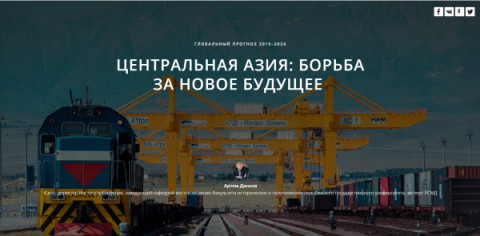 Central Asia: struggle for the new future Year of publication: 2018 Author: A. Dankov The article discusses the social, economic and political prospects of Central Asia (2019-2024). Prognosis also covers the ethnic changes, migration, cultural and language diversity, urbanization, quality of life.