
Resources
Explore a wide range of valuable resources on GCED to deepen your understanding and enhance your research, advocacy, teaching, and learning.
4 Results found
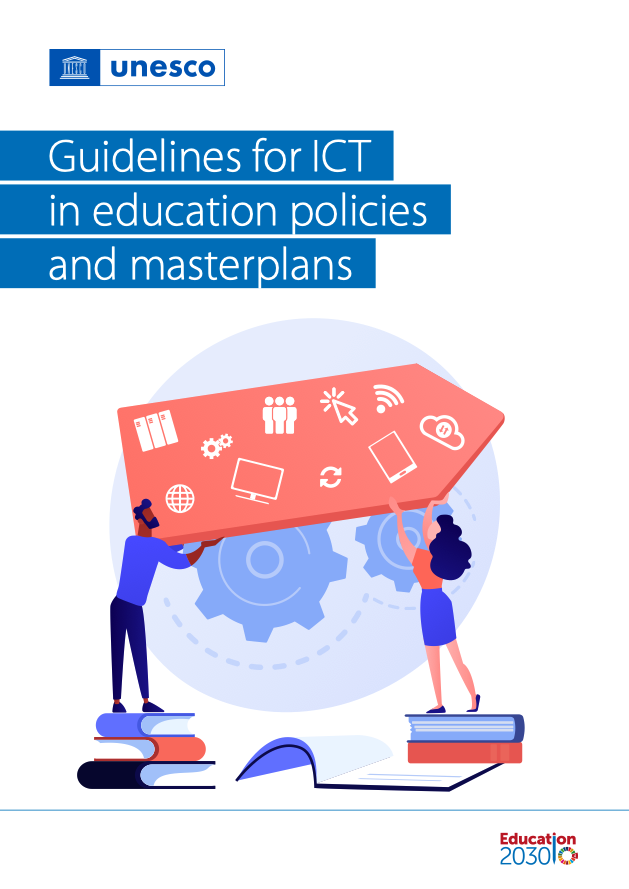 Guidelines for ICT in education policies and masterplans Year of publication: 2022 Author: Fengchun Miao | Juan Enrique Hinostroza | Molly Lee | Shafika Isaacs | Dominic Orr | Fabio Senne | Ana-Laura Martinez | Ki-Sang Song | Alexander Uvarov | Wayne Holmes | Benjamin Vergel de Dios Corporate author: UNESCO Countries across the world have been leveraging information and communication technologies (ICTs) to advance education for decades. These initiatives are driven by public institutions and involve commercial technology companies, and have resulted in paradoxes such as increasing digital inequalities and uneven access to high-quality digital learning opportunities. The COVID-19 crisis further exacerbated this trend: At least one third of students globally did not have access to distance learning during the peak of the COVID-19 crisis in 2020.The publication aims to guide policy-makers to ensure that when adopting technology, human rights should be defended; inclusion, equity and gender equality should be at the heart of solutions; and innovations should be considered as a common good. Based on these principles, the publication presents a human-centred view on the potentials of technologies ranging from low-bandwidth technologies to emerging technologies including Artificial Intelligence and Web 3.0 or “metaverse”. It advocates for national policies to protect the digital well-being of teachers and students, to reduce and neutralize the digital emission footprint, and to avoid ‘techno-solutionism’.This publication proposes policy planning frameworks and an iterative roadmap to examine the digital readiness of local education systems, assess needs of learners and teachers, and plan well-resourced national ICT in education programmes. This is followed by a deep dive into examples of national masterplans on the use of ICT in different types of education. 教育信息化政策和总体规划论纲 Year of publication: 2022 Author: Fengchun Miao | Juan Enrique Hinostroza | Molly Lee | Shafika Isaacs | Dominic Orr | Fabio Senne | Ana-Laura Martinez | Ki-Sang Song | Alexander Uvarov | Wayne Holmes | Benjamin Vergel de Dios Corporate author: UNESCO 几十年来,全球各国都在尝试利用信息与通信技术(Information and Communication Technologies,ICTs)促进教育发展。这些由公共 机构推动并涉及商业技术公司的行动计划却产生了诸如数字不平等 进一步加剧以及高质量数字学习机会不均衡等矛盾。新冠疫情危机 加剧了这一趋势:在2020年新冠疫情危机最严峻的时期,全球至少 三分之一的学生无法获得远程教育。本出版物旨在引导政策制定者在采用技术时提供人 权保障;将包容、公平和性别平等视为解决方案的 核心;将技术创新视为共同利益。 基于以上原则, 本出版物采用以人为本的视角, 审视从低带宽技术到人工智能和互联网3.0或“元宇宙”等新兴技术的潜能。本出版物倡导国家政策应保护教师和学生的数字健康, 减少和中和数字碳排放足迹,并避免“技术解决方案主义”。本出版物提出了一个教育信息化政策规划框架以及 迭接式政策规划路线图,以引导对各地教育系统的数字化准备状态 的评估、对学习者和教师的需求分析,进而规划有充足的配套资源 支持的国家教育信息化方案。随后,本出版物还深入剖析了在教育 的不同领域实施教育信息化的国家总体规划的典型范例。
 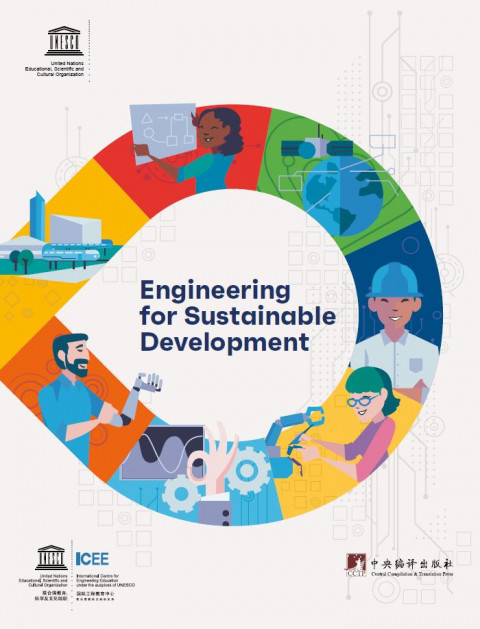 Engineering for Sustainable Development: Delivering on the Sustainable Development Goals Year of publication: 2021 Corporate author: UNESCO | International Centre for Engineering Education (ICEE) The report highlights the crucial role of engineering in achieving each of the 17 SDGs. It shows how equal opportunities for all is key to ensuring an inclusive and gender balanced profession that can better respond to the shortage of engineers for implementing the SDGs. It provides a snapshot of the engineering innovations that are shaping our world, especially emerging technologies such as big data and AI, which are crucial for addressing the pressing challenges facing humankind and the planet. It analyses the transformation of engineering education and capacity-building at the dawn of the Fourth Industrial Revolution that will enable engineers to tackle the challenges ahead. It highlights the global effort needed to address the specific regional disparities, while summarizing the trends of engineering across the different regions of the world.By presenting case studies and approaches, as well as possible solutions, the report reveals why engineering is crucial for sustainable development and why the role of engineers is vital in addressing basic human needs such as alleviating poverty, supplying clean water and energy, responding to natural disasters, constructing resilient infrastructure, and bridging the development divide, among many other actions, leaving no one behind.It is hoped that the report will serve as a reference for governments, engineering organizations, academia and educational institutions, and industry to forge global partnerships and catalyse collaboration in engineering so as to deliver on the SDGs. 工程—支持可持续发展 Year of publication: 2021 Corporate author: UNESCO | International Centre for Engineering Education (ICEE) 报告强调了工程在实现17项可持续发展目标中的关键作用。它表明,人人机会均等是确保一个包容性和性别均衡的职业的关键,能够更好地应对实施可持续发展目标的工程师短缺的问题。它提供了塑造我们世界的工程创新的快照,特别是大数据和人工智能等新兴技术,这些技术对于解决人类和地球面临的紧迫挑战至关重要。它分析了第四次工业革命初期工程教育和能力建设的转变,这将使工程师能够应对未来的挑战。它强调了解决具体地区差异所需的全球努力,同时总结了世界不同地区的工程趋势。通过介绍案例研究和方法以及可能的解决办法,报告揭示了为什么工程对可持续发展至关重要,以及为什么工程师的作用对解决人类的基本需求至关重要,例如减轻贫困、提供清洁水和能源、应对自然灾害,在许多其他行动中,建设有弹性的基础设施和弥合发展鸿沟,不让任何人掉队。希望该报告能为各国政府、工程组织、学术界和教育机构以及工业界建立全球伙伴关系和促进工程领域的合作提供参考,以实现可持续发展目标。