
Resources
Explore a wide range of valuable resources on GCED to deepen your understanding and enhance your research, advocacy, teaching, and learning.
8 Results found
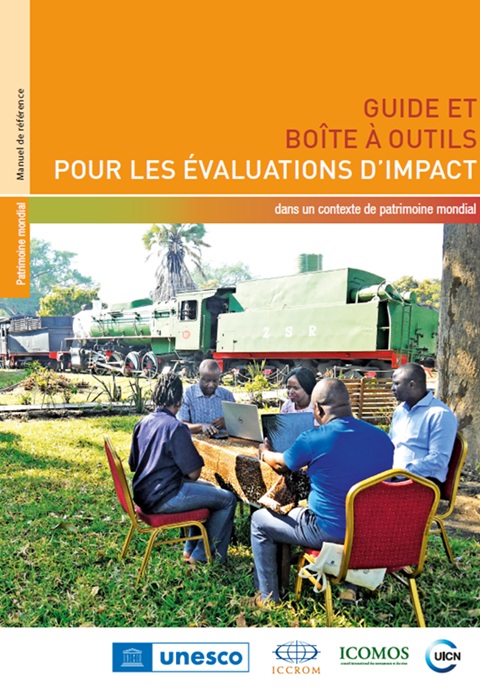 Guide et boîte à outils pour les évaluations d’impact dans un contexte de patrimoine mondial Year of publication: 2023 Author: Sarah Court | Eugene Jo | Richard Mackay | Mizuki Murai | Riki Therivel Corporate author: UNESCO | International Centre for the Study of the Preservation and Restoration of Cultural Property (ICCROM) | International Council on Monuments and Sites (ICOMOS) | International Union for Conservation of Nature (IUCN) Notre patrimoine mondial menacé : les évaluations d’impact offrent des solutionsLors du 50e anniversaire de la Convention du patrimoine mondial, en 2022, on dénombrait plus de 1 100 sites du patrimoine mondial de l’UNESCO. Ces sites sont si précieux pour l’humanité que leur conservation nous incombe à tous. Pourtant, nombre de ces lieux exceptionnels sont confrontés à la pression croissante qu’exercent les divers types de développement et des projets dans et autour des sites. L’évaluation des impacts de ces projets – avant toute décision de mise en œuvre – est essentielle pour éviter tout dommage causé au patrimoine mondial et identifier des choix durables.Le Guide et boîte à outils pour les évaluations d’impact dans un contexte de patrimoine mondial est la référence incontournable qui explique la démarche à suivre pour atteindre cet objectif. Grâce à des conseils et outils (dont des listes de contrôle et glossaire), il fournit un cadre permettant de réaliser des évaluations d’impact pour les sites du patrimoine culturel et naturel.Élaboré par l’UNESCO et les Organisations consultatives du Comité du patrimoine mondial – l’ICCROM, l’ICOMOS et l’UICN –, ce manuel constitue une base de collaboration intersectorielle et multidisciplinaire en vue de trouver des réponses permettant de protéger les sites du patrimoine mondial et de soutenir un développement qualitatif et approprié. Les États parties, les gestionnaires du patrimoine, les décideurs, les planificateurs et les aménageurs de la Convention du patrimoine mondial sont invités à l’utiliser pour contribuer à la réalisation de notre engagement collectif : la transmission de notre patrimoine inestimable aux générations futures.
  La Securite Alimentaire Et De La Nutrition Dans Le Monde Year of publication: 2022 Corporate author: Food and Agriculture Organization of the United Nations (FAO) Le présent rapport met en lumière de manière récurrente l’intensification des principaux facteurs d’insécurité alimentaire et de malnutrition: les conflits, les phénomènes climatiques extrêmes et les chocs économiques, dont les effets se conjuguent à ceux de l’accroissementdes inégalités. L’enjeu n’est pas de savoir si d’autres épreuves sont à venir ou non; il s'agit plutôt de prendre les choses en main avec plus de courage et de renforcer la résilience face aux chocs futurs. Security, Food and Nutrition in the World Year of publication: 2022 Corporate author: Food and Agriculture Organization of the United Nations (FAO) This report repeatedly highlights the intensification of the main factors of food insecurity and malnutrition: conflicts, climatic phenomena extremes, and economic shocks, the effects of which combine with those of the increase in some inequalities. The issue is not whether more trials are to come or not; it's about rather taking matters into their own hands with more courage and building resilience in the face of future shocks.
  Indigenous Peoples Glossary Year of publication: 2018 Corporate author: International Fund for Agricultural Development (IFAD) The purpose of this glossary is to ensure consistency and accuracy of terminology in English, French and Spanish, and standardize the terminology used in relation to indigenous peoples in official documentation and publications, and in all aspects of meeting preparations. It is intended for use by IFAD staff, indigenous peoples' organizations and other interested parties. Terms and definitions are accompanied by details of the source document and its date of publication. Glosario sobre los pueblos indígenas Year of publication: 2018 Corporate author: International Fund for Agricultural Development (IFAD) La finalidad de este glosario es asegurar la coherencia y la exactitud de la terminología en español, francés e inglés, así como normalizar la terminología en materia de pueblos indígenas que se emplea en la documentación y las publicaciones oficiales, y en todos los aspectos relativos a la preparación de reuniones. Sus destinatarios son el personal del FIDA, las organizaciones de pueblos indígenas y otras partes interesadas. Los términos y las definiciones van acompañados de información sobre el documento de origen y su fecha de publicación. Glossaire sur les peuples autochtones Year of publication: 2018 Corporate author: International Fund for Agricultural Development (IFAD) Le but de ce glossaire est de garantir la cohérence et la précision de la terminologie relative aux peuples autochtones, et ce en anglais, en espagnol et en français, et d’uniformiser cette terminologie dans les documents officiels ainsi que dans tout ce qui a trait à l’organisation de réunions. Il a été établi à l’intention du personnel du FIDA, des organisations des peuples autochtones et d’autres parties concernées. À côté de chaque terme, on trouvera le document source et sa date de publication.
  Gender and Rural Development in Eastern Europe and Central Asia: Key Issues Year of publication: 2016 Corporate author: Food and Agriculture Organization of the United Nations (FAO) This report provides a brief overview and description of the critical issues affecting the situation of rural women in the region. This overview has been compiled with the aim of informing all stakeholders and using this information in public campaigns and to achieve greater impact of interventions for development.
  Guidance and Toolkit for Impact Assessments in a World Heritage Context Year of publication: 2022 Author: Sarah Court | Eugene Jo | Richard Mackay | Mizuki Murai | Riki Therivel Corporate author: UNESCO | International Centre for the Study of the Preservation and Restoration of Cultural Property (ICCROM) | International Council on Monuments and Sites (ICOMOS) | International Union for Conservation of Nature (IUCN) | Korea R. Cultural Heritage Administration As the World Heritage Convention celebrates its 50th anniversary in 2022, over 1100 sites around the world are recognized as World Heritage - places that are so valuable to humanity that there conservation has been deemed our collective responsibility. Yet many of these exceptional places face increasing pressure from diverse types of development projects within and around the sites. Assessing the impacts of such projects – before deciding to proceed with their implementation – is essential to both prevent damage to World Heritage and identify sustainable options.The Guidance and Toolkit for Impact Assessments in a World Heritage Context is the go-to reference that explains the process for achieving these goals. Offering practical tips and tools including checklists and a glossary, it provides a framework for conducting impact assessments for cultural and natural heritage sites.Developed by UNESCO and the Advisory Bodies to the World Heritage Committee, ICCROM, ICOMOS and IUCN, this Guidance and Toolkit fosters cross-sectoral, multidisciplinary collaboration to identify solutions for both protecting World Heritage sites and supporting good quality and appropriate development . States Parties to the World Heritage Convention, heritage managers, decision-makers, planners and developers are invited to use it to help realise our collective commitment to passing on our precious heritage to future generations.