
Resources
Explore a wide range of valuable resources on GCED to deepen your understanding and enhance your research, advocacy, teaching, and learning.
3 Results found
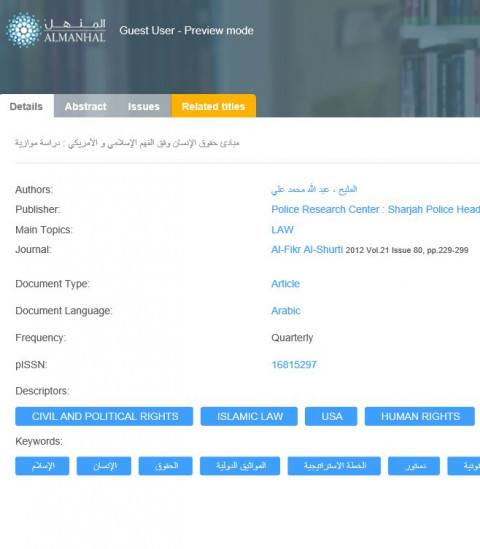 مبادئ حقوق الإنسان وفق الفهم الإسلامي و الأمريكي: دراسة موازية Year of publication: 2012 Author: Abdullah Mohammed Ali Malih Corporate author: Sharjah Police Headquarters. Police Research Center ر حقوق الإنسان من المواضيع الهامة في الشريعة الإسلامية ، والتي تناولها الكثير من الباحثين في كتاباتهم ، فالإسلام أرسى ضوابط فيما يتعلق باحترام وصيانة كرامة الإنسان وعدم المساس بها ، إلا أن هذا البحث جمع فيه الكاتب حقوق الإنسان في ميزان الشريعة بإيجاز ثم قارنها بوثيقة الحقوق للدستور الأمريكي الصادر عام 1791 لبيان عظمة الشريعة الإسلامية وسبقها سائر التشريعات الحديثة في الحث على احترام وصيانة كرامة الإنسان ، وإحاطتها بضمانات تكفل عدم المساس بحقوق الإنسان مهما كان لونه أو جنسه. ووزارة الداخلية بدولة الإمارات العربية المتحدة تبنت هذه الأسس وذلك من خلال القيم التي تبنتها في إطلاق الخطة الاستراتيجية 2011- 2013 من خلال القيمة الثانية والمتمثلة بالعدل وحقوق الإنسان ، وخلص البحث إلى مجموعة من النتائج منها إقرار الإسلام للإنسان الحق في محاكمة عادلة ، وأن يحميه من كل تسلط أو تعسف في تنفيذ الإجراءات ضده ، فلا يعذب وينتقص من عرضه أو قدره وهو ما نصت عليه وثيقة الدستور الأمريكية بالبند السادس والثامن. ولقد أكدت الدراسة أهمية مراعاة حقوق الإنسان الاجتماعية والسياسية والعقدية كحقه في الحياة وحق الحرية وحق المساواة وحق العدالة وحق الفرد في حماية خصوصياته وحق بناء الأسرة وحقوق الزوجة وحقوق الأبناء وحق الراعي وحق الفرد في محاكمة عادلة وحق الحماية من تعسف السلطة وحق الحماية من التعذيب وحق الفرد في حماية عرضه وسمعته وحق الفرد في اللجوء السياسي وحق الفرد في حرية الارتحال والإقامة والحقوق المترتبة للأقليات في المجتمعات الإسلامية وحق المشاركة في الحياة العامة وحق حرية التفكير والاعتقاد والتعبير وحق الحرية الدينية وحق الدعوى والبلاغ وحقوق الإنسان في الحرب وحق تقسيم الثروات بالعدل وحق حماية الملكية وحق العامل وواجبه وحق الفرد في كفايته من مقومات الحيا. Principles of Human Rights According to American and Islamic Understanding: A Parallel Study Year of publication: 2012 Author: Abdullah Mohammed Ali Malih Corporate author: Sharjah Police Headquarters. Police Research Center Human rights are an important topic in Islamic law, which was addressed by many researchers in their writings. Islam laid down controls with respect to the respect and preservation of human dignity and untouched.However, this research compiled the human rights in the balance of Sharia briefly and then compared it with the Bill of Rights of the US Constitution Issued in 1791 to demonstrate the greatness of Islamic law and preceded by all modern legislation in urging respect for and preservation of human dignity, and surrounded by guarantees to ensure that human rights, regardless of color or gender.The Ministry of Interior of the United Arab Emirates has adopted these principles through the values it adopted in launching the strategic plan 2011-2013 through the second value of justice and human rights, and the research concluded a set of results, including the recognition of Islam to the right to a fair trial, and protect it from all Dominating or arbitrary in the implementation of the proceedings against him, is not tortured and detract from his offer or ability, as stipulated in the US Constitution document section VI and VIII.The study emphasized the importance of observing social, political and ideological human rights such as the right to life, the right to liberty, the right to equality, the right to justice, the right to protect their privacy, the right to build a family, the rights of a wife, the rights of a child, the right of a shepherd, the right to a fair trial, the right to protection from arbitrary power, the right to protection from torture and the right to an individual. The protection of his presentation and reputation, the right of the individual to political asylum, the right to freedom of movement and residence, the rights of minorities in Islamic societies, the right to participate in public life, the right to freedom of thought, belief and expression, the right to freedom of religion, the right to claim, communication and human rights In war, the division of wealth and the right to justice and the right to property and the right to protect the worker and the duty and the right to sufficiency of the necessities of life.
 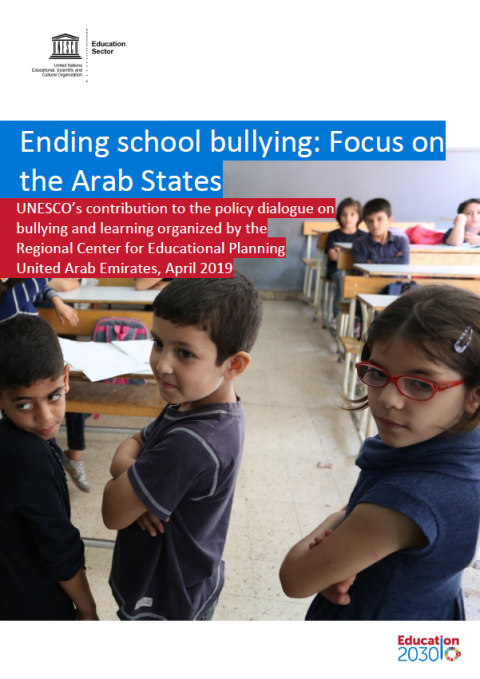 Ending school bullying: Focus on the Arab States and North Africa UNESCO’s contribution to the policy dialogue on bullying and learning organized by the Regional Center for Educational Planning United Arab Emirates Year of publication: 2019 Corporate author: UNESCO Bullying is a form of school violence. According to an agreed international definition, bullying is characterised by aggressive behaviour that involves unwanted, negative actions and an imbalance of power or strength between the perpetrator or perpetrators and the victim. Unlike isolated incidents of school violence, bullying is also characterised by repetition over time. The number of repetitions may vary and, for example, major surveys that collect data on bullying measure the frequency of bullying in different ways. The international Sustainable Development Goal Thematic Indicator 4.a.2 that measures the ‘percentage of students who experienced bullying during the past 12 months, by sex’, which was adopted in 2018, defines that the frequency of aggressions should be at least once or twice a month or more for a student to be considered a victim of bullying. It is important to note that here is no standard definition of bullying across the six international surveys that collect data on the prevalence of bullying. Some of them do not even provide a definition. These surveys are the following:Two international surveys that measure the health behaviours of students as well as protective factors including school climate: the WHO Global School-based Student Health Survey (GSHS) and the Health Behaviours in School-aged Child survey (HBSC) conducted by the HBSC Consortium.Four international surveys that focus mostly on the measurement of learning outcomes of students but also ask questions on the school climate including bullying: the Regional Comparative and Explanatory Study in Latin America (Estudio Regional Comparativo y Explicativo, ERCE in Spanish); theProgress in International Reading Literacy Study (PIRLS); the Programme for International Students Assessment (PISA); and the Trends in Mathematics and Science Study (TIMSS).