
Resources
Explore a wide range of valuable resources on GCED to deepen your understanding and enhance your research, advocacy, teaching, and learning.
6 Results found
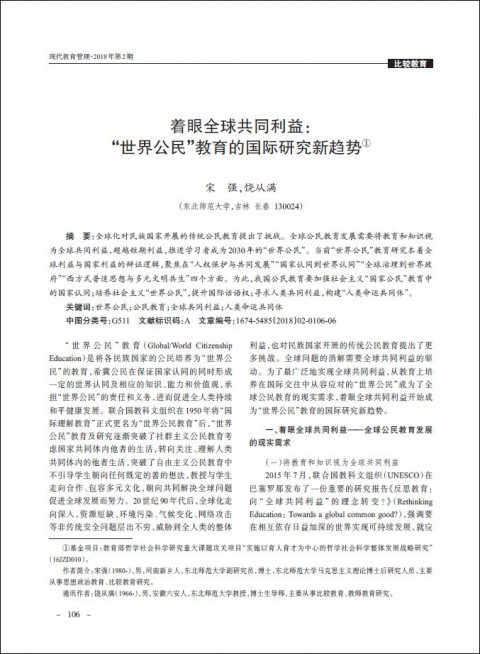 Focus on Global Common Good:The New International Research Trend on World Citizenship Education Year of publication: 2018 Author: Song Qiang | Rao Congman Globalization has posed challenges for national-states to develop traditional citizenship education. To develop the citizenship education in the world needs to regard education and knowledge as global common good, surpass short- term benefit,and promote learners to be world citizens by 2030. Start with the dialectical logic on global benefit and national benefit,the researches of world citizenship education focus on“human rights protection and joint development”,“from national identity to world identity”,“from global governance to world government”, and “western universal mind vs. multi- civilizations intergrowth”. Chinese citizenship education needs to reinforce the national identity in socialism national citizenship education; cultivateing socialism world citizenship and promoteing international discourse power;seek human common good and build community of common destiny for all mankind. 着眼全球共同利益:“世界公民”教育的国际研究新趋势 Year of publication: 2018 Author: Song Qiang | Rao Congman 全球化对民族国家开展的传统公民教育提出了挑战。全球公民教育发展需要将教育和知识视为全球共同利益,超越短期利益,推进学习者成为2030年的“世界公民”。当前“世界公民”教育研究本着全球利益与国家利益的辩证逻辑,聚焦在“人权保护与共同发展”“国家认同到世界认同”“全球治理到世界政府”“西方式普适思想与多元文明共生”四个方面。为此,我国公民教育要加强社会主义“国家公民”教育中的国家认同;培养社会主义“世界公民”,提升国际话语权;寻求人类共同利益,构建“人类命运共同体”。
 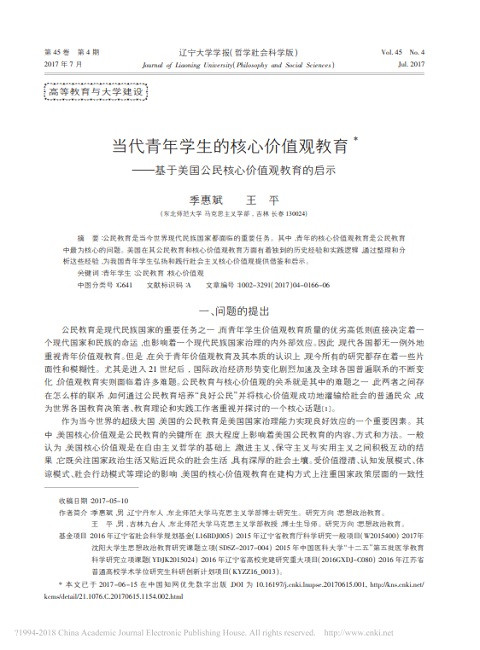 The Education of Core Values Among Contemporary Youth Students: Based on the Enlightenment From American Citizen Core Values Education (Journal of Liaoning University, Philosophy and Social Sciences Edition; Vol. 45, No. 4) Year of publication: 2017 Author: Ji Huibin | Wang Ping Corporate author: Liaoning University Civic Education is a key task for modern nation states around the world, among which the education of core values among youth students is the most important issue. The US has its own experience and practice in civic education and core values education. An analysis of the US experience can provide reference and enlightenment for the promotion and practice of core socialist values among youth students. 当代青年学生的核心价值观教育: 基于美国公民核心价值观教育的启示 (辽宁大学学报, 哲学社会科学版; Vol. 45, No. 5) Year of publication: 2017 Author: Ji Huibin | Wang Ping Corporate author: Liaoning University 公民教育是当今世界现代民族国家都面临的重要任务。其中,青年的核心价值观教育是公民教育中最为核心的问题。美国在其公民教育和核心价值观教育方面有着独到的历史经验和实践逻辑,通过整理和分析这些经验,为我国青年学生弘扬和践行社会主义核心价值观提供借鉴和启示。
 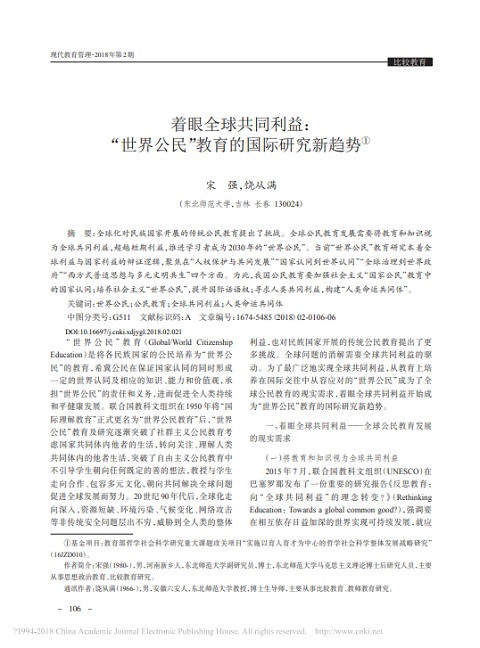 Focus on Global Common Good: The New International Research Trend on World Citizenship Education (Modern Education Management; No. 2) Year of publication: 2018 Author: Song Qiang | Rao Congman Corporate author: Liaoning Institute of Education Globalization has posed challenges for national-states to develop traditional citizenship education. To develop the citizenship education in the world needs to regard education and knowledge as global common good, surpass short-term benefit, and promote learners to be world citizens by 2030. Start with the dialectical logic on global benefit and national benefit, the researches of world citizenship education focus on “human rights protection and joint development”, “from national identity to world identity”, “ from global governance to world government”, and “ western universal mind vs. multi-civilizations intergrowth”. Chinese citizenship education needs to reinforce the national identity in socialism national citizenship education; cultivateing socialism world citizenship and promoteing international discourse power; seek human common good and build community of common destiny for all mankind. 着眼全球共同利益:‘世界公民’教育的国际研究新趋势” (现代教育管理; No. 2) Year of publication: 2018 Author: Song Qiang | Rao Congman Corporate author: Liaoning Institute of Education 全球化对民族国家开展的传统公民教育提出了挑战。全球公民教育发展需要将教育和知识视 为全球共同利益,超越短期利益,推进学习者成为2030年的“世界公民”。当前“世界公民”教育研究本着全 球利益与国家利益的辩证逻辑,聚焦在“人权保护与共同发展”“国家认同到世界认同”“全球治理到世界政 府”“西方式普适思想与多元文明共生”四个方面。为此,我国公民教育要加强社会主义“国家公民”教育中 的国家认同;培养社会主义“世界公民”,提升国际话语权;寻求人类共同利益,构建“人类命运共同体”。