
Resources
Explore a wide range of valuable resources on GCED to deepen your understanding and enhance your research, advocacy, teaching, and learning.
2 Results found
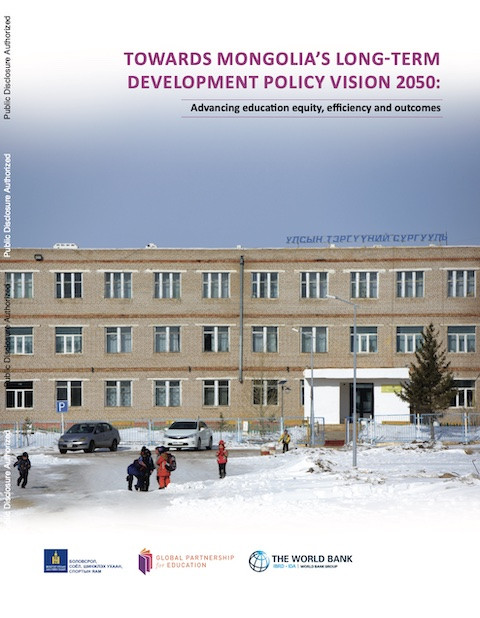 Towards Mongolia’s Long-Term Development Policy Vision 2050: Advancing Education Equity, Efficiency and Outcomes Year of publication: 2020 Corporate author: Mongolia Ministry of Education, Culture, Science and Sports | World Bank This report seeks to synthesize and analyze education outcomes with a view of identifying the main priorities for strengthening the education sector in support of Mongolia’s Sustainable Development Vision 2050. The report highlights data and findings generated from a series of source reports (see bibliography) related to the goals and targets set out in the Vision 2050. The report is composed of six thematic chapters: Access; Equity; Internal Efficiency, Education Cost and Finance; External Efficiency; Management. Each chapter will include an overview of the current situation and recent development with a focus on, key achievements and persistent challenges. As a synthesis report, the information on each topic is not exhaustive but rather seeks to present key findings. Specific activities highlighted in the Vision 2050 have been included at the beginning of each chapter and a complete mapping by activity is annexed (Annex 1. Vision 2050 Chapter mapping). This synthesis report draws on conclusions, finding, data and surveys produced in collaboration with MECSS by the Asian Development Bank, the Global Partnership for Education and the World Bank. The synthesis also draws from key UNESCO reports. The scope, research, and focus of the source reports differ, and precise findings are, on occasions, incongruent however the overall conclusions are fundamentally compatible. Whereas most of the source reports focus on one or two key stages, the synthesis report seeks to extract cross-cutting and/or recurring challenges that have an impact, positive or negative, on equity, efficiency and outcomes which ultimately may contribute to the implementation of Vision 2050. Mongolia’s State Education Policy (2014-2024) states: ‘Education is the main key factor of each citizen’s lifelong support and guarantee of life quality, and of the State’s societal and economical, science and technological development, and guarantee of national independence and security. Mongolian State shall develop education as a leading sector in society’.
  APCEIU-MNUAC Joint Research on Establishing the Foundation for Promoting Global Citizenship Education in Higher Education Institutions in Mongolia Year of publication: 2025 Author: Daehoon Jho | Jihyang Lee | Odsuren Dagmid | Mandukhai Baldandorj | Tumennast Dashtsenden | Amartuvshin Myagmarsuren | Delgertsetseg Choijilsuren | Punsaldulam Binderiya Corporate author: APCEIU | Mongolia National University of Arts and Culture (MNUAC) This report reviews the integration of global citizenship education (GCED) in higher education and examines various approaches to establishing a foundation for promoting GCED in Mongolian HEIs. To this end, the study conducted a situational analysis on the current status of GCED at MNUAC. Based on this analysis, the report proposes a GCED integration roadmap for MNAUC, outlining a sequenced pathway that begins with achievable initiatives while also offering insights for other HEIs in Mongolia. The report is available in both English and Mongolian.