
Resources
Explore a wide range of valuable resources on GCED to deepen your understanding and enhance your research, advocacy, teaching, and learning.
5 Results found
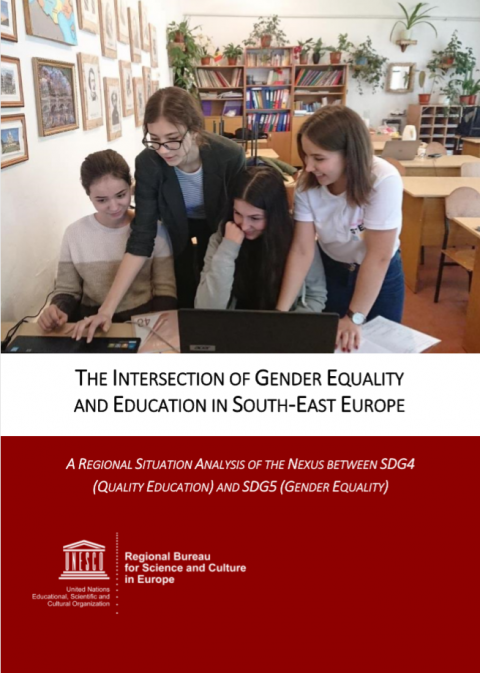 The Intersection of gender equality and education in South-East Europe: a regional situation analysis of the Nexus between SDG4 (Quality Education) and SDG5 (Gender Equality) Year of publication: 2019 Corporate author: UNESCO Venice This report focuses on highlighting both progress and persistent challenges.It does so by analyzing the current situation of gender equality in education, including gender parity in participation, education quality, and outcomes, aswell as issues related to gender equality in which education plays an important role, suchas policies that disproportionately affect women, early and unintended pregnancy, child marriage, and human trafficking. It relies on the most recent available data from the UNESCO Institute of Statistics (UIS), as well as supplemental data including from UNICEF, UN Women, and theOrganization for Economic Cooperation and Development(OECD), to descriptively analyze the rates for females and males, considering also progress over the last decade, and to identify where progress in gender equality has been made and whereactions are needed to ensure gender equality in and through education.
  [Video] Citizenship and Human Rights Education for Change Year of publication: 2019 Corporate author: Global Campus of Human Rights In increasingly selective, violent and intolerant times, it becomes crucial to reinforce our capacities to deal with topical, controversial and contested issues undermining our human dignity and to promote the supportive values of non-discrimination, democracy, intercultural dialogue and peace. Teaching and learning about democratic citizenship, human rights and EU common values represents an opportunity to react and counter the negative forces of our time.This MOOC aims to foster the promotion of Human Rights Education and EU common values through the transfer of knowledge about the definitions, frameworks and content of Human Rights Education as well as the analysis of existing and innovative practices on teaching styles, approaches and methods.
 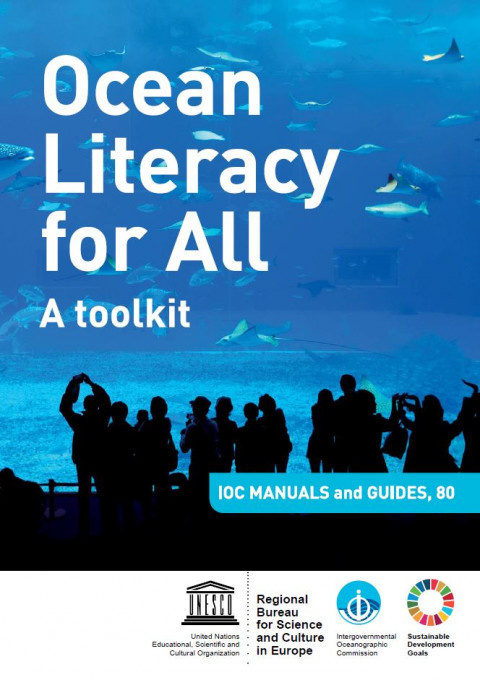 Ocean Literacy for All: A Toolkit (IOC Manuals and Guides, 80) Year of publication: 2017 Author: Francesca Santoro | Selvaggia Santin | Gail Scowcroft | Géraldine Fauville | Peter Tuddenham Corporate author: UNESCO Venice Ocean literacy programs and projects, until now, have been mainly focusing on developing resources, lesson plans and activities targeting Science, Technology, Engineering and Mathematics (STEM) education. Currently, and in particular after the adoption of the Sustainable Development Goal (SDG) 14, we have assisted to a shift in the focus towards the inclusion of approaches closer to those developed under the UNESCO framework of Education for Sustainable Development (ESD).ESD aims to improve access to quality education on sustainable development at all levels and in all social contexts, to transform society by reorienting education and help people develop knowledge, skills, values and behaviors needed for sustainable development. Individuals are encouraged to be responsible actors who resolve challenges, respect cultural diversity and contribute to creating a more sustainable world. This publication is made of two parts. The first part presents the history of ocean literacy, and describes its framework made of 7 essential principles, and connects them to international ocean science programs that contributes to enhancing ocean knowledge and observations. Moreover, marine scientists and educators were interviewed to share their professional experiences on ocean literacy as well as their views on its future. The last chapter of part 1 describes the existing challenges to marine education, as well as the path for the development of successful ocean literacy activities in the context of the 2030 Agenda. One of the most important factors identified is related to the creation of multi-sector partnerships among the education, government, and private sector that have jointly built ocean literacy programs for all formal educational levels from the primary school to the university level as well as for non-formal learners. Worldwide examples of such programs are presented. The second part, after introducing the methodological approach based on the multi-perspective framework for ESD developed by UNESCO, presents 14 activities that could provide tested examples and support for the implementation of marine education initiatives. The aim is not to provide a one size-fits-all ready to use collection, but rather to offer support and examples of what could be then adapted for different geographical and cultural contexts. The resources are designed to be relevant for all learners of all ages worldwide and to find their application in many learning settings, while in their concrete implementation they will, naturally, have to be adapted to the national or local context. Cultura oceánica para todos: kit pedagógico (COI Manuales y guías, 80) Year of publication: 2017 Author: Francesca Santoro | Selvaggia Santin | Gail Scowcroft | Géraldine Fauville | Peter Tuddenham Corporate author: UNESCO Venice Más que un concepto, la cultura oceánica es una herramienta fundamental para mejorar el conocimiento sobre el océano y estimular la participación activa de los ciudadanos y de las partes interesadas en la implementación de acciones sostenibles. Es también una manera de promover prácticas de producción sostenible, formular sólidas políticas públicas marinas, promover una ciudadanía más responsable, y animar a los jóvenes a iniciar una carrera en la economía azul o en las ciencias oceánicas. Esta publicación pretende describir y revisar los actuales enfoques, iniciativas, programas y proyectos sobre cultura oceánica. La primera parte ilustra los principios esenciales de la cultura oceánica y evidencia el conocimiento científico subyacente a través de estudios de casos, datos históricos e información cultural. Asimismo, muestra los esfuerzos actuales que realiza la cultura oceánica desde una perspectiva multidisciplinaria mediante entrevistas a expertos, educadores y científicos que trabajan y estudian en todo el mundo. La segunda parte presenta catorce actividades que proporcionan herramientas y buenas prácticas basadas en las competencias clave necesarias para que alumnos de todas las edades conozcan y se comprometan activamente con los temas sobre el desarrollo sostenible. Estas actividades pueden ser adaptadas a las necesidades y a los recursos disponibles. Las referencias adicionales que se proporcionan sirven para ampliar la información de los temas propuestos. Con este manual, la UNESCO y su Comisión Oceanográfica Intergubernamental (COI) pretenden que los países y las partes interesadas participen en el desarrollo de actividades interdisciplinarias y culturalmente diversas sobre cultura oceánica a escala mundial.
 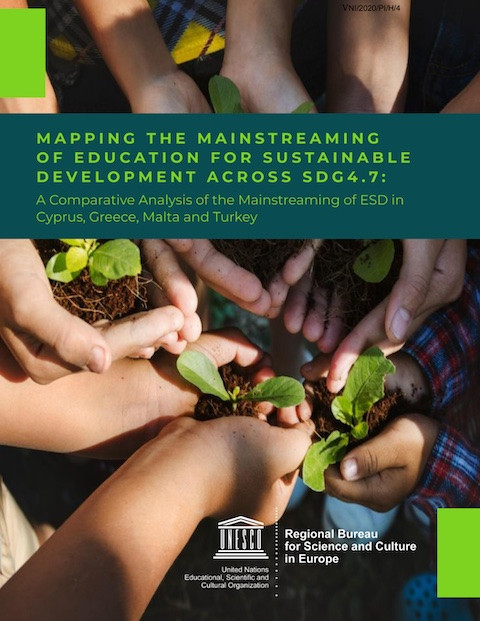 Mapping the Mainstreaming of Education for Sustainable Development Across SDG 4.7: A Comparative Analysis of the Mainstreaming of ESD in Cyprus, Greece, Malta and Turkey Year of publication: 2020 Author: Devonne Goad Corporate author: UNESCO The objective of the present report is to summarize the state of ESD implementation in Cyprus, Greece, Malta and Turkey. This report summarizes and shares the successes and challenges highlighted within National Implementation Reports, as such a summary could be an important contribution to UNESCO, as the organization is currently facilitating dialogues to establish the direction of the new global programme for ESD. For that reason, these four countries within the regional scope of the UNESCO Regional Bureau in Venice, Italy, were chosen for the preliminary study. For the purpose of this study, the binary data contained within the National Implementation reports of Cyprus, Greece, Malta and Turkey were extracted to summarize the state of ESD implementation.