
Resources
Explore a wide range of valuable resources on GCED to deepen your understanding and enhance your research, advocacy, teaching, and learning.
3,777 Results found
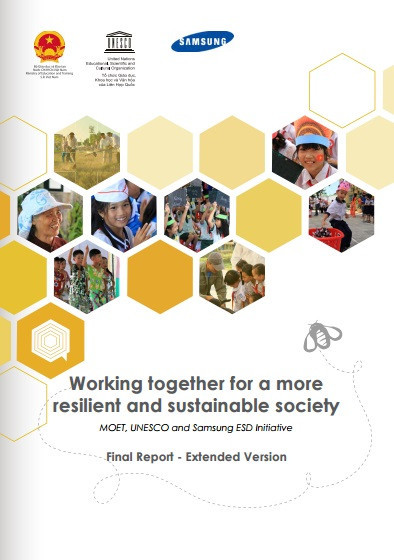 Working Together for a More Resilient and Sustainable Society: MOET, UNESCOand Samsung ESD Initiative; Final Report - Extended Version Year of publication: 2015 Corporate author: UNESCO Hanoi The overarching aim of the ESD Initiative is to support Viet Nam in shaping a more resilient and sustainable learning society. The strategy for the ESD Initiative was developed to establish enabling environments for students to better apply what they learn in school within their homes and communities, and to enhance the education of parents and the community through students. The strategy applies to various themes under ESD. In the case of the current implementation of the Initiative, the key areas are: climate change mitigation and adaptation, disaster risk reduction and biodiversity conservation and restoration, in line with the United Nations Decade of Education for Sustainable Development (UN DESD) and national needs and strategies.
  2019 유네스코 ESD 정책 포럼: 2030년을 위한 지속가능발전교육(ESD), 한국은 어떻게 준비할 것인가 Year of publication: 2019 Corporate author: 대한민국 교육부 | 유네스코한국위원회 2019년 11월에 유네스코한국위원회(ESD한국위원회)에서 주최한 '2019 유네스코 지속가능발전교육 정책 포럼'의 자료집으로 행사개요와 토론자료, 지속가능발전교육에 대한 부록을 수록하고 있다.2030년을 위한 지속가능발전교육(ESD), 한국은 어떻게 준비할 것인가를 주제로 ESD for 2030 체계 수립 및 이행 준비에 대한 국제사회 최신 동향 공유, 국가 이니셔티브 구축 관련 한국 차원의 정책적 준비 및 운영 체계 수립 방안 논의, GAP 참여기관 등 국내 ESD 이행 핵심 주체별 활동 내용 공유 및 제언 등이 주요 내용이다.
 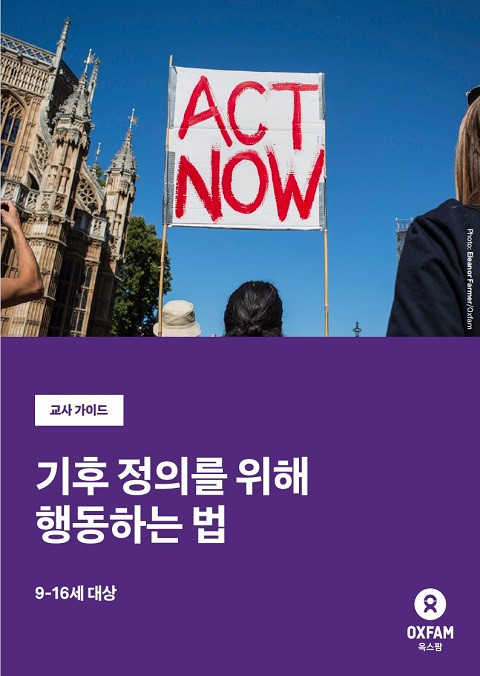 기후 정의를 위해 행동하는 법: 교사 가이드; 9-16세 대상 Year of publication: 2023 Corporate author: 옥스팜 기후 정의란 무엇일까? 우리는 모두 기후위기로부터 영향을 받고 있지만 어떤 특정 지역사회가 다른 지역보다 더 큰 영향을 받고 있다. 그리고 가장 큰 고통을 받고 있는 사람들은 기후위기 발생에 거의 기여하지 않은 사람들이다. 이러한 불공정한 기후위기 영향에 대해 알고, 이를 바꾸기 위해 기꺼이 행동하는 것이 바로 기후 정의이다. 이번 교육자료는 행동하는 것이 기후 정의 달성에 얼마나 중요한 지에 대한 내용을 다루고 있다. 특히 청소년들이 기후위기를 위해 행동하는 것은 사람과 지구의 삶을 개선하는 아주 중요한 변화를 가져오는 한 주체가 되는 경험이 될 것이다.
 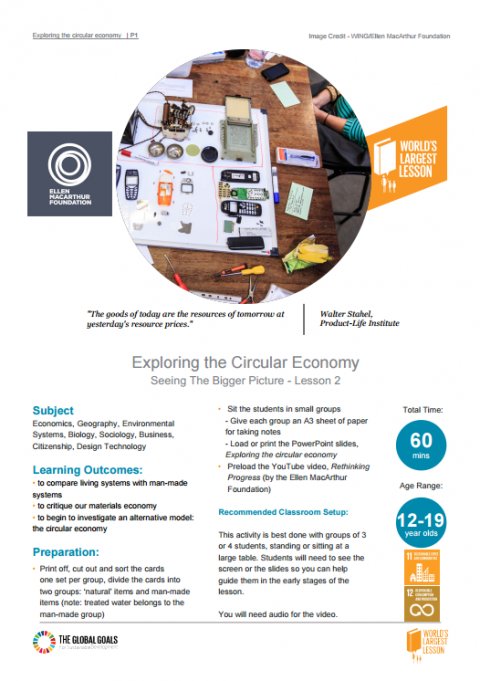 Exploring the Circular Economy: Seeing The Bigger Picture - Lesson 2 Corporate author: United Nations Children's Fund (UNICEF) World’s Largest Lesson is a collaborative education project to support the announcement of the United Nations Global Goals for Sustainable Development. Learning outcomes of the project: • to compare living systems with man-made systems • to critique our materials economy • to begin to investigate an alternative model: the circular economy
 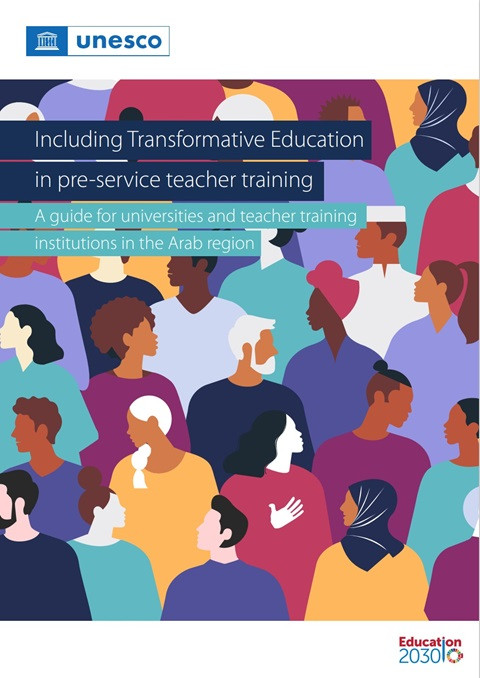 Including Transformative Education in Pre-service Teacher Training: A Guide for Universities and Teacher Training Institutions in the Arab Region Year of publication: 2024 Author: Khalaf Al Abri | Marco Pasqualini Corporate author: UNESCO Beirut Transformative Education (TE), which includes concepts such as Global Citizenship Education (GCED) and Education for Sustainable Development (ESD), is an essential approach to provide learners with the tools to act for more just, peaceful and sustainable societies. Between 2021 and 2023, the experts of the UNESCO Arab Transformative Education Network identified the creation of a course on Transformative Education for teachers’ pre-service training as a key step to (i) provide teachers with the needed skills to promote Transformative Education as part of the national curriculum as well as though their daily teaching practices, and (ii) to support the reform of pedagogies more broadly, by making them more interactive and focused on critical thinking, and thus positively contributing to improving learners’ overall learning outcomes. This guidance document is addressed to all entities in charge of pre-service teacher training (e.g. departments of education within higher education institutions and teacher training institutions) in the Arab region interested in including Transformative Education as part of their programmes. The guidance document particularly supports faculty deans and academia in defining the scope and the key parameters to consider while developing a course on Transformative Education, including defining course objectives, format, content, and pedagogy, as well as choosing the right facilitator(s) to deliver the course. The document also provides useful references to other guides and tools which can further support the reflections around Transformative Education and how it can be concretely applied and promoted at the higher education level.
 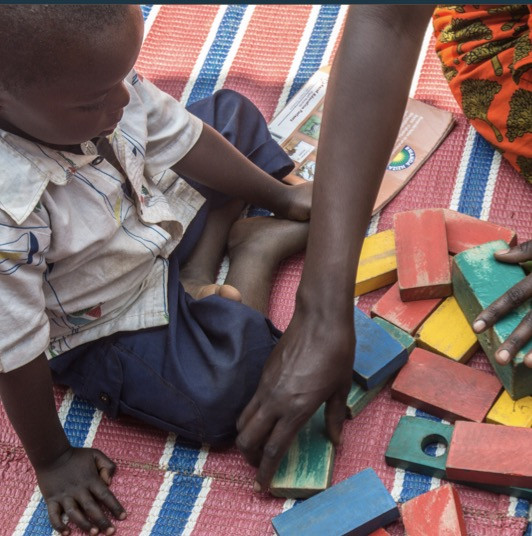 Promoting Climate-Sensitive Early Childhood Care and Education in Emergencies Year of publication: 2023 Corporate author: Inter-agency Network for Education in Emergencies (INEE) This brief addresses a gap in climate change and education literature: young children who are affected by crises. Climate mitigation and adaptation efforts often exclude early childhood care and education (ECCE), especially in crises and emergencies. Therefore, the brief outlines multisectoral ECCE interventions that can serve as solutions to broader climate change mitigation and adaptation goals. These interventions look at long-term solutions that reduce children’s exposure to climate change risks. The aim of these long-term solutions is to create new climate-adapted ways of thinking, being, and doing by focusing on care – for each other and for the earth – and by building climate resilience among children and their supporting care systems. Promouvoir l’éducation et la protection de la petite enfance en situations d’urgence sensibles au climat Year of publication: 2023 Corporate author: Inter-agency Network for Education in Emergencies (INEE) Ce document est destiné au secteur de l’éducation en situations d’urgence, mais il est pertinent pour toutes celles et ceux qui s’intéressent aux questions relatives aux enfants, car le changement climatique affecte le développement de l’enfant dans tous les contextes. Les approches présentées dans ce document peuvent aider les systèmes éducatifs dans des contextes non urgents à être mieux préparés et résilients face au climat. C’est pourquoi ce document décrit les interventions multisectorielles en matière d’EPPE qui peuvent servir de solutions à des objectifs plus larges d’atténuation du changement climatique et d’adaptation au changement climatique. Ces actions visent à trouver des solutions à long terme pour réduire l’exposition des enfants aux risques liés au changement climatique. L’objectif de ces solutions à long terme est de créer de nouvelles façons de penser, d’être et d’agir adaptées au climat, en se concentrant sur l’attention portée aux autres et à la Terre, et en renforçant la résilience climatique des enfants et des systèmes de prise en charge qui les soutiennent. تعزيز الرعاية والتعليم للطفولة المبكرة للتجاوب مع التغيرات المناخية في حالات الطوارئ Year of publication: 2023 Corporate author: Inter-agency Network for Education in Emergencies (INEE) يتناول هذا الملخص فجوة في أدبيات تغير المناخ والتعليم: الأطفال الصغار المتأثرون بالأزمات. غالبًا ما تستبعد جهود التخفيف من آثار المناخ والتكيف معه رعاية الطفولة المبكرة والتعليم، لا سيما في الأزمات وحالات الطوارئ. لذلك، يحدد الملخص التدخلات متعددة القطاعات في مجال رعاية وتعليم الطفولة المبكرة التي يمكن أن تكون بمكانة حلول لأهداف أوسع للتخفيف من تغير المناخ والتكيف معه. يبحث هذا الملخص في الحلول طويلة الأجل التي تقلل تعرض الأطفال لأخطار تغير المناخ. ويهدف هذا بدوره إلى إنشاء طرق جديدة متكيفة مع المناخ للتفكير والوجود والعمل من خلال التركيز على الرعاية - لبعضنا البعض وللأرض -،ومن خلال ناءي المرونة المناخية بين الأطفال وأنظمة الرعاية الداعمة لهم. يتناول هذا الملخص فجوة في أدبيات تغير المناخ والتعليم: الأطفال الصغار المتأثرون بالأزمات. غالبًا ما تستبعد جهود التخفيف من آثار المناخ والتكيف معه رعاية الطفولة المبكرة والتعليم، لا سيما في الأزمات وحالات الطوارئ. لذلك، يحدد الملخص التدخلات متعددة القطاعات في مجال رعاية وتعليم الطفولة المبكرة التي يمكن أن تكون بمكانة حلول لأهداف أوسع للتخفيف من تغير المناخ والتكيف معه. يبحث هذا الملخص في الحلول طويلة الأجل التي تقلل تعرض الأطفال لأخطار تغير المناخ. ويهدف هذا بدوره إلى إنشاء طرق جديدة متكيفة مع المناخ للتفكير والوجود والعمل من خلال التركيز على الرعاية - لبعضنا البعض وللأرض -،ومن خلال ناءي المرونة المناخية بين الأطفال وأنظمة الرعاية الداعمة لهم.
 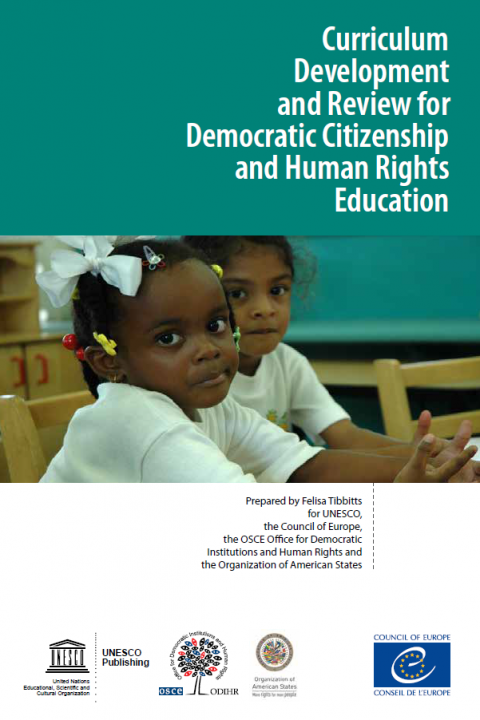 Curriculum development and review for democratic citizenship and human rights education Year of publication: 2015 Author: Felisa Tibbitts Corporate author: Council of Europe Education for democratic citizenship and human rights education (EDC/HRE) are educational areas that contribute fundamentally to our ability to live together in communities, in countries and as neighbours across national borders. They also help to enable a flourishing global community. The wider aim of EDC/HRE is the establishment of sustainable and participative forms of democracy based on respect for human rights and good governance. As such, EDC/HRE is a public good and an ongoing investment for producing societies characterised by human rights principles such as non-discrimination, inclusion and participation, and the rule of law. The central purpose of this resource is to support the development of education policies and curricula in schools that support and promote young people’s participation in democratic life. As such, EDC/HRE is inevitably in an ongoing state of development and review. This resource aims to support the work of education leaders and curriculum developers in integrating EDC/HRE within curriculum systems and to encourage the engagement of stakeholders in supporting such efforts. Élaboration et examen d'un curriculum pour la citoyenneté démocratique et l'éducation aux droits de l'homme Year of publication: 2015 Author: Felisa Tibbitts Corporate author: Conseil de l'Europe La plupart des jeunes grandissent en apprenant les leçons de vie des soins, de la solidarité, de la responsabilité et de la justice en s'engageant quotidiennement auprès des familles, des amis, des écoles et des institutions communautaires. L'éducation à la citoyenneté démocratique et l'éducation aux droits de l'homme (EDC / EDH) sont des domaines éducatifs qui contribuent fondamentalement à notre capacité à vivre ensemble dans les communautés, dans les pays et comme voisins à travers les frontières nationales. Ils aident également à favoriser une communauté mondiale florissante. L'objectif plus large d'EDC / EDH est l'instauration de formes de démocratie durables et participatives fondées sur le respect des droits de l'homme et la bonne gouvernance. À ce titre, l'EDC / EDH est un bien public et un investissement permanent pour des sociétés productrices caractérisées par des principes relatifs aux droits de l'homme tels que la non-discrimination, l'inclusion et la participation et l'état de droit. L'objectif central de cette ressource est d'appuyer l'élaboration de politiques et de programmes éducatifs dans les écoles qui soutiennent et encouragent la participation des jeunes à la vie démocratique. À ce titre, EDC / EDH est inévitablement dans un état de développement et d'examen permanent. Cette ressource vise à appuyer le travail des leaders de l'éducation et des concepteurs de programmes d'études pour intégrer EDC / EDH dans les systèmes curriculaires et encourager l'engagement des parties prenantes à soutenir ces efforts.