
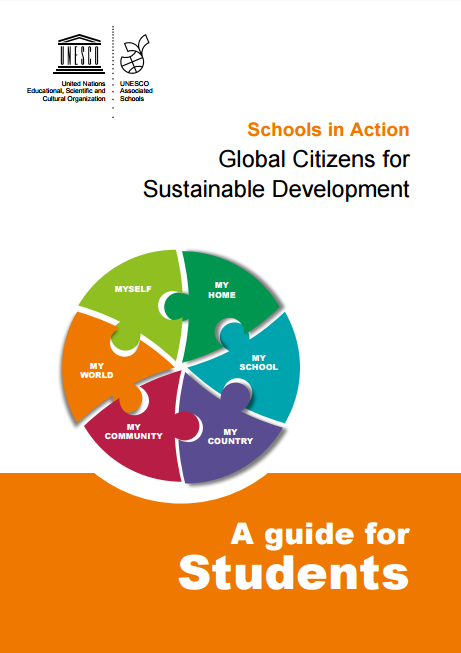
Escuelas en acción Ciudadanos del mundo para el desarrollo sostenible: guía para el alumnado
- Autor Corporativo
- Organización de las Naciones Unidas para la Educación, la Ciencia y la Cultura (UNESCO)
- ISBN
- 978-92-3-100179-6
- Colección
- 32 p.
- Idioma del recurso
- inglésfrancés
- Año de publicación
- 2016
- Palabra Clave
- International educationGlobalizaciónCivic educationEducación para el desarrollo sostenible
- Tema
- Civiles / Ciudadanía / DemocraciaGlobalización y justicia social / Comprensión internacionalDesarrollo sostenible / Sostenibilidad
- Nivel de Educación
- Educación secundaria
- Región
- Global
- Lugar de publicación
- Paris
The UNESCO Associated Schools Project Network (ASPnet) in Action: Global Citizens for Sustainable Development student guide aims to introduce secondary school students to Global Citizenship Education (GCED) and Education for Sustainable Development (ESD) and provide them with ideas and activities to contribute proactively to a more peaceful and sustainable world. The guide draws on the discussions and activities of almost 1,100 participants from 104 countries, including ASPnet National Coordinators, school principals, teachers, students and experts who contributed to the ASPnet Online Collaborative Platform: Global Citizens Connected for Sustainable Development in 2014 and 2015 [http://en.unesco.org/aspnet/globalcitizens]. You will find in this student guide: An overview of what it means to be a global citizen and of how you can contribute to sustainable development. Ideas for getting active yourself, as part of your home, school, community, country and globally. Selected activities on GCED and ESD from ASPnet schools around the world.
 Addressing Violent Pasts Through Education: A Policy Guide
  Where Learners Meet History: Reaffirming the Role of History Education in the 21st Century
  Report on Digital Transformation in Higher Education in South Asia
  Voices Against Violence: Middle Years