
Recursos
Exploren una amplia gama de recursos valiosos en GCED para profundizar su comprensión y promover su búsqueda, incidencia, enseñanza y aprendizaje.
2 resultados encontrados
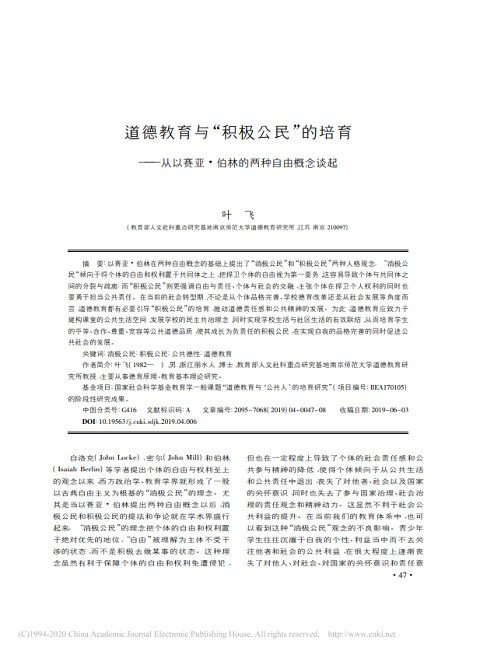 Moral Education and the Cultivation of Positive Citizen: Insights from Isaiah Berlin’s Conceptualization of Two Types of Freedom Año de publicación: 2019 Autor: Ye Fei Autor corporativo: 苏州大学 On the basis of a binary model of freedom, Isaiah Berlin distinguished two types of citizenship: “negative citizen” and “active citizen”. “Negative citizens” tend to place individual freedom and rights above the community, and to defend the individual freedom as the top priority, which readily leads to the division and alienation between the individual and the community. “Active citizens”, on the other hand, tend to place a greater emphasis on the close relationship between freedom and responsibility and the integration of individual and the society, advocating that individuals shall have the courage to assume public responsibility while defending their individual rights. In the ongoing social transformation, moral education shall guide the cultivation of “active citizens” and promote the development of moral responsibility and public spirit, which is valid practice with relation to individual personality improvement, school moral education reform, and social development. To this end, moral education should be devoted to constructing a public living space in the classroom, developing the concept of democratic co-governance in schools, and meanwhile establishing an effective connection between schools and communities. Thus, students can be expected to become responsible and positive citizens who treasure such public virtues as equality, cooperation, respect, and tolerance, and who shall contribute to the progress of public life in building a respectable character. 道德教育与“积极公民”的培育—从以赛亚・伯林的两种自由概念谈起 Año de publicación: 2019 Autor: Ye Fei Autor corporativo: Soochow University 以赛亚·伯林在两种自由概念的基础上提出了“消极公民”和“积极公民”两种人格观念。“消极公民”倾向于将个体的自由和权利置于共同体之上,把捍卫个体的自由视为第一要务,这容易导致个体与共同体之 间的分裂与疏离; 而“积极公民”则更强调自由与责任、个体与社会的交融,主张个体在捍卫个人权利的同时也要勇于担当公共责任。在当前的社会转型期,不论是从个体品格完善、学校德育改革还是从社会发展等角度而言,道德教育都有必要引导“积极公民”的培育,推动道德责任感和公共精神的发展。为此,道德教育应致力于建构课堂的公共生活空间,发展学校的民主共治理念,同时实现学校生活与社区生活的有效联结,从而培育学生的平等、合作、尊重、宽容等公共道德品质,使其成长为负责任的积极公民,在实现自我的品格完善的同时促进公共社会的发展。