
Recursos
Exploren una amplia gama de recursos valiosos en GCED para profundizar su comprensión y promover su búsqueda, incidencia, enseñanza y aprendizaje.
17 resultados encontrados
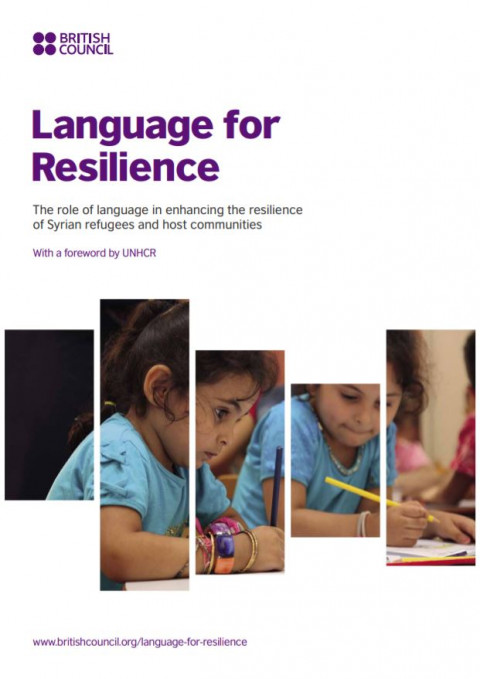 اللغة لتعزيز القدرة على مواجهة الأزمات: فهم الدور الذي تؤديه اللغة في تعزيز قدرة اللاجئين السوريين والمجتمعات المستضيفة لهم على مواجهة الأزمات Año de publicación: 2018 Autor: Tony Capstick | Marie Delaney Autor corporativo: British Council | UN. Office of the United Nations High Commissioner for Refugees (UNHCR) يستند التقرير الى دروس مستفادة من برامج اللغة الانجليزية التي يقدمها المجلس الثقافي البريطاني، ويستخدم كمرجع في تطوير البرامج المستقبلية الخاصة بتعليم اللغات للمتأثرين بالأزمة السورية. Language for Resilience: The Role of Language in Enhancing the Resilience of Syrian Refugees and Host Communities Año de publicación: 2018 Autor: Tony Capstick | Marie Delaney Autor corporativo: British Council | UN. Office of the United Nations High Commissioner for Refugees (UNHCR) The Language for Resilience report examines the impact of language on refugees and host communities affected by the Syrian crisis, identifying the different ways that language skills enhance resilience and providing suggestions for programme responses that address key needs.The report shows that for children and young people attending schools or post-school education, and for educators in host communities handling influxes of refugee students, quality language learning improves attainment and attendance and builds safer and more inclusive classrooms. It also illustrates how creative approaches to language education can support the development of life skills and help meet psycho-social needs.
 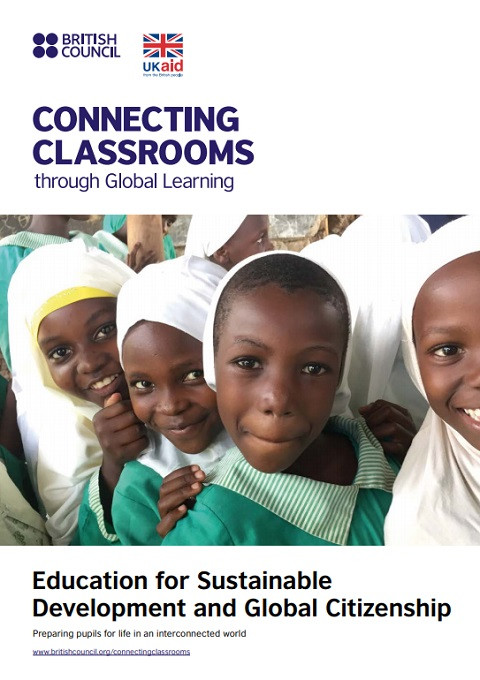 Connecting Classrooms through Global Learning: Education for Sustainable Development and Global Citizenship; Preparing Pupils for Life in an Interconnected World Año de publicación: 2020 Autor corporativo: British Council | UK aid This resource contributes to the development of pupils’ core skills, enabling them to think critically, to consider how to resolve problems, to take informed and reflective action and to develop personal leadership skills. During the course, pupils will analyse global issues, and will plan, implement and evaluate action. This course can be linked to a variety of curriculum areas, including English, Social Studies, Geography, Modern Foreign Languages, Maths, History and Art and Design. It can be used with or without an overseas partner school.
  Active citizens: globally connected, locally engaged; facilitator's toolkit Año de publicación: 2014 Autor corporativo: British Council This toolkit has been created to help facilitators to design and deliver the Active Citizens programme all over the world. Active Citizens is a social leadership programme which promotes intercultural dialogue and social responsibility as key leadership competencies in the 21st century. Active Citizens is run by the British Council working with civil society organisations all over the world. It began in 2009 and has been delivered in Europe, the Middle East, Africa and South Asia. It has reached more than 100,000 people to date through its training, conferences, social research and International Study Visits. The toolkit is in five sections - the introduction to the programme, preparing a workshop, delivering a workshop and post-workshop. There is also a large resource of workshop activity plans to support facilitators throughout the training cycle. The Active Citizens programme promotes community-led social development. It motivates members of communities to take responsibility for their social needs and gives them the knowledge, skills and experience to address them. The main audiences for the programme are community leaders working in, and with marginalised communities. They are people and institutions established, trusted and valued in the community - CSOs, NGOs, religious leaders, politicians, youth workers etc. They are influential and working to improve the lives of people living in their community. The programme develops skills and knowledge to identify and engage networks to help achieve goals as well as skills to plan and implement a project. The networks are between individuals at community level; institutions engaged in social action at community level; and institutions engaged in social policy dialogue at a national level. It includes cross-sectoral networking e.g. with the business community, media, etc. The building of these networks increases social inclusion, community resilience to conflict and increases social development in communities. See Diagram 1 on page 9. The programme is flexible and adaptable. It has been delivered to diverse groups, from rural communities in North-West Frontier Province Pakistan to urban communities in East London UK, to communities vulnerable to post-election violence in Kenya and internally displaced persons (IDPs) in Sri Lanka. Des Citoyens Actifs: connecté globalement recrutés sur place; la boîte à outils de l'animateur Año de publicación: 2014 Autor corporativo: British Council Cette boîte à outils a été créé pour aider les animateurs à concevoir et à exécuter le programme des citoyens actifs partout dans le monde. Citoyens actifs est un programme de leadership social qui favorise le dialogue interculturel et la responsabilité sociale comme compétences clés en leadership au 21e siècle. Citoyens actifs est géré par le British Council travaille avec des organisations de la société civile partout dans le monde. Il a commencé en 2009 et a été livré en Europe, au Moyen-Orient, en Afrique et en Asie du Sud. Il a atteint plus de 100.000 personnes à ce jour par le biais de sa formation, les conférences, la recherche sociale et visites d'étude internationaux. La boîte à outils est en cinq sections - l'introduction au programme, la préparation d'un atelier, offrant un atelier et post-atelier. Il y a aussi une ressource importante de l'activité de l'atelier prévoit de soutenir les animateurs tout au long du cycle de formation. Le programme des citoyens actifs favorise le développement social dirigé par la communauté. Il motive les membres des communautés à prendre en charge leurs besoins sociaux et leur donne les connaissances, les compétences et l'expérience nécessaires pour y remédier. Les principaux publics pour le programme sont des leaders communautaires qui travaillent dans et avec les communautés marginalisées. Ce sont des gens et des institutions établies, fiables et appréciés dans la communauté - OSC, les ONG, les chefs religieux, les politiciens, les travailleurs de la jeunesse, etc. Ils sont influents et travaille à améliorer la vie des personnes vivant dans leur communauté. Le programme développe les compétences et les connaissances pour identifier et engager des réseaux pour aider à atteindre les objectifs ainsi que les compétences nécessaires pour planifier et mettre en œuvre un projet. Les réseaux sont entre les individus au niveau de la communauté; les institutions engagées dans l'action sociale au niveau communautaire; et les institutions engagées dans un dialogue de politique sociale au niveau national. Il comprend la mise en réseau intersectoriel par exemple avec la communauté des affaires, des médias, etc. La construction de ces réseaux augmente l'inclusion sociale, la résilience des communautés aux conflits et augmente le développement social dans les communautés. Voir diagramme 1 à la page 9. Le programme est flexible et adaptable. Il a été remis à divers groupes, des communautés rurales en North-West Frontier Province du Pakistan aux communautés urbaines à East London au Royaume-Uni, aux communautés des personnes vulnérables à la violence post-électorale au Kenya et déplacées à l'intérieur (PDI) au Sri Lanka.
 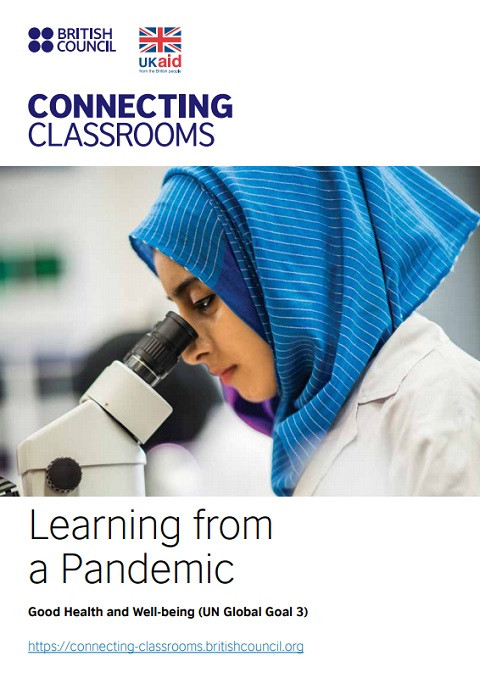 Connecting Classrooms: Learning From a Pandemic; Good Health and Well-Being (UN Global Goal 3) Año de publicación: 2020 Autor corporativo: British Council | UK aid This resource will help you make a contribution to a recovery curriculum in schools, and beyond this, by providing interesting, engaging and relevant content that encourages pupils to recall, discuss and process some of their thoughts, feelings and memories. Over the course of six lessons, pupils will have opportunities to develop an understanding of:• Covid-19 in the context of some of the world’s most common communicable diseases and pandemics from the past• how communicable diseases like Covid-19 may start and spread, and how this is investigated• relevant prevention strategies to foster positive physical and mental health and well-being.In doing so, pupils will have the opportunity to develop core skills in critical thinking and problem solving, citizenship, student leadership, creativity and imagination and aspects of digital literacy. This learning unit is also designed to support the United Nations’ Global Goals for Sustainable Development (SDGs), in particular Goal 3: Good health and well-being.
 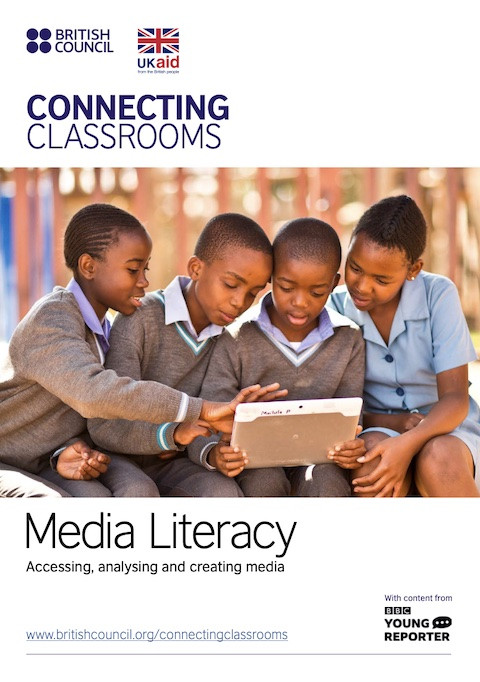 Connecting Classrooms: Media Literacy; Accessing, Analysing and Creating Media Año de publicación: 2019 Autor corporativo: British Council | UK aid This resource aims to help young people develop and use a number of skills and approaches to analyse and critically examine information received through a range of channels and sources, such as the internet, social media, newspapers and TV.