
Recursos
Exploren una amplia gama de recursos valiosos en GCED para profundizar su comprensión y promover su búsqueda, incidencia, enseñanza y aprendizaje.
146 resultados encontrados
 Decenio de las Naciones Unidas de la educación para el desarrollo sostenible (2005-2014): plan de aplicación internacional Año de publicación: 2005 Autor corporativo: UNESCO The International Implementation Scheme (IIS) sets out a broad framework for all partners to contribute to the Decade. It is a strategic document that focuses primarily on what nations have committed to achieve through the DESD and under UNESCO’s leadership. It summarizes the goals and objectives of the Decade, and its relationship to other key education movements. It emphasizes the importance of partnership in the eventual success of the Decade and outlines how these might contribute at all levels – community, national, regional, and international. It outlines UNESCO’s leadership tasks. The IIS also lists key milestones for the DESD. It then lays out seven strategies for moving forward with ESD and describes how this wide range of partners can develop contributions based on their particular contexts. Those not familiar with the background of the Decade or Education for Sustainable Development are referred to Annex I of this document, which provides a succinct summary of key trends as well as other important background information. The IIS should foster collective ownership of the DESD. The IIS describes pathways forward in the hope that it will stimulate imagination, creativity, and energy to make the DESD a success. It is envisaged that regions and nations will create plans, strategic approaches, and timetables on the basis of the framework provided by this International Implementation Scheme. Promover una asociación mundial con miras al Decenio de las Naciones Unidas de la educación para el desarrollo sostenible (2005-2014): el plan de aplicación internacional del decenio en pocas palabras Año de publicación: 2006 Autor corporativo: UNESCO Through the International Implementation Scheme governments and other partners, especially potential donors, are urged to assess existing ESD resources and needs in countries, reallocate existing resources and find means of mobilizing new resources to ensure that ESD will not be a mere slogan but actual reality. Inclusión, educación para el desarrollo sostenible, aprendizaje de adultos, educación superior e investigación: cuatro conferencias internacionales para promover la equidad, la calidad, la pertinencia y la responsabilidad social en materia de educación Año de publicación: 2008 Autor corporativo: UNESCO This cycle of conferences brings together a wide array of influential stakeholders in the common interest of creating education systems that serve the needs of all learners, address the challenges of today's world and make learning a springboard of development. Material educativo para los países situados en zonas montañosas: una manera creativa de educar sobre el medio ambiente Año de publicación: 2011 Autor: Thomas Schaaf Autor corporativo: UNESCO Entitled: A Teaching Resource Kit for Mountain Countries, it is a new environmental education kit similar to the Teaching Resource Kit for Dryland Countries published by UNESCO in 2008. It is based on the same innovative approach appealing to the creativity and artistic sensibility of pupils aged around 10 to 15, and is intended for secondary-school (and late primary-school) teachers and their pupils, this time living in mountain ecosystems, where climate and environmental conditions are harsh, often varying between extremes, and which are subject to the problems of erosion. As an educational tool, the kit offers a practical and attractive way of helping teachers and their pupils towards a better understanding of the environmental problems of their region and to stimulate their quest for possible solutions. In this respect, its content is a further contribution to the United Nations General Assembly’s resolution proclaiming 2002 the International Year of Mountains and is also consistent with the activities developed as part of the United Nations Decade of Education for Sustainable Development (2005-2014), the promotion of which is UNESCO’s responsibility. Material educativo para los países situados en zonas secas: una manera creativa de educar sobre el medio ambiente Año de publicación: 2008 Autor: Thomas Schaaf Autor corporativo: Organización de las Naciones Unidas para la Educación, la Ciencia y la Cultura (UNESCO) Entitled A Creative Approach to Environmental Education/Teaching Resource Kitfor Dryland Countries, the kit is intended for secondary-school teachers in countries affected by desertification and is based on an innovative approach appealing to the creativity and artistic sensibility of pupils aged 10 to 15 years. This approach favours discovery of the environment through the senses, and emphasizes the visual and exploratory aspects of environmental study. The idea of using creativity and artistic sensibility to promote ecological awareness may in the future become a source of collaboration to be explored in detail by the different sectors of UNESCO. Directrices de la UNESCO sobre la educación intercultural Año de publicación: 2006 Autor corporativo: Organización de las Naciones Unidas para la Educación, la Ciencia y la Cultura (UNESCO) These Guidelines have been prepared as a contribution to the understanding of the issues around intercultural education. They draw together the key standard-setting instruments and the results of numerous conferences, in particular, the Expert Meeting held at UNESCO Headquarters in March 2006, in order to present those concepts and issues which may be used to guide future activities and policy making in this area. The document refl ects UNESCO’s unique role as international standard setter and convenor of diverse cultural and ideological perspectives.
 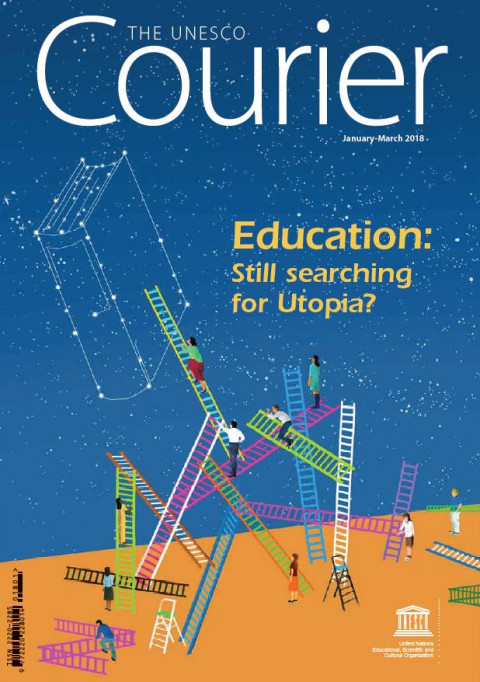 La Educación, una utopia necesaria (El Correo de la UNESCO no.1, Enero-Marzo 2018) Año de publicación: 2018 Autor corporativo: UNESCO El poderoso vector de transformación que es la educación reviste una importancia fundamental en estos tiempos en que parecen ponerse en tela de juicio más que nunca los derechos humanos, la libertad de expresión, la paz y el futuro de nuestro planeta.La educación es una “utopía necesaria” y “constituye un instrumento indispensable para que la humanidad pueda progresar hacia los ideales de paz, libertad y justicia social”, tal como se afirma en el histórico informe “La educación encierra un tesoro”, presentado a la UNESCO en 1996 por la Comisión Internacional sobre la Educación para el siglo XXI presidida por Jacques Delors.La educación, según ese informe, no es un remedio milagroso ni un mágico “ábrete sésamo”, sino una vía mejor que otras para lograr que la humanidad sea mejor.Nuestra época afronta una situación extremadamente paradójica. Mientras que el nivel de instrucción de la población mundial ha alcanzado su más alto nivel histórico, todavía quedan en el mundo 263 millones de niños y adolescentes sin escolarizar y otros 617 millones no logran alcanzar un nivel mínimo de competencia en lectura, escritura y matemáticas. Además, hay 750 millones de adultos analfabetos y actualmente la posibilidad de que las niñas y las jóvenes no pisen jamás una escuela es mucho más alta que en el caso de los varones. Ahora bien, la educación sigue siendo un instrumento indispensable para reducir las desigualdades, la pobreza, elterrorismo y los conflictos armados, así como un factor clave para la mentalización de las personas con vistas a que lleguen a “ciudadanos del mundo” y coadyuven a al desarrollo sostenible. La educación para la ciudadanía y para el desarrollo sostenible son dos ámbitos de acción de la UNESCO, que además tiene el mandato de liderar la agenda mundial Educación 2030, procurando en especial que los sistemas educativos no dejen a nadie atrás.Bajo el título “La educación, una utopía necesaria”, El Correo de la UNESCO traza una panorámica de determinados aspectos de la educación en el mundo, así como de la manera en que ésta puede responder a algunos de los grandes retos planteados a la humanidad.
  Empoderar a los alumnos para crear sociedades justas: manual para docentes de educación secundaria Año de publicación: 2019 Autor corporativo: Organización de las Naciones Unidas para la Educación, la Ciencia y la Cultura (UNESCO) | UN. Office on Drugs and Crime (UNODC) Cuál es el objetivo de este manual? Su finalidad es: Proporcionar a los docentes diversos materiales didácticos relevantes y accesibles que pueden usarse tanto dentro como fuera del aula (resúmenes de actividades breves, unidades didácticas) dirigidos a transmitir los principios del estado de derecho a los alumnos de educación secundaria. Ayudar a los docentes en la aplicación de los materiales didácticos a su contexto educativo local ofreciendo ideas de adaptación para diversos entornos de prendizaje. El presente manual ofrece: Resúmenes de materiales didácticos procedentes de organismos de las Naciones Unidas, ONG, ONGI y ministerios encargados de lograr resultados educativos en materia de promoción del estado de derecho para la educación para la ciudadanía mundial; Enlaces a los recursos originales, donde pueden consultarse opciones de aprendizaje adicionales; Consejos y sugerencias para la adaptación y ampliación de los recursos didácticos, así como su cotejo con otros materiales; y Sugerencias para evaluar el aprendizaje. Puede resultar de utilidad a: Docentes y formadores de docentes en entornos educativos formales de educación secundaria. Anima a los docentes a fortalecer el estado de derecho a través de la educación intergrandolo en sus clases y planificaciones; Profesionales que trabajan en contextos educativos no formales o que están implicados con los jóvenes, por ejemplo, asociaciones deportivas, en organizaciones comunitarias, que hacen trabajo social y en el sector de justicia; Padres que desean criar a ciudadanos empoderados que contribuyan de forma activa a la paz y la justicia.
  Empoderar a los alumnos para crear sociedades justas: manual para docentes de educación primaria Año de publicación: 2019 Autor corporativo: Organización de las Naciones Unidas para la Educación, la Ciencia y la Cultura (UNESCO) | UN. Office on Drugs and Crime (UNODC) ¿Cuál es el objetivo de este manual? Su finalidad es: Proporcionar a los docentes diversos recursos educativos relevantes y accesibles que pueden usarse tanto dentro como fuera del aula (resúmenes de actividades breves, planes de clase) dirigidos a transmitir los principios del estado de derecho a los alumnos de educación primaria. Ayudar a los docentes en la aplicación de los materiales didácticos a su contexto educativo local ofreciendo ideas de adaptación para diversos entornos de aprendizaje. El presente manual ofrece: Resúmenes de materiales didácticos procedentes de organismos de las Naciones Unidas, ONG, ONGI y ministerios encargados de lograr resultados educativos en materia de promoción del estado de derecho para la educación para la ciudadanía mundial; Enlaces a los recursos originales, donde pueden consultarse opciones de aprendizaje adicionales; Consejos y sugerencias para la adaptación y ampliación de los recursos didácticos, así como su cotejo con otros materiales; y Sugerencias para evaluar el aprendizaje. Puede resultar de utilidad a: Docentes y formadores de docentes en entornos educativos formales de educación primaria. Anima a los docentes a fortalecer el estado de derecho a través de la educación intergrandolo en sus clases y planificaciones; Profesionales que trabajan en contextos educativos no formales o que están implicados con los jóvenes, por ejemplo, en asociaciones deportivas, en organizaciones comunitarias, que hacen trabajo social y en el sector de justicia; Padres que desean criar a ciudadanos empoderados que contribuyan de forma activa a la paz y la justicia.
 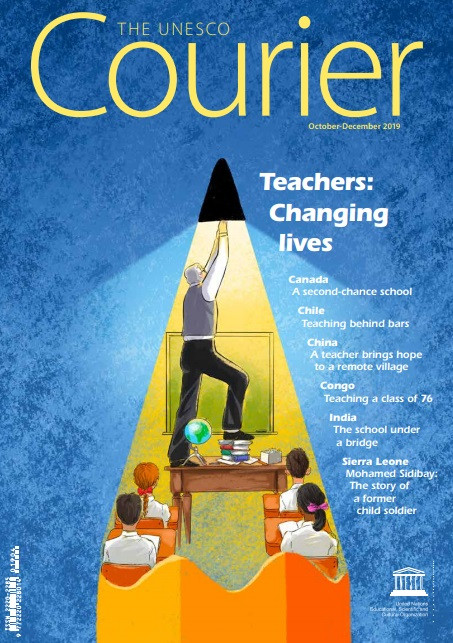 Docentes que cambian el mundo (El Correo de la UNESCO 4, Octubre-Diciembre 2019) Año de publicación: 2019 Autor corporativo: Organización de las Naciones Unidas para la Educación, la Ciencia y la Cultura (UNESCO) Sin duda, todo el mundo reconoce la función esencial que desempeñan los docentes. A título individual, cada uno de nosotros puede mencionar el nombre de al menos un maestro que le influyó decisivamente, a veces hasta el punto de reorientar toda su vida. En el ámbito internacional, los Objetivos de Desarrollo Sostenible (ODS) de las Naciones Unidas, en particular el ODS 4, destacan la importancia del profesorado en la consecución de la Agenda 2030 de desarrollo sostenible.Y, sin embargo, la profesión docente está en crisis. El desarrollo de la neurociencia cognitiva y las múltiples aplicaciones de las nuevas tecnologías en el sector educativo imponen al magisterio la necesidad de adaptarse, de reinventarse.