
Recursos
Exploren una amplia gama de recursos valiosos en GCED para profundizar su comprensión y promover su búsqueda, incidencia, enseñanza y aprendizaje.
139 resultados encontrados
 Coordinación mundial/regional y apoyo de la UNESCO para el cumplimiento del ODS 4-Educación 2030 Año de publicación: 2017 Autor corporativo: Organización de las Naciones Unidas para la Educación, la Ciencia y la Cultura (UNESCO)
  Educación física de calidad (EFC): guía para los responsables políticos Año de publicación: 2015 Autor: Nancy, McLennan | Jannine, Thompson Autor corporativo: UNESCO A key feature of the Post-2015 Development Agenda is sustainable development. Sustainable development starts with safe, healthy, well-educated children. Participation in quality physical education (QPE), as part of a rounded syllabus, enhances young peoples’ civic engagement, decreases violence and negative patterns of behaviour, and improves health awareness. The UNESCO QPE Policy Package is an original piece of work, which draws upon results from extensive global research (including the Worldwide Survey of School Physical Education). These guidelines, designed for global application and local adaptation, provide a means of analysing current policy through practical guidance and a ‘how-to’ approach. The materials have been developed in consultation with key partners including the European Commission, the International Council for Sport Science and Physical Education (ICSSPE), UNDP, UNICEF, UNOSDP and WHO.
  [Vídeo] Descubre las Diez Metas del Objetivo de Desarrollo Sostenible 4... ¡con Elyx! Año de publicación: 2017 Autor corporativo: UNESCO La UNESCO presenta su nuevo vídeo para explicar las diez metas del Objetivo de Desarrollo 4. Junto a Elyx, la primera embajadora digital de la UNESCO, descubre como garantizar una educación inclusiva, equitativa y de calidad y promover oportunidades de aprendizaje durante toda la vida para todos.
  El acercamiento de las culturas; Hoja de ruta Año de publicación: 2016 Autor corporativo: UNESCO Today, the sheer compression of the world is bringing people and their cultures into the same space with intense speed, rendering new levels and forms of human interaction and interdependence. Population growth and migration are increasing in scale and complexity, and technology and media are bringing people together in ways never before thought possible. As a result, new creative expressions, innovation and immense opportunities have been generated and developed. While these phenomena have brought people together across geographic spaces, it has concurrently exposed a widening moral gap in our societies and the extent to which our societies are ill-equipped to effectively manage and overcome the challenges that continue to arise. Often in parallel with developmental progress, retrogressive patterns have emerged that present persistent threats to peace-building and social cohesion. Recurrent cycles of deadlock and conflict undermine governance and legislation at international, national and local levels preventing long-term peace and development. The litany of polarization within our societies often defined along the lines of ‘identity’ – religious, cultural, ethnic, or otherwise – are increasingly manifested in prejudice, intolerance, racism, xenophobia, discrimination, radicalization and extreme violence. The challenges are often multidimensional and interrelated, and their impacts cross conventional borders, thus revealing a pervading vulnerability at global level and the accompanying need for a global response. From a policy and governance perspective, this has rendered new levels of complexity in addressing challenges. It has also reinforced the need for a more inclusive and participatory notion of development, including integrated approaches that tackle the issues at hand as well as their foundations. The Decade has come into being in an era marked by increased divisiveness, and learning to live together in the 21st century presents a new frontier for managing cultural diversity. Respect for the inherent dignity of all persons underpins the values of the Decade and is one of the core pillars of the UN system, to ensure that all people have equal rights and opportunities to shape their future. These principles are reflected in the values of many cultures around the world. Intercultural dialogue denotes an open process of exchange and respect between individuals and groups of different cultures, points of view and aspirations. In such a way, the respect for and exercise and enjoyment of human rights and fundamental freedoms are not only key inroads to dialogue, but they are integral to its process. Ultimately they are crucial to sustaining the rapprochement of cultures as the central aspiration of the Decade.
 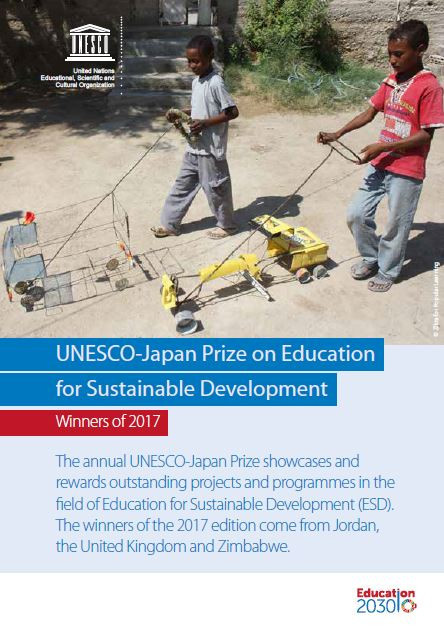 Premio UNESCO-Japon de Educacion para el Desarrollo Sostenible: Galardonados de 2017 Año de publicación: 2017 Autor corporativo: UNESCO En 2017 el Premio UNESCO-Japon llegaba a su tercera edicion. Los galardonados fueron elegidos de entre las mas de 100 candidaturas presentadas por gobiernos de Estados Miembros de la UNESCO y organizaciones no gubernamentales quecolaboran oficialmente con la Organizacion. Tras examinar las candidaturas, un jurado independiente formado por cinco especialistas internacionales en EDS recomendo los tres galardonados a la Directora General de la UNESCO.Este ano se ha concedido el premio a una escuela, una empresa y una organizacion sin animo de lucro que promueven la EDS a escala local, regional y mundial respectivamente: la escuela de primaria Sihlengeni, de la Republica de Zimbabwe; Zikra por el Aprendizaje Popular, del Reino Hachemita de Jordania; y el Proyecto Hard Rain, del Reino Unido de Gran Bretana e Irlanda del Norte. Cada una de estas entidades recibira un premio en metalico de 50,000 dolares estadounidenses.La Directora General de la UNESCO y el Ministro de Educacion del Japon haran entrega del Premio a los tres galardonados en el curso de una ceremonia que tendra lugar en la Sede de la UNESCO (Paris) el 3 de noviembre de 2017, coincidiendo con la celebracion de la 39ª reunion de la Conferencia General.
 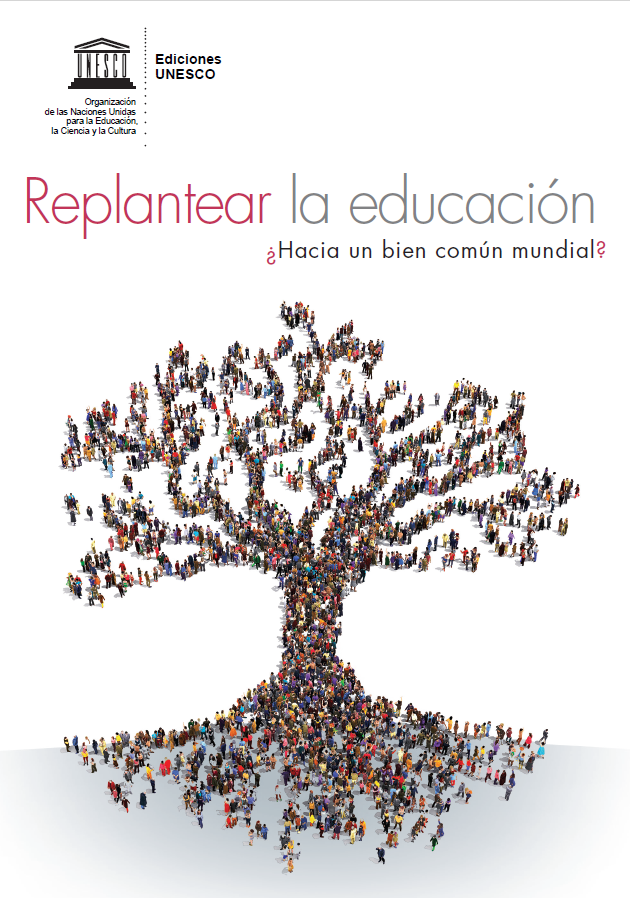 Replantear la educación: ¿Hacia un bien común mundial? Año de publicación: 2015 Autor corporativo: UNESCO Los cambios del mundo actual se caracterizan por niveles nuevos de complejidad y contradicción. Estos cambios generan tensiones para las que la educación tiene que preparar a los individuos y las comunidades, capacitándolos para adaptarse y responder. Esta publicación contribuye a replantear la educación y el aprendizaje en este contexto. Parte de una de las tareas principales que tiene encomendada la UNESCO como observatorio mundial de las transformaciones sociales y tiene como objetivo fomentar los debates públicos sobre políticas.Es una llamada al diálogo entre todos los interesados. Se inspira en una concepción humanista de la educación y el desarrollo, basada en el respeto a la vida y a la dignidad humana, la igualdad de derechos, la justicia social, la diversidad cultural, la solidaridad internacional y la responsabilidad compartida de un futuro sostenible. Éstos son los fundamentos de nuestra humanidad común. El presente libro ahonda en la visión que presentaban dos publicaciones memorables de la UNESCO: Aprender a ser: la educación del futuro (1972), el ‘Informe Faure’; y La educación encierra un tesoro (1996), el ‘Informe Delors’.
  Poner fin a la violencia en la escuela: guía para los docentes Año de publicación: 2014 Autor corporativo: UNESCO “Stopping Violence in Schools: A Guide for Teachers” examines various forms of violence that take place in schools, and offers practical suggestions as to what teachers can do to prevent them. Ten action areas are proposed, each with specific examples that teachers can adapt to address and prevent violence. Excerpts from relevant international normative instruments as well as a list of links to online resources for stopping violence in schools are annexed at the end of the book.
  Educación para la Ciudadanía Mundial: Preparar a los Educandos para los Retos del Siglo XXI Año de publicación: 2014 Autor corporativo: UNESCO Esta publicación explora una serie de condiciones favorables para la promoción y la puesta en práctica de la ECM. Entre estos se incluyen: la existencia de un entorno abierto para los valores universales, la aplicación de pedagogía transformativa y el apoyo a las iniciativas dirigidas por los jóvenes. El estudio reconoce que hay una serie de tensiones vigentes para con los conceptos de ciudadanía mundial y educación para la ciudadanía mundial. Si bien estas tensiones varían, todas ellas apuntan a la cuestión fundamental de cómo promover la universalidad (p. ej. la identidad, el interés, la participación, el deber comunes y colectivos), respetando al mismo tiempo la singularidad (es decir, los derechos individuales, la superación personal). Se proponen algunas maneras de avanzar para resolver estas tensiones, a la vez que se mantiene que las dificultades que plantean los elementos teóricos de la ECM no deben socavar su práctica.
  Educación para la ciudadanía mundial: temas y objetivos de aprendizaje Año de publicación: 2015 Autor corporativo: UNESCO This publication, titled Global Citizenship Education: Topics and learning objectives, is the first pedagogical guidance from UNESCO on global citizenship education. It is the result of an extensive research and consultation process with experts from different parts of the world. This guidance draws on the UNESCO publication Global Citizenship Education: Preparing learners for the challenges of the 21st century and the outcomes of three key UNESCO events on global citizenship education: the Technical Consultation on Global Citizenship Education (September 2013), as well as the First and Second UNESCO Fora on Global Citizenship Education, organized in December 2013 and January 2015 respectively. Before it was finalized, the guidance was field-tested by education stakeholders in selected countries in all regions to ensure its relevance in different geographical and socio-cultural contexts. Following the foundational work of UNESCO to clarify the conceptual underpinnings of global citizenship education and provide policy and programmatic directions, this document has been developed in response to the needs of Member States for overall guidance on integrating global citizenship education in their education systems. It presents suggestions for translating global citizenship education concepts into practical and age-specific topics and learning objectives in a way that allows for adaptation to local contexts. It is intended as a resource for educators, curriculum developers, trainers as well as policy-makers, but it will also be useful for other education stakeholders working in non-formal and informal settings. Replantear la educación: ¿Hacia un bien común mundial? Año de publicación: 2015 Autor corporativo: UNESCO The changes in the world today are characterized by new levels of complexity and contradiction. These changes generate tensions for which education is expected to prepare individuals and communities by giving them the capability to adapt and to respond. This publication contributes to rethinking education and learning in this context. It builds on one of UNESCO’s main tasks as a global observatory of social transformation with the objective of stimulating public policy debate. It is a call for dialogue among all stakeholders. It is inspired by a humanistic vision of education and development, based on respect for life and human dignity, equal rights, social justice, cultural diversity, international solidarity, and shared responsibility for a sustainable future. These are the fundamentals of our common humanity. This book enhances the vision provided by the two landmark UNESCO publications: Learning to Be: The world of education today and tomorrow (1972), the ‘Faure Report’, and Learning: The treasure within (1996), the ‘Delors Report’.