
Recursos
Exploren una amplia gama de recursos valiosos en GCED para profundizar su comprensión y promover su búsqueda, incidencia, enseñanza y aprendizaje.
139 resultados encontrados
 Educación para la ciudadanía mundial: temas y objetivos de aprendizaje Año de publicación: 2015 Autor corporativo: UNESCO La educación para la ciudadanía mundial aspira a ser un factor de transformación, inculcando los conocimientos, las habilidades, los valores y las actitudes que los educandos necesitan para poder contribuir a un mundo más inclusivo, justo y pacífico.La presente publicación, titulada Educación para la ciudadanía mundial: Temas y objetivos de aprendizaje, es la primera guía de la UNESCO al respecto. Se presentan sugerencias para plasmar los conceptos de la educación para la ciudadanía mundial en temas y objetivos de aprendizaje específicos para cada grupo de edad de un modo que facilita su adaptación a las circunstancias locales. Es un recurso para los educadores, los responsables de la elaboración de programas de estudios, los instructores y los encargados de la formulación de políticas, pero también será de utilidad para otros copartícipes en la educación que trabajan en contextos no formales e informales.
  Informe de seguimiento de la educatión en el mundo: documento de política Año de publicación: 2016 Autor corporativo: UNESCO This paper’s focus on textbooks is directly related to the global indicator established for Target 4.7, which seeks to measure the extent to which global citizenship education and education for sustainable development, including gender equality and human rights, are mainstreamed in national education policies, curricula, teacher education and student assessments. Textbooks are related mostly to policy implementation and curricular intentions but also to teacher preparation and student assessment.
  La Educación para Todos, 2000-2015: logros y desafíos, informe de seguimiento de la EPT en el mundo, 2015: youth version Año de publicación: 2015 Autor corporativo: UNESCO This report highlights the progress and challenges that countries have faced over 15 years, brining together the voices of young people to show how Education for All (EFA) has affected their lives.
  Recomendaciones de Politicas Educativas en base al TERCE Año de publicación: 2016 Autor: Ernesto Treviño, Cristóbal Villalobos, Andrea Baeza Autor corporativo: Organización de las Naciones Unidas para la Educación, la Ciencia y la Cultura (UNESCO) Recomendaciones de Políticas Educativas en América Latina en base al TERCE ha sido elaborado por encargo de la Oficina Regional de Educación para América Latina y el Caribe, OREALC/ UNESCO Santiago. La presente publicación se encuentra orientada a hacedores de política educativa. Para el LLECE, la toma de decisiones debe estar basada en evidencia y anclada a algunos modelos conceptuales que permitan interpretar de manera adequada la realidad. Este documento cumple con este propósito, puesto que posee la característica fundamental de traducir las conclusiones extraídas de la evidencia del TERCE en política y la práctica educativa. En este sentido, la evidencia empírica que aporta el estudio muestra los principales factores que influyen en el logro de los aprendizajes, los cuales representan desafíos concretos de política educativa.
 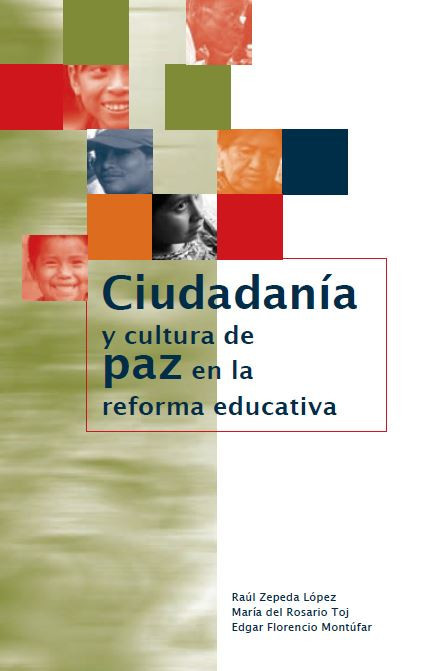 Ciudadanía y cultura de paz en la reforma educativa Año de publicación: 2005 Autor: Raúl Zepeda López, María del Rosario Toj, Edgar Florencio Montúfar Autor corporativo: UNESCO La preocupación planteada por los temas y contenidos de la formación ciudadana y la cultura de paz en la niñez y la juventud son cuestiones sentidas en diversos sectores académicos, en organizaciones sociales y autoridades educativas que algunas veces se traducen en sendos artículos en los medios de comunicación en donde, entre otras cosas, se habla de “la pérdida de valores” a secas, generalmente teniendo como referencia a las jóvenes generaciones e invisibilizando que esta pérdida principalmente está presente en las generaciones adultas, las cuales son responsables de esta situación. Estas inquietudes, a pesar de aquella consciente ambigüedad, no son gratuitas. Pueden ser punto de partida para tomar conciencia de la necesidad de desarrollo de nuevas capacidades y valores, cuya ausencia, los jóvenes latinoamericanos identifican en sus dirigentes políticos y sociales, como ha quedado antes señalado en estudios citados, realizados por UNICEF para América Latina y por Beatriz de Cazali para Guatemala. La necesidad de responder a esta preocupación está presente, además, en los participantes en los diálogos y consensos municipales (2000), así como entre autoridades y curriculistas del MINEDUC en los últimos quinquenios.
 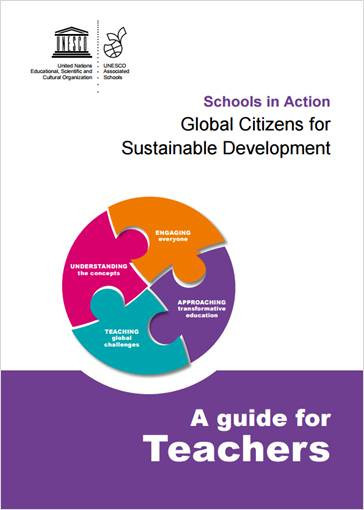 Escuelas en acción, ciudadanos del mundo para el desarrollo sostenible: guía para el profesorado Año de publicación: 2016 Autor corporativo: UNESCO The Global Citizens for Sustainable Development Teachers’ guide aims to introduce teachers to Global Citizenship Education (GCED) and Education for Sustainable Development (ESD). It provides secondary school teachers with ideas and activities to help students become global citizens and sustainable development actors. The Teachers’ guide draws on the discussions and activities of almost 1,100 participants from 104 countries, including ASPnet National Coordinators, school principals, teachers, students and experts who contributed to the Online Collaborative Platform ASPnet in Action: Global Citizens Connected for Sustainable Development in 2014 and 2015 [http://en.unesco. org/aspnet/globalcitizens] with associated activities and initiatives. The Teachers’ guide provides: An overview of what it means for learners to become global citizens and of how learners can contribute to sustainable development. Ideas for classroom activities that can help secondary school students to develop knowledge, skills, values, attitudes and behaviours that promote GCED and ESD. Selected activities on GCED and ESD from ASPnet schools around the world.
 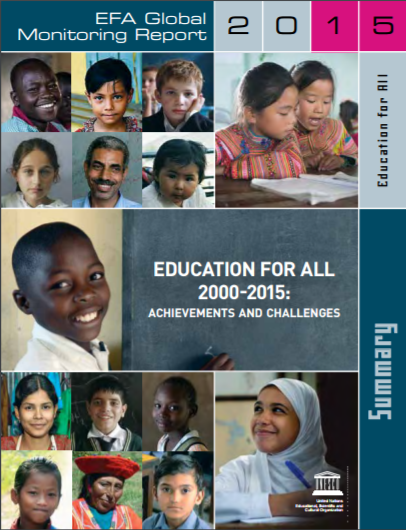 Other lang. title: L'Education pour tous 2000-2015: progrès et enjeux, rapport mondial de suivi sur l'EPT, 2015, résumé; La Educación para Todos, 2000-2015: logros y desafíos, informe de seguimiento de la EPT en el mundo, 2015, resumen Año de publicación: 2015 Autor corporativo: UNESCO At the World Education Forum in Dakar, Senegal, in 2000, governments from 164 countries, together with representatives of regional groups, international organizations, donor agencies, non-government organizations (NGOs) and civil society, adopted a Framework for Action to deliver Education for All (EFA) commitments. The Dakar Framework comprised 6 goals and their associated targets to be achieved by 2015, and 12 strategies to which all stakeholders would contribute. The EFA Global Monitoring Report (GMR) has monitored progress on an almost annual basis towards the EFA goals and the two education-related Millennium Development Goals (MDGs). The 2015 GMR provides a complete assessment of progress since 2000 towards the target date for reaching the Dakar Framework’s goals. It takes stock of whether the world achieved the EFA goals and stakeholders upheld their commitments. It explains possible determinants of the pace of progress. Finally, it identifies key lessons for shaping the post-2015 global education agenda.
 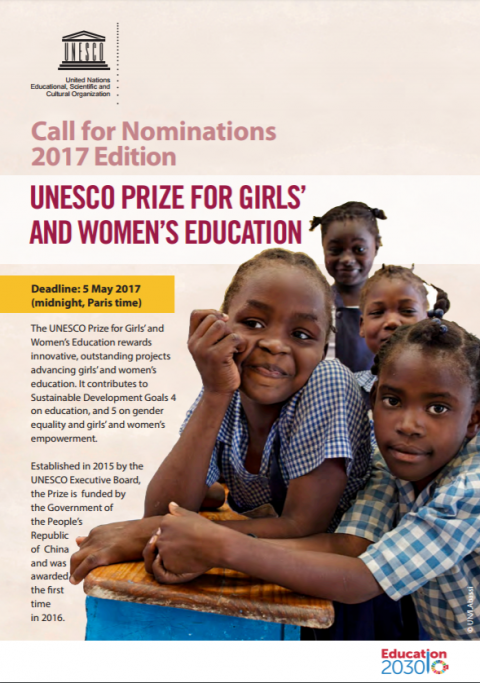 Premio UNESCO de educación de las niñas y las mujeres, edición de 2017: solicitud de candidaturas Año de publicación: 2017 Autor corporativo: UNESCO The UNESCO Prize for Girls’ and Women’s Education rewards innovative, outstanding projects advancing girls’ and women’s education. It contributes to Sustainable Development Goals 4 on education, and 5 on gender equality and girls’ and women’s empowerment.
 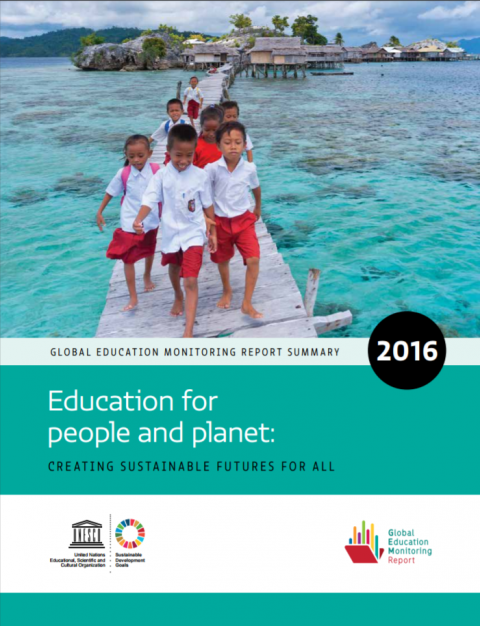 La Educación al servicio de los pueblos y el planeta: creación de futuros sostenibles para todos, resumen del informe de seguimiento de la educación en el mundo 2016; Año de publicación: 2016 Autor corporativo: UNESCO The GEM Report provides an authoritative account of how education is the most vital input for every dimension of sustainable development. Better education leads to greater prosperity, improved agriculture, better health outcomes, less violence, more gender equality, higher social capital and an improved natural environment. Education is key to helping people around the world understand why sustainable development is such a vital concept for our common future. Education gives us the key tools – economic, social, technological, even ethical – to take on the SDGs and to achieve them. These facts are spelled out in exquisite and unusual detail throughout the report. Yet the report also emphasizes the remarkable gaps between where the world stands today on education and where it has promised to arrive as of 2030.
  Función y responsabilidades de la UNESCO en la realización de la educación para la ciudadanía mundial y la promoción de la educación para la paz y los derechos humanos y la educación para el desarrollo sostenible Año de publicación: 2015 Autor corporativo: UNESCO This document is an addendum to document 196 EX/32. This item was included in the provisional agenda of the 196th session of the Executive Board at the request of Austria and Italy