
Recursos
Exploren una amplia gama de recursos valiosos en GCED para profundizar su comprensión y promover su búsqueda, incidencia, enseñanza y aprendizaje.
1,583 resultados encontrados
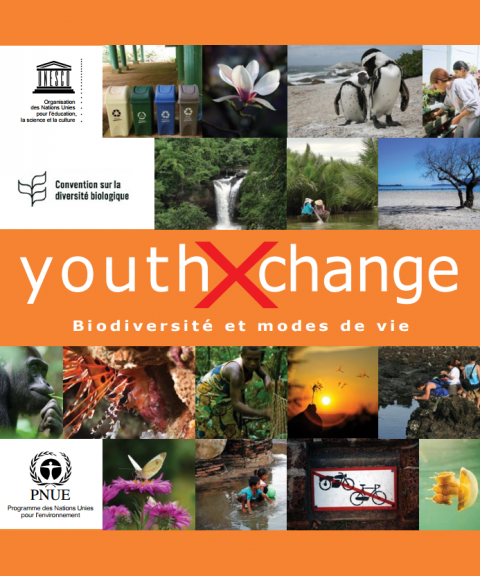 Série de guides youthXchange: biodiversité et modes de vie Año de publicación: 2015 Autor corporativo: UNESCO | United Nations Environment Programme (UNEP) The YouthXchange Biodiversity and LifestylesGuidebook is designed to help young people familiarize themselves with the dimensions of global biological and cultural diversity, as well as help them to develop essential skills whileengaging with biodiversity.The guidebook aims to:• Explore the interactions between biodiversity and lifestyle choices by explaining the interrelatedness of food, consumption, culture and biodiversity conservation;• Help young people familiarize themselves with the dimensions of global biological and cultural diversity, as well as help them to develop essential skills while engaging with biodiversity; and• Help young people consider how they can preserve biodiversity though responsible lifestyle choices, engagement and action.
  Issues and Trends in Education for Sustainable Development Año de publicación: 2018 Autor: Alexander Leicht | Julia Heiss | Wonjung Byun Autor corporativo: UNESCO Education for Sustainable Development (ESD) is globally acknowledged as a powerful driver of change, empowering learners to take the decisions and actions needed to build a just and economically viable society respectful of both the environment and cultural diversity.This publication comes at a moment of heightened global interest in addressing sustainability challenges through education in order to achieve the targets of the 2030 Sustainable Development Agenda. ESD is not only recognized as a key enabler of sustainable development but an integral element of all quality education. By exploring key issues related to ESD policy and practice, UNESCO aims to help accelerate the reorientation of education towards achieving a sustainable and resilient world. Enjeux et tendances de l'éducation en vue du développement durable Año de publicación: 2018 Autor: Alexander Leicht | Julia Heiss | Wonjung Byun Autor corporativo: UNESCO L’éducation en vue du développement durable (EDD) est universellement considérée comme un puissant vecteur de changement qui donne aux apprenants les moyens de prendre les décisions nécessaires et d’agir pour bâtir une société juste et économiquement viable, respectueuse de l’environnement et de la diversité culturelle. Cet ouvrage paraît dans un contexte mondial marqué par un intérêt accru pour les efforts visant à relever les défis du développement durable par le biais de l’éducation, afin d’atteindre les objectifs du Programme de développement durable à l’horizon 2030. L’EDD est non seulement reconnue comme un moteur indispensable du développement durable, mais aussi comme un élément constitutif d’une éducation de qualité. En explorant les principaux enjeux liés aux politiques et aux pratiques d’EDD, l’UNESCO entend accélérer la réorientation de l’éducation vers un monde plus durable et plus résilient.
 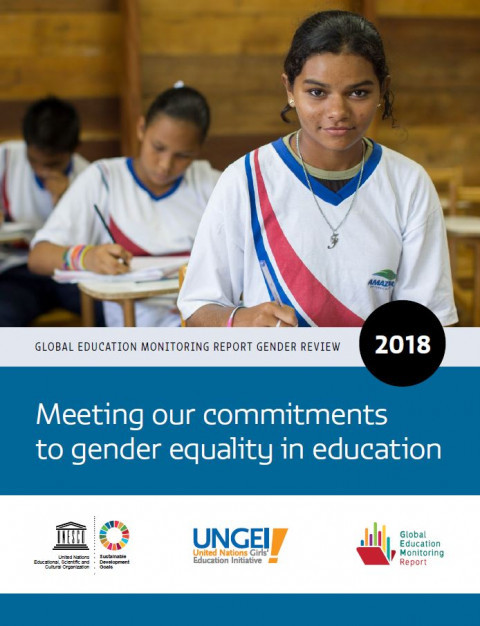 Meeting Our Commitments to Gender Equality in Education: Global Education Monitoring Report Gender Review 2018 Año de publicación: 2018 Autor corporativo: UNESCO The Education 2030 Framework for Action, a tool aimed at helping the international community achieve SDG 4 on education, explicitly recognizes gender equality as a guiding principle linked to the realization of the right to education. It states clearly that girls and boys, women and men, must be equally empowered ‘in and through education’.In this sixth Gender Review, in a series that began in 2011, the Global Education Monitoring Report team maintains the focus on a broad conception of gender equality that extends beyond counting boys and girls in classrooms. The review’s first part examines disparities in participation and skills, in education and political leadership positions, and in selected aspects of infrastructure and curricula. It also examines gender issues in professional development by exploring the role of education in three other SDGs: those concerning agriculture, health, and water and sanitation.The second part of the review analyses institutions, laws and policies to explore ways to determine and enforce accountability for gender equality in education. Cumplir nuestros compromisos de igualdad de género en la educación: Resumen sobre género del informe de seguimiento de la educación en el mundo 2018 Año de publicación: 2018 Autor corporativo: UNESCO El Marco de Acción para la Educación 2030, que es una herramienta encaminada a contribuir a que la comunidad internacional alcance el ODS 4 relativo a la educación, reconoce explícitamente la igualdad de género como un principio rector para la realización del derecho a la educación para todos. Dice claramente que las niñas y los niños, las mujeres y los hombres, deben adquirir las mismas competencias “en la educación y mediante ella”.En este sexto Resumen sobre Género de una serie que se inició en 2011, los autores del Informe de Seguimiento de la Educación en el Mundo siguen centrándose en un concepto amplio de la igualdad de género que va más allá del simple recuento del número de niños y niñas en las aulas.En la primera parte del documento se examinan las disparidades en materia de participación y de competencias, de puestos de dirección de alto nivel en el ámbito educativo y político, y en determinados aspectos de las infraestructuras y los programas de enseñanza. Se examinan asimismo las cuestiones de género en el desarrollo profesional, estudiando el papel de la educación en otros tres ODS, los relativos a la agricultura, la salud, y el agua y saneamiento.En la segunda parte se analizan las instituciones, leyes y políticas, con miras a explorar modalidades que permitan determinar y aplicar la rendición de cuentas en materia de igualdad de género en la educación.
  Le Prisme de l'éducation pour le développement durable: un outil d'analyse des politiques et des pratiques Año de publicación: 2010 Autor corporativo: UNESCO The Education for Sustainable Development (ESD) Lens has been prepared to support UN Member States to respond to these challenges through implementation of the United Nations Decade of Education for Sustainable Development (DESD, 2005- 2014). The ESD Lens supports the goals of the DESD, and encourages policy-makers and practitioners in Member States to initiate the process of re-orienting education, particularly the formal education system, towards sustainable development. The overall goal of the UN Decade of Education for Sustainable Development (DESD) is for countries to integrate the understandings, skills and values inherent in sustainable development into all aspects of national education plans to encourage changes in lifestyles and behaviour that allow for a more sustainable and just society for all. This complements existing Education for All initiatives, and strengthens the objectives of the Millennium Development Goals. Education for Sustainable Development has the potential to improve the quality and relevance of education everywhere. Education for sustainable development lens: a policy and practice review tool Año de publicación: 2010 Autor corporativo: UNESCO The Education for Sustainable Development (ESD) Lens has been prepared to support UN Member States to respond to these challenges through implementation of the United Nations Decade of Education for Sustainable Development (DESD, 2005- 2014). The ESD Lens supports the goals of the DESD, and encourages policy-makers and practitioners in Member States to initiate the process of re-orienting education, particularly the formal education system, towards sustainable development. The overall goal of the UN Decade of Education for Sustainable Development (DESD) is for countries to integrate the understandings, skills and values inherent in sustainable development into all aspects of national education plans to encourage changes in lifestyles and behaviour that allow for a more sustainable and just society for all. This complements existing Education for All initiatives, and strengthens the objectives of the Millennium Development Goals. Education for Sustainable Development has the potential to improve the quality and relevance of education everywhere. 联合国 可持续发展教育十年 后半期战略 Año de publicación: 2010 Autor corporativo: UNESCO The UNESCO Strategy for the Second Half of the United Nations (UN) Decade of Education for Sustainable Development (DESD) draws on the findings and lessons learnt from the first phase of the DESD monitoring and evaluation (M&E) process (as reflected in the 2009 DESD M&E report Learning for a Sustainable World: Review of Contexts and Structures for Education for Sustainable Development. It also builds on the UNESCO World Conference on ESD and the Bonn Declaration as well as on the outcomes of other key international ESD meetings. The Bonn Declaration gives particular emphasis to the importance of education for the global development agenda and underlines the essential contribution of ESD to shaping the purpose, content and quality of all education. The UNESCO strategy will be implemented in line with the International Implementation Scheme (IIS), which, along with the Bonn Declaration, will provide the global strategic framework for UNESCO and its DESD partners during the second half of the Decade. The Strategy takes into account key DESD regional challenges and opportunities. It is also shaped by the shared vision of education emerging from the four 2008-2009 UNESCO international education conferences: one of education systems that encourage equity and inclusion, quality learning, flexibility and innovation. While UNESCO puts highest emphasis on achieving Education for All (EFA), the Organization’s actions in education extend beyond this, to pay explicit attention to inclusion, social cohesion and social justice, to lifelong learning and to the crucial role of higher education and research. The overall goal of the UNESCO Strategy for the Second Half of the DESD is to support Member States and other stakeholders in addressing global sustainable development challenges at regional, national and global level through ESD, thus addressing the challenges of learning for bringing about a more sustainable world. من أجل التنمية المستدامة الأمم المتحدة للتعليم للنصف الثاني من العقد استراتيجية اليونسكو Año de publicación: 2010 Autor corporativo: UNESCO The UNESCO Strategy for the Second Half of the United Nations (UN) Decade of Education for Sustainable Development (DESD) draws on the findings and lessons learnt from the first phase of the DESD monitoring and evaluation (M&E) process (as reflected in the 2009 DESD M&E report Learning for a Sustainable World: Review of Contexts and Structures for Education for Sustainable Development. It also builds on the UNESCO World Conference on ESD and the Bonn Declaration as well as on the outcomes of other key international ESD meetings. The Bonn Declaration gives particular emphasis to the importance of education for the global development agenda and underlines the essential contribution of ESD to shaping the purpose, content and quality of all education. The UNESCO strategy will be implemented in line with the International Implementation Scheme (IIS), which, along with the Bonn Declaration, will provide the global strategic framework for UNESCO and its DESD partners during the second half of the Decade. The Strategy takes into account key DESD regional challenges and opportunities. It is also shaped by the shared vision of education emerging from the four 2008-2009 UNESCO international education conferences: one of education systems that encourage equity and inclusion, quality learning, flexibility and innovation. While UNESCO puts highest emphasis on achieving Education for All (EFA), the Organization’s actions in education extend beyond this, to pay explicit attention to inclusion, social cohesion and social justice, to lifelong learning and to the crucial role of higher education and research. The overall goal of the UNESCO Strategy for the Second Half of the DESD is to support Member States and other stakeholders in addressing global sustainable development challenges at regional, national and global level through ESD, thus addressing the challenges of learning for bringing about a more sustainable world.
  Un apercu sur l’éducation Año de publicación: 2018 Autor corporativo: UNESCO La vidéo est un apercu de la réflexion sur les progrès et les défis de l'éducation. Prenant en considération les consultations mondiales et régionales de l’ODD4-Education 2030 tout au long de 2018. Pour en savoir plus https://fr.unesco.org/themes/education