
Recursos
Exploren una amplia gama de recursos valiosos en GCED para profundizar su comprensión y promover su búsqueda, incidencia, enseñanza y aprendizaje.
1,583 resultados encontrados
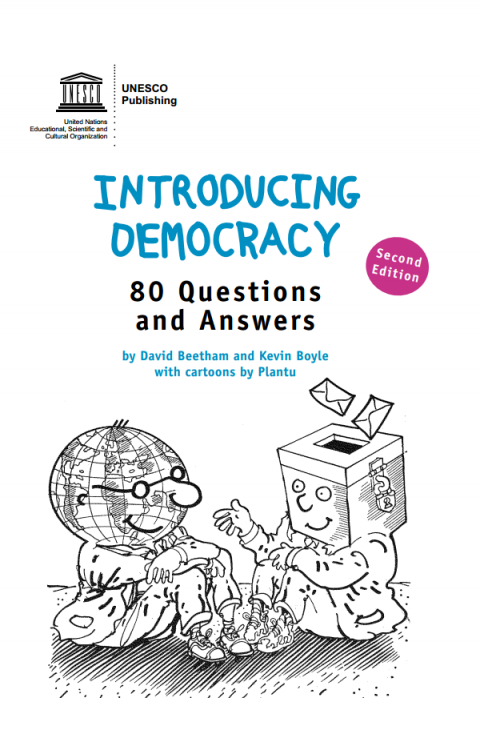 Introducing democracy: 80 questions and answers Año de publicación: 2009 Autor: David Beetham | Kevin Boyle Autor corporativo: UNESCO Humorously illustrated by Plantu, the famous cartoonist of the French newspaper Le Monde, this book is a valuable tool for all those who want to know more about democracy and human rights, whether it be students, activists, civil servants, or simply as interested citizens. What is democracy? What is the relation between democracy and individual rights? Is majority rule always democratic? How can democracy be maintained and improved? This book tackles these and other questions about democracy, covering six broad areas: basic concepts and principles; free and fair elections; open and accountable government; individual rights and their defence; democratic or civil society; the future of democracy. Démocratie: questions et réponses Año de publicación: 2009 Autor: David Beetham | Kevin Boyle Autor corporativo: UNESCO Humorously illustrated by Plantu, the famous cartoonist of the French newspaper Le Monde, this book is a valuable tool for all those who want to know more about democracy and human rights, whether it be students, activists, civil servants, or simply as interested citizens. What is democracy? What is the relation between democracy and individual rights? Is majority rule always democratic? How can democracy be maintained and improved? This book tackles these and other questions about democracy, covering six broad areas: basic concepts and principles; free and fair elections; open and accountable government; individual rights and their defence; democratic or civil society; the future of democracy.
  Using Civic Participation and Civic Reasoning to Shape Our Future and Education (Background Paper for the Futures of Education Initiative) Año de publicación: 2020 Autor: Sarah M. Stitzlein Autor corporativo: UNESCO Actualizing a preferred future relies on citizens who are prepared to effectively engage perhaps the most fundamental civic question: ‘What should we do?’ (Levine, 2016; Dishon & Ben-Porath, 2018). It is a question that arises when people face a problem, must reach a decision, or must figure out how to flourish together as a group. This question is closely tied to the key question posed by the International Commission on the Futures of Education: ‘What do we want to become?’ Engaging both questions is a useful way for us to envision education in the future. These questions push us to consider not only what we merely can do, but also what is right for us to do in light of our responsibilities to others.Civic reasoning is the sort of reasoning we do as we answer the question, ‘What should we do?’ Civic discourse is a means or method by which people engage in civic reasoning. Efforts to envision improved education and futures should foreground civic reasoning and discourse as both a means and ends of citizen participation. They are important for the ways in which they directly engage citizens and for their products, which lead to future civic action and better futures.
  Homophobic and Transphobic Bullying in Educational Centers: Awareness Workshop for its Prevention; Facilitation Guide Año de publicación: 2015 Autor corporativo: UNESCO This publication presents strategies for teachers and educational authorities with the aim of addressing homophobic and transphobic violence from a Human Rights perspective. Through lessons that incorporate concepts, activities and reflections, it underlines the importance of respect for sexual diversity through the acquisition of knowledge, and the strengthening of teaching skills to overcome stigmas and prejudices.
  From words to action; Des paroles aux actes Año de publicación: 2014 Autor corporativo: UNESCO Since its creation in 1945, UNESCO has been working to enhance mutual understanding between peoples, founded on an ever more subtle knowledge of cultures in their rich diversity in order to promote the dignity of all through the affirmation of the principles, rights and values of our common humanity. The era of globalization characterizes our societies, in a cultural landscape which, more than ever, is permeated with diversity because of the mutual influences of peoples, communities, and of their cultural and religious practices. A major issue remains: the need to demonstrate the benefits of promoting both respect for human rights and cultural diversity, recognizing the importance of genuine intercultural dialogue in order to fight against new forms of racism, discrimination, intolerance, extremism and radicalization. UNESCO, with lengthy practical experience as an international laboratory of ideas, monitors respect for universal values, in particular by initiating research and producing various kinds of teaching tools designed for the acquisition of intercultural skills. Which skills should be mobilized or acquired in order to be able not only to respect but also to appreciate the Other in all his or her diversity. How many of these skills can be useful on both a collective level and an individual one in order to protect cultural rights, protect oneself from, or to transcend prejudice? Intercultural sensibility and aptitudes have to be explored since they refer to the willingness and capacity of people to step outside of their own logic and systems of thought in order to engage with others, and appreciate different cultural narratives especially if they are not equally valorized or recognized in a given societal context. This portfolio proposes a basic tool for capacity building in support of exchange, communication and cooperation beyond cultural, religious and national borders, allowing the emergence of a global citizenship in a safer world for all. In this perspective, this set of key resources consists of papers by international experts exploring the linkage between respect for cultural diversity and human rights, with all that that implies. It brings together other publications such asIntercultural Competences, Conceptual and Operational Framework, published by UNESCO in 2013, and documents such as Dire la Tolérance (Defining Tolerance), published in 1997 and translated into English and into Arabic, and, finally, UNESCO’s Programme of Action for a Culture of Peace and Non-Violence, A Vision in Action, published in English in 2012 and in French in 2013. Symbolically released on 10 December 2014, Human Rights Day, this multilingual and evolving publication is designed primarly to be an Open Access tool, a flagship project of the International Decade for the Rapprochement of Cultures (2013-2022). In the same spirit, its content will be enriched and developed in an e-learning format, throughout the Decade.
 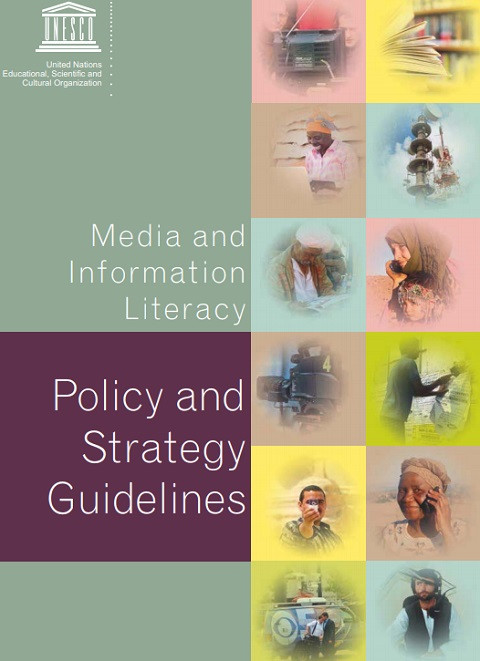 Media and Information Literacy: Policy and Strategy Guidelines Año de publicación: 2013 Autor: Alton Grizzle | Penny Moore | Michael Dezuanni | Sanjay Asthana | Carolyn Wilson | Fackson Banda | Chido Onumah | Maria Carme Torras Calvo Autor corporativo: UNESCO This resource aims to treat MIL as a composite concept, unifying information literacy and media literacy as well as considering the right to freedom of expression and access to information through ICTs. It is divided into two parts. Part 1 is the MIL Policy Brief, and is designed for policy or decision makers and can serve as a summary of the publication. Part 2 is divided into several comprehensive chapters and suggests: 1) how to enlist MIL a development tool; 2) conceptual frameworks for MIL policies and strategies; and 3) model MIL policy and strategies that can be adapted by countries globally.
  El acercamiento de las culturas; Hoja de ruta Año de publicación: 2016 Autor corporativo: UNESCO Today, the sheer compression of the world is bringing people and their cultures into the same space with intense speed, rendering new levels and forms of human interaction and interdependence. Population growth and migration are increasing in scale and complexity, and technology and media are bringing people together in ways never before thought possible. As a result, new creative expressions, innovation and immense opportunities have been generated and developed. While these phenomena have brought people together across geographic spaces, it has concurrently exposed a widening moral gap in our societies and the extent to which our societies are ill-equipped to effectively manage and overcome the challenges that continue to arise. Often in parallel with developmental progress, retrogressive patterns have emerged that present persistent threats to peace-building and social cohesion. Recurrent cycles of deadlock and conflict undermine governance and legislation at international, national and local levels preventing long-term peace and development. The litany of polarization within our societies often defined along the lines of ‘identity’ – religious, cultural, ethnic, or otherwise – are increasingly manifested in prejudice, intolerance, racism, xenophobia, discrimination, radicalization and extreme violence. The challenges are often multidimensional and interrelated, and their impacts cross conventional borders, thus revealing a pervading vulnerability at global level and the accompanying need for a global response. From a policy and governance perspective, this has rendered new levels of complexity in addressing challenges. It has also reinforced the need for a more inclusive and participatory notion of development, including integrated approaches that tackle the issues at hand as well as their foundations. The Decade has come into being in an era marked by increased divisiveness, and learning to live together in the 21st century presents a new frontier for managing cultural diversity. Respect for the inherent dignity of all persons underpins the values of the Decade and is one of the core pillars of the UN system, to ensure that all people have equal rights and opportunities to shape their future. These principles are reflected in the values of many cultures around the world. Intercultural dialogue denotes an open process of exchange and respect between individuals and groups of different cultures, points of view and aspirations. In such a way, the respect for and exercise and enjoyment of human rights and fundamental freedoms are not only key inroads to dialogue, but they are integral to its process. Ultimately they are crucial to sustaining the rapprochement of cultures as the central aspiration of the Decade. Le rapprochement des cultures; feuille de route Año de publicación: 2016 Autor corporativo: UNESCO Today, the sheer compression of the world is bringing people and their cultures into the same space with intense speed, rendering new levels and forms of human interaction and interdependence. Population growth and migration are increasing in scale and complexity, and technology and media are bringing people together in ways never before thought possible. As a result, new creative expressions, innovation and immense opportunities have been generated and developed. While these phenomena have brought people together across geographic spaces, it has concurrently exposed a widening moral gap in our societies and the extent to which our societies are ill-equipped to effectively manage and overcome the challenges that continue to arise. Often in parallel with developmental progress, retrogressive patterns have emerged that present persistent threats to peace-building and social cohesion. Recurrent cycles of deadlock and conflict undermine governance and legislation at international, national and local levels preventing long-term peace and development. The litany of polarization within our societies often defined along the lines of ‘identity’ – religious, cultural, ethnic, or otherwise – are increasingly manifested in prejudice, intolerance, racism, xenophobia, discrimination, radicalization and extreme violence. The challenges are often multidimensional and interrelated, and their impacts cross conventional borders, thus revealing a pervading vulnerability at global level and the accompanying need for a global response. From a policy and governance perspective, this has rendered new levels of complexity in addressing challenges. It has also reinforced the need for a more inclusive and participatory notion of development, including integrated approaches that tackle the issues at hand as well as their foundations. The Decade has come into being in an era marked by increased divisiveness, and learning to live together in the 21st century presents a new frontier for managing cultural diversity. Respect for the inherent dignity of all persons underpins the values of the Decade and is one of the core pillars of the UN system, to ensure that all people have equal rights and opportunities to shape their future. These principles are reflected in the values of many cultures around the world. Intercultural dialogue denotes an open process of exchange and respect between individuals and groups of different cultures, points of view and aspirations. In such a way, the respect for and exercise and enjoyment of human rights and fundamental freedoms are not only key inroads to dialogue, but they are integral to its process. Ultimately they are crucial to sustaining the rapprochement of cultures as the central aspiration of the Decade.
  Mainstreaming SDG4-Education 2030 in sector-wide policy and planning: technical guidelines for UNESCO field offices Año de publicación: 2016 Autor corporativo: UNESCO The main responsibility for implementing the SDG4-Education 2030 Agenda lies with governments, with UNESCO and partners providing support through coordinated policy advice, technical assistance, capacity development and monitoring of progress at global, regional and national levels. By their position, UNESCO field offices have a key role to play in providing such support at country level and therefore require adequate technical capacity to fulfil their mission.These guidelines aim at providing a basic resource to field offices for ensuring adequate technical support to national authorities in this process. In doing so, it takes into account different profiles of country needs and capacities, thus avoiding a one-size-fits-all approach. Countries may have different levels of awareness of, or political commitment to, Sustainable Development Goal 4 (SDG4). In all cases, UNESCO is expected to ensure that all the relevant information about SDG4-Education 2030 is properly disseminated and that national authorities and stakeholders are reminded of its importance. To assist field offices in this task UNESCO has developed and made available a number of resources and support materials, notably the Unpacking SDG4-Education 2030 Guide, parts of which are excerpted here, and will continue coordination efforts in this respect.Inevitably, field staff will have to adapt the guidelines provided here to the reality of the country they are serving. That is why this document is full of resources and pointers that can be combined and tailored to fit the particular context of each country. At the same time, field staff are invited to require additional technical guidance from the corresponding regional bureaus, which can rely on the backstopping of Headquarters services and support from the specialized institutes.These guidelines represent a first attempt to provide specific directions and resources to allow field offices to technically support Member States. After a first evaluation, in which all field staff are invited to participate, the guidelines will be improved so as to make them even more suitable and useful. They will also be supplemented with other material to ensure that UNESCO plays its role as the leading United Nations agency in the field.
 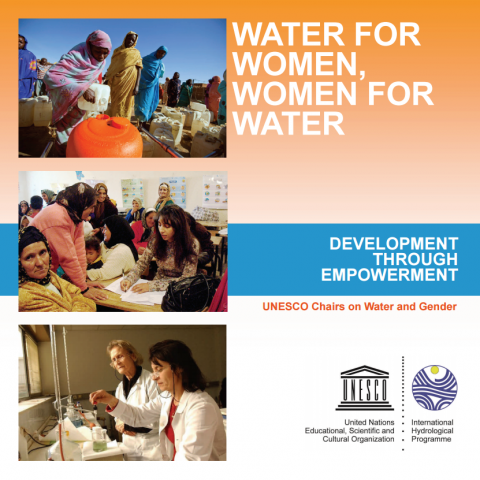 Water for Women, Women for Water: UNESCO's Chairs on Water and Gender Año de publicación: 2014 Autor corporativo: UNESCO The access to sufficient, safe and affordable water is a basic human right. It calls for governments, institutions, corporations and public and private organizations involved in the water sector to eliminate various forms of discrimination in the access, management and decision‐making processes involving water resources. Within the framework of the UNITWIN/UNESCO Chairs Programme, UNESCO has established five Chairs seeking to promote the engagement of women in sustainable development and water resource management. These Chairs integrate the UNESCO Water Family, consisting of the International Hydrological Programme (IHP), water‐related Centers’, the UNESCO‐IHE Institute for Water Education, the World Water Assessment Programme (WWAP), and a total of 35 UNESCO Chairs and UNITWIN Networks.Located in Brazil, Côte d’Ivoire, Morocco, Togo and the Dominican Republic, the Chairs are based in institutions of research and higher education, working actively to develop human resources, build solutions, and share scientific and practical knowledge. They work in partnership with other academic institutions, as well as public and private organizations. They also pave the way for the research and higher education communities to join forces with UNESCO in an effort to achieve internationally agreed Development Goals and targets. With a high appreciation for the Chairs’ great potential for impact, IHP has strongly encouraged their projects and initiatives, as well their involvement in other focal areas of the Eighth Phase of IHP, in order to strengthen water security, enhance tertiary and technical water education and respond to the needs of communities, with a special focus on women’s needs. With their inception in 2006, the UNESCO Chairs on Water and Gender have built a remarkable combination of knowledge and experience in their area of expertise. Through their actions, the Chairs have successfully fostered cooperation and exchange of information among different institutions of higher education; conducted research and training activities on gender‐related issues, water and natural sciences; established networks between professionals, governmental, non‐governmental and private organizations; created new approaches to deal with the water‐related needs of local communities and succeeded in increasing participation, leadership and the role of women in the water sector.As a general goal, the Chairs strive to enhance women’s capacities through motivation, engagement, development of skills and education. They have been active in organizing learning courses, training sessions, workshops, conferences and a diverse range of research and community projects. The following pages present a detailed overview of the five Chairs and their goals, activities, and initiatives.