
Recursos
Exploren una amplia gama de recursos valiosos en GCED para profundizar su comprensión y promover su búsqueda, incidencia, enseñanza y aprendizaje.
792 resultados encontrados
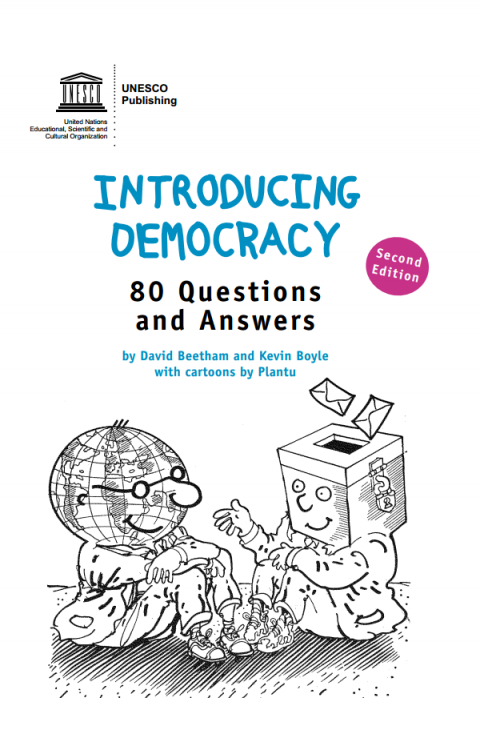 Introducing democracy: 80 questions and answers Año de publicación: 2009 Autor: David Beetham | Kevin Boyle Autor corporativo: UNESCO Humorously illustrated by Plantu, the famous cartoonist of the French newspaper Le Monde, this book is a valuable tool for all those who want to know more about democracy and human rights, whether it be students, activists, civil servants, or simply as interested citizens. What is democracy? What is the relation between democracy and individual rights? Is majority rule always democratic? How can democracy be maintained and improved? This book tackles these and other questions about democracy, covering six broad areas: basic concepts and principles; free and fair elections; open and accountable government; individual rights and their defence; democratic or civil society; the future of democracy.
 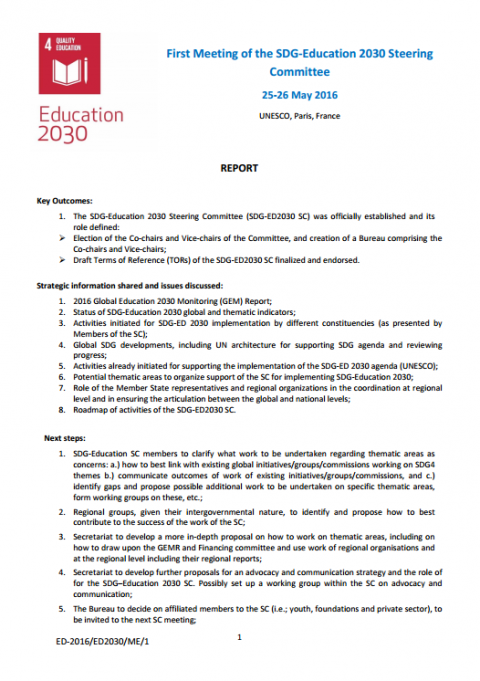 First Meeting of the SDG-Education 2030 Steering Committee: report Año de publicación: 2016 Autor corporativo: UNESCO The present report provides the first SDG-education 2030 Steering Committee meeting programme, a short summary of key outcomes and decisions, as well as a second part including a more detailed summary of deliberations reflecting the themes, issues and understandings emerging from the discussions.
 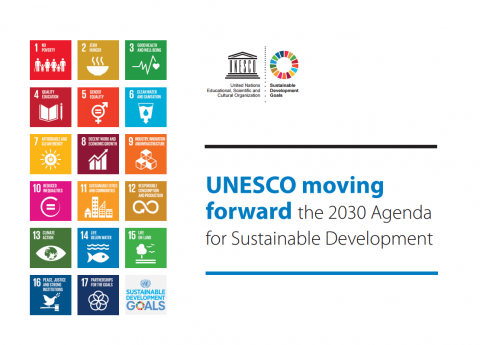 UNESCO moving forward the 2030 Agenda for Sustainable Development Año de publicación: 2017 Autor corporativo: UNESCO The United Nations 2030 Agenda for Sustainable Development, with its 17 Sustainable Development Goals, sets forth a bold new framework for development cooperation over the next 15 years. This agenda aspires to ensure prosperity and well-being for all women and men, while protecting our planet and strengthening the foundations for peace.
  Education Transforms Lives Año de publicación: 2017 Autor corporativo: UNESCO This brochure explores UNESCO’s role in leading and coordinating the Education 2030 Agenda, which is part of a global movement to eradicate poverty through 17 Sustainable Development Goals by 2030. Education, essential to achieve all of these goals, has its own dedicated Goal 4, which aims to “ensure inclusive and equitable quality education and promote lifelong learning opportunities for all”. UNESCO is the United Nations’ specialized agency for education and the Education Sector provides global and regional leadership in education and responds to contemporary global challenges through education with a special focus on gender equality and Africa.
 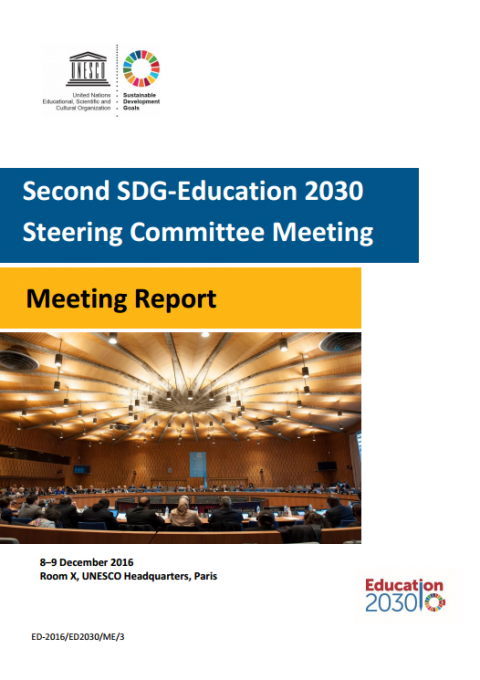 Second SDG-Education 2030 Steering Committee: meeting report Año de publicación: 2016 Autor corporativo: UNESCO The present report provides the SDG-Education 2030 SC meeting programme, a short summary of key outcomes and decisions, as well as a second part including a more detailed summary of deliberations reflecting the themes, issues and understandings emerging from the discussions.
 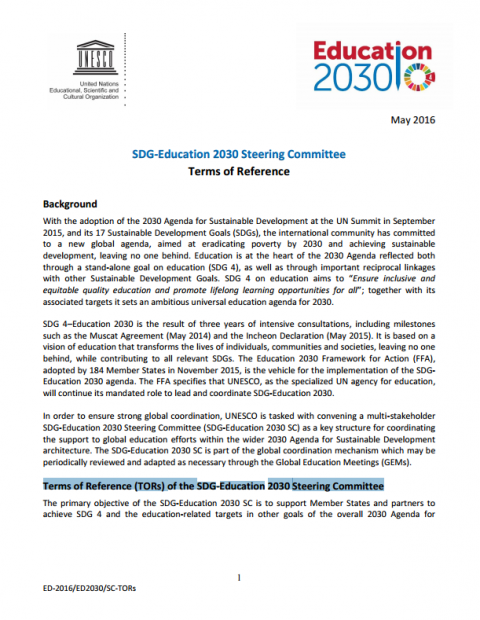 SDG-Education 2030 Steering Committee: Terms of Reference Año de publicación: 2016 Autor corporativo: UNESCO This paper is the terms of reference of the SDG-Education 2030 Steering Committee.
 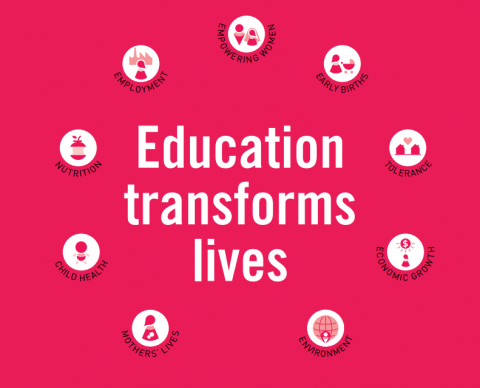 Education Transforms Lives Año de publicación: 2013 Autor corporativo: UNESCO Education lights every stage of the journey to a better life, especially for the poor and the most vulnerable. Education’s unique power to act as a catalyst for wider development goals can only be fully realized, however, if it is equitable. That means making special efforts to ensure that all children and young people – regardless of their family income, where they live, their gender, their ethnicity, whether they are disabled – can benefit equally from its transformative power. Education empowers girls and young women, in particular, by increasing their chances of getting jobs, staying healthy and participating fully in society – and it boosts their children’s chances of leading healthy lives. To unlock the wider benefits of education, all children need the chance to complete not only primary school but also lower secondary school. And access to schooling is not enough on its own: education needs to be of good quality so that children actually learn. Given education’s transformative power, it needs to be a central part of any post-2015 global development framework.
  Ensuring the right to equitable and inclusive quality Education: results of the ninth consultation of Member States on the implementation of the UNESCO Convention and Recommendation against Discrimination in Education Año de publicación: 2017 Autor corporativo: UNESCO The Convention and Recommendation against Discrimination in Education reflect UNESCO’s constitutional mission of instituting collaboration among nations to ‘advance the ideal of equality of educational opportunities without regard to race, sex, or any distinctions, economic or social.’ The purpose of these instruments, recently recognized as a cornerstone of the Education 2030 Agenda, is not only the elimination of discrimination in education, but also the adoption of concrete measures aimed at promoting equality of opportunities and treatment in this field. They cover the right to education comprehensively. The purpose of reporting is to illustrate the steps taken to implement the instruments, the progress made and the difficulties encountered by Member States. Eight Member State consultations have been conducted on the measures taken for the implementation of the 1960 Convention and Recommendation since the adoption of these instruments by the General Conference of UNESCO. Each of the consultations led to a global report containing the results of the consultation for submission to the UNESCO Executive Board’s Committee on Conventions and Recommendations and for consideration by the General Conference.
  [Summary] Accountability in Education: Meeting Our Commitments: Global Education Monitoring Report Summary, 2017/8 Año de publicación: 2017 Autor corporativo: UNESCO This summary of the 2017/8 GEM Report shows the entire array of approaches to accountability in education. It ranges from countries unused to the concept, where violations of the right to education go unchallenged, to countries where accountability has become an end in itself instead of a means to inclusive, equitable and high-quality education and lifelong learning for all.The report emphasizes that education is a shared responsibility. While governments have primary responsibility, all actors – schools, teachers, parents, students, international organizations, private sector providers, civil society and the media – have a role in improving education systems. The report emphasizes the importance of transparency and availability of information but urges caution in how data are used. It makes the case for avoiding accountability systems with a disproportionate focus on narrowly defined results and punitive sanctions. In an era of multiple accountability tools, the report provides clear evidence on those that are working and those that are not.
  Education for Sustainable Development Goals: Learning Objectives Año de publicación: 2017 Autor corporativo: UNESCO UNESCO has been promoting Education for Sustainable Development (ESD) since 1992. It led the UN Decade for ESD from 2005 to 2014 and is now spearheading its follow-up, the Global Action Programme (GAP) on ESD. The momentum for ESD has never been stronger. Global issues – such as climate change – urgently require a shift in our lifestyles and a transformation of the way we think and act. To achieve this change, we need new skills, values and attitudes that lead to more sustainable societies. Education systems must respond to this pressing need by defining relevant learning objectives and learning contents, introducing pedagogies that empower learners, and urging their institutions to include sustainability principles in their management structures. The new 2030 Agenda for Sustainable Development clearly reflects this vision of the importance of an appropriate educational response. Education is explicitly formulated as a stand-alone goal – Sustainable Development Goal 4. Numerous educationrelated targets and indicators are also contained within other Sustainable Development Goals (SDGs). Education is both a goal in itself and a means for attaining all the other SDGs. It is not only an integral part of sustainable development, but also a key enabler for it. That is why education represents an essential strategy in the pursuit of the SDGs. This publication is designed as a guide for education professionals on the use of ESD in learning for the SDGs, and consequently to contribute to achieving the SDGs. The guide identifies indicative learning objectives and suggests topics and learning activities for each SDG. It also presents implementation methods at different levels, from course design to national strategies. The guide does not aim to be prescriptive in any way, but to provide guidance and suggestions that educators can select and adapt to fit concrete learning contexts