
Recursos
Exploren una amplia gama de recursos valiosos en GCED para profundizar su comprensión y promover su búsqueda, incidencia, enseñanza y aprendizaje.
114 resultados encontrados
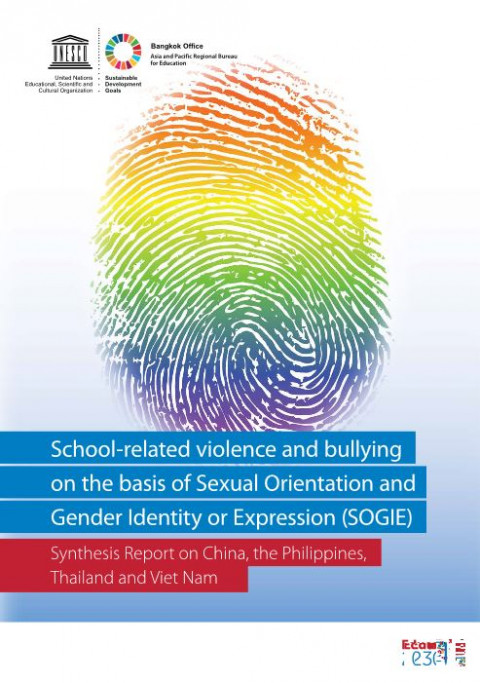 School-related violence and bullying on the basis of Sexual Orientation and Gender Identity or Expression (SOGIE): synthesis report on China, the Philippines, Thailand and Viet Nam Año de publicación: 2018 Autor corporativo: UNESCO Bangkok School related violence and bullying is a problem in all countries. UNESCO is committed to ensuring that all children and young people have access to safe, inclusive, health-promoting learning environments as part of its strategy on education for health and well-being. This synthesis report on school related violence and bullying on the basis of Sexual Orientation and Gender Identity or Expression (SOGIE), covering China, the Philippines, Thailand and Viet Nam, was developed to broaden awareness and understanding about this issue, while also identifying best practices and policies. It also aims to mobilize support for advocacy among educators, research institutions, policy makers and activists at the national and regional levels.
 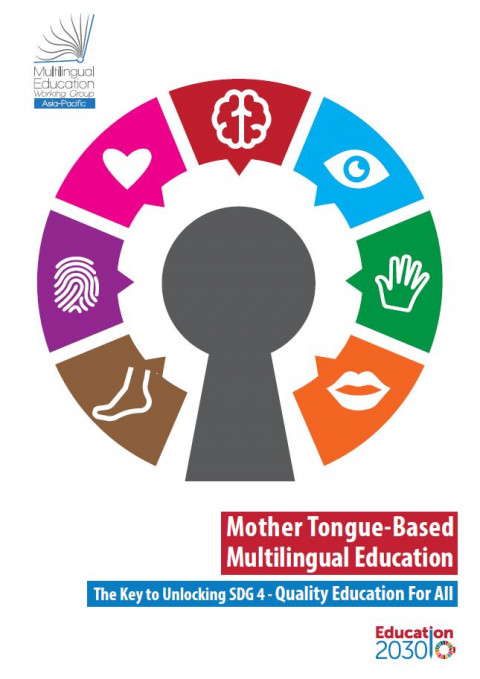 Mother Tongue-Based Multilingual Education: The Key to Unlocking SDG 4 - Quality Education for All Año de publicación: 2017 Autor: Matt Wisbey Autor corporativo: UNESCO Bangkok This brochure, designed as a bright and bold resource to be used with policy makers and other key stakeholders, explores the reasons why mother tongue-based multilingual education (MTB-MLE) is the key to quality lifelong learning opportunities for all. Linking the key elements of MTB-MLE with SDG4’s targets, it outlines the benefits for both individual learners and society as a whole. Полиязычное образование на основе родного языка. Ключ к реализации ЦУР 4 - качественное образование для всех Año de publicación: 2017 Autor: Matt Wisbey Autor corporativo: UNESCO Bangkok Полиязычное образование на основе родного языка - это образование, начинающееся на языке, которым ученик владеет свободно и затем постепенно вводит другие языки.Справедливое качественное образование и непрерывное обучение для всех возможно только тогда, когда образование учитывает и отражает полиязычный характер общества. Дети, молодежь и взрослые нуждаются в образовательных возможностях, основанных на их образе жизни и потребностях, на родном языке и посредством него.Поскольку ЦУР 4 является основополагающей для других целей устойчивого развития, без полиязычного образования на основе родного языка остальные 16 целей так и останутся недостижимыми.Информация в этой брошюре частично основана на презентациях и дискуссиях с 5-й Международной конференции по языку и образованию: устойчивое развитие посредством многоязычного образования, которая состоялась в Бангкоке, Таиланд, в октябре 2016 года.Для получения дополнительной информации о конференции или просмотра оригинальных презентаций и ключевых сообщений, пожалуйста, посетите: http://www.lc.mahidol.ac.th/mleconf/2016/program.htm
 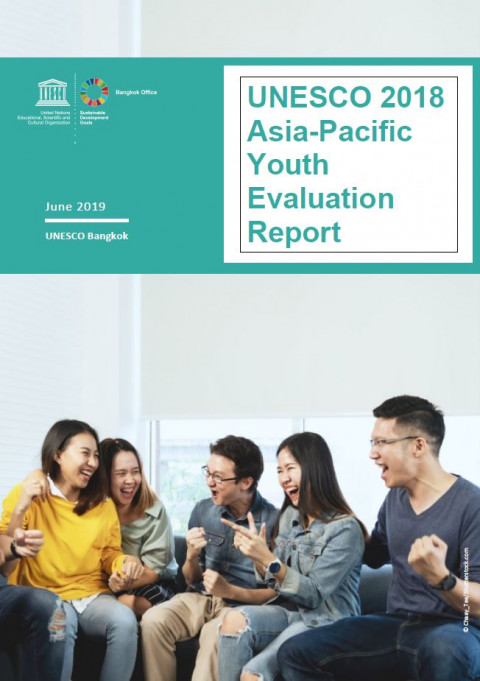 UNESCO 2018 Asia-Pacific Youth Evaluation Report Año de publicación: 2020 Autor: Rebecca Barr | Sue Vize Autor corporativo: UNESCO Bangkok In March 2019 UNESCO conducted the first ever “youth evaluation” of the youth programmes implemented during 2018. This evaluation is a pilot for integrating youth-led evaluation as part of UNESCO’s programming cycle as part of our commitment to meaningfully engaging with youth.This evaluation was developed by UNESCO staff in partnership with youth who have been involved in UNESCO’s work in a variety of ways. It consists of three parts: an online survey, focus group discussions and stories written by young people about their experiences being part of a UNESCO project.
  Education for intercultural understanding Año de publicación: 2010 Autor: Joy de Leo Autor corporativo: UNESCO Bangkok The theme of intercultural understanding and respect for cultural diversity falls within the social dimension of peace, equality and human rights, underpinned by the cultural context, within and through which learning occurs, and which forms the basis for inter-linkages between the various sustainability dimensions (i.e., socio-political, environmental and economic). Within the International Implementation Scheme, the value of respect is seen as central to all aspects of sustainable development: respect for self, for others and for all life on earth. L'éducation pour la compréhension interculturelle Año de publicación: 2010 Autor: Joy de Leo Autor corporativo: UNESCO Bangkok Le thème de la compréhension interculturelle et le respect de la diversité culturelle relève de la dimension sociale de la paix, l'égalité et les droits de l'homme, sous-tendue par le contexte culturel, à l'intérieur et à travers lequel l'apprentissage se produit, et qui constitue la base des liens entre les différentes dimensions de la durabilité (ie, socio-politique, environnemental et économique). Dans le cadre du programme d'application international, la valeur du respect est considérée comme essentielle à tous les aspects du développement durable: le respect de soi, des autres et de toute vie sur terre. 상호 문화 간 이해 교육 Año de publicación: 2010 Autor: Joy de Leo Autor corporativo: UNESCO Bangkok 상호 문화 간 이해와 문화 다양성에 대한 존중이라는 주제는 문화적 맥락에 기반을 둔 인권과 평등 및 평화의 사회적 영역에 속하며 학습 안에서 또한, 그 과정을 통해 이루어지며, 다양한 지속가능한 영역내에서 다양한 문화 간 상호 연계의 기반(즉, 사회·정치적, 환경적, 경제적으로)을 구축한다. 국제 실행계획(International Implementation Scheme)내에서, 존중의 가치는 지속가능한 발전의 모든 측면에서 핵심적인 것으로 간주된다. 곧, 자기 존중, 타인과 지구상의 모든 삶에 대한 존중을 의미한다.
 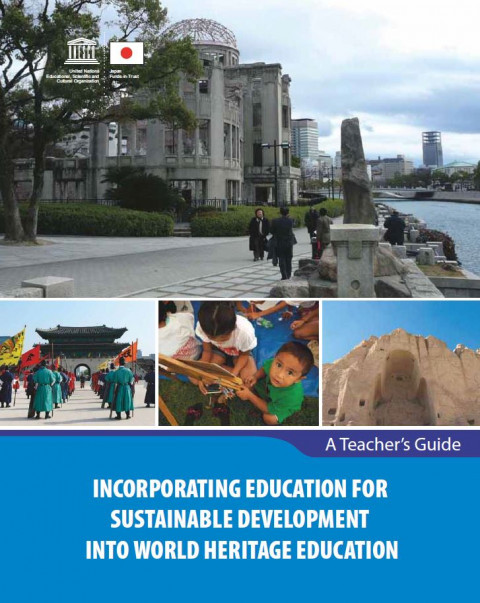 Incorporating education for sustainable development into world heritage education: a teacher's guide Año de publicación: 2010 Autor corporativo: UNESCO Bangkok This publication, A Teacher’s Guide: Incorporating Education for Sustainable Development into World Heritage Education, represents the collective efforts of workshop participants to produce a practical tool for teachers to modify available curricula and incorporate ESD concepts and principles into WHE. It has taken a long time for the guide to be available in print. Nonetheless, the content of the guide remains practical and relevant in incorporating Education for Sustainable Development into World Heritage Education. Intégrer l'éducation au développement durable dans l'éducation au patrimoine mondial: un guide pour l'enseignant Año de publicación: 2010 Autor corporativo: UNESCO Bangkok Cette publication, intitulée Un guide pour les enseignants: intégrer l'éducation au développement durable dans l'éducation au patrimoine mondial, représente les efforts collectifs des participants à l'atelier pour produire un outil pratique pour les enseignants afin de modifier les programmes disponibles. Le guide a mis du temps à être disponible en version imprimée. Néanmoins, le contenu du guide reste pratique et pertinent pour intégrer l'éducation au développement durable dans l'éducation au patrimoine mondial.
 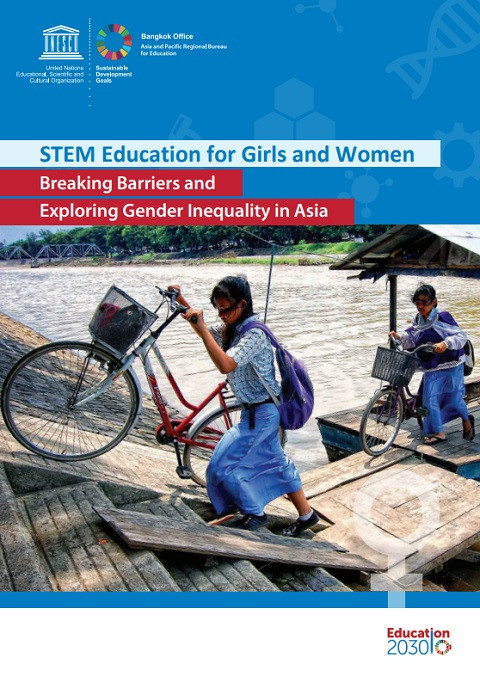 STEM Education for Girls and Women: Breaking Barriers and Exploring Gender Inequality in Asia Año de publicación: 2020 Autor corporativo: UNESCO Bangkok | UNESCO Science, Technology, Engineering and Mathematics (STEM) fields are considered catalysts for the achievement of the 2030 Agenda for Sustainable Development. Yet, particularly for STEM fields, girls and women, for a multitude of social, cultural and psychological reasons, engage and participate at a lower rate than boys and men. This research collection aims to highlight the contextual barriers that girls and women face in STEM education and careers and offer concrete examples of interventions that successfully encourage participation of girls and women in STEM. These eight case studies from across Asia explore both the barriers and the achievements in SDG 4 and SDG 5, and give context-specific analysis of different aspects of gender disparities in the respective countries.