
Recursos
Exploren una amplia gama de recursos valiosos en GCED para profundizar su comprensión y promover su búsqueda, incidencia, enseñanza y aprendizaje.
97 resultados encontrados
 Suwon-Osan CONFINTEA VI Mid-Term Review Statement: The Power of Adult Learning and Education; A Vision Towards 2030 Año de publicación: 2018 Autor corporativo: UNESCO Institute for Lifelong Learning (UIL) The Sixth International Conference on Adult Education (CONFINTEA VI), held in Brazil in December 2009, closed with the adoption of the Belém Framework for Action, which recorded the commitments of Member States and presented a strategic guide for the global development of adult learning and education from a lifelong learning perspective. The third Global Report on Adult Learning and Education (GRALE III), published in 2016, drew on survey data to evaluate progress made by countries in fulfilling the commitments made in Brazil, while also highlighting some of the contributions adult learning and education can make to the 2030 Agenda for Sustainable Development. The CONFINTEA VI Mid-Term Review, held in Suwon, Republic of Korea, in October 2017, took stock of progress made by Member States in the past eight years, looking ahead to GRALE IV in 2019. This statement represents the overall perspective of delegates and their recommendations for the future. Declaración de Suwon-Osan sobre la Revisión a Medio Término de la CONFINTEA VI: el poder del aprendizaje y la educación de adultos: una visión hacia el 2030 Año de publicación: 2018 Autor corporativo: UNESCO Institute for Lifelong Learning (UIL) La VI Conferencia Internacional de Educación de Adultos (CONFINTEA VI), celebrada en Belém (Brasil), en diciembre de 2009, se clausuró con la aprobación del Marco de acción de Belém que registró los compromisos de los Estados Miembros y presentó una guía estratégica para el desarrollo mundial del aprendizaje y la educación de adultos desde una perspectiva de aprendizaje a lo largo de toda la vida. El tercer Informe mundial sobre el aprendizaje y la educación de adultos (GRALE III), publicado en 2016, se basó en los datos de una encuesta destinada a evaluar el progreso realizado por los países en el cumplimiento de los compromisos formulados en Brasil, al mismo tiempo que hacía hincapié en algunas de las contribuciones que puede hacer el aprendizaje y la educación de adultos a la Agenda 2030 para el Desarrollo Sostenible. La Revisión a Medio Término de la CONFINTEA VI, realizada en Suwon (República de Corea) en octubre de 2017, hizo un balance del progreso realizado por los Estados Miembros en los últimos ocho años, mirando en la perspectiva del GRALE IV para 2019. Este pronunciamiento representa el punto de vista global de los delegados y sus recomendaciones para el futuro. 유네스코 제6차 세계성인교육회의 중간회의 수원-오산 선언문: 성인학습 교육(ALE)의 힘; 2030년을 향한 비전 Año de publicación: 2018 Autor corporativo: UNESCO Institute for Lifelong Learning (UIL) 2009년 12월 브라질 벨렘에서 개최된 제6차 세계성인교육회의(CONFINTEA VI)에서 벨렘 실행계획(Belém Framework for Action)이 채택되었다. 벨렘 실행계획은 회원국의 성인학습과 교육에 대한 공약을 기록하고, 평생학습 관점에서 성인학습과 교육의 세계적 발전을 위한 전략적 지침을 제시하였다. 2016년 발간된 유네스코의 제3차 성인학습과 교육(ALE)에 관한 글로벌 보고서(GRALE III)에서는 설문조사를 통해 수집된 데이터를 기반으로 2009년 제6차 회의 당시 회원국이 제시한 공약의 이행 현황을 평가하는 한편, 2030 지속가능발전의제(2030 Agenda for Sustainable Development) 이행에 있어 성인학습과 교육이 기여할 수 있는 부분을 강조하였다. 2017년 10월 대한민국 수원시에서 개최된 제6차 세계성인교육회의 중간회의(CONFINTEA VI Mid-Term Review)에서 회원국들은 지난 8년 동안 이행된 활동 현황을 검토하고, 2019년 발간 예정인 제4차 성인학습과 교육(ALE)에 관한 글로벌 보고서(GRALE IV)를 준비하였다. 이 선언문은 성인학습과 교육에 대한 각국 대표의 전반적 관점과 그들이 제시하는 미래에 대한 권고안이다.
 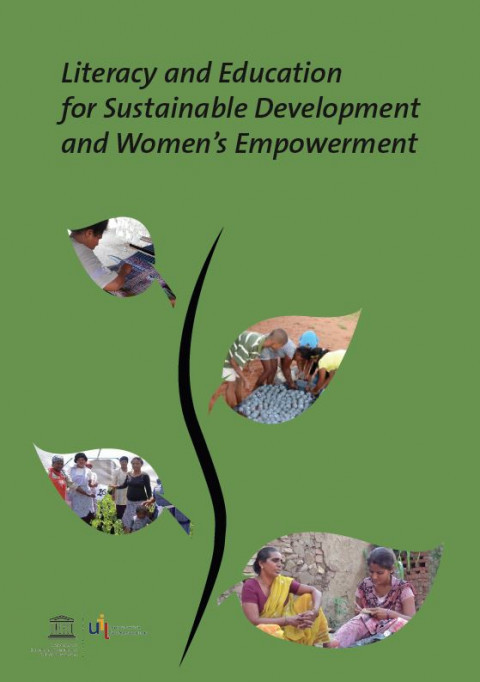 Literacy and education for sustainable development and women's empowerment Año de publicación: 2014 Autor: Anna Robinson-Pant Autor corporativo: UNESCO Institute for Lifelong Learning (UIL) The fact that women constitute two-thirds of the world’s non-literate population has been a cause for concern for several decades now. Despite a number of high-profile literacy interventions specifically targeting women – including UNESCO’s LIFE initiative – the disparity between male and female literacy rates persists in many countries of the world (UIL, 2013). This starting point for thinking about women’s literacy has however often led to a narrow focus on literacy access and outcomes. Whilst educational policy makers and planners have attempted to identify and overcome barriers to women’s participation, researchers have directed their attention to measuring the social and economic benefits of women’s literacy (see Robinson-Pant, 2004). Statistical correlations have been presented as evidence of the impact of women’s literacy: for instance, in Pakistan, women with a high level of literacy earned 95% more than women with no literacy skills yet there was only a 33% differential amongst men (UNESCO 2012: 196).Barriers to participation have been analysed in terms of structural (timing, location, women-only versus mixed gender) and social (marriage, poverty, language hierarchies) factors (see Ballara 1991). Within such analysis however, little attention has been given to the social processes associated with literacy learning and development. By contrast, this paper sets out to take a wider lens on literacy in order to explore not only ‘what works’ in practical terms of encouraging women to participate programmes, but also to look at how and why literacy programmes can contribute to sustainable development and processes of empowerment. Taking this perspective on women’s literacy involves asking alternative questions from the more usual ‘how can we make more women literate?’ Approaching literacy through the lens of sustainable development and women’s empowerment means that we develop a more nuanced understanding of how different kinds of literacy emerge from or support different development approaches and how women engage with such processes of change.How is literacy related to sustainable development programmes? What does empowerment mean to different women in different situations? What kind of research evidence and knowledge are literacy programmes and policy building on? How can adult learning facilitate economic, social and environmental change? These larger questions will guide the conceptual exploration of sustainable development, women’s empowerment and literacy, as well as the review of literacy programmes presented in this paper. The starting assumption is that only by looking in depth at the processes of literacy learning and development practice can we begin to address the challenge of narrowing the gender gap in literacy attainment.
  Literacy and the Promotion of Citizenship: discourses and effective practices Año de publicación: 2008 Autor corporativo: UNESCO Institute for Lifelong Learning (UIL) The UNESCO Institute for Lifelong Learning and its partners, the Agence Nationale de Lutte Contre L’Illettrisme (ANLCI) and the UNESCO French National Commission, organized a Regional Meeting on “Literacy and the Promotion of Citizenship: The Challenge of Learning” from 2-5 April 2005 in Lyon, France. Participants from 38 countries of what UNESCO considers to be the European Region (i.e. Europe, Canada, Israel and the United States of America) reviewed pertinent policies and shared good practices.By focusing on the theme of citizenship, the meeting sought to establish a link between literacy and the empowerment of citizens. This publication brings together the main presentations from that meeting, and as such documents the diversity of literacy-related thinking and practice in the region.
 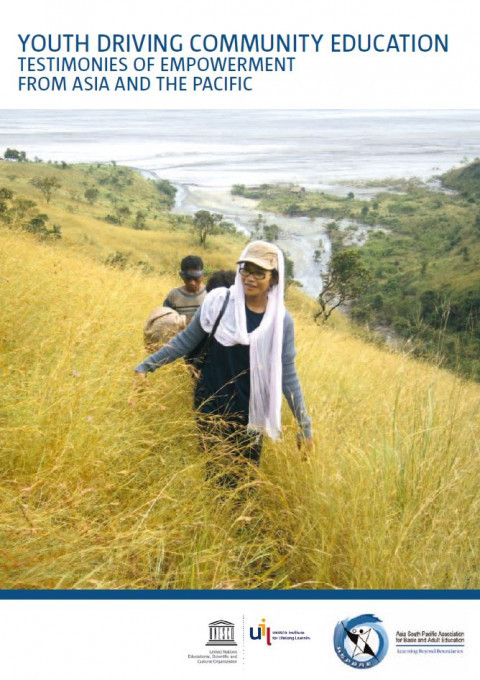 Youth Driving Community Education: Testimonies of Empowerment from Asia and the Pacific Año de publicación: 2014 Autor corporativo: UNESCO Institute for Lifelong Learning (UIL) | Asia South Pacific Association for Basic and Adult Education (ASPBAE) This publication presents a collection of testimonies from young women and men from vulnerable backgrounds who have transformed their lives through community education and development activities. Their testimonies describe the challenges they faced in pursuing an education, how they benefited from community education programmes, and the active roles they now play in community education and development.The publication will meet its objectives if it inspires young people and their partners to take action to:> Improve educational and learning environments for young men and women;> Improve the participation of young women in community building and democratic processes; and> Engage young men and women as active citizens working towards peace, democracy and sustainable development.
  Alfabetización para el desarrollo sostenible y el empoderamiento de las mujeres Año de publicación: 2014 Autor: Anna Robinson-Pant Autor corporativo: UNESCO Institute for Lifelong Learning (UIL) The fact that women constitute two-thirds of the world’s non-literate population has been a cause for concern for several decades now. Despite a number of high-profile literacy interventions specifically targeting women – including UNESCO’s LIFE initiative – the disparity between male and female literacy rates persists in many countries of the world (UIL, 2013). This starting point for thinking about women’s literacy has however often led to a narrow focus on literacy access and outcomes. Whilst educational policy makers and planners have attempted to identify and overcome barriers to women’s participation, researchers have directed their attention to measuring the social and economic benefits of women’s literacy (see Robinson-Pant, 2004). Statistical correlations have been presented as evidence of the impact of women’s literacy: for instance, in Pakistan, women with a high level of literacy earned 95% more than women with no literacy skills yet there was only a 33% differential amongst men (UNESCO 2012: 196). Barriers to participation have been analysed in terms of structural (timing, location, women-only versus mixed gender) and social (marriage, poverty, language hierarchies) factors (see Ballara 1991). Within such analysis however, little attention has been given to the social processes associated with literacy learning and development. By contrast, this paper sets out to take a wider lens on literacy in order to explore not only ‘what works’ in practical terms of encouraging women to participate programmes, but also to look at how and why literacy programmes can contribute to sustainable development and processes of empowerment. Taking this perspective on women’s literacy involves asking alternative questions from the more usual ‘how can we make more women literate?’ Approaching literacy through the lens of sustainable development and women’s empowerment means that we develop a more nuanced understanding of how different kinds of literacy emerge from or support different development approaches and how women engage with such processes of change. How is literacy related to sustainable development programmes? What does empowerment mean to different women in different situations? What kind of research evidence and knowledge are literacy programmes and policy building on? How can adult learning facilitate economic, social and environmental change? These larger questions will guide the conceptual exploration of sustainable development, women’s empowerment and literacy, as well as the review of literacy programmes presented in this paper. The starting assumption is that only by looking in depth at the processes of literacy learning and development practice can we begin to address the challenge of narrowing the gender gap in literacy attainment.
  Embracing a Culture of Lifelong Learning: Contribution to the Futures of Education Initiative Año de publicación: 2020 Autor corporativo: UNESCO Institute for Lifelong Learning (UIL) This report, a contribution to UNESCO's Futures of Education initiative, reflects on the potential contribution of lifelong learning both in transforming the field of education and in creating a more sustainable, healthy and inclusive future. Drawing on the insights of 12 distinguished experts from different disciplines and countries, the report presents a compelling vision for lifelong learning and the values and principles that must underpin it. It calls on the international community to acknowledge the social and private dimensions of education, and to recognize lifelong learning as a new human right. Realizing this vision, it argues, requires adopting a transdisciplinary approach that can effectively grasp the complex, multidimensional nature of the challenges faced by humanity. The report outlines the main features of the ‘enabling environment’ needed to make lifelong learning the governing principle of education policy and to offer people opportunities to learn throughout life, whatever their background or context. It concludes with a set of key messages, complemented by specific action points and a discussion of selected policy measures.
  Addressing Global Citizenship Education in Adult Learning and Education; Summary Report Año de publicación: 2019 Autor: Christiana Nikolitsa-Winter | Werner Mauch | Philippe Maalouf Autor corporativo: UNESCO Institute for Lifelong Learning (UIL) | APCEIU The Asia-Pacific Centre of Education for International Understanding (APCEIU) has published the summary report on Addressing Global Citizenship Education in Adult Learning and Education (ALE) in partnership with UNESCO Institute for Lifelong Learning (UIL). In regard to GCED in ALE the publication looks at the developments, gaps and challenges in Finland, Mauritania, the Republic of Korea, South Africa, and Uruguay and highlights a number of good practices in the field. As the role of ALE and GCED has been emphasized in realizing the 2030 Sustainable Development Agenda, it aims to raise awareness of the significance of GCED in ALE and to inspire various stakeholders to develop and strengthen this field of education. ForewordIntroduction Part I: Thematic Studies Global citizenship education(GCED): Conceptual considerationsRealizing the 2030 Sustainable Development Agenda: The role of GCED in ALEALE’s contribution to fostering GCED - ALE as GCEDLiteracy: The foundation of ALE and GCED - Contribution of adult literacy programmes to GCED outcomes - GCED in ALE: Global trends and outcomesProfessionalization of adult educators in GCED - Competency framework for adult educators in GCED - Curriculum framework for adult educators in GCED - Examples of curricula for adult educatorsConclusion on the thematic studies Part II: Case Studies GCED in ALE: Case studies from the five UNESCO regions - State of the art of ALE in the five countries - Legal frameworks and discourse - Selected ALE programmes and mechanisms that touch on GCED in the case studies - Professionalizing ALE educators as a means of fostering GCED in ALE: examples - Key outcomes of the country case studies - Addendum: GCED in ALE as a response to acute need - The BEF Alpha programme Conclusion and way forwardBibliography
  [Summary] 4th Global Report on Adult Learning and Education: Leave No One Behind: Participation, Equity and Inclusion; Key Messages and Executive Summary Año de publicación: 2020 Autor corporativo: UNESCO Institute for Lifelong Learning (UIL) The fourth Global Report on Adult Learning and Education (GRALE 4) argues that achieving SDG 4, and realizing its cross-cutting contribution to the other 16 goals, demands a much more integrated and comprehensive approach to education, with adult learning and education at its heart. GRALE 3, published in 2016, showed that adult learning and education produces significant benefits across a range of policy areas. Countries reported a positive impact on health and well-being, employment and the labour market, and social, civic and community life. GRALE 4, while reinforcing the message that the benefits of participation in ALE are substantial, shows that they remain unevenly distributed.