
Recursos
Exploren una amplia gama de recursos valiosos en GCED para profundizar su comprensión y promover su búsqueda, incidencia, enseñanza y aprendizaje.
70 resultados encontrados
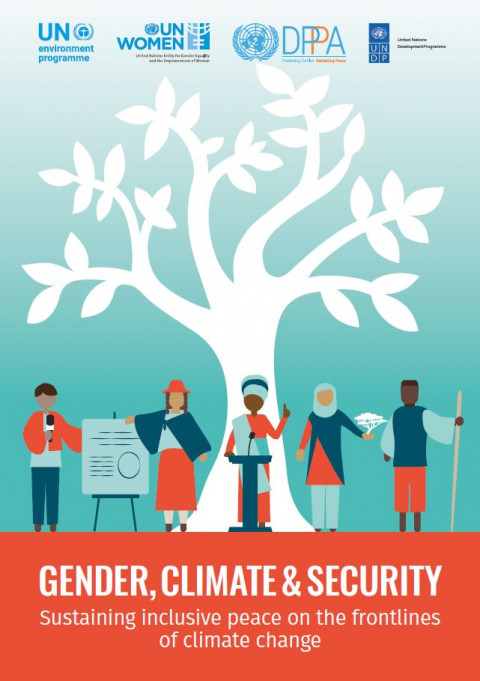 Gender, Climate & Security: Sustaining Inclusive Peace on the Frontlines of Climate Change Año de publicación: 2020 Autor corporativo: United Nations Environment Programme (UNEP) | United Nations Entity for Gender Equality and the Empowerment of Women (UN Women) | United Nations Development Programme (UNDP) Climate change is a defining threat to peace and security in the 21st century – its impacts felt by everyone, but not equally. Gender norms and power dynamics shape how women and men of different backgrounds experience or contribute to insecurity in a changing climate. Grounded in a series of case studies from research and programming experience, this report offers a comprehensive framework for understanding how gender, climate and security are inextricably linked. The report assesses entry points for action across existing global agendas and suggests concrete recommendations for how policymakers, development practitioners and donors can advance three inter-related goals: peace and security, climate action and gender equality.
  Policy Brief: The Impact of Covid-19 on Women Año de publicación: 2020 Autor corporativo: United Nations Entity for Gender Equality and the Empowerment of Women (UN Women) | United Nations (UN) The year 2020, marking the twenty-fifth anniversary of the Beijing Platform for Action, was intended to be ground-breaking for gender equality. Instead, with the spread of the COVID-19 pandemic, even the limited gains made in the past decades are at risk of being rolled back. The pandemic is deepening pre-existing inequalities, exposing vulnerabilities in social, political and economic systems which are in turn amplifying the impacts of the pandemic.Across every sphere, from health to the economy, security to social protection, the impacts of COVID-19 are exacerbated for women and girls simply by virtue of their sex.This policy brief by the UN Secretary-General explores how women and girls’ lives are changing in the face of COVID-19, and outlines suggested priority measures to accompany both the immediate response and longer-term recovery efforts.
  Beyond COVID-19: A Feminist Plan for Sustainability and Social Justice Año de publicación: 2021 Autor corporativo: United Nations Entity for Gender Equality and the Empowerment of Women (UN Women) As the world learns to live with COVID-19, to emerge from the current crisis, and to “build back better”, UN Women’s new Feminist Plan for Sustainability and Social Justice is a visionary but practical roadmap for putting gender equality, social justice, and sustainability at the centre of the recovery. The Feminist Plan maps the ambitious and transformative policies – on livelihoods, care, and the environment – that are needed to build a more equal and sustainable future. To get there, calls for context-specific policy pathways, tailored political strategies, and financing. The plan identifies key levers that can create change and the actors at global, national, local levels that need to take action to move towards this vision. Au-delà du COVID-19 : Un plan féministe de durabilité et de justice sociale Año de publicación: 2021 Autor corporativo: United Nations Entity for Gender Equality and the Empowerment of Women (UN Women) Alors que le monde apprend à vivre avec le COVID-19, à « reconstruire en mieux » et est mobilisé pour sortir de la crise actuelle, le nouveau « Plan féministe » d’ONU Femmes fournit une feuille de route visionnaire mais concrète visant à placer l’égalité des sexes, la justice sociale et la durabilité au centre de la relance. Le « Plan féministe » cartographie les politiques ambitieuses et transformatrices relatives aux moyens de subsistance, aux soins et à l'environnement qui sont nécessaires pour construire un avenir plus équitable et durable. Pour y parvenir, il appelle à des approches politiques spécifiques au contexte, à des stratégies politiques adaptées et à un financement. Le plan identifie les leviers clés qui peuvent créer un changement ainsi que les actrices et acteurs aux niveaux mondial, national et local qui doivent prendre des mesures pour avancer vers cette vision. Más allá del COVID-19: un plan feminista para la sostenibilidad y la justicia social Año de publicación: 2021 Autor corporativo: United Nations Entity for Gender Equality and the Empowerment of Women (UN Women) En un momento en que el mundo está aprendiendo a vivir con el COVID-19, y busca emerger de la crisis actual y “construir mejor”, el nuevo “Plan feminista” de ONU Mujeres ofrece una hoja de ruta visionaria y práctica para poner la igualdad de género, la justicia social y la sostenibilidad en el centro de la recuperación. En el “Plan feminista” se hace un recuento de las políticas ambiciosas y transformadoras en torno a los medios de vida, los cuidados y el medio ambiente que se necesitan para construir un futuro más igualitario y sostenible. Para llegar ahí, el documento hace un llamado a que se avance en políticas específicas para distintos contextos, estrategias políticas adaptadas y un financiamiento adecuado. Asimismo, se identifican los instrumentos clave que pueden generar el cambio y a los actores que necesitan entrar en acción a los niveles global, nacional y local para poder avanzar hacia esta aspiración.
 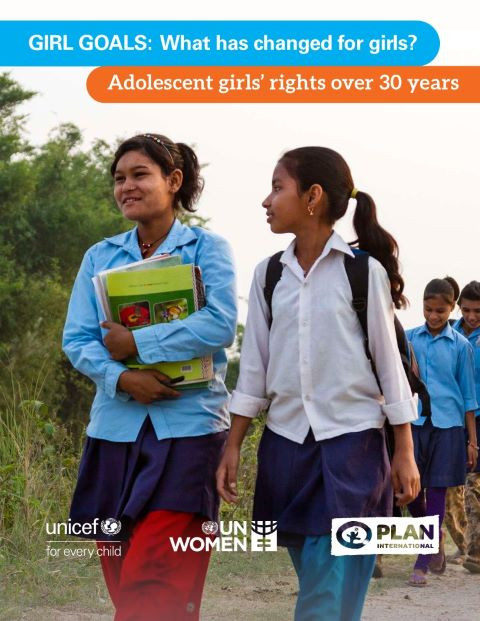 Girl Goals: What has Changed for Girls? Adolescent Girls’ Rights over 30 Years Año de publicación: 2025 Autor corporativo: United Nations Children's Fund (UNICEF) | United Nations Entity for Gender Equality and the Empowerment of Women (UN Women) | Plan International This report makes three key recommendations on action we can take now to advance adolescent girls’ rights at scale, in ways that account for fiscally constrained contexts and multiple competing priorities: 1. Ensure tangible and actionable support for adolescent girls’ voices, advocacy and action. The current generation of girls are raising their voices to be heard and are already at the forefront of making change around the world. With the right support, resources and seats at the table, adolescent girls can help transform the world for the better, shaping better policy outcomes for themselves and everyone. This is not about girls’ voices above all others, or endless consultation, but about specific, meaningful actions that ensure girls get the support they need and are heard on policy issues that matter to them. 2. Establish and track explicit targets for change for adolescent girls, who are too often invisible and sidelined Setting explicit targets to monitor outcomes for adolescent girls is key to making progress. Context-specific prioritization will be necessary, but there are some issues that stand out globally. Gaps in progress (such as child marriage gains accruing disproportionately to wealthier households) demonstrate the need forprogrammes that address poverty and economic realities alongside harmful social norms. The disproportionate number of adolescent girls not in education, employment or training, not entering the labour market as young women, and left behind when it comes to digital skills, is a threat to the gains made for girls and to economic growth that will benefit everyone. Stagnation on issues like underweight also stand out. Country- specific priorities supported by data- driven accountability mechanisms and investments are needed to translate policy commitments into change on the ground. 3. Resource and deliver smartly to unlock the social and economic dividend Governments and partners should invest in solutions proven to change outcomes across multiple SDGs at scale – for example, investing in education and skills, cash transfers and economic empowerment programmes designed to support girls. Existing systems, from maternal health care to school curricula, should be adapted to meet girls’ needs rather than creating small- scale, separate projects. Streamlined, evidence-based ‘add-ons’ – such as adding parenting support to existing maternal health-care programmes – can be cost effective and accelerate outcomes if well designed. Change is possible, and this report shows that great gains have been made. Smart investments now can transform the world for girls, families, communities and national economies. It is time to act.
  Progress on the Sustainable Development Goals: The Gender Snapshot 2024 Año de publicación: 2024 Autor: Papa Alioune Seck | Antra Bhatt | Farrah Frick | Yongyi Min | Heather Page | Natalia Tosi | Sokunpanha You | Guillem Fortuny Fillo Autor corporativo: United Nations Entity for Gender Equality and the Empowerment of Women (UN Women) | UN. Department of Economic and Social Affairs (UN. DESA) This publication highlights new data and evidence on gender equality trends. It finds the world falling short on its commitments to women and girls. Despite declining poverty and narrowing gender gaps in education, not a single indicator under the global gender equality Goal has been achieved. The report stresses the high cost of not investing in women's rights and champions radical action to accelerate the pace of change.
  International Technical Guidance on Sexuality Education: An Evidence-Informed Approach Año de publicación: 2018 Autor corporativo: Joint United Nations Programme on HIV/AIDS (UNAIDS) | United Nations Population Fund (UNFPA) | United Nations Children's Fund (UNICEF) | United Nations Entity for Gender Equality and the Empowerment of Women (UN Women) | World Health Organization (WHO) The UN International technical guidance on sexuality education was first published in 2009 as an evidence-informed approach for schools, teachers and health educators.Recognizing the dynamic shifts in the field of sexuality education that have occurred since then, an expanded group of UN co-publishing partners has reviewed and updated the content to respond appropriately to the contemporary needs of young learners, and to provide support for education systems and practitioners seeking to address those needs. The International technical guidance on sexuality education (revised edition) provides sound technical advice on the characteristics of effective comprehensive sexuality education (CSE) programmes; a recommended set of topics and learning objectives that should be covered in comprehensive sexuality education; and, recommendations for planning, delivering and monitoring effective CSE programmes. This revised edition of the Guidance reaffirms the position of sexuality education within a framework of human rights and gender equality, and promotes structured learning about sex and relationships in a manner that is positive, affirming, and centred on the best interests of the young person. It is based on a review of the latest evidence and lessons-learned from implementing CSE programmes across the globe. The revised Guidance reflects the contribution of sexuality education to the realization of multiple Sustainable Development Goals, notably Goal 3 on good health and well-being for all, Goal 4 on quality education for all, and Goal 5 to achieve gender equality.
  Preventing Conflict, Transforming Justice, Securing the Peace: A Global Study on the Implementation of United Nations Security Council resolution 1325 Año de publicación: 2015 Autor corporativo: United Nations Entity for Gender Equality and the Empowerment of Women (UN Women) The Global Study on the Implementation of Resolution 1325 is an important part of the United Nations' global agenda for change to better serve the world's most vulnerable people. According to the High Level Independent Panel on United Nations Peace Operations and the Consultative Group of Experts in the 2015 review of the United Nations peacebuilding architecture, changes in conflict may outpace the ability of United Nations peace operations to respond effectively. Any reforms must include gender equality and women's leadership as central components. منع النزاع وتحويل العدالة وضمان السلام: دراسة عالمية حول تنفيذ قرار مجلس األمن التابع لألمم المتحدة رقم 1325 Año de publicación: 2015 Autor corporativo: United Nations Entity for Gender Equality and the Empowerment of Women (UN Women) تمثل الدراسة العالمية بشأن تنفيذ القرار 1325 جزءًا هامًا من جدول أعمال الأمم المتحدة العالمي للتغيير من أجل خدمة أكثر الأشخاص تعرضًا للخطر في العالم على نحوٍ أفضل. طبقًا لما ذكره الفريق المستقل رفيع المستوى المعني بعمليات السلام للأمم المتحدة، وفريق الخبراء الاستشاري في استعراض عام 2015 لهيكل الأمم المتحدة لبناء السلام، فإن التغييرات في النزاع قد تفوق سرعتها قدرة عمليات السلام للأمم المتحدة على الاستجابة بفعالية. ويجب أن تشمل أية إصلاحات المساواة بين الجنسين وقيادة النساء كمكوِّنات مركزية.