
Recursos
Exploren una amplia gama de recursos valiosos en GCED para profundizar su comprensión y promover su búsqueda, incidencia, enseñanza y aprendizaje.
90 resultados encontrados
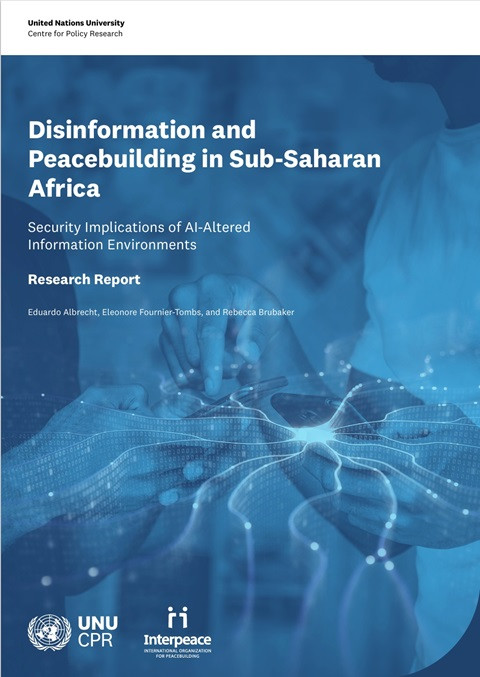 Disinformation and Peacebuilding in Sub-saharan Africa: Security Implications of AI-Altered Information Environments; Research Report Año de publicación: 2024 Autor: Eduardo Albrecht | Eleonore Fournier-Tombs | Rebecca Brubaker Autor corporativo: United Nations University | Interpeace This report aims to further explore the way in which AI technologies as they currently stand impact peace and conflict, and what methods might be used to mitigate their adverse effects - through the development of better tools and the inclusion of peace and conflict considerations in AI governance frameworks. The report proposes the following recommendations: 1. More funding and support should be provided to civil society organization efforts to expand media literacy and fact-checking initiatives using AI tools to enhance capabilities. 2. Governments need to work with civil society to develop and implement comprehensive, transparent legal frameworks combating disinformation. These legislative measures need to support digital and media literacy campaigns and fact-checking organizations. 3. Social media companies need to expand investment and research into understanding local information environments, so they can better identify and respond to instances of disinformation in all contexts in which they operate and enhance transparency. 4. Peacebuilding organizations need to carefully consider local media ecosystems and information environments when conducting conflict analyses, and factor these dynamics into their projects' frameworks.
 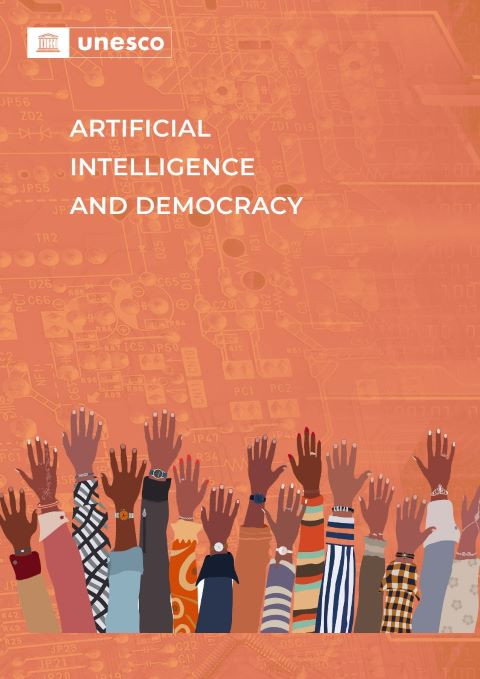 Artificial Intelligence and Democracy Año de publicación: 2024 Autor: Daniel Innerarity Autor corporativo: UNESCO Montevideo | Latin American Council of Social Sciences (CLACSO) UNESCO’s Recommendation on the Ethics of Artificial Intelligence, adopted by all Member States in November 2021, is the first global policy framework for artificial intelligence (AI) and outlines different aspects of this technology that directly impact political life. The initial considerations of the Recommendation outline the potential ramifications of AI across diverse domains, notably its implications for democracy. This report builds on these analyses and recommendations, aligning with the core values and principles outlined in the Recommendation. It delves into the current and potential impact of artificial intelligence on democracy and the benefits that both artificial intelligence and digitalization, in general, could bring to enhancing collective decision-making processes. This analysis is structured around four key topics:1. The democratic expectations and disappointments of digitization2. The new digital public space: the democratic conversation3. The democracy of data: the politics of Big Data4. Democracy as a form of political decision-making: algorithmic governance Finally, this report offers recommendations for the democratic governance of artificial intelligence aimed at mitigating neative impacts and fostering a more democratic approach to AI governance. Inteligencia artificial y democracia Año de publicación: 2024 Autor: Daniel Innerarity Autor corporativo: UNESCO Montevideo | Latin American Council of Social Sciences (CLACSO) La Recomendación sobre la ética de la inteligencia artificial de la UNESCO, aprobada por todos los Esta- 1 dos miembros en noviembre de 2021, es el primer marco político global para la inteligencia artificial (IA) y señala diversos aspectos de esta tecnología que tienen impacto directo en la vida política. En sus consideraciones iniciales alude a sus posibles efectos en diversos ámbitos y, concretamente, en la de- mocracia. El presente informe pretende ampliar y concretar esos análisis y recomendaciones, desde los valores y principios de la Recomendación, poniendo foco en el impacto que la inteligencia artificial tie- ne y puede tener en la democracia, así como en las virtualidades que tanto la IA como la digitalización en general pueden tener en la mejora de los procedimientos de toma de decisión colectiva. Para abordar esta temática se plantean cuatro grandes asuntos:1. Las expectativas y las decepciones democráticas de la digitalización A modo de introducción se presentarán las principales demandas y expectativas sociales respecto al impacto de la digitalización en la democracia que se han ido configurando en los últimos años, tanto por personas expertas como por la opinión pública en general.2. El nuevo espacio público digital: la conversación democrática La democracia requiere de una conversación social de calidad y un espacio público que reúna deter- minadas propiedades, sin las cuales la democracia no puede sobrevivir o se verá debilitada. En este documento se abordarán las características de esta necesaria conversación en el entorno digital, se identificarán los problemas subyacentes y se propondrán posibles medidas para mejorarla.3. La democracia de los datos: la política del big data Los tres elementos que modificarán la política de este siglo son los sistemas cada vez más inteligentes y automatizados, una tecnología más integrada e interoperable y una sociedad más cuantificada. Si bien los datos son fundamentales para el gobierno de la sociedad, el documento se preguntará críticamente por la dimensión política y democrática de la big data.4. La democracia como forma de decisión política: gobernanza algorítmica La democracia es una forma de decisión colectiva. El documento examinará la compatibilidad de la proliferación de sistemas automáticos de decisión con los principios normativos del autogobierno de- mocrático. El incremento de la gobernanza algorítmica plantea diversos problemas y desafíos para la democracia, principalmente la identificación de las tareas que pueden ser resueltas por un algoritmo sin dañar los valores democráticos y el conjunto de condiciones que asegurarían esa compatibilidad. Por último, se efectuarán algunas recomendaciones para la gobernanza democrática de la inteli- gencia artificial para evitar o mitigar los impactos negativos y hacer que la gobernanza de la inteligen- cia artificial sea más democrática.
 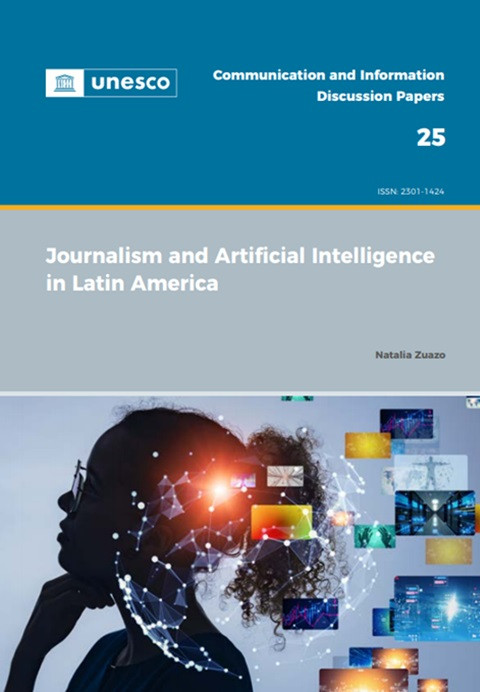 Periodismo e inteligencia artificial en América Latina Año de publicación: 2023 Autor: Natalia Zuazo Autor corporativo: UNESCO Montevideo En un contexto de crecimiento exponencial de la inteligencia artificial (IA) y predominancia tecnológica en todas las esferas de la vida –económica, social, cultural, ambiental y política-, este Cuaderno explora el impacto de la IA en el periodismo desde una perspectiva crítica y ética, con especial atención a América Latina. Se abordan desigualdades y desafíos inherentes a la implementación de la IA en la región. Con ello, se busca ofrecer una herramienta útil en la formación continua de estudiantes y profesionales de medios de comunicación.
  Disinformation and Peacebuilding in Sub-Saharan Africa : Security Implications of AI-Altered Information Environments : Research Report Año de publicación: 2024 Autor: Eduardo Albrecht | Eleonore Fournier-Tombs | Rebecca Brubake Autor corporativo: United Nations University This report aims to further explore the way in which AI technologies as they currently stand impact peace and conflict, and what methods might be used to mitigate their adverse effects - through the development of better tools and the inclusion of peace and conflict considerations in AI governance frameworks. The report proposes the following recommendations: 1. More funding and support should be provided to civil society organization efforts to expand media literacy and fact-checking initiatives using AI tools to enhance capabilities. 2. Governments need to work with civil society to develop and implement comprehensive, transparent legal frameworks combating disinformation. These legislative measures need to support digital and media literacy campaigns and fact-checking organizations. 3. Social media companies need to expand investment and research into understanding local information environments, so they can better identify and respond to instances of disinformation in all contexts in which they operate and enhance transparency. 4. Peacebuilding organizations need to carefully consider local media ecosystems and information environments when conducting conflict analyses, and factor these dynamics into their projects' frameworks. Journalism and Artificial Intelligence in Latin America Año de publicación: 2023 Autor: Natalia Zuazo Autor corporativo: UNESCO Montevideo In a context of exponential growth of artificial intelligence (AI) and technological dominance in all spheres of life — economic, social, cultural, environmental, and political —, this Paper explores the impact of AI on journalism from a critical and ethical perspective, with special attention to Latin America. It addresses inequalities and challenges inherent in the implementation of AI in the region. The aim is to offer an useful tool in the continuous training of students and media professionals.
  문화다양성협약 국내 이행을 위한 논의: 유튜브에서 AI까지, 21세기 한국에서의 문화다양성 Año de publicación: 2020 Autor: 김재인 | 염신규 | 이광석 | 이동연 | 이상욱 | 홍성수 | 황승흠 Autor corporativo: 대한민국 문화체육관광부 | 한국문화예술위원회 | 유네스코한국위원회 「문화다양성협약 국내 이행을 위한 논의 - 유튜브에서 AI까지, 21세기 한국에서의 문화다양성」는 모두 세 차례에 걸쳐 진행된 전문가회의에서 각 분야 전문가들이 발표하고 토론한 내용을 담은 종합보고서입니다. 올해는 문화다양성협약의 이행과 관련된 이슈들 중 특히 디지털플랫폼의 급부상, 인공지능 기술의 급격한 발달에 초점을 두어 논의하는 한편, 우리들의 일상을 송두리째 바꿔놓은 코로나19가 낳은 불안과 공포, 이로 인한 적대감이 초래한 소외와 고립, 혐오와 갈등의 문제를 짚어보았습니다. 전문가회의에서 나온 전문가들의 진단과 논의가 앞으로 한국사회에서 문화다양성협약 이행 관련 의제를 주도하는 데 있어서 필요한 비전과 전략 수립에도 기여하기를 기대합니다.
  Reading and Writing in Digital Culture: Trends and Education Año de publicación: 2023 Autor: Carina Maguregui Autor corporativo: Educ.ar This video presents an expanded talk whose central theme or narrative thread, «Reading and writing in digital culture: trends and education», provides a contextual framework for three possible itineraries or expansions: a.) Artificial intelligence as a virtual assistant for writing and other productions; b) Ecosystem of screens and platforms, and c) The right to digital disconnection.Each expansion—itinerary or talk—is self-contained, has a presentation, development and closure. However, the three complement each other and, in some way, dialogue with each other. The most important thing is that they provide a much richer overview. Lectura y escritura en la cultura digital: tendencias y educación Año de publicación: 2023 Autor: Carina Maguregui Autor corporativo: Educ.ar Este video presenta una charla expandida cuyo tema central o hilo narrativo, «Lectura y escritura en la cultura digital: tendencias y educación», da marco contextual a tres itinerarios posibles o expansiones: a.) La inteligencia artificial como asistente virtual para la escritura y otras producciones; b) Ecosistema de pantallas y plataformas, y c) El derecho a la desconexión digital.Cada expansión —itinerario o charla— es autoconclusiva, tiene presentación, desarrollo y cierre. Sin embargo, las tres se complementan y, de algún modo, dialogan entre sí. Lo más importante es que brindan una visión de conjunto mucho más rica.
  Podcast: Learning for the Future; Opportunities of Artificial Intelligence in School Education Año de publicación: 2024 Autor: Marcelo Mendoza Autor corporativo: Chile Foundation | Educarchile In this edition of the podcast: Learning for the Future, we spoke with Marcelo Mendoza, Principal Investigator of the Human-Centered AI Research Line at CENIA, with whom we developed the topic: Opportunities for Artificial Intelligence in school education. We also learned about the experience of the Bicentennial People Help People High School in Pilmaiquén using AI in various processes, together with teacher Cristóbal Morales.