
Recursos
Exploren una amplia gama de recursos valiosos en GCED para profundizar su comprensión y promover su búsqueda, incidencia, enseñanza y aprendizaje.
358 resultados encontrados
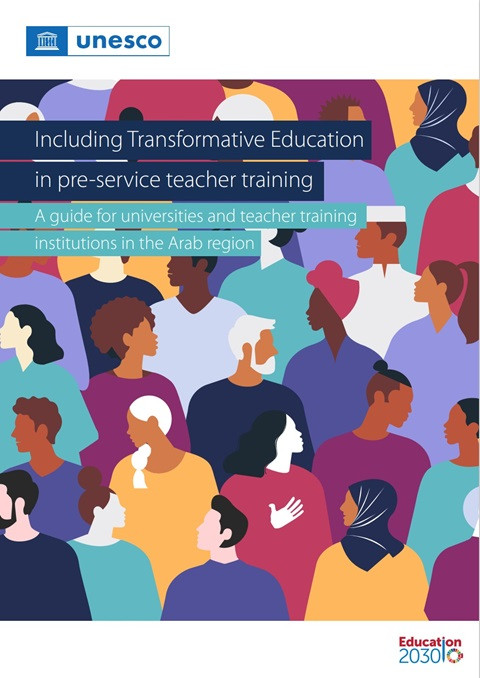 Including Transformative Education in Pre-service Teacher Training: A Guide for Universities and Teacher Training Institutions in the Arab Region Año de publicación: 2024 Autor: Khalaf Al Abri | Marco Pasqualini Autor corporativo: UNESCO Beirut Transformative Education (TE), which includes concepts such as Global Citizenship Education (GCED) and Education for Sustainable Development (ESD), is an essential approach to provide learners with the tools to act for more just, peaceful and sustainable societies. Between 2021 and 2023, the experts of the UNESCO Arab Transformative Education Network identified the creation of a course on Transformative Education for teachers’ pre-service training as a key step to (i) provide teachers with the needed skills to promote Transformative Education as part of the national curriculum as well as though their daily teaching practices, and (ii) to support the reform of pedagogies more broadly, by making them more interactive and focused on critical thinking, and thus positively contributing to improving learners’ overall learning outcomes. This guidance document is addressed to all entities in charge of pre-service teacher training (e.g. departments of education within higher education institutions and teacher training institutions) in the Arab region interested in including Transformative Education as part of their programmes. The guidance document particularly supports faculty deans and academia in defining the scope and the key parameters to consider while developing a course on Transformative Education, including defining course objectives, format, content, and pedagogy, as well as choosing the right facilitator(s) to deliver the course. The document also provides useful references to other guides and tools which can further support the reflections around Transformative Education and how it can be concretely applied and promoted at the higher education level.
  Bank of Digital Task Sheets Autor corporativo: Council of Europe Around forty sheets of tasks anchored in real life and reflective tasks are available. The proposed tasks implement the didactic framework that promotes a socio-interactional approach and extends the usual typology of tasks with tasks anchored in real life.These tasks, carried out on online participatory sites, allow the people who carry them out to experience both authentic (inter)actions and digital citizenship.Alongside these tasks, reflective tasks invite learners to reflect on online practices and in particular on their own uses of digital technology. They are to be adapted according to the contexts of use and provide examples of the implementation of the approach defined in the Didactic Framework. Banque de fiches de tâches numériques Autor corporativo: Conseil de l'Europe Une quarantaine de fiches de tâches ancrées dans la vie réelle et de tâches réflexives sont disponibles. Les tâches proposées mettent en œuvre le cadre didactique qui promeut une approche socio-interactionnelle et étend la typologie habituelle des tâches avec des tâches ancrées dans la vie réelle.Ces tâches, réalisées sur des sites participatifs en ligne, permettent aux personnes qui les réalisent de faire l'expérience, à la fois, d'(inter)actions authentiques et de la citoyenneté numérique.A côté de ces tâches, des tâches réflexives invitent les apprenant·es à réfléchir sur les pratiques en ligne et notamment sur leurs propres usages du numérique. Elles sont à adapter en fonction des contextes d'utilisation et permettent de donner des exemples de mise en œuvre de l'approche définie dans le Cadre didactique.
  Tool for quality assuarance of education for democratic citizenship in schools Año de publicación: 2005 Autor corporativo: Council of Europe This Tool for Quality Assurance of Education for Democratic Citizenship (EDC) in Schools was prepared as a response to the compliance gap between policies and practices of EDC in various countries. While EDC policies are well developed, EDC practices in schools present significant weaknesses. The Tool was also prepared as part of the current interest and implementation of quality assurance in education. This Tool is designed as a reference document. It focuses on education for democratic citizenship and applies the principles and processes of quality assurance to EDC.
 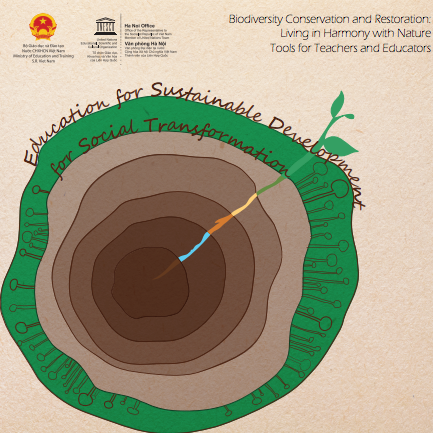 Education for sustainable development for social transformation Año de publicación: 2017 Autor corporativo: UNESCO Hanoi | Viet Nam. Ministry of Education and Training This course on Education for Sustainable Development for Social Transformation explains the connection between sustainable development, education and the successful implementation of national and international policies and initiatives on Sustainable Development, such as the Education for Sustainable Development Framework, Global Citizenship Education and the post-2015 Development Agenda. A particular focus is placed on Viet Nam's implementation of these initiatives, including MOET's Action Plan to Implement the National Strategy on Natural Disaster Prevention, Control and Mitigation in the Education Sector in the 2011-2020 Period.The courses promote creative thinking and a holistic approach to some of our planet's most pressing issues. A contribution to sustainable development will be made by encouraging students, families, schools and communities to be bioliterate. Education for sustainable development for social transformation Año de publicación: 2017 Autor corporativo: UNESCO Hanoi | Viet Nam. Ministry of Education and Training This course on Education for Sustainable Development for Social Transformation explains the connection between sustainable development, education and the successful implementation of national and international policies and initiatives on Sustainable Development, such as the Education for Sustainable Development Framework, Global Citizenship Education and the post-2015 Development Agenda. A particular focus is placed on Viet Nam's implementation of these initiatives, including MOET's Action Plan to Implement the National Strategy on Natural Disaster Prevention, Control and Mitigation in the Education Sector in the 2011-2020 Period.The courses promote creative thinking and a holistic approach to some of our planet's most pressing issues. A contribution to sustainable development will be made by encouraging students, families, schools and communities to be bioliterate. Education for sustainable development for social transformation Año de publicación: 2017 Autor corporativo: UNESCO Hanoi | Viet Nam. Ministry of Education and Training This course on Education for Sustainable Development for Social Transformation explains the connection between sustainable development, education and the successful implementation of national and international policies and initiatives on Sustainable Development, such as the Education for Sustainable Development Framework, Global Citizenship Education and the post-2015 Development Agenda. A particular focus is placed on Viet Nam's implementation of these initiatives, including MOET's Action Plan to Implement the National Strategy on Natural Disaster Prevention, Control and Mitigation in the Education Sector in the 2011-2020 Period.The courses promote creative thinking and a holistic approach to some of our planet's most pressing issues. A contribution to sustainable development will be made by encouraging students, families, schools and communities to be bioliterate.
  Between legs and hands: animal well-being Año de publicación: 2015 Autor: Gloria Diva Guevara Autor corporativo: Ambiente This book is especially aimed at children, but also at teachers and parents with the intention to raise awareness of the importance of respecting pets and wildlife. Parmi les jambes et les mains pour le bien-être des animaux Año de publicación: 2015 Autor: Gloria Diva Guevara Autor corporativo: Ambiente Ce livre est particulièrement destiné aux enfants, mais aussi aux enseignants et aux parents avec l'intention de sensibiliser à l'importance du respect des animaux et de la faune. Entre patas y manos: por el bienestar animal Año de publicación: 2015 Autor: Gloria Diva Guevara Autor corporativo: Ambiente This book is especially aimed at children, but also at teachers and parents with the intention to raise awareness of the importance of respecting pets and wildlife.