
Recursos
Exploren una amplia gama de recursos valiosos en GCED para profundizar su comprensión y promover su búsqueda, incidencia, enseñanza y aprendizaje.
178 resultados encontrados
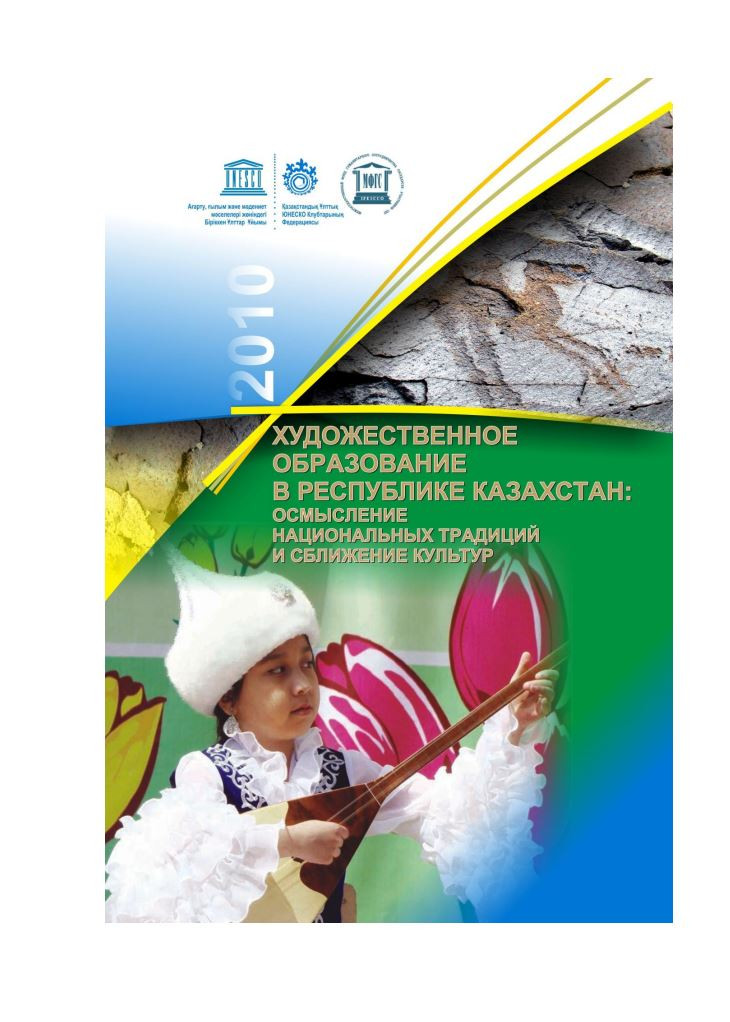 Художественное образование в Республике Казахстан: осмысление национальных традиций и сближение культур. Аналитический доклад. Año de publicación: 2010 Autor: Rustam Muzafarov Уникальность этнокультурного многообразия Казахстана обусловлена исторически сложившимся полиэтническим и многоконфессиональным составом населения. В таких условиях важно создание возможностей для возрождения и развития этнических культур, взаимодействия между ними в интересах общенационального единства. Принятие идеи этнокультурного образования означает создание национальной системы обучения и воспитания, базирующейся на идее культурного и лингвистического плюрализма, сочетающей мировой уровень технической и информационной оснащенности образования с традиционными культурными ценностями. Именно образование формирует причастность личности к исторической и культурной традиции.
  التنوع الثقافي والتعايش السلمي في الوطن العربي: التحديات الفكرية والسياسية Año de publicación: 2015 Autor: Osman Hassan Autor corporativo: Jil Research Center أصبحت مسألة التنوع الثقافي من المسائل المهمة في المجتمع العربي المعاصر. وقد شغلت الإشكاليات التي تثيرها مثل: "التعايش السلمي". "الوحدة في التنوع". "الاختلاف". "دولة المواطنة"... وغيرها: شغلت كثيرا من الكتاب. والمفكرين. والباحثين على مدى السنوات الماضية. وجزء كبير من تلك الجهود ركز اهتمامه في تدعيم قضايا التنوع الثقافي لبناء المجتمع من ناحية. وتعزيز علاقة الانتماء المشترك في الوطن الواحد من ناحية أخرى. وذلك بالنظر لما تثيره قضايا التنوع الثقافي من مطالب متناقضة على الحياة السياسية خلفت واقعاً مأساويا في جانب من التجربة العربية الحديثة والمعاصرة يقتضي المعالجة على مستوى الفكر والممارسة. لهذا نقول في ضوء التجربة المعيشة في المجتمعات العربية إن مسألة التعايش بين الثقافات. وأشكال التنوع. وما انبثق عنها من اشكاليات ليست ذات طبيعة ثقافية. وإنما هي مشكلة سياسة ومصالح مرتبطة بالبعض تزامنت مع متغيرات نمو الوعي بحقيقة الذات ومعرفة حقوقها المشروعة. كما إن التعايش يتحقق على أساس الحقوق والواجبات التي تكفلها الأنظمة والدساتير التي يضعها البشر. Cultural Diversity and Peaceful Coexistence in the Arab World: Intellectual and Political Challenges Año de publicación: 2015 Autor: Osman Hassan Autor corporativo: Jil Research Center The issue of cultural diversity has become an important issue in contemporary Arab society. It has occupied the problems it raises, such as: "peaceful coexistence". "Unity in Diversity". "the difference". "State of Citizenship"... and others: It occupied a lot of books. and thinkers. and researchers over the past years. A large part of those efforts focused on strengthening the issues of cultural diversity to build society on the one hand. And strengthening the relationship of common belonging to the one country on the other hand. This is in view of the contradictory demands raised by cultural diversity issues on political life, which have left a tragic reality in an aspect of the modern and contemporary Arab experience that requires treatment at the level of thought and practice. That is why we say in light of the experience of living in Arab societies that the issue of coexistence between cultures. and forms of diversity. And the problems that emerged from it are not of a cultural nature. Rather, it is a problem of politics and interests linked to some that coincided with the variables of the growth of awareness of the truth of the self and knowledge of its legitimate rights. Coexistence is also achieved on the basis of the rights and duties guaranteed by the systems and constitutions established by human beings.
 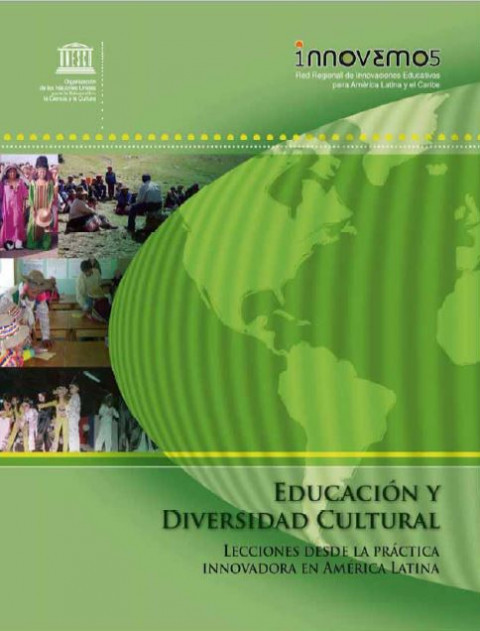 Education and Cultural Diversity Lessons from Innovative Practice in Latin America Año de publicación: 2008 Autor: Carolina Hirmas R. Autor corporativo: UNESCO Santiago This publication, which is the second volume of the collection, is the result of analysis and reflection on a series of innovative educational experiences from several Latin American countries, which respond with pedagogical relevance to the students' cultural context and offer an education oriented towards knowledge, understanding and dialogue between people of different cultures. The significant contribution of the aforementioned experiences lies in the recognition and appreciation of the ethnic and cultural diversity of its students and communities, as a starting point for the development of new learning and affirmation of their identity. In turn, life in educational centers promotes intercultural relations of respect and fraternity in a local and subregional sociogeographic context, characterized by multiculturalism.
  Jugendliche aus Einwandererfamilien und die Geschichte des Nationalsozialismus Año de publicación: 2003 Autor: V. B. Georgi Based on 55 interviews with young Germans with immigrant family background from the age of 15–20, Giorgi constructs a typology of how they position themesleves to the German Nazi past.
  Promoting the culture of dialogue between cultures in the Arab world Año de publicación: 2013 Autor: Selim El Sayegh Autor corporativo: UNESCO Beirut The major challenge of the Arab uprisings resides in the youth drive. Accounting for 60 per cent of the Arab population, Youth have been calling for political and economic reforms. During the revolts, these claims have become more radical seeking a fundamental change. This gradual evolution, from a relatively partial change to a more absolute comprehensive one, ushers in a new era with a different intellectual construct. With the ousting of dictatorships, all civil society forces are unleashed with huge actual and potential resources mobilized to contribute to building up the new order. Groups of solidarity, communities, parties, associations, and organizations of all nature among many others put forward new ideas and adequate action plans. Liberty thus acclaimed becomes the outcry for dignity, honor and pride. Never before in the Arab world has the individual had such a central place as it does today. An individual fully grasping the possibilities of restored liberty and recognized dignity gives birth to a new citizen acting in a new paradigm; a new citizen that seeks a transcendence of the ego to relate the individual to the common good. This fresh paradigm empowers the individual as a citizen in the name of equality, while simultaneously recognizing the right of difference of each citizen when it comes to belonging to a culture or sub‐culture. The right to be different involves more than the right to differ and to dispute and by the same token, the obligation of peaceful settlement. The right to be different, by belonging to a culture or a sub‐culture means in a new era of liberty and dignity, the obligation to conduct a transformation of the patterns generating disputes and conflicts among cultures. Henceforth, the issue of promoting the culture of intercultural dialogue in the aftermath of the Arab revolts represents major characteristics that will be reflected hereafter. Promouvoir la culture du dialogue entre les cultures dans le monde Arabe Año de publicación: 2013 Autor: Selim El Sayegh Autor corporativo: UNESCO Beirut Le défi majeur des soulèvements arabes réside dans le lecteur de la jeunesse. Comptabilisation de 60 pour cent de la population arabe, de la jeunesse ont été réclame des réformes politiques et économiques. Pendant les révoltes, ces créances sont devenues plus radicales à la recherche d'un changement fondamental. Cette évolution progressive, d'un changement relativement partielle à l'une complète plus absolue, ouvre la voie à une nouvelle ère avec une construction intellectuelle différente. Avec l'éviction des dictatures, toutes les forces de la société civile se déchaînent avec d'énormes ressources réelles et potentielles mobilisées pour contribuer à l'édification du nouvel ordre. Des groupes de solidarité, les communautés, les partis, les associations et organisations de toute nature parmi beaucoup d'autres mettent en avant de nouvelles idées et plans d'action adéquats. Liberté ainsi acclamé devient le cri de la dignité, l'honneur et la fierté. Jamais auparavant dans le monde arabe a l'individu avait une telle place centrale comme il le fait aujourd'hui. Un individu de saisir pleinement les possibilités de la liberté restaurée et reconnue la dignité donne naissance à un nouveau citoyen agissant dans un nouveau paradigme; un nouveau citoyen qui cherche une transcendance de l'ego de relier l'individu au bien commun. Ce nouveau paradigme permet l'individu en tant que citoyen au nom de l'égalité, tout en reconnaissant en même temps le droit à la différence de chaque citoyen en ce qui concerne l'appartenance à une culture ou sous-culture. Le droit d'être différent implique plus que le droit à la différence et à contester et par le fait même, l'obligation de règlement pacifique. Le droit à la différence, par l'appartenance à une culture ou d'une sous-culture signifie une nouvelle ère de liberté et de dignité, l'obligation de procéder à une transformation des modèles de génération de différends et les conflits entre les cultures. Dès lors, la question de la promotion de la culture du dialogue interculturel dans la foulée des révoltes arabes représente les principales caractéristiques qui seront reflétées ci-après. Educación y diversidad cultural: lecciones desde la práctica innovadora en América Latina Año de publicación: 2008 Autor: Carolina Hirmas R. Autor corporativo: UNESCO Santiago Esta publicación, que constituye el segundo volumen de la colección, es el resultado del análisis y la reflexión acerca de un conjunto experiencias educativas innovadoras de varios países de Latinoamérica, que responden con pertinencia pedagógica al contexto cultural de los estudiantes y ofrecen una educación orientada al conocimiento, comprensión y diálogo entre personas de diferentes culturas. El aporte significativo de las experiencias referidas, reside en el reconocimiento y valoración de la diversidad étnica y cultural de sus estudiantes y comunidades, como punto de partida para el desarrollo de nuevos aprendizajes y afirmación de su identidad. A su vez, la vida en los centros educativos promueve relaciones interculturales de respeto y fraternidad en un contexto sociogeográfico local y subregional, caracterizado por la multiculturalidad.
  Educational Policies for Attention to Cultural Diversity: Brazil, Chile, Colombia, Mexico and Peru; volume 1 Año de publicación: 2005 Autor: Carolina Hirmas R. | Ricardo Hevia R. | Ernesto Treviño | Pablo Marambio V. Autor corporativo: UNESCO Santiago This publication consists of three volumes. The first is an analysis of how the educational policies of five countries in the region -Brazil, Chile, Colombia, Mexico and Peru- address the issue of cultural diversity, both through its legislation and its curricular policies. teacher training and institutional management. The second presents a set of ethnographic studies conducted in these same countries in order to show how the phenomenon of "cultural discrimination" occurs in the daily life of the school, the opposite side of the "cultural pluralism" that the school is called to build. The third volume is a compendium of educational materials on five relevant topics about cultural diversity to be worked with teachers and students in schools.
 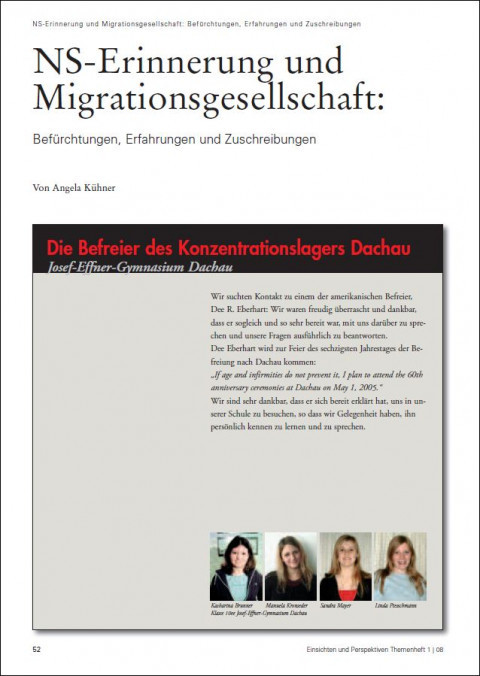 The Memory of Nazism and the Migration Society: Fears, Experiences and Attributions. Intergenerational Historical Consciousness Año de publicación: 2008 Autor: Angela Kühner The original title: NS-Erinnerung und Migrationsgesellschaft: Befüchtungen, Erfahrungen und Zuschreibungen(Einsichten und Perspektiven, Bayerische Zeitschrift für Politik und Geschichte, 1(8), pp. 52-65) The articles deals with a specific part of the pilot-study (see Kühner et al. 2008) on teachers’ and students’ experiences and representations, i.e. with the dimension of a migration-society. The author suggests to use the idea of “a society of migration as a context,” instead of the “migrants as target group.” This approach allows the author to work out several ways in which the students and teachers position themselves towards the national-socialist past of German society, and how the attribution of guilt, shame or esponsibility to several groups of “Others” serves as an interactive pattern in a migration society. Migration can therefore offer on one hand a tool to project their own fears or feelings, but on the other hand, it can also offer an opportunity for dialog and a higher degree of reflexivity on the past and the present. The above abstract is taken from the International Holocaust Remembrance Alliance Education Research Project. Please also consult the full list of abstracts in 15 languages and the accompanying publication Research in Teaching and Learning about the Holocaust: A Dialogue Beyond Borders. Ed: IHRA, Monique Eckmann, Doyle Stevick, Jolanta Ambrosewicz-Jacobs, 2017, Metropol Verlag at www.holocaustremembrance.com/resources/publications.