
Recursos
Exploren una amplia gama de recursos valiosos en GCED para profundizar su comprensión y promover su búsqueda, incidencia, enseñanza y aprendizaje.
54 resultados encontrados
 Derechos humanos en Argentina y américa latina: Formación y debates para unaciudadanía crítica Año de publicación: 2022 Autor: Ana Laura Sucari | Ramiro Manduca Autor corporativo: Red de Investigadores y Organizaciones Sociales de Latinoamérica (RIOSAL) Este libro es una invitación a estudiar sobre los Derechos Humanos. A la vez, busca ser un material que amplíe derechos abriendo debates que fomenten la enseñanza y el aprendizaje en un marco de respeto por los Derechos Humanos y para los DDHH ya que es necesario aprender cuáles son nuestros derechos con el fin de intervenir en la realidad de acuerdo a los mismos.
  La Educación para la ciudadanía global: Una apuesta por la democracia Año de publicación: 2019 Autor: Manuela Mesa Autor corporativo: Autonomous University of Madrid | Red Iberoamericana de Investigación sobre Cambio y Eficacia Escolar (RINACE) En este artículo se hace una reflexión sobre el papel de la educación en el actual contexto internacional, marcado por profundos cambios y por una situación de incertidumbre e inestabilidad y de retroceso en derechos. Se abordan los diversos marcos interpretativos que explican el mundo actual y que se articulan en torno al eje global-local y al eje identitario. En un mundo caracterizado por la complejidad y la rapidez de cambios es muy importante superar la compartimentalización del conocimiento en áreas estanco (matemáticas, sociales, lengua, etc.) para abordarlo de manera global. La educación como práctica transformadora no puede estar al margen de los grandes retos que enfrenta la humanidad en el ámbito nacional y multilateral. La Agenda 2030 y los Objetivos de Desarrollo Sostenible abre oportunidades para consolidar la educación para la ciudadanía global.
  Vivir con la controversia: Cómo enseñar temas controvertidos mediante la Educación para la ciudadanía y los derechos humanos (EDC/HRE) Módulo de formación para el profesorado Año de publicación: 2015 Autor corporativo: European Union (EU) Learning how to engage in dialogue with people whose values are different from one’s own and to respect them is central to the democratic process and essential for the protection and strengthening of democracy and fostering a culture of human rights. ■ Yet in Europe young people do not often have an opportunity to discuss controversial issues in school because they are seen as too challenging to teach, e.g., issues to do with extremism, gender violence, child abuse, or sexual orientation. Unable to voice their concerns, unaware of how others feel or left to rely on friends and social media for their information, young people can be frustrated or confused about some of the major issues which affect their communities and European society today. In the absence of help from school, they might have no reliable means of dealing with these issues constructively and no one to guide them. ■ The idea for this Pack came out of a call from policy-makers and practitioners in a number of European countries for more effective training for teachers in the teaching of controversial issues. Escuelas asociadas de la UNESCO news infos: educación relativa a los derechos humanos Año de publicación: 2011 Autor corporativo: UNESCO Associated Schools Project Network (ASPnet) Human Rights Education is as relevant today as it was in 1953 when it was acknowledged as one of the major themes of ASPnet at its foundation. Education should encompass values such as peace, non‐ discrimination, equality, justice, non‐violence, tolerance and respect for human dignity. Quality education, using a human rights‐based approach, means that rights are implemented throughout the whole education system and in all learning environments. Educación para la ciudadanía y la convivencia: manual de ciudadanía y convivencia desde la construcción colectiva de sentidos y redes; derechos humanos y paz Año de publicación: 2015 Autor corporativo: Centro de Investigación y Educación Popular (CINEP) | Secretaría de Educación del Distrito (SED) Human rights and peace is one of the main themes related with education for citizenship and coexistence. Therefore, identifies three areas of reflection: 1) Human rights as an ongoing and unfinished process, 2) Recognizing the diversities, 3) The generations of peace. Each one of these areas is accompanied by didactic tools that allow to deepen into the contents that are based on fundamental theoretical and practical elements, which could be useful in the pedagogical process leaded by the participants of the project. Encuentro nacional de educación para la paz: documento de trabajo; memorias Año de publicación: 2015 Autor corporativo: Encuentro de Educacion para la Paz y los Derechos Humanos This document presents the most relevant reflections and commitments made up from the First National Encounter of Education for Peace and Human Rights, which took place on July 29th of 2014, with the participation of the Mayors, Secretaries of Education from the different territories of Colombia, governmental organizations, NGO's and multilateral agencies. Memorias del Segundo encuentro nacional sobre educación para la paz y los derechos humanos en los territorios Año de publicación: 2015 Autor corporativo: Encuentro de Educacion para la Paz y los Derechos Humanos The discussions and reflections of the Second National Encounter of Education for Peace and Human Rights were focused on the reality of schools, their dynamics and the territorial problems, taking into account those territories were the armed Colombian conflict has been deeply developed and the politic and administrative relations between the local-national dynamics present important challenges. These memories gather those discussions that lead to actions, new challenges and commitments, specially focused on the construction of public policy for education for peace and human rights.
 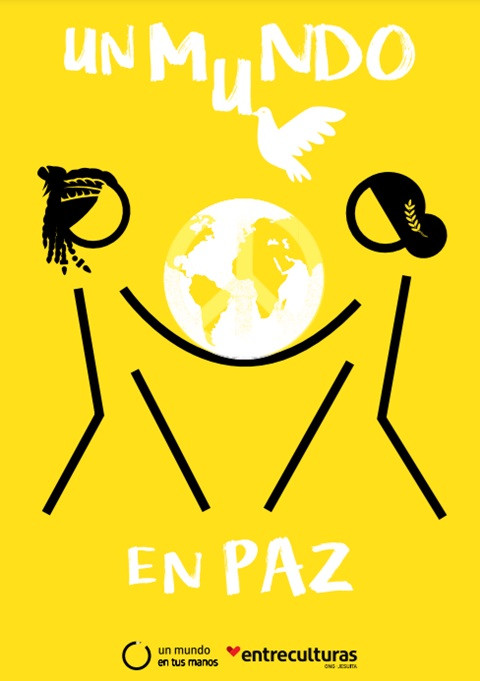 Un mundo en paz Año de publicación: 2022 Autor corporativo: Entreculturas Un mundo en paz forma parte de “Un mundo en tus manos”, la propuesta pedagógica de Entreculturas para educar en una ciudadanía global. Con ella pretendemos contribuir a la formación de personas capaces de ejercer una ciudadanía activa y comprometida, de transformar su entorno y de asumir como suyos tantos los retos globales de nuestro tiempo como el cumplimiento de la Agenda 2030 y de los Objetivos de Desarrollo Sostenible. En esta publicación recogemos propuestas para trabajar la cultura de paz y desarrollar conocimientos, valores y competencias sociales y ciudadanas que permitan a las personas que los trabajen comprometerse de forma activa con la convivencia, la resolución de conflictos y la creación de cultura de paz en sus entornos y a nivel global.
  Cultura de Paz y educación para la ciudadanía democrática Año de publicación: 2006 Autor: Jose Tuvilla Rayo La Cultura de Paz entendida como el concepto síntesis --suma de derechos humanos, democracia, desarme y desarrollo humano sostenible--, demanda, como respuesta humanizadora de la globalización, importantes esfuerzos de los sistemas educativos hacia la consecución de cuatro contratos sociales mundiales (Grupo de Lisboa, 1995): el contrato de las necesidades básicas destinado a suprimir las desigualdades, el contrato cultural destinado a promover la tolerancia y el diálogo entre culturas, el contrato de la democracia encaminado hacia un sistema de gobierno mundial; y, el contrato de la Tierra para promover un desarrollo humano estable y duradero. Para ello – recordando a Juan Carlos Tedesco (2001) – aprender a vivir juntos, uno de los pilares de la educación del siglo XXI, no puede ser mantenido en el terreno exclusivo de la adhesión meramente retórica.
  El concepto de ciudadanía a lo largo de la historia Año de publicación: 2021 Autor corporativo: Argentina. Ministry of Education Este video recorre la noción de ciudadanía a lo largo de la historia. Este video fue elaborado en el marco del Programa Seguimos Educando, que durante 2020 y 2021 permitió, a través de distintos medios, que las y los estudiantes siguieran en contacto con la escuela. Las actividades y contenidos propuestos están orientados por los Núcleos de Aprendizajes Prioritarios comunes para todo el país.