
Recursos
Exploren una amplia gama de recursos valiosos en GCED para profundizar su comprensión y promover su búsqueda, incidencia, enseñanza y aprendizaje.
26 resultados encontrados
 La Educación sobre el medio ambiente en acción: una historia de la reserva de biosfera Tonlé Sap de Camboya Año de publicación: 2013 Autor: Keat Kunthea Osmose is a not-for-profit association linking community-based conservation, ecotourism and environmental education in Prek Toal. Osmose has been supported by UNESCO in Phnom Penh in many projects including: production of a poster depicting the flooded forest and plants of the Tonle Sap Biosphere Reserve, handicraft, and particularly, environemental education (EE). EE was initiated in 2000 when Osmose realized there was an increase in the child population and that education was therefore needed in order to protect their natural resources. Educación para la ciudadanía y convivencia: manual de ciudadanía y convivencia desde la construcción colectiva de sentidos y redes; ambiente Año de publicación: 2015 Autor corporativo: Centro de Investigación y Educación Popular (CINEP) | Secretaría de Educación del Distrito (SED) Environment is one of the main themes related to education for citizenship and coexistence. For that reason, this manual identifies three areas of reflection: 1) My first territory: selfcare, caring for others, 2) Environmental territories and their cultural dimension, 3) regional and worldwide territory. Each one of these areas is accompanied by didactic tools that allow to deepening into the contents through the dialogue between the characters that have been created, proposing theoretical and practical fundamental elements, which could be useful in the pedagogical process leaded by the participants of the project.
 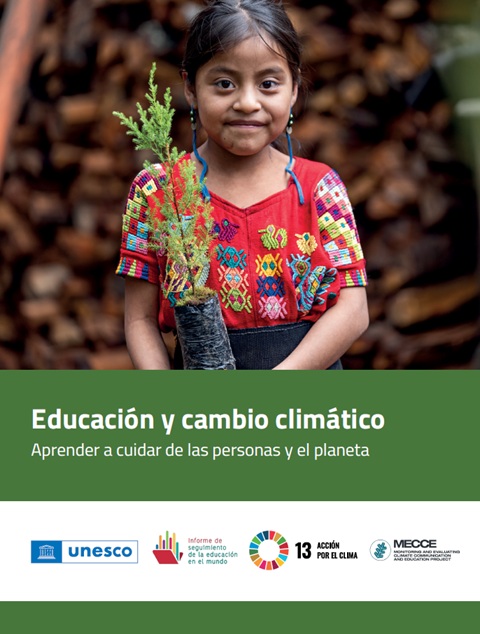 Educación y cambio climático: aprender a cuidar de las personas y el planeta Año de publicación: 2024 Autor corporativo: Global Education Monitoring Report Team | Monitoring and Evaluating Climate Communication and Education Project (MECCE) | University of Sakatchewan ¿Cómo puede la educación conducir a la acción contra el cambio climático?A pesar de las sólidas pruebas existentes sobre la repercusión de la educación en el logro de otros objetivos de desarrollo y la función que desempeña en el desarrollo de la capacidad profesional para las transiciones hacia el desarrollo sostenible, la educación suele estar ausente de las consideraciones estratégicas, políticas, de planificación y de financiación de otros sectores.El Informe de seguimiento de la educación en el mundo presenta una nueva serie destinada a fomentar el diálogo sobre la interrelación de la educación con los demás Objetivos de Desarrollo Sostenible. El primer documento de la serie se centra en el cambio climático, y empieza por analizar el creciente impacto del cambio climático en la educación antes de pasar a abordar la función de la educación en la acción climática.La contribución de la educación al desarrollo de capacidades profesionales para la transición a una economía verde está en cierta medida infravalorada. Al mismo tiempo, existe la conciencia de que el aprendizaje, tanto formal como no formal e informal, desempeña una función esencial a la hora de motivar la acción en materia de mitigación del cambio climático y adaptación a sus efectos.Sin embargo, la existencia de una correlación positiva entre el nivel de educación y los niveles de consumo insostenibles, así como la falta de conclusiones de muchas investigaciones sobre la repercusión directa de la educación en la mitigación del cambio climático y la adaptación a sus efectos, han contribuido en parte a que se otorgue escasa prioridad a la educación en las agendas mundiales y nacionales sobre el cambio climático.En este documento se sostiene que es necesario adaptar la educación sobre el cambio climático para que desarrolle todo su potencial. El paradigma educativo no puede basarse únicamente en la transferencia de conocimientos, sino que debe centrarse en el aprendizaje socioemocional y orientado a la acción. Gran parte de la investigación se ha centrado en analizar el logro educativo y los resultados que se alcanzan mediante el aprendizaje cognitivo. Por ello, es necesario seguir investigando para evaluar otros factores mediante los cuales la educación puede influir en los comportamientos y motivar la acción contra el cambio climático. Estas investigaciones son necesarias para formular paquetes de reformas educativas viables que mejoren los planes de estudios, refuercen la preparación de las escuelas y los sistemas educativos para el cambio climático, impliquen a los educandos y preparen a los educadores en consecuencia. La contribución de la educación inicial para una sociedad sustentable Año de publicación: 2009 Autor corporativo: UNESCO This report originates from the international workshop, ‘The Role of Early Childhood Education for a Sustainable Society’, jointly organized in Göteborg, Sweden, by Göteborg University, Chalmers University of Technology and the City of Göteborg, from 2 to 4 May 2007. It was attended by thirty-five participants from sixteen different countries (see ‘List of Participants’). The workshop was a follow-up to the international conference on education for sustainable development, ‘Learning to Change Our World’, held in May 2004, in Göteborg. It was one of four preparatory workshops leading to another international conference on education for sustainable development, to be organized in 2008 or 2009, in the same city. The aim of the four workshops is to discuss promoters and barriers related to learning for sustainability, and to propose recommendations for the upcoming international conference. The present workshop was conceived for the following reasons. First, our societies urgently require new kinds of education that can help prevent further degradation of our planet, and that foster caring and responsible citizens genuinely concerned with and capable of contributing to a just and peaceful world. Second, these new kinds of education must be available to all – not only a handful of people – and take place in various settings, including families and communities. Third, they must begin in early childhood, as the values, attitudes, behaviours and skills acquired in this period may have a long-lasting impact in later life. Thus, early childhood education clearly has an important place in the efforts to bring about sustainable development. Guardarenas Sandwatch: adaptarse al cambio climático y educar para el desarollo sostenible Año de publicación: 2012 Autor: Gillian Cambers | Paul Diamond Autor corporativo: UNESCO Sandwatch provides a framework for children, youth and adults, with the help of teachers and local communities, to work together to critically evaluate the problems and conflicts facing their beach environments, and to develop sustainable approaches to address these issues. It also helps beaches become more resilient to climate change. The preliminary chapters of this publication focus on how to get started with Sandwatch activities and examine ways to address climate change impacts. The principle aim of this publication is to document the Sandwatch methodology: monitoring, analysing, sharing and taking action. An activities-orientated approach is used to provide step-by-step instructions to cover monitoring methods and data analysis, including observation and recording, erosion and accretion, beach composition, human activities, beach debris, water quality, waves, longshore currents, plants and animals. The activities are related to (a) sustainable development issues, including: beach ownership, mining beaches for construction material, conflict resolution between different beach users, pollution, conservation of endangered species, and (b) climate change adaptation issues: sea level rise, rising temperatures, ocean acidification and increased extreme events. Ways to share findings and create a Sandwatch network are detailed including methods such as the use of local media, websites, social networking and video production. Finally, ways are discussed to design, plan and implement a Sandwatch project to fulfill one or all of the following criteria: (a) addressing a particular beach-related issue, (b) enhancing the beach, and (c) promoting climate change adaptation. Sandwatch stands as an example of Education for Sustainable Development in action, and is being targeted as one of several flagship projects for the United Nations Decade of Education for Sustainable Development (2005–2014). As the world confronts the growing threat of climate change, Sandwatch presents an opportunity to help people and ecosystems respond to present and future changes in a practical manner. Beaches are among the ecosystems most at risk from climate change as they face rising sea levels and increased more intense storms. By contributing to ecosystem health and resilience, Sandwatch can help people from all walks of life learn about climate change and how their actions can contribute to the adaptation process.
 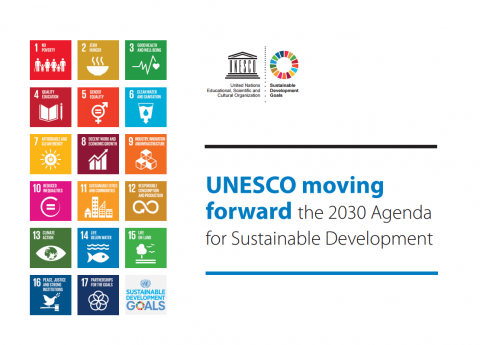 La UNESCO avanza la Agenda 2030 para el Desarrollo Sostenible Año de publicación: 2017 Autor corporativo: Organización de las Naciones Unidas para la Educación, la Ciencia y la Cultura (UNESCO) The United Nations 2030 Agenda for Sustainable Development, with its 17 Sustainable Development Goals, sets forth a bold new framework for development cooperation over the next 15 years. This agenda aspires to ensure prosperity and well-being for all women and men, while protecting our planet and strengthening the foundations for peace. Educación sobre el Cambio Climático para el Desarrollo Sostenible: Iniciativa de la UNESCO sobre el Cambio Climático Año de publicación: 2010 Autor corporativo: UNESCO The UNESCO Climate Change Initiative was launched by Director-General Irina Bokova in Copenhagen during the 15th Conference of the Parties to the UN Framework Convention on Climate Change (UNFCCC COP15). It seeks to reinforce the scientific, mitigation and adaptation capacities of countries and communities that are most vulnerable to the effects of climate change. It focuses on a select number of strategic issues in line with The UN System Delivering as One on Climate Change action plan and The UNESCO Strategy for Action on Climate Change. The Initiative is based on four thematic areas: scientific, educational, environmental and ethical. Key objectives will be achieved through intersectoral and interdisciplinary cooperation, coordinated field activities, and networking. Special attention is given to UNESCO’s two global priorities, Africa and gender equality, as well as to the increased vulnerability of Small Island Developing States (SIDS). The UN System “Delivering as One” on Climate Change During the 13th session of the Conference of Parties to the UNFCCC in Bali, Indonesia, UN Secretary General Ban Ki-Moon presented an unprecedented coordination effort to bring together all the diverse perspectives, expertise and strengths of the UN system so as to deliver as one in the critical area of climate change. The initiative brings together expertise and ongoing work in diverse areas ranging from science and technology to agriculture, transport, forestry and disaster risk reduction, to address both mitigation and adaptation. It brings together the normative, standard setting and knowledge sharing capacities of the system with its operational reach in order to support the most vulnerable. The overall objective is to maximize existing synergies, eliminate duplication and overlap, and optimize the impact of the collective effort of the UN system. To ensure better coordination, convening responsibilities were assigned to UN system entities with a large volume of activities in the five focus areas and four cross-cutting areas. Focus areas ㆍAdaptation – High-Level Committee on Programmes collectively ㆍ Technology transfer – UNIDO, UN-DESA ㆍReduction of emissions from deforestation and degradation (REDD) – UNDP, FAO, UNEP ㆍ Financing mitigation and adaptation action – UNDP, World Bank Group ㆍCapacity building – UNDP, UNEP Cross-cutting areas ㆍClimate knowledge: science, assessment, monitoring and early warning – WMO, UNESCO ㆍSupporting global, regional and national action – UN-DESA, UN Regional Commissions, UNDP ㆍClimate-neutral UN – UNEP ㆍPublic awareness – UNCG, UNEP.
  Informe de seguimiento de la educatión en el mundo: documento de política Año de publicación: 2016 Autor corporativo: UNESCO This paper’s focus on textbooks is directly related to the global indicator established for Target 4.7, which seeks to measure the extent to which global citizenship education and education for sustainable development, including gender equality and human rights, are mainstreamed in national education policies, curricula, teacher education and student assessments. Textbooks are related mostly to policy implementation and curricular intentions but also to teacher preparation and student assessment. Escuelas asociadas de la UNESCO news infos: educación sobre el cambio climático Año de publicación: 2009 Autor corporativo: UNESCO As the United Nations Climate Change Conference takes place on December 7 to 18 2009 in Copenhagen, Denmark, this special issue will focus on selected climate change education activities carried out by the ASP network around the globe. Climate change is one of the most urgent challenges of sustainable development and a key action theme in the UN Decade of Education for Sustainable Development (DESD). ASPnet schools around the world work on Climate Change Education in order to enable students to make informed and responsible decisions, turn passive awareness into behaviour change and make sustainable behaviours a daily habit. The development of good practices and innovative educational materials in climate change education is a key element in ASPnet’s strategy to meet the pressing educational needs of the future generation. This newsletter highlights only a few of the large number of activities of ASPnet worldwide. Declaración de Aichi-Nagoya sobre la Educación para el Desarrollo Sostenible Año de publicación: 2014 Autor corporativo: UNESCO We, the participants of the UNESCO World Conference on Education for Sustainable Development held in AichiNagoya, Japan, from 10 to 12 November 2014, adopt this Declaration and call for urgent action to further strengthen and scale up Education for Sustainable Development (ESD), in order to enable current generations to meet their needs while allowing future generations to meet their own, with a balanced and integrated approach regarding the economic, social and environmental dimensions of sustainable development. This Declaration recognises that people are at the centre of sustainable development and builds on the achievements of the United Nations (UN) Decade of ESD (2005-2014); the deliberations of the UNESCO World Conference on ESD in Aichi-Nagoya; and the Stakeholder Meetings held in Okayama, Japan, from 4 to 8 November 2014, namely, UNESCO ASPnet International ESD events, the UNESCO ESD Youth Conference, the Global Regional Centres of Expertise Conference, and other relevant events and consultation processes, including regional ministerial meetings. We express our sincere gratitude to the Government of Japan for hosting the UNESCO World Conference on ESD.