
Recursos
Exploren una amplia gama de recursos valiosos en GCED para profundizar su comprensión y promover su búsqueda, incidencia, enseñanza y aprendizaje.
14 resultados encontrados
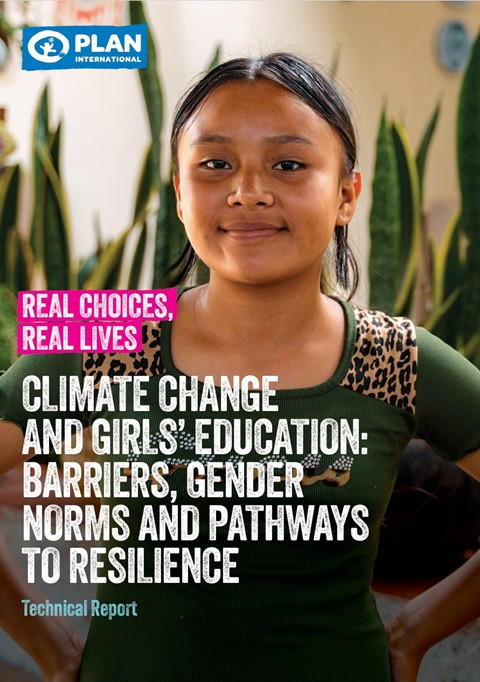 [Reporte técnico] Cambio climático y educación de las niñas: barreras, normas de género, y rutas hacia la resiliencia Año de publicación: 2023 Autor corporativo: Plan International This is the technical report of the Climate Change and Girls' Education: Barriers, Gender Norms and Pathways to Resilience for further detail on the findings and research itself.
  Inequidad de género en los logros de aprendizaje en educación primaria ¿Qué nos puede decir TERCE? Año de publicación: 2016 Autor corporativo: UNESCO Santiago Existing research identifies several significant, subject-based gender inequalities in education. Male learners have significant advantages in mathematics and female learners have no less significant advantages in reading and writin. Such considerable differences in achievement may have important consequences for the future wellbeing of students. In order to shed light on this phenomenon in Latin America, this report analyzes the gender gaps in educational achievement in the Third Regional Comparative and Explanatory Study (TERCE) led by the Latin American Laboratory for Assessment of the Quality of Education (LLECE).
 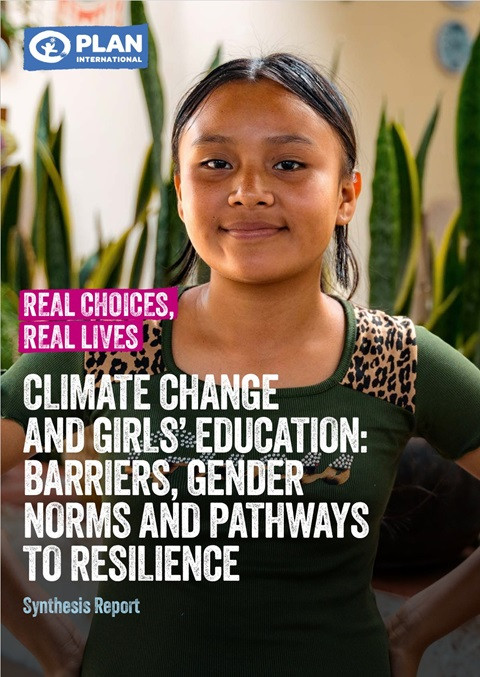 [Informe de síntesis] Cambio climático y educación de las niñas: barreras, normas de género, y rutas hacia la resiliencia Año de publicación: 2023 Autor corporativo: Plan International Esta investigación explora la relación entre el cambio climático y la educación de las niñas: ¿cuáles son los impactos directos e indirectos del cambio climático sobre el acceso de las niñas a la escuela y la finalización de su educación? ¿Cómo se cruzan estos impactos con las barreras de género existentes a la educación? ¿Y cómo ayuda su educación a las niñas a responder y adaptarse al cambio climático en sus comunidades? Se incluye un informe de síntesis y un resumen, junto con el informe técnico para más detalles sobre las conclusiones y la propia investigación.
 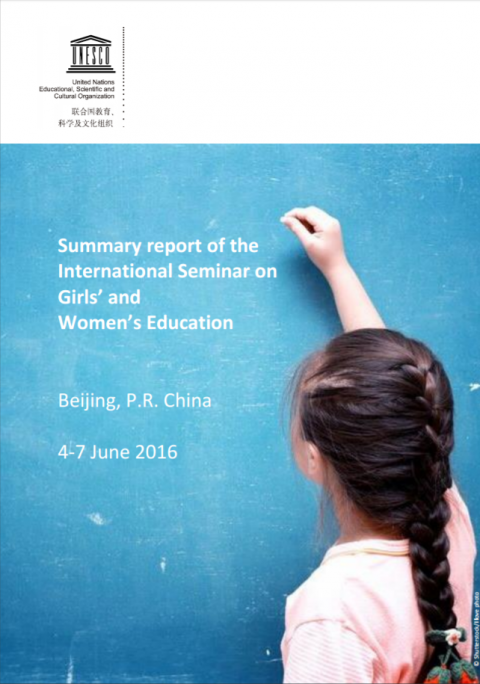 Informe resumido del Seminario internacional sobre la educación de las niñas y las mujeres, Beijing, R. P. China, 4-7 de junio de 2016 Año de publicación: 2016 Autor corporativo: National Commission of the People's Republic of China for UNESCO | UNESCO Beijing The International Seminar on Girls’ and Women’s Education, held 4-6 June 2016 in Beijing, explored benefits of education on girls and women along with barriers to the achievement of gender equality in education. It provided a platform for dialogue on the role of education for girls and women, particularly in the context of the 2030 Agenda for Sustainable Development, and specifically in reaching SDG 4 and supporting the achievement of other SDGs. The event also marked the first award ceremony of the UNESCO Prize for Girls’ and Women’s Education, which honoured two laureates for their outstanding innovation and contributions to advancing girls’ and women’s education. This publication presents a synthesis of information that was shared during the seminar’s sessions, and the findings and recommendations originating from the exchanges.
 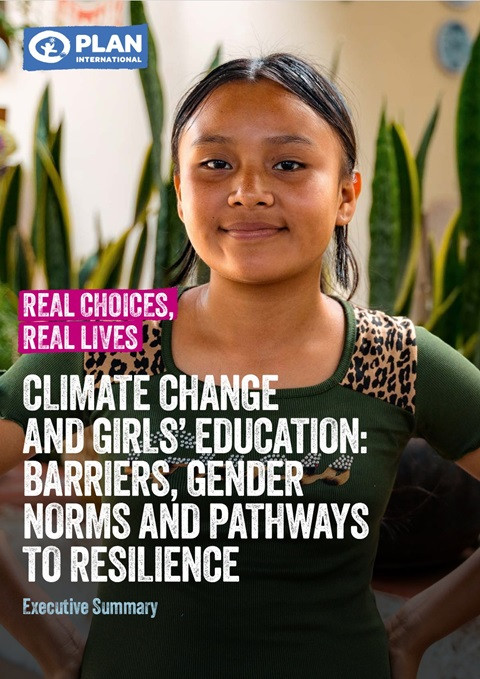 [Resumen Ejecutivo] Cambio climático y educación de las niñas: barreras, normas de género, y rutas hacia la resiliencia Año de publicación: 2023 Autor corporativo: Plan International This is the Executive Summary for the report: Climate Change and Girls’ Education: Barriers, Gender Norms and Pathways to Resilience. The full technical report and accompanying synthesis report are also available.
 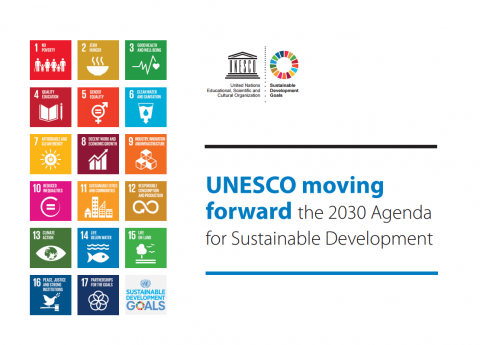 La UNESCO avanza la Agenda 2030 para el Desarrollo Sostenible Año de publicación: 2017 Autor corporativo: Organización de las Naciones Unidas para la Educación, la Ciencia y la Cultura (UNESCO) The United Nations 2030 Agenda for Sustainable Development, with its 17 Sustainable Development Goals, sets forth a bold new framework for development cooperation over the next 15 years. This agenda aspires to ensure prosperity and well-being for all women and men, while protecting our planet and strengthening the foundations for peace.
 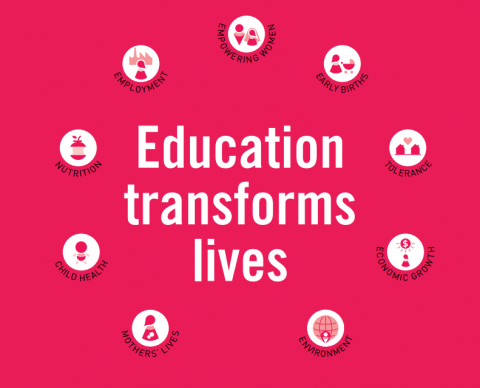 La Educación transforma la vida Año de publicación: 2013 Autor corporativo: Organización de las Naciones Unidas para la Educación, la Ciencia y la Cultura (UNESCO) Education lights every stage of the journey to a better life, especially for the poor and the most vulnerable. Education’s unique power to act as a catalyst for wider development goals can only be fully realized, however, if it is equitable. That means making special efforts to ensure that all children and young people – regardless of their family income, where they live, their gender, their ethnicity, whether they are disabled – can benefit equally from its transformative power. Education empowers girls and young women, in particular, by increasing their chances of getting jobs, staying healthy and participating fully in society – and it boosts their children’s chances of leading healthy lives. To unlock the wider benefits of education, all children need the chance to complete not only primary school but also lower secondary school. And access to schooling is not enough on its own: education needs to be of good quality so that children actually learn. Given education’s transformative power, it needs to be a central part of any post-2015 global development framework.
 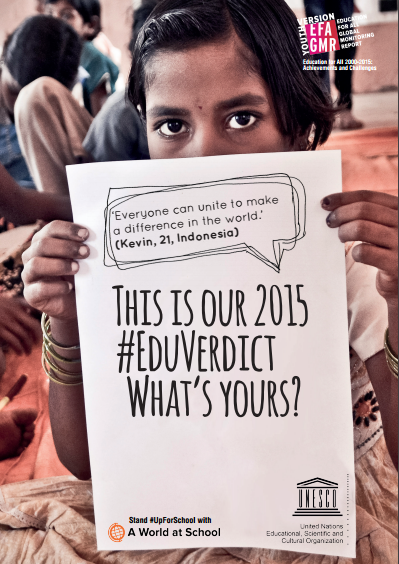 La Educación para Todos, 2000-2015: logros y desafíos, informe de seguimiento de la EPT en el mundo, 2015: youth version Año de publicación: 2015 Autor corporativo: UNESCO This report highlights the progress and challenges that countries have faced over 15 years, brining together the voices of young people to show how Education for All (EFA) has affected their lives.
 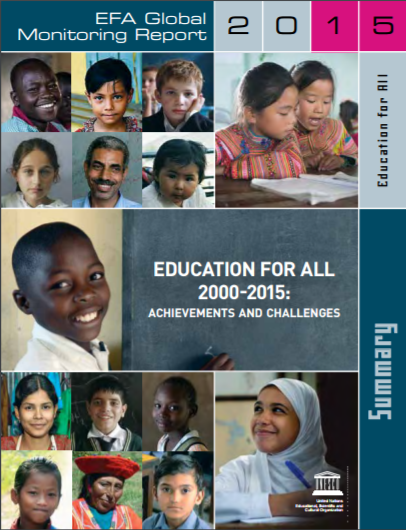 Other lang. title: L'Education pour tous 2000-2015: progrès et enjeux, rapport mondial de suivi sur l'EPT, 2015, résumé; La Educación para Todos, 2000-2015: logros y desafíos, informe de seguimiento de la EPT en el mundo, 2015, resumen Año de publicación: 2015 Autor corporativo: UNESCO At the World Education Forum in Dakar, Senegal, in 2000, governments from 164 countries, together with representatives of regional groups, international organizations, donor agencies, non-government organizations (NGOs) and civil society, adopted a Framework for Action to deliver Education for All (EFA) commitments. The Dakar Framework comprised 6 goals and their associated targets to be achieved by 2015, and 12 strategies to which all stakeholders would contribute. The EFA Global Monitoring Report (GMR) has monitored progress on an almost annual basis towards the EFA goals and the two education-related Millennium Development Goals (MDGs). The 2015 GMR provides a complete assessment of progress since 2000 towards the target date for reaching the Dakar Framework’s goals. It takes stock of whether the world achieved the EFA goals and stakeholders upheld their commitments. It explains possible determinants of the pace of progress. Finally, it identifies key lessons for shaping the post-2015 global education agenda.
 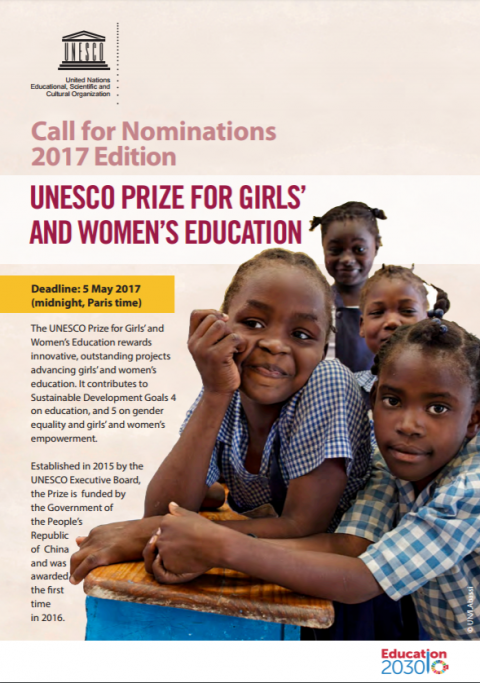 Premio UNESCO de educación de las niñas y las mujeres, edición de 2017: solicitud de candidaturas Año de publicación: 2017 Autor corporativo: UNESCO The UNESCO Prize for Girls’ and Women’s Education rewards innovative, outstanding projects advancing girls’ and women’s education. It contributes to Sustainable Development Goals 4 on education, and 5 on gender equality and girls’ and women’s empowerment.