
Recursos
Exploren una amplia gama de recursos valiosos en GCED para profundizar su comprensión y promover su búsqueda, incidencia, enseñanza y aprendizaje.
54 resultados encontrados
 Inclusión, educación para el desarrollo sostenible, aprendizaje de adultos, educación superior e investigación: cuatro conferencias internacionales para promover la equidad, la calidad, la pertinencia y la responsabilidad social en materia de educación Año de publicación: 2008 Autor corporativo: UNESCO This cycle of conferences brings together a wide array of influential stakeholders in the common interest of creating education systems that serve the needs of all learners, address the challenges of today's world and make learning a springboard of development. Alfabetización para el desarrollo sostenible y el empoderamiento de las mujeres Año de publicación: 2014 Autor: Anna Robinson-Pant Autor corporativo: UNESCO Institute for Lifelong Learning (UIL) The fact that women constitute two-thirds of the world’s non-literate population has been a cause for concern for several decades now. Despite a number of high-profile literacy interventions specifically targeting women – including UNESCO’s LIFE initiative – the disparity between male and female literacy rates persists in many countries of the world (UIL, 2013). This starting point for thinking about women’s literacy has however often led to a narrow focus on literacy access and outcomes. Whilst educational policy makers and planners have attempted to identify and overcome barriers to women’s participation, researchers have directed their attention to measuring the social and economic benefits of women’s literacy (see Robinson-Pant, 2004). Statistical correlations have been presented as evidence of the impact of women’s literacy: for instance, in Pakistan, women with a high level of literacy earned 95% more than women with no literacy skills yet there was only a 33% differential amongst men (UNESCO 2012: 196). Barriers to participation have been analysed in terms of structural (timing, location, women-only versus mixed gender) and social (marriage, poverty, language hierarchies) factors (see Ballara 1991). Within such analysis however, little attention has been given to the social processes associated with literacy learning and development. By contrast, this paper sets out to take a wider lens on literacy in order to explore not only ‘what works’ in practical terms of encouraging women to participate programmes, but also to look at how and why literacy programmes can contribute to sustainable development and processes of empowerment. Taking this perspective on women’s literacy involves asking alternative questions from the more usual ‘how can we make more women literate?’ Approaching literacy through the lens of sustainable development and women’s empowerment means that we develop a more nuanced understanding of how different kinds of literacy emerge from or support different development approaches and how women engage with such processes of change. How is literacy related to sustainable development programmes? What does empowerment mean to different women in different situations? What kind of research evidence and knowledge are literacy programmes and policy building on? How can adult learning facilitate economic, social and environmental change? These larger questions will guide the conceptual exploration of sustainable development, women’s empowerment and literacy, as well as the review of literacy programmes presented in this paper. The starting assumption is that only by looking in depth at the processes of literacy learning and development practice can we begin to address the challenge of narrowing the gender gap in literacy attainment.
 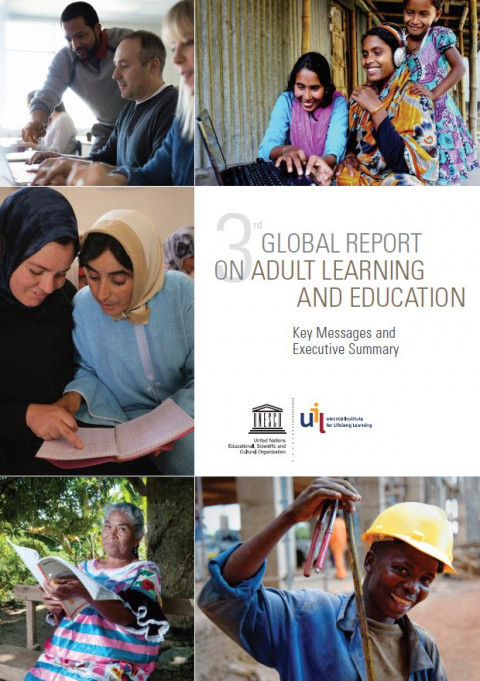 [Resumen] 3do Informe mundial sobre el aprendizaje y la educación de adultos: el impacto del aprendizaje y la educación de adultos sobre la salud y el bienestar, el empleo y el mercado de trabajo, y la vida social, cívica y comunitaria, mensajes clave y resumen ejecutivo Año de publicación: 2016 Autor corporativo: UNESCO Institute for Lifelong Learning (UIL) El tercer Informe mundial sobre el aprendizaje y la educación de adultos (GRALE III) se funda en los estudios de monitoreo completados por 139 Estados Miembros de la UNESCO a fin de producir una visión diferenciada sobre el estado global del aprendizaje y la educación de adultos (AEA). Evalúa el progreso de los países en lo que respecta al cumplimiento de los compromisos que hicieron en el Marco de acción de Bélem, aprobado en la VI Conferencia Internacional de Educación de Adultos (CONFINTEA VI) en 2009.Además, el informe examina el impacto del AEA en tres áreas importantes: salud y bienestar; empleo y mercado de trabajo, así como vida cívica y comunitaria. El GRALE III brinda a los responsables de la formulación de política, investigadores y practicantes pruebas convincentes de los más amplios beneficio del AEA en todas estas áreas. Al hacerlo, destaca algunas de las contribuciones más importantes que el AEA puede hacer para realizar los objetivos de la Agenda 2030 para el Desarrollo Sostenible.El presente informe responde a tres objetivos: en primer lugar, analizar los resultados de una encuesta de seguimiento realizada entre los Estados Miembros de la UNESCO y determinar si los países están cumpliendo los compromisos que contrajeron en CONFINTEA VI; en segundo lugar, reforzar los argumentos en favor del aprendizaje y la educación de adultos con datos fehacientes sobre los beneficios que reportan en los ámbitos de la salud y el bienestar, el empleo y el mercado de trabajo y la vida social, cívica y comunitaria; y en tercer lugar, proporcionar un referente a partir del cual debatir y pasar a la acción a escala nacional, regional e internacional.
 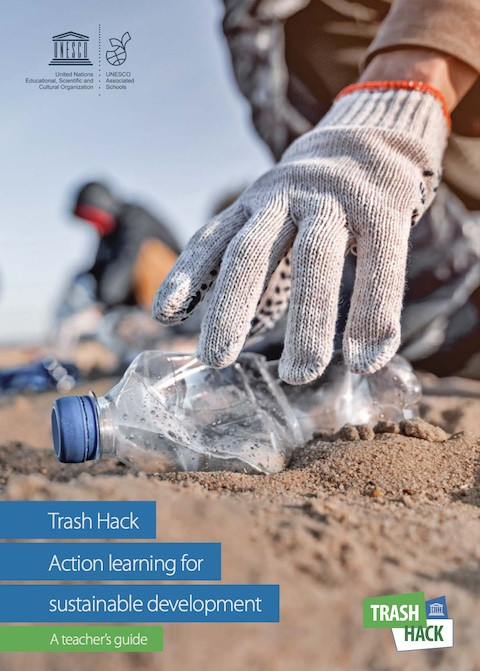 "Trash Hack": Educación para el desarrollo sostenible a través de la acción: Guía para los docentes Año de publicación: 2021 Autor corporativo: UNESCO La educación para el desarrollo sostenible (EDS) proporciona a las personas las herramientas para abordar los problemas del presente y del futuro, y así luchar contra la crisis climática, cambiar el mundo y alcanzar los ODS. La EDS replantea lo que aprendemos, dónde lo hacemos y de qué forma. Se trata de un aprendizaje permanente, que permite a las personas desarrollar el conocimiento, las aptitudes, los valores y las actitudes que necesitan para tomar decisiones y emprender acciones fundamentadas sobre los problemas mundiales. Las actividades propuestas en esta guía están basadas en la acción y tienen por objeto ayudar a fomentar las tres dimensiones del aprendizaje (cognitiva, socioemocional yconductual) y, por consiguiente, promover competencias transversales para los ODS, como el pensamiento sistémico, la competencia de anticipación, la colaboración, elpensamiento crítico y la solución de problemas integrada.