
Recursos
Exploren una amplia gama de recursos valiosos en GCED para profundizar su comprensión y promover su búsqueda, incidencia, enseñanza y aprendizaje.
24 resultados encontrados
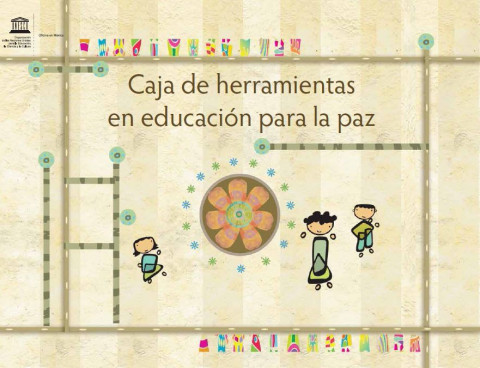 Caja de Herramientas en Educación para la Paz Año de publicación: 2013 Autor: Luz Marfa Chapela Autor corporativo: UNESCO Mexico Los componentes de esta caja forman un sistema en el que cada elemento tiene sus propios fines y todos los elementos, reunidos y vinculados, buscan un mismo fin compartido: ofrecer materiales lúdicoeducativos que propicien la reflexión introspectiva, el mejor conocimiento del otro y del entorno, el estudio colaborativo, la participación de distintos agentes de la comunidad en apoyo a los maestros, el uso de las lenguas maternas y la identificación de recursos, saberes, talentos y habilidades en las comunidades locales. Esta caja se dirige de manera especial a maestros y estudiantes de educación básica, así como a distintos agentes de la sociedad civil que los apoyan. Tiene entre sus propósitos favorecer el desarrollo de comunidades escolares que hagan de la escuela un centro de estudio, juego, asesoría y trabajo para todos. Porque los materiales de la Caja de Herramientas también pueden resultar interesantes a jóvenes y adultos de todas las edades. En este sentido, la caja invita a los distintos agentes de las comunidades a pensar y producir nuevos materiales lúdico-educativos que recojan y pongan en acción algunos contenidos locales prioritarios, mismos que, seguramente, enriquecerán la vida y las posibilidades educativas de las comunidades escolares.
  La contribución de la educación inicial para una sociedad sustentable Año de publicación: 2009 Autor corporativo: UNESCO This report originates from the international workshop, ‘The Role of Early Childhood Education for a Sustainable Society’, jointly organized in Göteborg, Sweden, by Göteborg University, Chalmers University of Technology and the City of Göteborg, from 2 to 4 May 2007. It was attended by thirty-five participants from sixteen different countries (see ‘List of Participants’). The workshop was a follow-up to the international conference on education for sustainable development, ‘Learning to Change Our World’, held in May 2004, in Göteborg. It was one of four preparatory workshops leading to another international conference on education for sustainable development, to be organized in 2008 or 2009, in the same city. The aim of the four workshops is to discuss promoters and barriers related to learning for sustainability, and to propose recommendations for the upcoming international conference. The present workshop was conceived for the following reasons. First, our societies urgently require new kinds of education that can help prevent further degradation of our planet, and that foster caring and responsible citizens genuinely concerned with and capable of contributing to a just and peaceful world. Second, these new kinds of education must be available to all – not only a handful of people – and take place in various settings, including families and communities. Third, they must begin in early childhood, as the values, attitudes, behaviours and skills acquired in this period may have a long-lasting impact in later life. Thus, early childhood education clearly has an important place in the efforts to bring about sustainable development.
 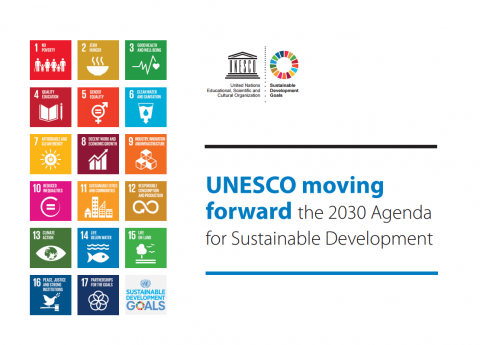 La UNESCO avanza la Agenda 2030 para el Desarrollo Sostenible Año de publicación: 2017 Autor corporativo: Organización de las Naciones Unidas para la Educación, la Ciencia y la Cultura (UNESCO) The United Nations 2030 Agenda for Sustainable Development, with its 17 Sustainable Development Goals, sets forth a bold new framework for development cooperation over the next 15 years. This agenda aspires to ensure prosperity and well-being for all women and men, while protecting our planet and strengthening the foundations for peace.
  Informe de seguimiento de la educatión en el mundo: documento de política Año de publicación: 2016 Autor corporativo: UNESCO This paper’s focus on textbooks is directly related to the global indicator established for Target 4.7, which seeks to measure the extent to which global citizenship education and education for sustainable development, including gender equality and human rights, are mainstreamed in national education policies, curricula, teacher education and student assessments. Textbooks are related mostly to policy implementation and curricular intentions but also to teacher preparation and student assessment.
 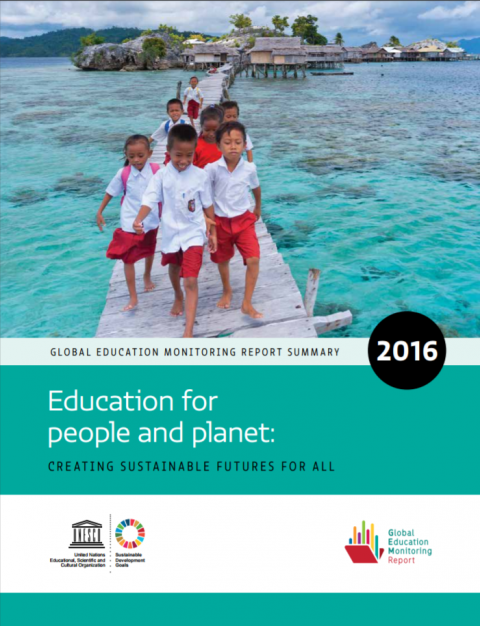 La Educación al servicio de los pueblos y el planeta: creación de futuros sostenibles para todos, resumen del informe de seguimiento de la educación en el mundo 2016; Año de publicación: 2016 Autor corporativo: UNESCO The GEM Report provides an authoritative account of how education is the most vital input for every dimension of sustainable development. Better education leads to greater prosperity, improved agriculture, better health outcomes, less violence, more gender equality, higher social capital and an improved natural environment. Education is key to helping people around the world understand why sustainable development is such a vital concept for our common future. Education gives us the key tools – economic, social, technological, even ethical – to take on the SDGs and to achieve them. These facts are spelled out in exquisite and unusual detail throughout the report. Yet the report also emphasizes the remarkable gaps between where the world stands today on education and where it has promised to arrive as of 2030.
 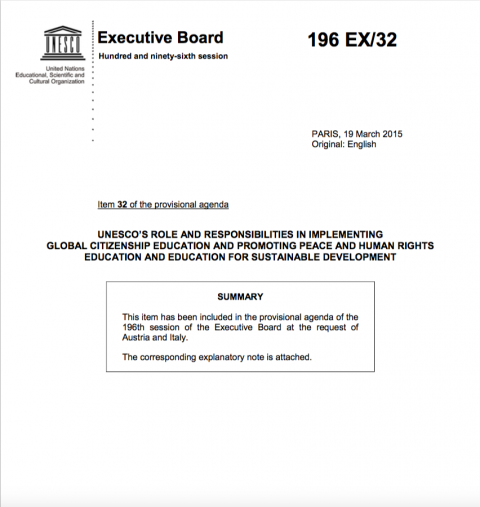 Función y responsabilidades de la UNESCO en la realización de la educación para la ciudadanía mundial y la promoción de la educación para la paz y los derechos humanos y la educación para el desarrollo sostenible Año de publicación: 2015 Autor corporativo: UNESCO This document is an addendum to document 196 EX/32. This item was included in the provisional agenda of the 196th session of the Executive Board at the request of Austria and Italy
 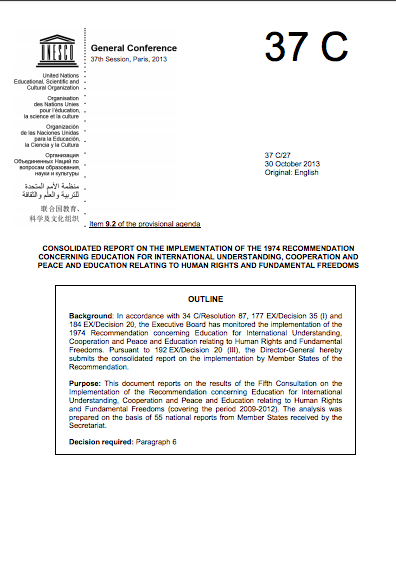 Informe de síntesis sobre la aplicación por los Estados Miembros de la Recomendación de 1974 sobre la Educación para la Comprensión, la Cooperación y la Paz Internacionales y la Educación relativa a los Derechos Humanos y las Libertades Fundamentales Año de publicación: 2013 Autor corporativo: UNESCO Background: In accordance with 34 C/Resolution 87, 177 EX/Decision 35 (I) and 184 EX/Decision 20, the Executive Board has monitored the implementation of the 1974 Recommendation concerning Education for International Understanding, Cooperation and Peace and Education relating to Human Rights and Fundamental Freedoms. Pursuant to 192 EX/Decision 20 (III), the Director-General hereby submits the consolidated report on the implementation by Member States of the Recommendation.Purpose: This document reports on the results of the Fifth Consultation on the Implementation of the Recommendation concerning Education for International Understanding, Cooperation and Peace and Education relating to Human Rights and Fundamental Freedoms (covering the period 2009-2012). The analysis was prepared on the basis of 55 national reports from Member States received by the Secretariat. Declaración y Plan de Acción Integrado sobre la Educación para la Paz, los Derechos Humanos y la Democracia Año de publicación: 1995 Autor corporativo: UNESCO This document is Declaration of the 44th session of the International Conference on Education (Geneva, October 1994) endorsed by the General Conference Declaration of the 44th session of the International Conference on Education (Geneva, October 1994) endorsed by the General Conference of UNESCO at its twenty-eight session Paris, November 1995 of UNESCO at its twenty-eight session Paris, November 1995.
 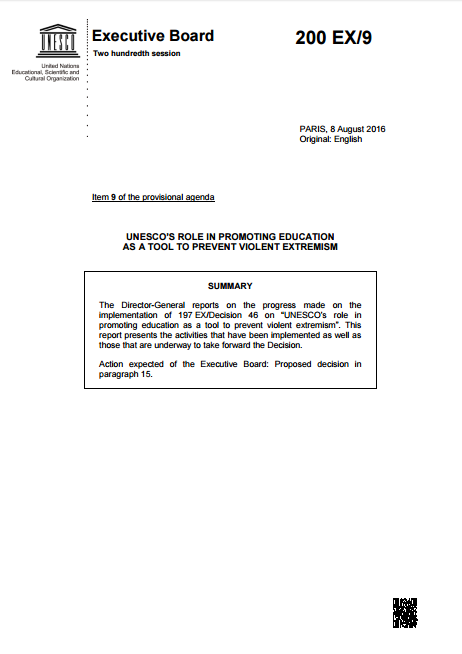 La Función de la UNESCO en la promoción de la educación como instrumento para prevenir el extremismo violento Año de publicación: 2016 Autor corporativo: UNESCO The Director-General reports on the progress made on the implementation of 197 EX/Decision 46 on “UNESCO’s role in promoting education as a tool to prevent violent extremism”. This report presents the activities that have been implemented as well as those that are underway to take forward the Decision.
 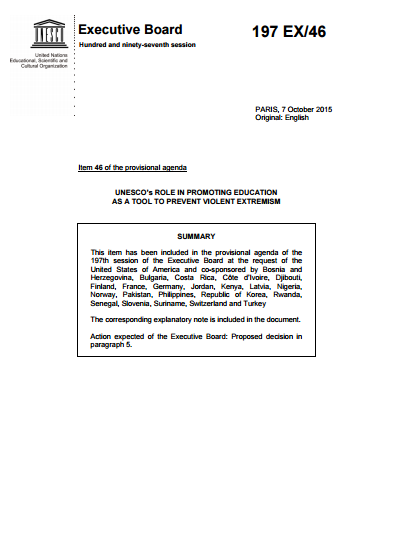 La Función de la UNESCO en la promoción de la educación como instrumento para prevenir el extremismo violento Año de publicación: 2015 Autor corporativo: UNESCO This item has been included in the provisional agenda of the 197th session of the Executive Board at the request of the United States of America and co-sponsored by Bosnia and Herzegovina, Bulgaria, Costa Rica, Côte d’Ivoire, Djibouti, Finland, France, Germany, Jordan, Kenya, Latvia, Nigeria, Norway, Pakistan, Philippines, Republic of Korea, Rwanda, Senegal, Slovenia, Suriname, Switzerland and Turkey