
Recursos
Exploren una amplia gama de recursos valiosos en GCED para profundizar su comprensión y promover su búsqueda, incidencia, enseñanza y aprendizaje.
249 resultados encontrados
 Address by Irina Bokova, Director-General of UNESCO, on the occasion of the Award Ceremony of the 2017 UNESCO-Japan Prize on Education for Sustainable Development, 39th General Conference; UNESCO, 3 November 2017 Año de publicación: 2017 Autor corporativo: UNESCO. Director-General, 2009-2017 (Bokova, I.G.) This address was delivered by Irina Bokova, Director-General of UNESCO, on the occasion of the Award Ceremony of the 2017 UNESCO-Japan Prize on Education for Sustainable Development at UNESCO Headquarters in Paris, on 3 November.
  Neuroscience Applied to Everyday Life: David del Rosario, Neuroscience Researcher (Full Version) Año de publicación: 2022 Autor: David del Rosario Autor corporativo: Banco Bilbao Vizcaya Argentaria (BBVA) Why are we unhappy even when everything is going well? What is thought? Do we know how our mind and body works? "Knowledge, if not applied, is useless," says scientist David del Rosario. In this video, the researcher analyzes different experiments and questions our relationship with what we think to address what he calls "everyday neuroscience".
  The Conceptualization of competencies related to sustainable development and sustainable lifestyles Año de publicación: 2017 Autor: Irmeli Halinen Autor corporativo: UNESCO International Bureau of Education (IBE) The education system of Finland has been developed soundly and steadily during the past 40 years. The guiding principles have been equity and equality in education as going hand in hand with the view to promote every individual’s life-long learning. Following these principles, it has strengthened the sustainability of the system itself. This report describes the role of sustainable development and the importance of learning a sustainable lifestyle in Finnish basic (primary and lower secondary) education. It highlights the goals, values, tasks, and the conceptualization of the competencies related to sustainability in the 2014 National Core Curriculum for basic education. In addition, it describes the sustainable nature of the curriculum reform process itself. The report examines the role and the contribution of various school subjects and key aspects, such as the school culture and the learning environment, in creating a strong knowledge base on which to build the values, attitudes, skills and the will needed for sustainable lifestyle, and in promoting sustainable ways of living. The report concludes with lessons drawn from the Finnish way of enhancing sustainability in education.
 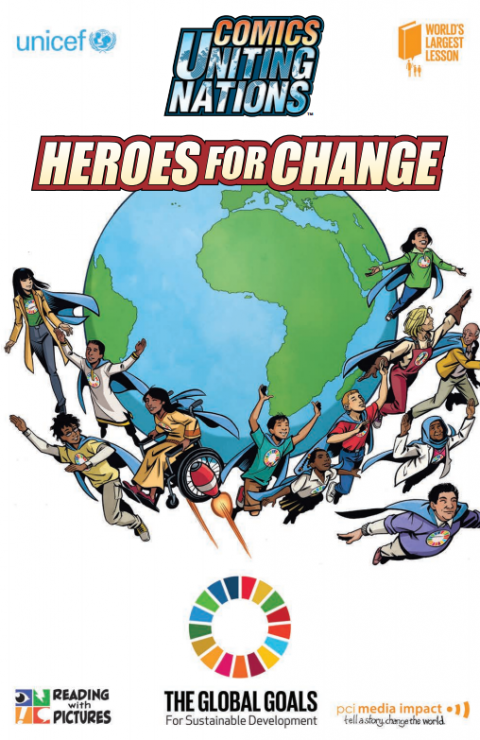 Heroes For Change Año de publicación: 2015 Autor: Josh Elder | Natabara Rollosson | Sean Southey | Grace Allison | Karl Kesel | Grace Allison Autor corporativo: Project Everyone | PCI Media Impact | Reading With Pictures Heroes for Change has been created for the World's Largest Lesson Initiative to share information on the global goals.
  MDG #2: Education Año de publicación: 2014 Autor corporativo: United Nations (UN) Malala Yousafzai was shot and almost killed by Taliban militants in Pakistan on her way home from school, yet her survival only made her a greater global advocate for universal education.
 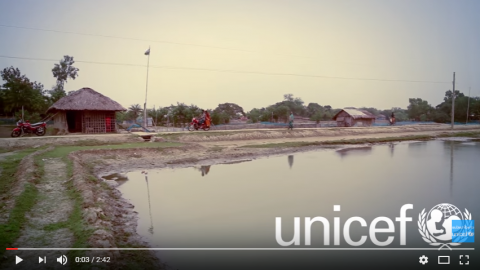 Bridging the education gap in Bangladesh Año de publicación: 2015 Autor corporativo: United Nations Children's Fund (UNICEF) “If this school didn’t exist, I wouldn’t be here… I would be forced to work,” Mohammed, 13, says. Mohammed attends an ability-based learning school in Shyamnagar, Bangladesh supported by UNICEF’s Let Us Learn initiative. Many children in Bangladesh are out of school because they never enrolled or dropped out, largely due to poverty and child labour.
 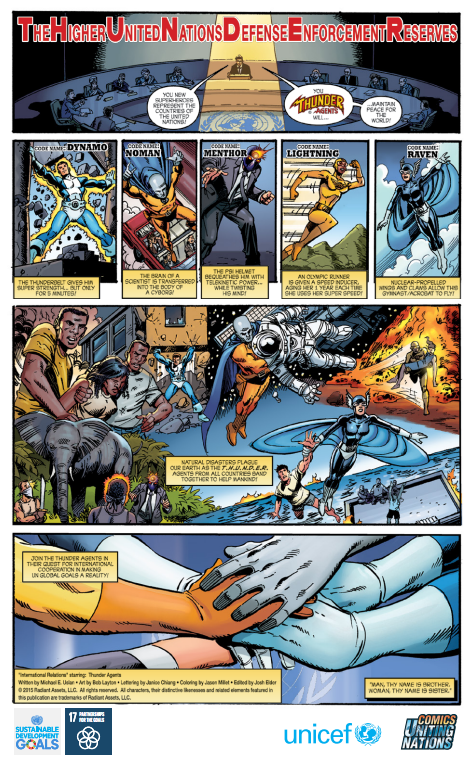 T.H.U.N.D.E.R. Agents Año de publicación: 2015 Autor: Michael E. Ulsan | Bob Layton | Janic Chiang | Jason Millet | Josh Elder Autor corporativo: Radiant Assets | LLC | United Nations Children's Fund (UNICEF) T.H.U.N.D.E.R. -- The Higher United Nations Defense Enforcement Reserves -- are UN Superheroes tasked with promoting global cooperation to make the world a better place. The T.H.U.N.D.E.R. Agentswas a comic originally created in the 1960s and is set to be made into a major motion picture in 2018.
 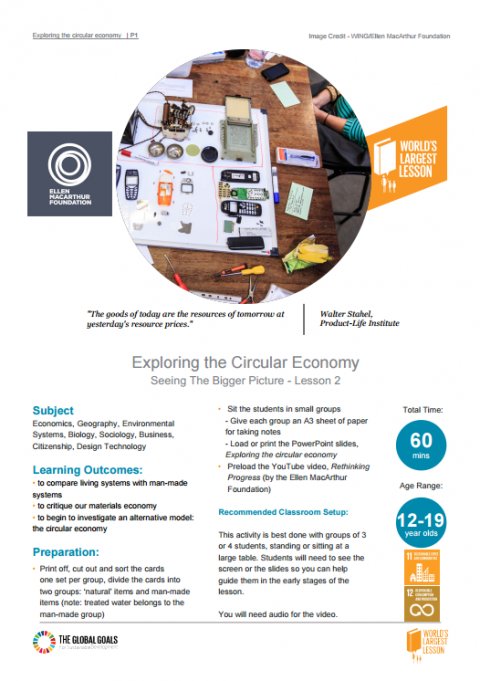 Exploring the Circular Economy: Seeing The Bigger Picture - Lesson 2 Autor corporativo: United Nations Children's Fund (UNICEF) World’s Largest Lesson is a collaborative education project to support the announcement of the United Nations Global Goals for Sustainable Development. Learning outcomes of the project: • to compare living systems with man-made systems • to critique our materials economy • to begin to investigate an alternative model: the circular economy
  Understanding the Challenge of Finite Resources: Seeing The Bigger Picture - Lesson 3 Autor corporativo: United Nations Children's Fund (UNICEF) World’s Largest Lesson is a collaborative education project to support the announcement of the United Nations Global Goals for Sustainable Development. Learning outcomes of the project: • To understand and the urgent challenge that finite resources pose to our current economic system • To explore economic history since the industrial revolution through personal narrative • To critically evaluate our current consumption and production systems and explore better ways of dealing with resources.
 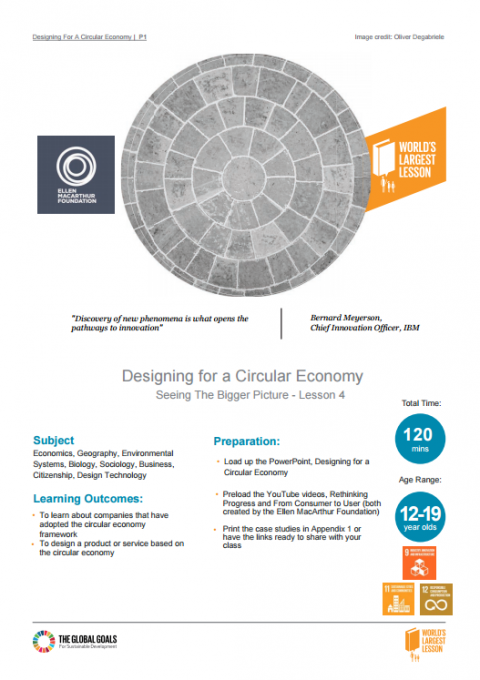 Designing for a Circular Economy: Seeing The Bigger Picture - Lesson 4 Autor corporativo: United Nations Children's Fund (UNICEF) World’s Largest Lesson is a collaborative education project to support the announcement of the United Nations Global Goals for Sustainable Development. Learning outcomes of the project: • To learn about companies that have adopted the circular economy framework • To design a product or service based on the circular economy