
Recursos
Exploren una amplia gama de recursos valiosos en GCED para profundizar su comprensión y promover su búsqueda, incidencia, enseñanza y aprendizaje.
18 resultados encontrados
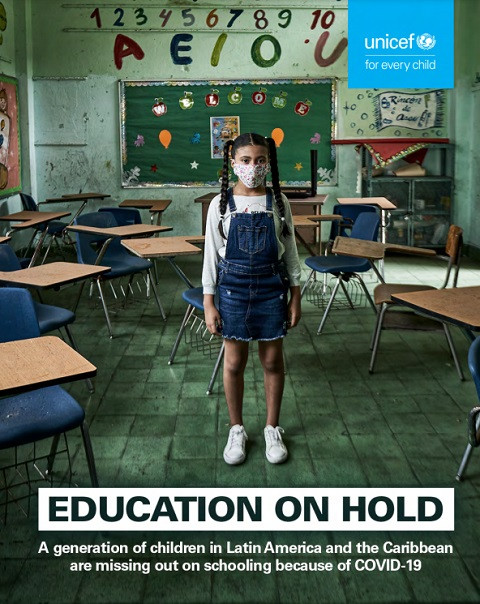 Education on Hold: A Generation of Children in Latin and the Caribbean Are Missing Out on School Because of COVID-19 Año de publicación: 2020 Autor: Laura Andreea Seusan | Rocío Maradiegue Autor corporativo: United Nations Children's Fund (UNICEF) More than seven months into the pandemic, COVID-19 is putting education on hold for more than 137 million children in Latin America and the Caribbean. This is according to a new UNICEF report about the devastating impacts of COVID-19 on education. The report also finds that COVID-19 has further widened the education gaps between rich and poor families in Latin America and the Caribbean. New UNICEF data shows that the percentage of children not receiving any form of education across the region has soared dramatically, from 4 to 18 per cent in the past few months. UN projections reveal that COVID-19 may push up to 3 million additional children out of school in Latin America and the Caribbean. Educación en Pausa: Una generación de niños y niñas en América Latina y el Caribe está perdiendo la escolarización debido al COVID-19 Año de publicación: 2020 Autor: Laura Andreea Seusan | Rocío Maradiegue Autor corporativo: United Nations Children's Fund (UNICEF) Más de siete meses después de que iniciara la pandemia, el COVID-19 está poniendo la educación en pausa de más de 137 millones de niños, niñas y adolescentes en América Latina y el Caribe, según un nuevo informe de UNICEF acerca de los devastadores impactos del COVID-19 en la educación.El informe encuentra también que el COVID-19 ha ampliado aún más las brechas educativas entre las familias ricas y las pobres en América Latina y el Caribe. Los nuevos datos de UNICEF muestran que el porcentaje de niños, niñas y adolescentes que no reciben ninguna forma de educación en la región se ha disparado drásticamente, del 4 al 18 por ciento en los últimos meses. Las proyecciones de la ONU revelan que el COVID-19 podría sacar de la escuela hasta 3 millones de niños más en América Latina y el Caribe.
 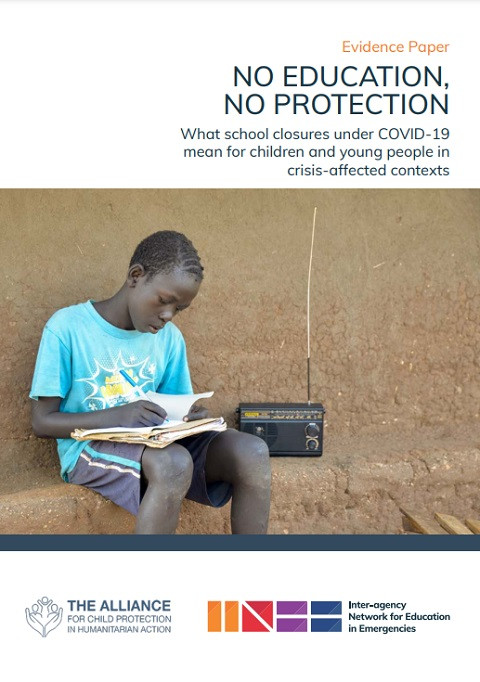 No Education, No Protection: What School Closures Under COVID-19 Mean for Children and Young People in Crisis-Affected Contexts Año de publicación: 2021 Autor corporativo: Inter-agency Network for Education in Emergencies (INEE) | Alliance for Child Protection in Humanitarian Drawing from research and experience on previous infectious disease outbreaks and an emergent body of work from the current COVID-19 pandemic, this report highlights the primarily negative effects resulting from the combination of sudden school closures and restricted access to and availability of services, social networks, and other protective facilities for children and young people living in crisis-affected contexts. The consequences of school closures on education and child protection can be categorized into three principal areas:1. Loss of learning and impediments to providing inclusive, equitable, quality education2. Negative impact on child well-being and healthy development3. Amplified child protection risks and harms experienced by children and young people
 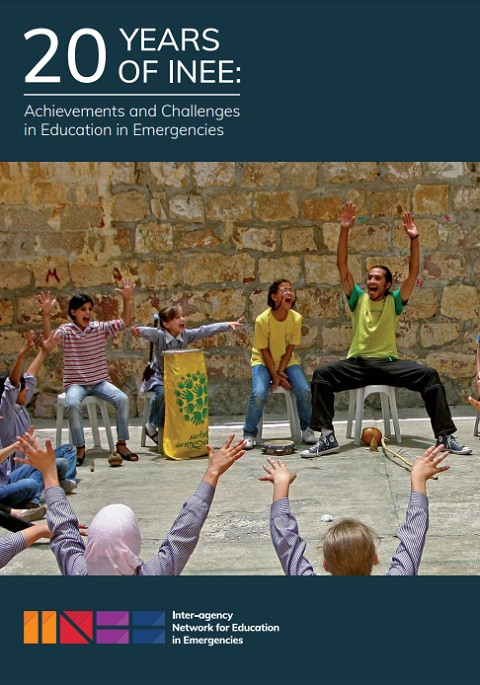 20 Years of INEE: Achievements and Challenges in Education in Emergencies Año de publicación: 2020 Autor corporativo: Inter-agency Network for Education in Emergencies (INEE) This report highlights the continued relevance of INEE 20 years on. It presents new data that shows 127 million primary and secondary school-age children and young people living in crisis-affected countries were out of school in 2019. This is equivalent to almost half of the global out-of-school population, even though only around 29% of children and young people in this age group globally live in crisis-affected countries. These figures are based on new data provided by the UNESCO Institute for Statistics (UIS). The report also demonstrates the still urgent need to prioritize education and financing of education in emergencies, particularly in ‘forgotten’ crises. 20 ans de l’INEE : Réalisations et Défis dans l’Éducation en Situations d’Urgence Año de publicación: 2020 Autor corporativo: Inter-agency Network for Education in Emergencies (INEE) Ce rapport, qui marque le 20e anniversaire de l’INEE, souligne les réalisations dans le domaine de l’ESU au cours des deux dernières décennies et identifie les défis permanents. Il retrace les changements qui ont amené l’ESU dans les programmes mondiaux de planification et d’action et note les étapes clés du développement de l’ESU en tant que domaine reconnu. Reconnaissant également les engagements énoncés dans l’Agenda 2030 pour le développement durable, notamment la promesse de veiller à ce que « personne ne soit laissé de côté » (ONU, 2015), ce rapport se tourne vers l’avenir en recommandant des actions immédiates et durables pour atteindre l’Objectif de Développement Durable 4 (ODD 4), une éducation de qualité et des possibilités de formations permanente inclusives et équitables pour tous - incluant les enfants et les jeunes dans les contextes de crise (ONU, 2015). 20º aniversario de la INEE: Logros y desafíos en la educación en situaciones de emergencia Año de publicación: 2020 Autor corporativo: Inter-agency Network for Education in Emergencies (INEE) Este informe, con motivo del 20.º aniversario de la INEE, enfatiza los logros alcanzados en el ámbito de la EeE en las últimas dos décadas y señala los desafíos que siguen existiendo. Explora los cambios que facilitaron la inclusión de la EeE en los programas globales de planificación y acción, y señala los hitos principales en el desarrollo de la EeE como un campo reconocido. Asimismo, este informe reconoce los compromisos establecidos en la Agenda de Desarrollo Sostenible de 2030, incluido el compromiso de «no dejar a nadie atrás» (ONU, 2015), y enfrenta el futuro con la recomendación de acciones inmediatas y sostenidas para alcanzar el Objetivo de Desarrollo Sostenible 4 (ODS 4),una educación de calidad inclusiva y equitativa, y oportunidades de aprendizaje durante toda la vida para todos; incluidos los niños, niñas y jóvenes en contextos de crisis (UN, 2015).
 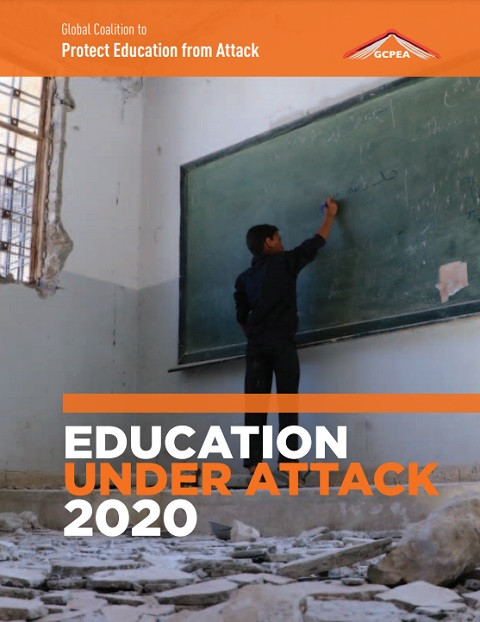 Education Under Attack 2020 Año de publicación: 2020 Autor corporativo: Global Coalition to Protect Education from Attack (GCPEA) This study is published by the Global Coalition to Protect Education from Attack (GCPEA), which was formed in 2010 by organisations working in the fields of education in emergencies and conflict-affected contexts, higher education, protection, and international human rights and humanitarian law that were concerned about ongoing attacks on educational institutions, their students, and staff in countries affected by conflict and insecurity.GCPEA is a coalition of organizations that includes: co-chairs Human Rights Watch and Save the Children, the Council for At-Risk Academics (Cara), the Institute of International Education (IIE), the Office of the United Nations High Commissioner for Refugees (UNHCR), the Education Above All Foundation (EAA), Plan International, the United Nations Children’s Fund (UNICEF) and the United Nations Educational, Scientific and Cultural Organization (UNESCO). GCPEA is a project of the Tides Center, a non-profit 501(c)(3) organization. Education under Attack 2020 is the result of independent research conducted by GCPEA. It is independent of the individual member organizations of the Steering Committee of GCPEA and does not necessarily reflect the views of the Steering Committee member organizations.
 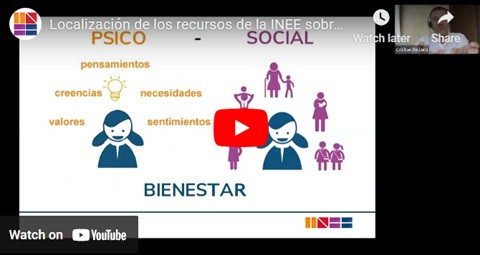 Localización de los recursos de la INEE sobre PSS-SEL Año de publicación: 2024 Autor corporativo: Harvard Graduate School of Education (HGSE) | Inter-agency Network for Education in Emergencies (INEE) En estos talleres, los participantes aprendieron cómo localizar los recursos de PSS-SEL de la INEE, incluyendo el Documento de referencia de la INEE sobre Apoyo psicosocial y psicoeducación en niños, niñas y jóvenes en situaciones de emergencia, la nota de orientación de la INEE sobre PSS, la Caja de herramientas de PSS-SEL, y la nota de orientación sobre bienestar docente en situaciones de emergencia, y cómo adaptarlos eficazmente a los distintos contextos.
  Minimum Standards for Education: Preparedness, Response, Recovery Año de publicación: 2024 Autor corporativo: Inter-agency Network for Education in Emergencies (INEE) Since 2004, the INEE Minimum Standards for Education: Preparedness, Response, Recovery (INEE MS) have provided a framework for inclusive and equitable quality education. The purpose of the handbook is:-To improve the quality of education preparedness, response, and recovery;-To increase access to safe and relevant learning opportunities;-To ensure that the actors who provide these services are held accountable The INEE MS are designed to be applicable to crisis response in many different situations, including emergencies caused by conflict, by natural hazards such as those induced by climate change, and slow- and rapid-onset crises in both rural and urban environments. Location of INEE Resources on PSS-SEL Año de publicación: 2024 Autor corporativo: Harvard Graduate School of Education (HGSE) | Inter-agency Network for Education in Emergencies (INEE) In these workshops, participants learned how to locate INEE PSS-SEL resources, including the INEE Background Document on Psychosocial Support and Psychoeducation for Children and Youth in Emergencies, the INEE Guidance Note on PSS, the PSS-SEL Toolkit, and the Guidance Note on Teacher Well-Being in Emergencies, and how to effectively adapt them to different contexts.