
Recursos
Exploren una amplia gama de recursos valiosos en GCED para profundizar su comprensión y promover su búsqueda, incidencia, enseñanza y aprendizaje.
201 resultados encontrados
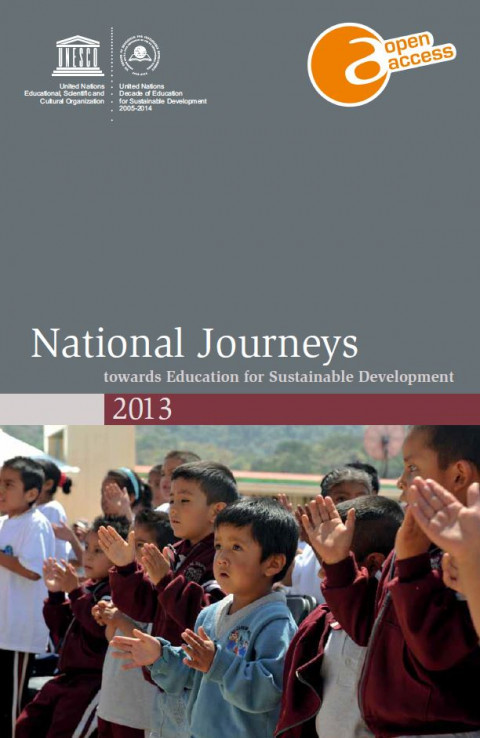 Voyages nationaux vers l'éducation pour le développement durable, 2013: examen des expériences nationales EDD du Costa Rica, Maroc, Afrique du Sud, Suède, Vietnam Año de publicación: 2013 Autor corporativo: UNESCO Cette publication a source d'informations à partir d'une série d'examens nationaux mandatés par l'UNESCO en 2011/2012 et a été rédigé par des experts au Costa Rica, Maroc, Afrique du Sud, la Suède et le Viet Nam. Les pays présentés dans ce rapport ne sont pas nécessairement les exemples «meilleurs» de la région, comme beaucoup d'autres pays progressent également de manière efficace pour mettre en œuvre l'éducation pour le développement durable (EDD). Au contraire, les pays sélectionnés illustrent la grande diversité des approches et des initiatives qui se déroulent dans différentes parties du monde EDD. Les études nationales ont ensuite été modifiés et harmonisés avant les thèmes et les enseignements tirés ont été identifiés pour soutenir d'autres efforts nationaux dans le déplacement vers la fin de la Décennie des Nations Unies pour l'éducation au développement durable communs.
  Education in the twenty‐first century: Conflict, reconstruction and reconciliation1 Año de publicación: 2005 Autor: Alan Smith Autor corporativo: Taylor & Francis This paper is an attempt to map out an emerging and increasingly important field of study concerning the relationship between education and conflict. The paper argues that actions through various ‘entry points’ at each of these levels carry the potential to exacerbate or ameliorate conflict and suggests that a systemic analysis of investments in education systems from a conflict perspective should be a routine part of educational planning. Education in the twenty‐first century: Conflict, reconstruction and reconciliation1 Año de publicación: 2005 Autor: Alan Smith Autor corporativo: Taylor & Francis Ce papier tente d’établir un nouveau domaine d'étude de plus en plus important portant sur le lien entre l'éducation et les conflits. Le document fait valoir que les actions menées à travers différents « points d’entrée » à chaque niveau ont le potentiel d'exacerber ou bien d’atténuer les conflits. Le papier suggère qu'une analyse systémique des investissements dans les systèmes d'éducation contre les conflits devrait faire partie intégrante de la planification de l'éducation.
  Case Study - Pakistan: Education, Religion and Conflict Año de publicación: 2015 Autor: Raza Rumi Autor corporativo: Tony Blair Faith Foundation | McGill University Pakistan is in the midst of crisis. It is threatened by virulent extremist groups and is suffering from a failing education system that is poorly funded and politically manipulated. It promulgates an undefined Islamo-nationalist ideology that lays the foundations for widespread acceptance of ideologically motivated violence. Reforms to the curriculum have been legislated but are badly implemented by the country's politicians; the international community has largely turned a blind eye to these shortcomings. Unless aid and advocacy are specifically focused on far-reaching educational reform that directly tackles extremism, the long-term consequences will be extremely severe. Case Study - Pakistan: Education, Religion and Conflict Año de publicación: 2015 Autor: Raza Rumi Autor corporativo: Tony Blair Faith Foundation | McGill University Le Pakistan traverse une crise. Il est menacé par des groupes extrémistes virulents et souffre d'un système éducatif défaillant, mal financé et manipulé politiquement. Il promulgue une idéologie islamo-nationaliste vague qui jette les bases d'une large acceptation de la violence idéologique. Il y a une législation sur les réformes du programme mais celles-ci sont mal appliquées par les politiciens du pays ; la communauté internationale dans son ensemble a fermé les yeux sur ces lacunes. Si l'assistance et le plaidoyer ne sont pas spécifiquement axés sur une vaste réforme de l'éducation abordant directement l'extrémisme, les conséquences à long terme seront extrêmement graves.
 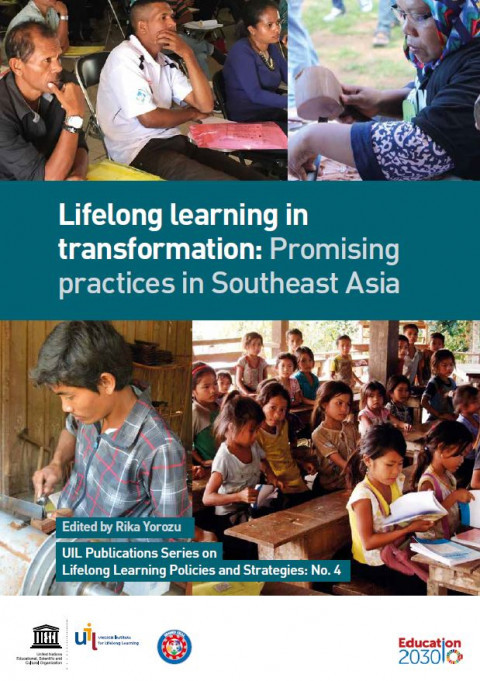 Lifelong Learning in Transformation: Promising Practices in Southeast Asia Año de publicación: 2017 Autor: Rika Yorozu Autor corporativo: UNESCO Institute for Lifelong Learning (UIL) This report is an outcome of a project on building a lifelong learning agenda in Southeast Asian countries, which aims to address the region’s remaining educational challenges in ensuring ‘inclusive and equitable quality education and promot[ing] lifelong learning opportunities for all’ (Goal 4 of the 2030 Agenda for Sustainable Development). By sharing promising policies and practices in implementing integrated lifelong learning from different perspectives, countries can learn from one another and move their visions for lifelong learning fully into practice. The publication documents a variety of promising practices from 11 countries, focusing particularly on the features critical to the promotion of lifelong learning for all; namely, inclusive and gender-responsive teaching and learning practices, recognition of learning outcomes from non-formal and informal learning, collaboration between social and economic development sectors and coherent national government policies and strategies. The report comprises three main sections: a reflection on lifelong learning in international and national documents, a collection of good practice drawn from their national reports, and a set of recommendations for policies and programmes promoting lifelong learning. It is hoped that these recommendations will stimulate discussion and new developments, in both policy and practice, in the region.
  IBE-UNESCO preparatory report for the 48th ICE on inclusive education Año de publicación: 2007 Autor corporativo: UNESCO International Bureau of Education (IBE) The International Conference on Education (ICE) is a major international forum for educational policy dialogue among Ministers of Education and other stakeholders (researchers, practitioners, representatives of intergovernmental organizations and NGOs). The ICE is organized by the International Bureau of Education (IBE), the UNESCO institute specialized in assisting Member States in curriculum development to achieve quality Education For All. The IBE Council, composed of 28 UNESCO Member States, has proposed in January 2007 that the 48th ICE session, to be held in Geneva in November 2008, should focus on the theme “Inclusive Education: the Way of the Future”. The 48th ICE will focus on broadening the understanding of the theory and practice of inclusive education while discussing how governments can develop and implement policies on inclusive education. The IBE is hosting a series of regional preparatory workshops dedicated to exploring and advancing inclusive education in preparation for the ICE 2008. The Regional Preparatory Workshop "International Workshop on Inclusive Education, Andean and Southern Cone Regions” was held in Buenos Aires, Argentina on the 11-14 September 2007. This event was organized by the International Bureau of Education (IBE/UNESCO), the Division for the Promotion of Basic Education (ED/BAS, UNESCO Paris), the Regional Bureau of Education for Latin America and the Caribbean (OREALC/UNESCO); University of de San Andrés, Ministry of Science, Technology and Education, in collaboration with the Community of Practice - Southern Cone and Andean Regions; it had the participation of ten countries from the Southern Cone and Andean Regions. This report is based on the workshop’s country reports and presentations on the conception and status of inclusive education in participating countries, and on the ideas proposed by participants on what the next steps should be on how to advance inclusive education policy and implementation in the region. Rapport préparatoire du BIE-UNESCO pour la 48e CIE sur l'éducation inclusive Año de publicación: 2007 Autor corporativo: UNESCO International Bureau of Education (IBE) La Conférence Internationale sur l'Éducation (CIE) est un important forum international pour le dialogue sur les politiques éducatives entre les Ministres de l'Éducation et d'autres parties prenantes (chercheurs, praticiens, représentants d'organisations intergouvernementales et ONG). CIE est organisé par le Bureau International d'Éducation (BIE), l'Institut de l'UNESCO spécialisé pour aider les États membres dans l'élaboration des programmes pour atteindre une éducation de qualité pour tous. Le Conseil du BIE, composé de 28 États membres de l'UNESCO, a proposé en Janvier 2007 que la session de la CIE 48e, qui se tiendra à Genève en Novembre 2008, devrait se concentrer sur le thème «Education pour l'inclusion: la voie de l'avenir». La 48e CIE mettra l'aCECnt sur l'élargissement de la compréhension de la théorie et la pratique de l'éducation inclusive, tout en discutant comment les gouvernements peuvent élaborer et mettre en œuvre des politiques sur l'éducation inclusive. Le BIE organise une série d'ateliers préparatoires régionaux dédiés à l'exploration et de faire progresser l'éducation inclusive dans la préparation de la CIE 2008. L'Atelier régional préparatoire "Atelier international sur l'éducation inclusive, des Andes et les régions du Cône Sud» a eu lieu à Buenos Aires, Argentine sur la 11-14 Septembre 2007. Cet événement a été organisé par le Bureau International d'Éducation (BIE / UNESCO), la Division de la promotion de l'Éducation de Base (ED / BAS, UNESCO Paris), le Bureau Régional de l'Éducation pour l'Amérique latine et les Caraïbes (OREALC / UNESCO); Université de de San Andrés, Ministère de la Science, de la Technologie et de l'Éducation, en collaboration avec la Communauté de Pratique - Cône Sud et les régions andines;. il y avait la participation de dix pays du Cône Sud et les régions andines Cette rapport est basé sur les rapports et les présentations des pays de l'atelier sur la conception et le statut de l'éducation inclusive dans les pays participants, ainsi que sur les idées proposées par les participants sur les prochaines étapes devraient être sur la façon de faire progresser la politique de l'éducation inclusive et la mise en œuvre dans la région. Education, Poverty and Terrorism: Is There a Causal Connection? Año de publicación: 2003 Autor: Alan B. Krueger | Jitka Maleckova Autor corporativo: American Economic Association In the authors' view, any connection between poverty, education and terrorism is indirect, complicated and probably quite weak. Instead of viewing terrorism as a direct response to low market opportunities or ignorance, the article suggests it is more accurately viewed as a response to political conditions and long-standing feelings of indignity and frustration that have little to do with economics.
  Homegrown terrorism and transformative learning: an interdisciplinary approach to understanding radicalization Año de publicación: 2010 Autor: Alex S. Wilner | Claire-Jehanne Dubouloz Since 2001, a preponderance of terrorist activity in Europe, North America and Australia has involved radicalized Westerners inspired by Al Qaeda. Described as ‘homegrown terrorism’, perpetrators are citizens and residents born, raised, and educated within the countries they attack. While most scholars and policy-makers agree that radicalization plays a central role in persuading Westerners to embrace terrorism, little research properly investigates the internal and cognitive processes inherent to radicalization. Transformative learning theory, developed from the sciences in education, health and rehabilitation, provides an unconventional and interdisciplinary way to understand the radicalization process. The theory suggests that sustained behavioural change can occur when critical reflection and the development of novel personal belief systems are provoked by specific triggering factors.