
Recursos
Exploren una amplia gama de recursos valiosos en GCED para profundizar su comprensión y promover su búsqueda, incidencia, enseñanza y aprendizaje.
6 resultados encontrados
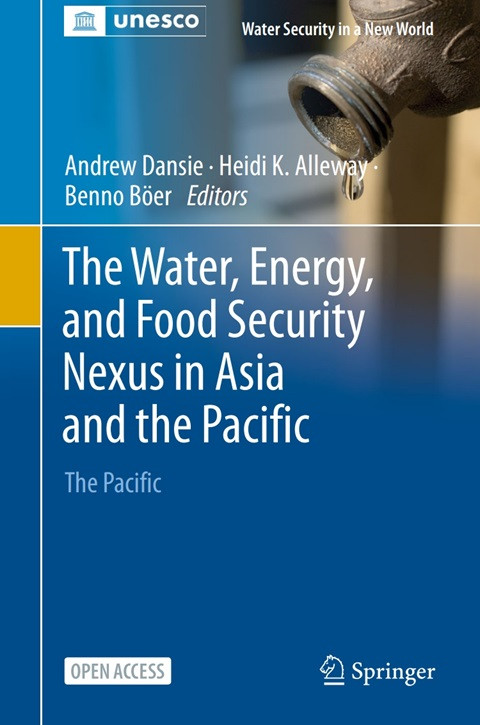 The Water, Energy, and Food Security Nexus in Asia and the Pacific: The Pacific Año de publicación: 2024 Autor corporativo: UNESCO | UNESCO Bangkok | UNESCO Jakarta Global climate targets and the call to action from the Pacific must be heeded while major environmental, societal and economical progress is needed in the region. Leadership from Pacific Island Countries and Territories needs to be supported with action and resourcing to meet both global net zero goals and regional SDGs. This volume applies the water, energy, and food security nexus approach solely in a Pacific context for the first time, bringing together the region’s 17 countries and 7 Territories. This approach improves the security of each sector and supports regional climate and environmental priorities. Effective intersectoral solutions exist with connectivity between the water-food and water-energy sectors of particular benefit. Traditional knowledge and crop production have historically and will continue to play a major role in food security and water resources management in the region. Increased energy demand needs to be met with increased renewables installation as well as new technologies that encompass storage and transport considerations.
  Food Sovereignty Año de publicación: 2023 Autor corporativo: Quebec Association of International Cooperation Organizations (AQOCI) In 2023-2024, AQOCI and its members have chosen food sovereignty as the theme for their global citizenship education campaigns. These campaigns include videos explaining food sovereignty and related issues. Souveraineté alimentaire Año de publicación: 2023 Autor corporativo: Association québécoise des organismes de coopération internationale (AQOCI) En 2023-2024, l’AQOCI et ses membres ont choisi la souveraineté alimentaire comme thématique pour les campagnes d’éducation à la citoyenneté mondiale . Ces campagne s'accompagne notamment de vidéos explicatives sur la souveraineté alimentaire, et des problématiques liés à ce thèmes.
  مدخل االرتباط الحضري البيئي لتحقيق اإلدارة المستدامة للعمران المصري Año de publicación: 2022 Autor: Marwa Sebawy Hamed, Mohamed Fareed Mohamed Abd-Elaziz التوجه الأحادي للتعامل مع تلك القضايا وعدم وجود خطط متكاملة تعمل الحفاظ على الموارد بشكل عام وتحقيق أهداف التنمية المستدامة. لذا يهدف البحث إلى صياغة إطار منهجي لتحقيق الإدارة المستدامة للعمران المصري عن طريق تطبيق مدخل الإرتباط الحضري البيئي بالتجمعات العمرانية المصرية، لتحقيق أهداف التنمية المستدامة وتوفير متطلبات النمو السكاني. حيث يتناول البحث دراسة مفاهيم الإدارة المستدامة للعمران في ضوء تطبيق مدخل الإرتباط الحضري البيئي Urban- Environmental Nexus Approach، ودوره في تحقيق أبعاد الإدارة المستدامة والتركيز على المبادئ الأساسية لاستدامة المياه والطاقة والغذاء في التجمعات العمرانية. الأمر الذي يتطلب تحديد الأسس والمعايير الخاصة بتحقيق الإدارة المستدامة القائمة على الترابط والتشابك الخطط القطاعية والمتكاملة وذلك لمواجهة التحديات والضغوطات الحالية والمحتملة. كما يتناول البحث العديد من التجارب العالمية المختلفة لفهم العلاقات التشابكية المتكاملة بين قطاعات المياه والطاقة والغذاء مع الوضع في الاعتبار خصوصية الحالة المصرية. وذلك للوصول إلى إطار منهجي مبدئي لتحقيق الإدارة المستدامة للعمران المصري، حيث يتم تدقيق هذا الإطار بالعرض على الخبراء والمتخصصين في المجال للوصول إلى الإطار المنهجي النهائي لتحقيق الإدارة المستدامة للعمران المصري. Urban-Environmental Nexus Approach To achieve sustainable management of Egyptian urbanization Año de publicación: 2022 Autor: Marwa Sebawy Hamed, Mohamed Fareed Mohamed Abd-Elaziz In view of the high rates of population growth witnessed by urban communities, and the resulting continuous increase in pressures on water, energy and food resources, which generates some issues facing societies such as economic turmoil, issues related to climate change and other urgent issues that need intervention. This is to try to achieve the principles and goals of sustainable development for these communities, as one of the most important reasons for these issues is the unilateral sectoral decisions and plans to deal with these issues and the lack of integrated plans that preserve resources in general and achieve the goals of sustainable development. Therefore, the research aims to formulate a methodological framework to achieve sustainable management of the Egyptian urbanization by applying the approach of the urban environmental link with the Egyptian urban agglomerations, to achieve the goals of sustainable development and provide the requirements of population growth. Where the research studies the concepts of sustainable urban management in the light of applying the urban-environmental nexus approach, and its role in achieving the dimensions of sustainable management and focusing on the basic principles of water, energy and food sustainability in urban agglomerations. This requires defining the foundations and criteria for achieving sustainable management based on the interdependence and interdependence of sectoral and integrated plans in order to meet current and potential challenges and pressures. The research also deals with many different international experiences to understand the integrated interrelationships between the water, energy and food sectors, taking into account the specificity of the Egyptian case. In order to reach an initial methodological framework for achieving sustainable management of the Egyptian urbanization, this framework is reviewed by presenting it to experts and specialists in the field in order to reach the final methodological framework for achieving sustainable management of the Egyptian urbanization.
 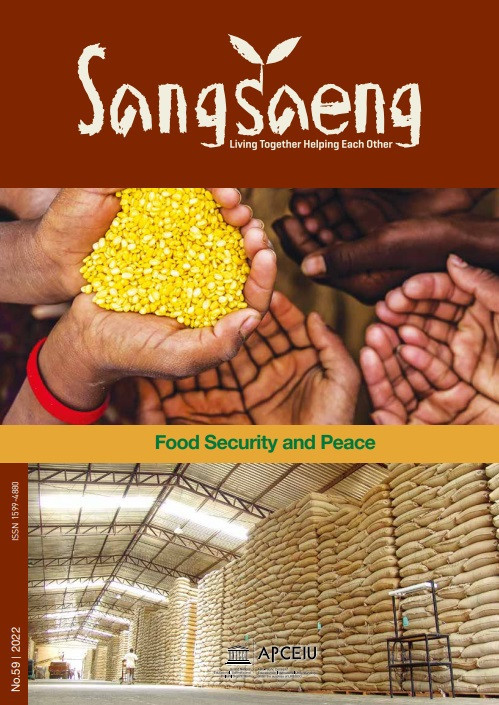 Food Security and Peace (SangSaeng no.59, 2022) Año de publicación: 2023 Autor corporativo: APCEIU The food security issue is vital in pursuing the United Nations’ Sustainable Development Goals, which specifically include a goal of zero hunger. Hunger is both a cause and a result of conflicts. In this perspective, SangSaeng No. 59 focuses on the issue of “food security and peace” in order to examine the impacts of food insecurity and food crises and to explore possible alternatives or solutions to prevent conflicts and secure peace. Contents 03 Editor’s Note 04 Special ColumnRepositioning Youth for Responsible Citizenship / Michael Boakye-Yiadom and Raymond Chegedua Tangonyire, SJ. 08 FOCUS: Food Security and Peace 08 Conflict of Securing Food – ‘Food Insecurity is in Effect Creating an Existential Threat to Human Existence’ / Gavin E L Hall 12 Prioritizing Food Justice – Thinking About Water/Food Nexus for Latin America / Mayari Castillo 16 Feeding the Planet’s Survival – Climate Crisis and Food Security are Paramount Issues for Students to Connect with Nature / Simon Klein 21 Best Practices 21 Archipelagos of Certainty and Inclusion – Identifying Diverse Strategies to Make Learning Effective for Disabled / Eduardo Esteban Perez Leon 25 Adventure Education in Youth Work – Using Rick to Connect People and Nature to Unlearn Unhealthy Behaviours / Tina Trdin 30 InterviewRoad to Peace and Hope in Times of Crisis – Lee Chul Soo’s Works on Peace and Living Beings / APCEIU 36 Story TimeMessage of a Warlus / Marisol Bock 40 Peace in My MemoryPeace at Home / Ivy Joshia 44 Understanding the Asia and the PacificRenaissance of Traditional Archery in Asia / Lee Seunghwan 48 LetterMaking History with the EIU Photo Class Programme / Fanny Amalia Surya Tantular 50 APCEIU in Action