
Recursos
Exploren una amplia gama de recursos valiosos en GCED para profundizar su comprensión y promover su búsqueda, incidencia, enseñanza y aprendizaje.
27 resultados encontrados
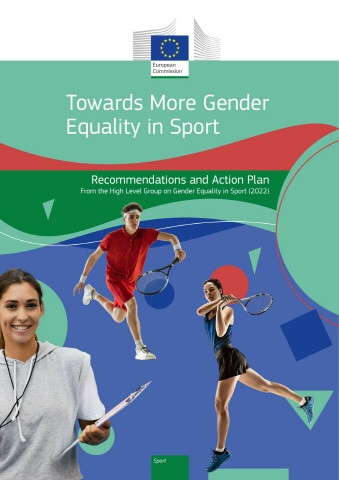 Towards More Gender Equality in Sport: Recommendations and Action Plan From the High Level Group on Gender Equality in Sport (2022) Año de publicación: 2022 Autor corporativo: European Commission | European Union (EU) Gender equality is a fundamental European Union (EU) principle. Enshrined in the Treaties, it is something the EU is actively trying to achieve – most recently through its Gender Equality Strategy 2021-2025. The Strategy aims to give women, men, girls and boys, in all their diversity, the freedom to pursue their chosen path in life and equal opportunities to thrive and to participate in and lead European society. Looking back at the steps already taken, the ‘Gender equality in sport – Proposal for strategic actions 2014-2020’ has certainly led to achievements, but the pace of reforms needs to be accelerated. Firstly, the principle of gender equality now underpins all actions funded under Erasmus+ Sport and projects supporting women’s sport are actively encouraged. Secondly, awareness raising is at the core of EU action in this field, notably through studies or discussions, such as within the Commission Expert Group on Good Governance. Finally, initiatives such as the annual #BeInclusive EU Sport Awards recognise those organisations using sport to increase social inclusion, including gender equality. In 2020, Commissioner Gabriel announced the setting up of an expert group with the aim of discussing the way forward and proposing future actions in the area of gender equality in sport to the European Commission, EU Member States and sports organisations. The work of the experts will lead to the implementation of concrete actions at local, national and European level. This report is the result of the work of the European Commission High-Level Group (HLG) on Gender Equality in Sport. The 15 members of the HLG were appointed in December 2020. Work began in February 2021 and was completed in December 2021. Meetings focused on six areas of engagement identified by the experts. Scientists and practitioners shared findings of their research and good practices. Each meeting was followed by working sessions to summarise the presentations and formulate recommendations. Vers une plus grande égalité des genres dans le sport: Recommandations et plan d'action du groupe de haut niveau sur l’égalité des genres dans le sport (2022) Año de publicación: 2022 Autor corporativo: European Commission | European Union (EU) L’égalité des genres est l’un des principes fondamentaux de l’Union européenne (UE). Inscrite dans les traités, elle constitue un objectif que l’UE s’efforce activement d’atteindre – notamment dans le cadre de sa stratégie en faveur de l’égalité entre les femmes et les hommes 2021-2025. Cette stratégie a pour objectif de donner aux femmes, aux hommes, aux jeunes filles et aux jeunes garçons, dans toute leur diversité, la liberté de suivre le chemin qu’ils ont choisi dans la vie et des chances égales de s’épanouir, de participer à la société européenne et de la diriger. Si l’on considère les mesures déjà prises, le rapport « Égalité des genres dans le sport – Proposition d’actions stratégiques 2014-2020 » a certes permis des avancées, mais le rythme des réformes doit être accéléré. Tout d’abord, le principe de l’égalité des genres sous-tend désormais toutes les actions financées dans le cadre du programme Erasmus+ Sport, et les projets soutenant le sport féminin sont activement encouragés. Ensuite, la sensibilisation est au coeur de l’action de l’UE dans ce domaine, notamment par le biais d’études ou de discussions, comme au sein du groupe d’experts de la Commission sur la bonne gouvernance. Enfin, des initiatives telles que les prix annuels #BeInclusive EU Sport Awards récompensent les organisations qui se servent du sport pour accroître l’inclusion sociale, notamment l’égalité des genres. En 2020, la commissaire Mariya Gabriel a annoncé la création d’un groupe d’experts chargé de déterminer la marche à suivre et de proposer des actions à implémenter dans le domaine de l’égalité des genres dans le sport à la Commission européenne, aux États membres de l’UE et aux organisations sportives. Le travail des experts permettra de mettre en oeuvre des actions concrètes aux niveaux locaux, nationaux et européen. Ce rapport est le résultat du travail du groupe de haut-niveau (GHN) de la Commission européenne sur l’égalité des genres dans le sport. Les 15 membres du groupe de haut-niveau ont été nommés en décembre 2020 Les travaux ont commencé en février 2021 et se sont terminés en décembre 2021. Les réunions ont porté sur six domaines d’engagement identifiés par les experts. Des scientifiques et des praticiens ont partagé le fruit de leurs recherches et leurs bonnes pratiques. Chaque réunion a été suivie par des sessions de travail destinées à résumer les présentations et à formuler des recommandations.
 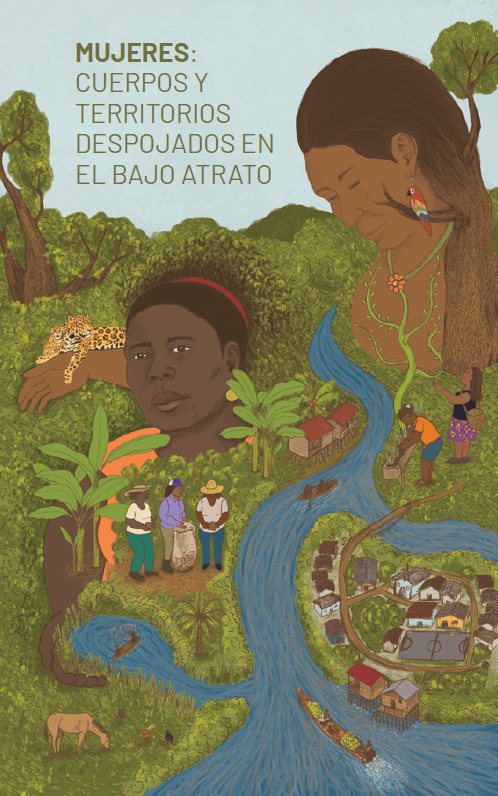 Women: Dispossessed Bodies and Territories in the Bajo Atrato Año de publicación: 2022 Autor: Magda Rocio Martínez Montoya Autor corporativo: Centro de Investigación y Educación Popular (CINEP) The violence exerted against the bodies of women is also a violence exerted against the territories. For the black, indigenous and mestizo women of the Bajo Atrato, their bodies are a substantive part of the territories and, from there, they have built and defended it. The rivers, swamps and streams are the extension of their arms and legs, waters in which they remain submerged carrying out daily tasks together with other women, their sons and daughters. In said construction and defense, their body-territories have been severely dispossessed and violated. However, they have fought and resisted, and continue to do so despite enormous risks, serious human rights violations and state abandonment. In Women: dispossessed bodies and territories in the Bajo AtratoAnalytical and contextual elements are presented that help to understand the complex relationship between gender-based violence and the processes of defending the rights to land and territory. With the delivery of this report to the Special Jurisdiction for Peace (JEP), the CINEP/PPP and the Inter-Church Commission for Justice and Peace, within the framework of the Vamos por la Paz project, provide relevant information to case 004, which prioritizes the events that occurred in the region of Urabá, Bajo Atrato and Darién. Mujeres: cuerpos y territorios despojados en el Bajo Atrato Año de publicación: 2022 Autor: Magda Rocio Martínez Montoya Autor corporativo: Centro de Investigación y Educación Popular (CINEP) La violencia ejercida contra los cuerpos de las mujeres también es una violencia ejercida contra los territorios. Para las mujeres negras, indígenas y mestizas del Bajo Atrato sus cuerpos son parte sustantiva de los territorios y, desde allí, lo han construido y defendido. Los ríos, ciénagas y quebradas son la extensión de sus brazos y sus piernas, aguas en las que permanecen sumergidas desarrollando labores cotidianas junto a otras mujeres, sus hijos e hijas. En dicha construcción y defensa, sus cuerpos-territorios han sido fuertemente despojados y violentados. Sin embargo, ellas han luchado y resistido, y lo siguen haciendo a pesar de los enormes riesgos, las graves violaciones a los derechos humanos y el abandono estatal. En Mujeres: cuerpos y territorios despojados en el Bajo Atrato se presentan elementos analíticos y contextuales que ayudan a comprender la compleja relación entre las violencias basadas en género y los procesos de defensa de los derechos a la tierra y el territorio. Con la entrega de este informe a la Jurisdicción Especial para la Paz (JEP), el Cinep/PPP y la Comisión Intereclesial de Justicia y Paz, en el marco del proyecto Vamos por la Paz, aportan información relevante al caso 004, que prioriza los hechos ocurridos en la región de Urabá, Bajo Atrato y Darién.
  Gender Violence in Childhood and Adolescence: Challenges and Realities Año de publicación: 2022 Autor corporativo: Red Papaz In this space, the guests talk about the challenges that girls face in their daily lives and how the school and the family together can build strategies to respond to them. In addition, they will invite us to reflect on the important role of boys and men in the consolidation of protective environments free of gender-based violence. Las violencias de género en la infancia y la adolescencia: retos y realidades Año de publicación: 2022 Autor corporativo: Red Papaz En este espacio los invitados conversan sobre los retos a los que se enfrentan las niñas en sus cotidianidades y cómo la escuela y la familia en conjunto pueden construir estrategias para responder ante ellos. Además, nos invitarán a reflexionar sobre el papel importante de los niños y hombres para la consolidación de entornos protectores libres de violencias de género.
 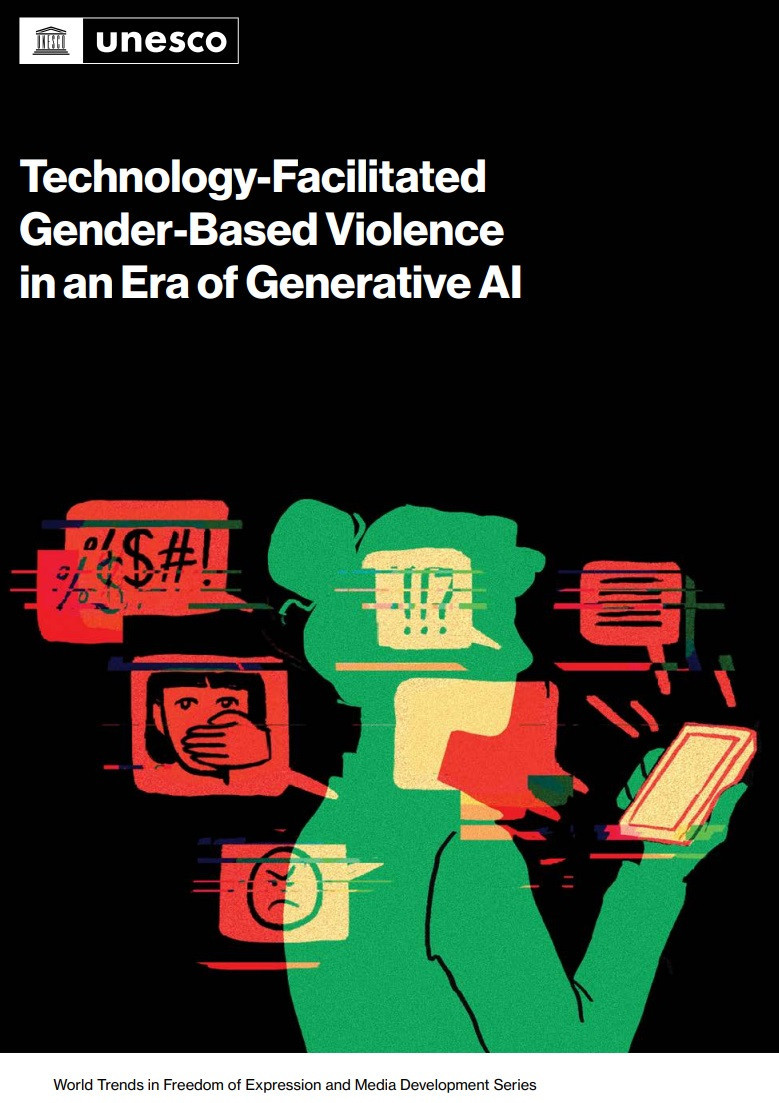 Technology-facilitated gender-based violence in an era of generative AI Año de publicación: 2023 Autor corporativo: UNESCO <Short summary>Experiments reveal how generative AI facilitates gender-based violence Generative Artificial Intelligence (AI) — deep-learning models that create voice, text, and image — are revolutionizing the way people access information and produce, receive and interact with content. While technological innovations like ChatGPT, DALL-E and Bard offer previously unimaginable gains in productivity, they also present concerns for the overall protection and promotion of human rights and for the safety of women and girls.The arrival of generative AI introduces new, unexplored questions: what are the companies’ policies and normative cultures that perpetuate technology-facilitated gender-based violence and harms? How do AI-based technologies facilitate gender-specific harassment and hate speech? What “prompt hacks” can lead to gendered disinformation, hate speech, harassment, and attacks? What measures can companies, governments, civil society organisations and independent researchers take to anticipate and mitigate these risks?A combination of measures are proposed to be put in place by generative AI companies and the technology companies that platform them, regulators and policy makers, by civil society organisations and independent researchers, as well as users.
  Inequalities and Gender Violence in Latin America and the Caribbean Año de publicación: 2023 Autor: Karina Batthyány Autor corporativo: Consejo Latinoamericano de Ciencias Sociales (CLACSO) The chapters of this book are the result of the powerful research work carried out within the framework of the call “Inequalities and gender violence in Latin America and the Caribbean", promoted by CLACSO. They seek, as a whole, to outline answers to these questions, through innovative methodologies that redefine conventional tools and give the texts great singularity. The point of view is, in all cases, novel and localized: territorially, but also in terms of theory and epistemology. The reading of This book manages to immerse the reader's gaze in a truly critical approach to the reality of the continent. Desigualdades y violencias de género en América Latina y el Caribe Año de publicación: 2023 Autor: Karina Batthyány Autor corporativo: Consejo Latinoamericano de Ciencias Sociales (CLACSO) Los capítulos del presente libro son fruto de los potentes trabajos de investigación realizados en el marco de la convocatoria “Desigualdades y violencias de género en América Latina y el Caribe", promovida por CLACSO. Buscan, en su conjunto, esbozar respuestas a dichos interrogantes, mediante metodologías innovadoras que resignifican herramientas convencionales y dotan a los textos de gran singularidad. El punto de vista es, en todos los casos, novedoso y localizado: territorialmente, pero también en lo que a la teoría y a la epistemología se refiere. La lectura de este libro logra sumergir la mirada de la lectora o el lector a un acercamiento verdaderamente crítico a la realidad del continente.
 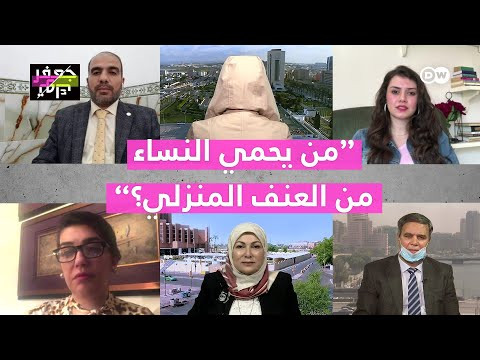 تصاعد العنف المنزلي في زمن كورونا... من يحمي النساء؟ Año de publicación: 2020 Autor: Jaafar Abdul Karim Autor corporativo: DW Jaafar Talk أحد برامج تلفزيون DW والذي يبث من برلين. يتحدث البرنامج عن العنف الجسدي الذي تتعرض له بعض النساء في الوطن العربي في زمن فيروس كورونا المستجد. يتميز البرنامج باستعراضه لحالات متعددة تعرضت للعنف وقت الحجر الصحي، ويسعى لمناقشة الاسباب والحلول لهذه القضية.