
Recursos
Exploren una amplia gama de recursos valiosos en GCED para profundizar su comprensión y promover su búsqueda, incidencia, enseñanza y aprendizaje.
123 resultados encontrados
 Holocaust Education in Ontario High Schools: An antidote to racism? The premise underpinning this article is that if the Holocaust is taught well, it can help to promote anti-racist goals. The need to realize the Holocaust's anti-racist potential is self-evident, but is arguably greatest where conventional anti-racism (aimed at enhancing the life chances of visible minorities) is under threat. Such a situation currently exists in Ontario, where the right wing Progressive Conservative party was elected to office in June 1995. The uncertain future of anti-racism in the province provides the background to this article. It examines the teaching of the Holocaust in Ontario high schools and reports the findings of a survey carried out among history staff in May 1998. Various ways are suggested in which the teachers involved (and others elsewhere) might alter their approach to the Holocaust in order to strengthen its contribution to anti-racist education. (By the author)
  Teaching the Holocaust: The relevance of children's perceptions of Jewish culture and identity The Holocaust is now part of the history curriculum for all 11-14-year olds in maintained schools in England and Wales. In this paper it is argued that for the Holocaust to be taught effectively, teachers will need to have some idea of how children within this age group perceive Jewish culture and identity. The empirical core of the paper attempts to go some way towards meeting this need. Seventy-two children aged between 12 and 14 were interviewed in order to explore their knowledge of Judaism, the nature of any misconceptions they may have about the faith, the extent to which they appreciate the commonalities between Judaism and Christianity and their awareness of anti-Semitism. The paper concludes with a discussion of the policy implications of the findings. (By the author)
  The role of the Holocaust in antiracist education: A view from the United Kingdom The failure of antiracist educators in the United Kingdom to engage seriously with the issue of anti‐Semitism provides the background to this article. With specific reference to the Holocaust, it argues that a lack of interest among antiracists in how the subject is taught has had a number of adverse consequences. These include the forfeiture of a potent vehicle for reinforcing and advancing the aims of antiracism and the loss of the unique contribution that a study of the Holocaust can make to an understanding of racism. Lack of interest in the Holocaust has also meant that inadequate consideration has been given to the consequences for antiracist education of the subject being taught badly. To obviate these drawbacks, the article advocates a definition of racism that can embrace anti‐Semitism and thereby facilitate the involvement of antiracists in teaching about the attempted annihilation of European Jewry. (By the author)
  Meeting a moral imperative. A rationale for teaching the Holocaust A primary rationale for studying the Holocaust (Shoah) involves the opportunity to consider the moral implications that can be drawn from examining the event. Studying the Shoah forces students to consider what it means to be human and humane by examining the full continuum of individual behavior, from ultimate evil to ultimate good. This article discusses several implications involved in studying the event, while proposing that a moral imperative exists for the presence of Holocaust education in contemporary classrooms. (By the publisher)
  Holocaust education: An investigation into the types of learning that take place when students encounter the Holocaust This study employs qualitative methods to investigate the types of learning that occurred when students in a single school encountered the Holocaust. The study explored the experiences of 48 students, together with two of their teachers and a Holocaust survivor who visited the school annually to talk to the students. A thematic analysis was conducted to identify prevalent similarities in the students’ responses. Three themes were identified, analysed and discussed. The three themes were: ‘surface level learning’ (their academic knowledge and understanding of the Holocaust), ‘affective learning’ (their emotional engagement with the topic) and ‘connective learning’ (how their encounter with the Holocaust fitted their developing worldview). The first theme revealed that students had a generally sound knowledge of the Holocaust, but there were discrepancies in the specifics of their knowledge. The second theme revealed that learning about the Holocaust had been an emotionally traumatic and complicated process. It also revealed that meeting a Holocaust survivor had a significant impact upon the students, but made them begin to question the provenance of different sources of Holocaust learning. The third theme showed that students had difficulty connecting the Holocaust with modern events and made flawed connections between the two. Finally, the study examines the views of the Holocaust survivor in terms of his intentions and his reasons for giving his testimony in schools. The study’s conclusions are drawn within the context of proposing a new conceptualization of the Holocaust as a ‘contested space’ in history and in collective memory. A tripartite approach to Holocaust Education is suggested to affect high quality teaching within the ‘contested space’ of the event. (By the author) The Holocaust and Historical Empathy: The Politics of Understanding It is difficult to choose secondary and primary sources for young historians. According to the author, two factors affect a student researcher’s decision when choosing sources. The first is in regards to his or her set of unique experiences and, secondly, how the researcher filters the available sources through a personal lens. Since we live in an information-rich world, student researchers often do not have a sustained attention of the past. This impedes historical understanding, which requires in-depth analysis and perspective taking. According to the author, history is one of the most controversial subjects taught. In reference to the Holocaust, since it is so politically charged, there are more issues than simple understanding. There may be difficulties in attempting to balance the cognitive and affective aspects of the Holocaust objectively. It is important for student researchers to build a framework around which to understand history through analysis of historical evidence. The author continues the article in three separate sections. The first deals with the politics of the Holocaust and how it is often a challenge to teach and sometimes creates a barrier to historical understanding. The second section discusses a methodological process and outcome interpretation of historical empathy in relation to the Holocaust. The final section critiques three popular curriculum guides on the Holocaust within the framework of historical empathy. The author concludes by discussing the considerations teachers face when teaching the Holocaust, such as whether to use prepared curriculum materials. The author also suggests that teachers employ the four constructs of historical empathy as outlined in the text and by Yeager, which provides students a framework for examining a historical event. Teachers must be cognizant of their positionalities and be clear about the reasons for teaching the Holocaust. (By the publisher) Holocaust education: challenges for the future The theme of the 2012 Ethel LeFrak Holocaust Education Conference was Holocaust Education: Challenges for the future. Its purpose was to bring together well-known scholars who could share with conference participants their research and reflections about what the Holocaust has to teach students about the dangers of dictatorship and apathy in the face of prejudice. Its purpose also was to inform participants about the 1994 genocide in Rwanda so that teachers also can incorporate teaching about the terrible event into their curricula. The essays in this book are intended to educate and encourage students and others who may be in situations to see, judge, and act on behalf of those whose lives are in danger. Studying about the Holocaust should encourage the people to help others in need. (By the USHMM) Dialogue and transformation in Holocaust education? Reweaving the tapestry of experience, research and practice. This article draws upon Habermas's three human interests to discuss different goals in Holocaust education research, namely the technical/instrumental interest in changing others' racist views, the communicative interest in understanding how such views make sense to others from their own perspective through dialogue, and the emancipatory interest in self-knowledge through which the researcher can uncover both implicit values about how things should be and implicit, and perhaps even subconscious theories of how things work. Achieving greater clarity about these implicit normative and empirical foundations of researchers' design decisions and interpretations has several positive outcomes: first, it enhances subjectivity, positionality and transparency in a field that is often highly personal for its participants; second, it enables the field to deliberate about the ethical dimensions of the work, while making theories about how things work explicit opens them up for critical examination; third, it has heuristic value, sharing ways of thinking, meaningful narratives and metaphors that may enhance Habermas's second, communicative interest in understanding. In practice, Habermas's three interests are not cleanly differentiated in Holocaust education research and practice, but are interconnected. This article focuses upon the emancipatory interest by exploring the interrelationships between experience and inquiry, or more specifically, how the author's encounter with tragedy shaped an evolving research agenda in Holocaust education. It revealed a set of implicit theories and commitments that, once unearthed and made explicit, are available for reflection and critique. It also clarified the ethical and empirical grounds for certain theories and commitments. (By the publisher)
 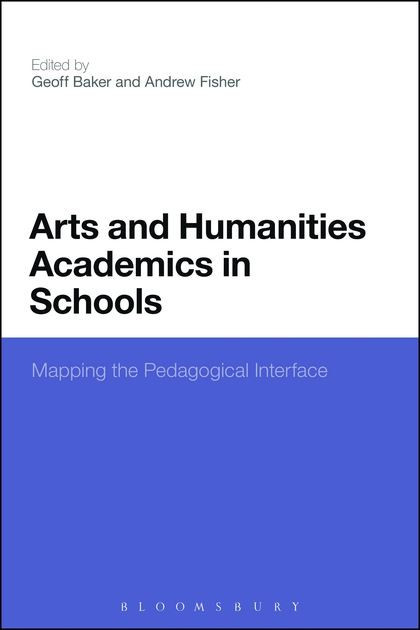 Transferring findings from genocide education research into strategies for teaching and learning about genocide in schools In recent years interest in schools outreach and academic enrichment has increased dramatically, reflecting a greater social conscience and awareness of the impact that universities can have on the wider community. The transferable skills that academics bring to schools need to be honed for this new learning environment, as delivery methods and success benchmarks are radically different in a schools context. This collection addresses the numerous issues raised when arts and humanities academics become involved with schools, bringing together practitioners from a broad range of fields within the arts and humanities to share experiences and insights. (By the author) What can we learn from the dark chapters in our history? Education about the Holocaust in Poland in a comparative perspective The article investigates what research tells us about the dynamics of educational practice in both formal and informal education about the Holocaust. It poses such questions as whether it is possible to identify good practices on a political and/or educational level, whether there are links between education about the Holocaust and human rights education, and how education about the Holocaust relates to attitudes toward Jews. Examples of both international studies (such as those by the Fundamental Rights Agency of the EU and the American Jewish Committee) and some national surveys on education about the Holocaust are discussed, followed by an analysis of empirical studies from Poland based on focus group interviews and individual interviews with educators. The choice of case study was based on the historical fact that occupied Poland was the site of the murder of almost 5 million Jews, including 3 million Polish Jews. In many cases a strong association with a Polish sense of victimhood based on the memory of the terror and the murder of almost 2 million ethnic Poles during WWII creates conflictingapproaches and generates obstacles to providing education about Jewish victims. Nevertheless, following the fall of communism, the number of educational initiatives designed to teach and learn about the Shoah is steadily increasing. The article presents tips for successful programmes of education about the Holocaust which can be generalized for any type of quality education, but are primarily significant for education about tolerance and education aimed at reducing prejudice, counteracting negative stereotypes and preventing discrimination. (By the author)