
Recursos
Exploren una amplia gama de recursos valiosos en GCED para profundizar su comprensión y promover su búsqueda, incidencia, enseñanza y aprendizaje.
72 resultados encontrados
 [Technical Report] Climate Change and Girls' Education: Barriers, Gender Norms and Pathways to Resilience Año de publicación: 2023 Autor corporativo: Plan International This is the technical report of the Climate Change and Girls' Education: Barriers, Gender Norms and Pathways to Resilience for further detail on the findings and research itself.
  Educate All Girls and Boys in South Asia; the global out of school children initiative Año de publicación: 2015 Autor corporativo: UNICEF South Asia The South Asia Out-of-School Children Initiative (OOSCI) is part of the global initiative launched by UNICEF and the UNESCO Institute for Statistics (UIS) in 2010. The goal of the initiative is to make significant and sustained reduction in the number of out-of-school children around the world by 1) developing comprehensive profiles of excluded children using consistent and innovative statistical methods; 2) linking these profiles to the barriers and bottlenecks that lead to exclusion; and 3) identifying, promoting and implementing sound policies that address exclusion from a multi-sectorial perspective.
  2030 Agenda: Challenges for us all Año de publicación: 2017 Since 1948, the UNESCO Courier has served as a platform for international debates on issues that concern the entire planet. This first issue of 2017, which marks the Courier’s revival after
a five-year break, is no exception to the rule: experts, public figures, artists and journalists from around the world have come together to discuss topical issues. Climate change and sustainable energy (p. 23), the future of cities and Smart Cities (p. 15), access to water and the state of groundwater (p. 19), educational policies and the importance they give to girls (p. 8), new technologies and their role in establishing efficient democratic institutions (p. 27), alliances and partnerships that must be forged to advance towards a better world
(p. 31) — these are some of the subjects that constitute the main dossier,
Wide angle, of this issue dedicated to Sustainable Development Goals (SDGs). UNESCO is closely associated with the development and implementation of this international road map that aims
to achieve the seventeen objectives established by the UN, which is convinced that culture, though officially absent from the SDGs, is at the heart of sustainable development policies (p. 12). Elyx, the jovial character created by Yacine Ait Kaci (YAK) and designated virtual ambassador of the UN, supports the Courier in its mission to make palpable the different realities around the world. These are illustrated by a number of SDGs and highlight the players who participate in achieving this agenda for everyone. These include the international community, states, civil society, local communities and authorities, the private sector, and the partnerships that these players set up between each other. The Ideas section, which is dedicated
to another highly topical issue — the current perception of Islam — suggests considering a reinterpretation of the Koran (p. 42) and the sharia (p. 48).
This issue of the Courier also features a reference text on the Different Aspects of Islamic Culture. Launched in 1977, in the wake of a monumental work produced by UNESCO Publishing on general and regional histories, this comprehensive work was completed in November 2016, with the publication of two volumes that constitute an important contribution to the current debate on Islam. In the Current affairs section for the April-June 2017 quarter, the Courier
will celebrate the launch of the World Book Capital programme in Conakry
on 23 April (p. 70) and the International Jazz Day, with the Cuban pianist Chucho Valdés (p. 58) on 30 April in Havana. The Courier will also participate in the celebration of several other international days such as the World Press Freedom Day on 3 May (p. 62), the World Oceans Day on 8 June (p. 65), and the International Day for the Elimination of Sexual Violence in Conflict on 19 June (p. 61). This issue of the Courier also invites you to delve into the peculiar and largely unknown world of Jeju Island’s haenyeo, the women divers from the Republic of Korea. Discover, through the stunning images in the Zoom section, the exceptional destinies of these extraordinary women (p. 36). We hope you enjoy reading this issue!
2030 Agenda: Challenges for us all Año de publicación: 2017 Since 1948, the UNESCO Courier has served as a platform for international debates on issues that concern the entire planet. This first issue of 2017, which marks the Courier’s revival after
a five-year break, is no exception to the rule: experts, public figures, artists and journalists from around the world have come together to discuss topical issues. Climate change and sustainable energy (p. 23), the future of cities and Smart Cities (p. 15), access to water and the state of groundwater (p. 19), educational policies and the importance they give to girls (p. 8), new technologies and their role in establishing efficient democratic institutions (p. 27), alliances and partnerships that must be forged to advance towards a better world
(p. 31) — these are some of the subjects that constitute the main dossier,
Wide angle, of this issue dedicated to Sustainable Development Goals (SDGs). UNESCO is closely associated with the development and implementation of this international road map that aims
to achieve the seventeen objectives established by the UN, which is convinced that culture, though officially absent from the SDGs, is at the heart of sustainable development policies (p. 12). Elyx, the jovial character created by Yacine Ait Kaci (YAK) and designated virtual ambassador of the UN, supports the Courier in its mission to make palpable the different realities around the world. These are illustrated by a number of SDGs and highlight the players who participate in achieving this agenda for everyone. These include the international community, states, civil society, local communities and authorities, the private sector, and the partnerships that these players set up between each other. The Ideas section, which is dedicated
to another highly topical issue — the current perception of Islam — suggests considering a reinterpretation of the Koran (p. 42) and the sharia (p. 48).
This issue of the Courier also features a reference text on the Different Aspects of Islamic Culture. Launched in 1977, in the wake of a monumental work produced by UNESCO Publishing on general and regional histories, this comprehensive work was completed in November 2016, with the publication of two volumes that constitute an important contribution to the current debate on Islam. In the Current affairs section for the April-June 2017 quarter, the Courier
will celebrate the launch of the World Book Capital programme in Conakry
on 23 April (p. 70) and the International Jazz Day, with the Cuban pianist Chucho Valdés (p. 58) on 30 April in Havana. The Courier will also participate in the celebration of several other international days such as the World Press Freedom Day on 3 May (p. 62), the World Oceans Day on 8 June (p. 65), and the International Day for the Elimination of Sexual Violence in Conflict on 19 June (p. 61). This issue of the Courier also invites you to delve into the peculiar and largely unknown world of Jeju Island’s haenyeo, the women divers from the Republic of Korea. Discover, through the stunning images in the Zoom section, the exceptional destinies of these extraordinary women (p. 36). We hope you enjoy reading this issue!  Gender Inequality in Learning Achievement in Primary Education: What can TERCE Tell Us? Año de publicación: 2016 Autor corporativo: UNESCO Santiago Existing research identifies several significant, subject-based gender inequalities in education. Male learners have significant advantages in mathematics and female learners have no less significant advantages in reading and writin. Such considerable differences in achievement may have important consequences for the future wellbeing of students. In order to shed light on this phenomenon in Latin America, this report analyzes the gender gaps in educational achievement in the Third Regional Comparative and Explanatory Study (TERCE) led by the Latin American Laboratory for Assessment of the Quality of Education (LLECE).
  Gender-Based Violence in Education Año de publicación: 2015 Autor: Jenny Perkes This paper examines how policies and strategies to address school-related gender-based violence have evolved since 2000, when gender-based violence within education was largely invisible. It traces remarkable progress in research, policy and programmes, particularly since the mid-2000s when evidence around the globe exposed high levels of many forms of violence. However, there is still insufficient knowledge about what works to reduce violence, and weaknesses in processes of policy enactment which inhibit effective action. Through four country case studies, in South Africa, Brazil, India and Liberia, this paper explores how different forms of violence are being addressed in varying contexts. It concludes that more attention is needed to the space between national and local policy enactments, and to tackling at national, district, school and community levels the norms and inequalities at the heart of gender-based violence.
 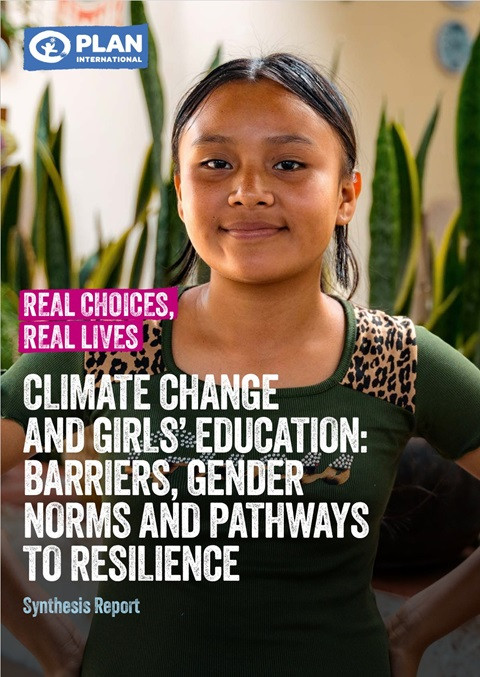 [Synthesis Report] Climate Change and Girls' Education: Barriers, Gender Norms and Pathways to Resilience Año de publicación: 2023 Autor corporativo: Plan International This research explores the relationship between climate change and girls' education: what are the direct and indirect impacts of climate change on girls' access to school and completion of their education? How do these impacts intersect with existing gender barriers to education? And how does your education help girls respond and adapt to climate change in their communities? A synthesis report and summary are also available, along with the technical report for more details on the conclusions and the research itself.
 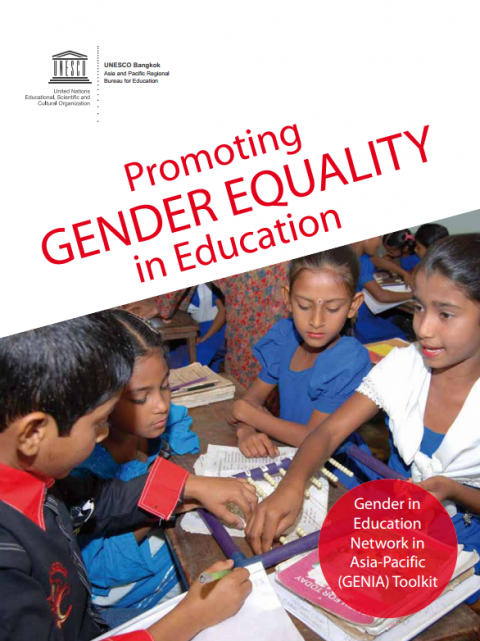 Promoting gender equality in education Año de publicación: 2009 Autor corporativo: UNESCO Kathmandu This publication was originally designed in 2003 when the Gender in Education Network in Asia-Pacific (GENIA) was established. Few gender in education resources were available at that time, and until the 2006 version, documents were mainly intended to be used by GENIA members, who are representatives (gender focal points) from ministries of education in the Asia-Pacific region. GENIA members have been using the Toolkit to sensitize and train their national counterparts ever since. However, the Toolkit has not only been distributed and used by gender focal points, but also by other people who have heard about GENIA, and/or who were interested in the resource materials published by UNESCO Bangkok. For this reason, the Toolkit has been accessible via the UNESCO Bangkok website1 since 2006. As a result, anyone searching the Web for information on gender equality can easily access the Toolkit. This fourth edition of the Toolkit, thus, expands the scope of the target audience. The content has likewise been adapted accordingly in order to meet the needs of all who could potentially access it. The Toolkit also integrates existing information and tools designed by other national or international organizations dedicated to promoting and providing training on gender equality in education and other sectors. Further information from these sources is obtained by consulting the references section at the end of the Toolkit. The Toolkit is designed as a user-friendly resource. As such, a matrix is provided on pages 4 and 5 to indicate each tool’s potential for use, based on its relevance to each prospective user group. Still, every tool will have relevance to many contexts or situations and, therefore, we encourage you to make use of all the materials by adapting them to your country context.
  Girl Rising Año de publicación: 2014 Autor corporativo: Girl Rising Suma's is one of Girl Rising's 9 remarkable stories. Though her brothers went to school, she was forced into bonded labor at age 6, like many other Nepali girls. Watch this chapter of Girl Rising to see how Suma gained her freedom and how she uses her education in a fight to free other girls. Written by Manjushree Thapa and voiced by Kerry Washington.
 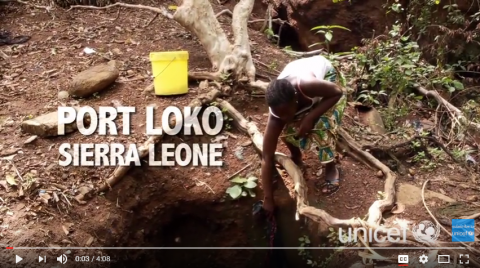 At a club for teenage girls in Sierre Leone, 18-year-old Mbalu leads by example Año de publicación: 2014 Autor: Nerina Penzhorn Teenage pregnancy is one of the most pervasive social problems in Sierra Leone today - more than one third of all pregnancies involve teenage girls. UNICEF, in collaboration with the NGO BRAC, is tackling this complex issue through a simple idea -- providing a place where teenage girls enjoy hanging out while they have training in life skills, gain valuable knowledge and access mentoring from peers. Mbalu Bumbuya, 18, a mentor at one such club for adolescent girls called 'the Wharf Club', is changing lives with her passion to teach and motivate her peers. "I tell them how to protect themselves so that they can excel in life," she says. "And I encourage them not to drop out of school." The club has also helped Mbalu stay focused on her education.
 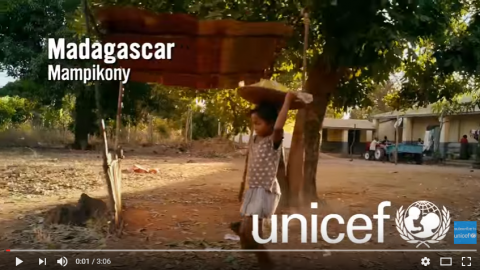 Educating the next generation of a Madagascar family Año de publicación: 2015 Autor corporativo: United Nations Children's Fund (UNICEF) One million. That’s how many children are out of school in Madagascar. However, Lantonirina, 11, is focused on finishing school and dreams of becoming a teacher: "I don't plan to marry very early because I want to continue my studies.” Lantonirina’s mother and sister were both married as adolescents and had to leave school so she is determined to break the cycle.